
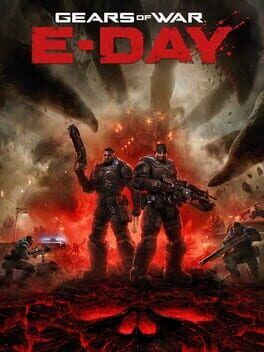

A disputed 320,000 figure has put Gears of War E-Day sales under a microscope, but Alinea's published estimate is 230,000 copies, with Game Pass upgrades complicating the early picture.
Image: IGDB
Store links: Gears of War: E-Day on Steam
The sales figure is already messier than the headline
The most concrete development around Gears of War: E-Day is also the one that needs the most careful handling: Kotaku’s headline says the game is estimated to have sold 320,000 copies, but the data firm cited in that story, Alinea Analytics, published a 230,000-copy estimate. Kotaku’s own article also quotes the 230,000 figure from Alinea analyst Rhys Elliott, breaking it down as 168,000 copies on Steam and 62,000 on Xbox across console and PC.
That conflict matters because the difference between 320,000 and 230,000 is not a rounding error. Windows Forum flagged the same discrepancy, noting that Kotaku’s headline uses 320,000 while Alinea’s report and Kotaku’s article text use 230,000. Nothing in the provided source material explains where 320,000 came from. Treating it as a typo is plausible, but that remains an inference rather than a confirmed correction.
The safest read is this: the publicly sourced estimate to cite is 230,000 copies sold since the October 1 advance-access launch and October 6 full release. Microsoft has not corroborated Alinea’s numbers, a point Kotaku also notes. So any discussion of Gears of War E-Day sales should start with two qualifiers. These are third-party estimates, and the most consistently supported sales figure in the available reporting is 230,000, not 320,000.
Strong reviews did not create a simple sales story
The tension is obvious because E-Day is not being described like a weak sequel limping out of cover. Alinea calls it the best-reviewed Gears game in nearly two decades. Kotaku frames it as the best-rated entry in the series in a long time. GameLoop’s own review described it as having “a compelling campaign” and “blood-soaked multiplayer,” saying The Coalition understands what makes Gears work.
Eurogamer’s review points in the same direction. The outlet says E-Day succeeds by looking backward, returning to waist-high cover, heavy firefights, gore, and the blunt force identity that defined the series. Eurogamer’s reviewer writes that the game is “excellent at what it does,” especially as a cover shooter built around arcade firefights, violent feedback, and chainsaw-gun spectacle. The review also calls out Horde Siege as a major pillar, with E-Day expanding the mode into 12-player squads split into units of four.
That context is important for anyone searching Gears of War E-Day review scores and wondering why the reported commercial result looks muted. The issue raised by Alinea is not that players rejected the game’s quality. The issue is that Xbox’s launch model changes how quality converts into visible copy sales. In a cleaner premium-only market, strong reviews might push more players toward a $69.99 purchase. On Xbox, many players had a cheaper route through Game Pass and a paid upgrade path.
Game Pass turned the launch into three different audiences
Alinea’s report separates E-Day’s early audience into categories that are easy to blur together if you only look at a headline. The firm estimates 230,000 full copies sold, 1.7 million players accessing the game through Game Pass, and 722,000 Game Pass players paying for the $30 Premium Edition upgrade for up to five days of early access.
Those categories do not mean the same thing. A copy sold is not the same as a Game Pass player. A Premium upgrade is not a full game sale. Adding all of them together and calling the result “sales” would inflate the figure. At the same time, focusing only on the 230,000-copy estimate undersells how many players paid money directly around launch.
Alinea estimates E-Day has generated roughly $37 million so far, with about $26 million coming from Xbox and roughly $11 million from Steam. That split is the sharpest part of the story. Steam produced far more estimated copy sales, 168,000 versus Xbox’s 62,000, but Xbox produced most of the revenue because of the Premium upgrade. Alinea says that counting those upgrades, nearly 950,000 people paid something for E-Day.
So Gears of War E-Day Xbox sales look small if the only metric is full copies. The broader launch economy looks different. Xbox did not simply give the game away to subscribers with no direct monetization. It sold early access to a large estimated group of Game Pass players. The commercial question is whether that $30 upgrade replaced too many $70 purchases.
Alinea’s argument is about cannibalization, not demand
Alinea’s interpretation is blunt: Game Pass is cannibalizing premium revenue for E-Day. Elliott argues that many of the 722,000 players who paid $30 for early access would have bought the game outright at $70 in a world without day-one Game Pass. That is an argument, not a confirmed counterfactual. The available sources do not prove how many of those players would have paid full price.
Still, the ratio Alinea highlights is hard to ignore. The firm estimates Xbox sold 62,000 copies while selling 722,000 Premium upgrades to Game Pass players. In Alinea’s framing, for every one Xbox copy sold, nearly 12 Game Pass upgrades were sold. The firm describes the $70 premium SKU as functionally dead on Xbox, at least for this launch pattern.
This is where strong reviews collide with platform strategy. Reviews can increase intent, and Alinea says E-Day sold another 250,000 early-access upgrades between the review embargo lifting on October 1 and the full release on October 6. But if the audience’s easiest path is a subscription plus a $30 upgrade, the review bump may show up as upgrade revenue rather than traditional unit sales.
That makes the reported Gears of War E-Day performance harder to judge than a normal boxed-era launch. If Microsoft’s goal was to maximize copies sold at $69.99, the estimate looks soft for a flagship shooter. If the goal was to drive Game Pass engagement while extracting extra money from the most committed fans, then the 722,000 estimated upgrade buyers become the central number. Microsoft has not provided official figures that settle which target mattered most internally.
The shooter itself seems built for the audience Xbox needed to mobilize
The irony is that E-Day, according to the reviews provided, appears to be tuned directly for the core Gears audience. Eurogamer describes a game that leans into cover movement, stop-and-pop firefights, gore, and co-op survival rather than trying to reinvent the franchise. GameLoop’s review similarly frames The Coalition as understanding the series’ strengths across campaign and multiplayer.
From a shooter perspective, that matters. Gears is at its strongest when each encounter has readable lanes, nasty close-range pressure, and weapons that force commitment. The series has never been about floating around a map fishing for aim-assist duels. It is about timing a roadie run, controlling cover, punishing a bad push, and making every reload and flank matter. The source material suggests E-Day delivers on that identity rather than chasing a broader trend.
That may help explain why critical reception was strong without guaranteeing a huge early sales number. The Coalition appears to have made the Gears game fans wanted, but Xbox gave those fans multiple ways to pay less than the full purchase price. For a competitive shooter audience trained to compare editions, access windows, subscription value, and multiplayer longevity, that choice is rational. If you already have Game Pass, buying the full game on Xbox becomes a harder sell when the launch window can be unlocked through a smaller upgrade.
The Steam split reinforces the point. On Steam, where the source material does not describe the same Game Pass substitution at scale, Alinea estimates 168,000 copy sales. On Xbox console and PC combined, it estimates 62,000 copies. That does not prove Steam demand was stronger overall, since Xbox also had 1.7 million estimated Game Pass players. It does show how platform business models can make unit sales a poor one-to-one comparison.
Price, release timing, and the upgrade path changed the calculation
The practical timeline is straightforward. Alinea says its estimate covers E-Day from the October 1 advance-access launch through the October 6 full release. Windows Forum, citing Xbox store listings and Microsoft’s launch information, says the Standard Edition was listed at $69.99, the Premium Edition at $99.99, and the Premium upgrade at $30 for players who already owned the Standard Edition. The same reporting says Premium Edition players could start up to five days early on October 1, while Game Pass Ultimate and PC Game Pass members could play from October 6.
That makes the Premium upgrade the key lever. Before October 6, the upgrade bought time. For Gears diehards, streamers, multiplayer grinders, and anyone who wanted to be there before the full release crowd, $30 was a direct route into the launch conversation. Alinea estimates 722,000 Game Pass players took that route.
After the full release date, the value proposition changes. The early-access portion has already passed. The provided source material does not detail every remaining Premium benefit, so players should check the current store listing before buying the upgrade now. If the goal is simply to play the campaign, Versus, or Horde Siege, Game Pass access covers the game for active subscribers according to the sources. If the goal is ownership, a subscription does not replace a purchased copy.
That distinction is easy to lose in the noise around Gears of War E-Day sales. A Game Pass player can be highly engaged and still not count as a sale. A Premium upgrade buyer can generate revenue without owning the base game. A Steam buyer counts as a copy sold but may contribute less total Xbox ecosystem revenue than a subscriber who paid for an upgrade. This launch was designed in a way that makes every simple sales headline incomplete.
The unanswered question is whether Xbox likes this result
Alinea calls the result soft for a flagship game at a moment when Xbox needs revenue wins. Kotaku connects the discussion to wider anxiety around Xbox teams and possible future cuts, while also stressing that the estimates have not been corroborated by Microsoft. Without Microsoft’s official numbers, there is no public answer on subscriber growth, retention, total hours played, multiplayer population health, or long-tail sales.
Those missing pieces are critical. For a shooter, early sales are only one scoreboard. Matchmaking health, Horde participation, campaign completion, returning-player rates, and post-launch spending all affect whether a launch has legs. The provided sources do not give verified technical performance data, netcode metrics, or concurrent player numbers that can be reported here. So any stronger claim about the game’s live health would be premature.
What can be said is narrower and more useful. The best-supported third-party estimate is 230,000 copies sold, despite a disputed 320,000 headline elsewhere. Reviews were strong across the cited coverage. Alinea estimates a much larger Game Pass audience and a major Premium upgrade audience, which likely pulled attention away from full-price Xbox purchases. That makes E-Day less a case of a praised shooter failing to find players, and more a case study in how Xbox’s own access model can hide demand inside subscriptions and upgrades.
For readers deciding whether to buy, subscribe, or wait, the answer depends on ownership. If you are already in Game Pass and only want to play, the service path is the obvious low-friction option. If you want to own E-Day or avoid subscription dependency, the full purchase is the cleaner route. If you are judging the game’s commercial launch, do not stop at the 320,000 headline. The real argument is buried in the split between 230,000 estimated copies, 1.7 million estimated Game Pass players, and 722,000 estimated paid upgrades.