
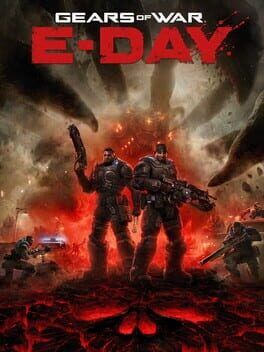
Hands-on reports say Gears of War: E-Day's Horde Siege turns classic wave survival into 12-player objective co-op, with extraction, class roles, and big boss pressure.
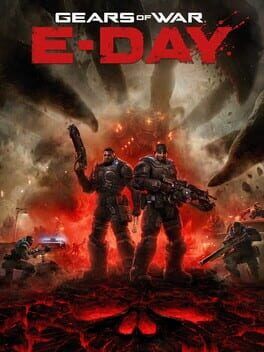
Image: IGDB
Store links: Gears of War: E-Day on Steam
Horde Siege is the clearest multiplayer swing in E-Day so far
The strongest confirmed development from the latest Gears of War E-Day preview cycle is that The Coalition is not treating Horde as a simple wave room this time. Multiple outlets that attended Xbox preview sessions describe Horde Siege as a 12-player PvE mode built around three four-player squads, larger maps, rotating objectives, defenses, class abilities, boss invasions, and extraction. That is a big structural change for Gears Horde mode, and it creates the central tension around E-Day’s multiplayer: The Coalition is chasing the panic and attrition that made classic Gears co-op work, while rebuilding the mode with modern live-service-adjacent pacing hooks.
MonsterVine said it played about six hours across Horde Siege and multiplayer, while Eurogamer said technical issues limited its Horde Siege time to a little over two hours. GameSpot, Pure Xbox, Insider Gaming, and DayOne also reported hands-on time with the mode. The consistent read across those previews is that Horde Siege is the showcase piece of E-Day’s multiplayer, even from writers who still have concerns about whether the broader game feels fully like old Gears.
That matters for lapsed series fans because Horde has always been one of the franchise’s cleanest tests. Strip away campaign spectacle and PvP wall-bounce ego, and Gears lives or dies on pressure: the snap into cover, the weight of a reload, the mistake that gets a teammate downed, and the dirty little decision to hold a lane for three more seconds or rotate before the Locust crush the angle. The hands-on reports suggest Horde Siege is trying to bring that pressure back at a larger scale without abandoning the close-range brutality that built the series.
The new structure is three squads fighting the same invasion from different angles
The basic co-op structure is now much wider than classic Horde. MonsterVine reported that a Horde Siege lobby contains 12 players split into three teams, while GameSpot and Pure Xbox also described three squads of four operating across large maps. DayOne framed the mode as constantly running drop-in and extract-out servers, with rounds lasting roughly 20 minutes during its preview, though that should be treated as a preview-session observation rather than a final rule for every playlist.
Instead of spawning into one defensive pocket and surviving a fixed wave count, squads are sent across a sprawling district with primary and secondary objectives. Eurogamer said squads begin in one area and receive objectives that move them elsewhere, with main tasks often built around a data-collecting device called the R.I.G. Sometimes that means defending it, and sometimes it means luring Locust out to recalibrate it. Pure Xbox cited objectives such as bomb defusal, destroying enemy intelligence, and assassinating high-value targets. DayOne similarly listed point defense, item delivery, assassinations, and other tasks.
The shared map is the key design shift. MonsterVine noted that players can interact with the other squads, but that running together all the time can work against the broader objective flow. GameSpot said its group learned over time how to interact with other squads during side activities. The best use case, according to several reports, is convergence: squads split to clear objectives and build strength, then collide when the map throws something big enough to demand all hands.
That is a smart shooter structure if it holds up under real matchmaking. Four-player squads keep the readable comms and revive responsibility that Gears needs, while the 12-player layer gives the battlefield a sense of an actual Locust assault. The risk is obvious too. If random squads ignore shared pressure points, or if objectives pull teams too far apart, Horde Siege could become three separate co-op runs happening near each other. MonsterVine’s preview is blunt on this point: the 12-player lobby felt most meaningful during the Invasion boss event, when everyone had a clear reason to collapse onto the same fight.
Classes, perks, and weapon parts push Horde toward a longer co-op loop
The class setup is one of the most concrete changes reported across the previews. MonsterVine and DayOne both identified four classes: Assault, Breacher, Marksman, and Medic. MonsterVine described Assault as a midrange fighter, Breacher as close range, Marksman as long range, and Medic as the sustain role. Each class has a tactical ability. MonsterVine said Assault deploys a stun, Breacher can heal itself, Marksman can reveal enemy positions, and Medic can heal or revive teammates. DayOne named some of those tools more specifically, including Assault’s Sonic Disruptor, Breacher’s Adrenaline Injector, and Marksman’s Pulse Drone.
Progression is layered on top. MonsterVine reported shared XP that transfers between the four classes, with higher levels unlocking more weapons and better gear. DayOne said the preview only exposed part of the unlock pool, with the base game planned to have a 50-level account cap and separate leveling for each class. According to DayOne, levels unlock weapons, ordnance, and mods. Those details came from preview access, not a final public progression breakdown, so the exact tuning could still change before launch.
Weapon Parts are the most interesting and potentially divisive piece. Eurogamer said completing side objectives can award Weapon Parts, but those parts are useless during the current round and must be extracted successfully before they can be used later for weapon upgrades. Pure Xbox said Weapon Parts can be scavenged from supply drops or earned through objectives, then used to improve gear, including accuracy boosts or adding a bayonet to a Gnasher. MonsterVine also mentioned attaching a bayonet to the Gnasher, letting it spear enemies in a way that recalled the Retro Lancer.
That gives Horde Siege a meta layer classic Horde did not have in the same way. The upside is retention and ownership. A squad has a reason to push side objectives even when the main defense is available, and players have something to bring back after extraction. The danger is grind pressure. Gears is at its best when the fight feels fair and readable, not when power creep muddies the line between skill, build, and time investment. None of the previews provide enough final tuning data to judge that yet, but the extraction-based upgrade loop is the part lapsed fans should watch closest.
Pacing sounds less like endless waves and closer to battlefield triage
Classic Horde pressure came from endurance. You held a position, counted ammo, repaired defenses, and tried to survive the next escalation. Horde Siege appears to stretch that pressure across a larger tempo. Eurogamer specifically called out quieter exploration between fights, saying secondary objectives create reasons to visit areas players might otherwise ignore. That is a sharp contrast with the old unrelenting wave rhythm.
The previews still make clear that defensive Gears is alive inside the new format. MonsterVine said squads prepare defended areas by buying tools such as barbed wire, dummies to confuse enemies, and mini mortars, then survive waves until the mission completes. Pure Xbox described hunkering down in locations such as a bistro district and a destroyed university campus. GameSpot said squads fight wave after wave of Locust before extraction. So the cover-and-hold identity is still present, but it is now one phase in a larger run rather than the whole mode.
Side objectives appear to drive escalation. Eurogamer compared the flow loosely to MOBAs because clearing side objectives awards Squad Perks, in-match stat modifiers that help squads get stronger for bosses and future waves. MonsterVine said completing a main mission grants a buff to the entire squad for the remainder of the game. GameSpot also reported squad perks from side objectives.
From a shooter pacing standpoint, that could be the right modernization. Gears combat needs compression, but it also needs release valves. If every minute is a meat grinder, the shotgun stops feeling like a decision and starts feeling like routine. Horde Siege’s loop of rotate, scavenge, defend, converge, and extract could make the pressure spike harder because players have something to lose and somewhere to be. The preview reports are positive on that rhythm, but they are still previews. The open question is whether the final maps and objective pool have enough variety after dozens of runs.
The boss invasions are where the 12-player promise seems to click
The clearest shared high point across the Gears of War E-Day hands-on reports is the invasion-style boss encounter. MonsterVine said its Invasion event happened once, spawning a giant boss that forced all three teams to work together. In that session, a Corpser rose from the ground with Boomers and other Locust alongside it. Pure Xbox also cited massive invasion bosses such as the Corpser and Brumak, while GameSpot described joining another squad to take down a huge Brumak.
That is the part of Horde Siege that sounds most aligned with E-Day’s setting. The game is set during Emergence Day, humanity’s first encounter with the Locust, as GameSpot summarized in its preview. A mode about squads spread across a city, scrambling between defensive pockets and suddenly getting dragged into a map-wide monster fight, is a strong mechanical match for that premise.
It also addresses a long-running Horde limitation. Traditional Horde is intimate and readable, but its scale is often implied by audio, skyboxes, and wave counts. Horde Siege seems designed to make scale functional. Three squads are not there for decoration if the map periodically produces threats that require cross-squad firepower, revives, and positioning. MonsterVine’s caveat is useful here: outside the boss event, it did not always feel necessary to run with the other teams. That could be good design if the goal is squad autonomy, or a missed opportunity if the mode rarely demands coordination.
For lapsed fans, the boss layer is the comeback hook. The series does not need to imitate every modern co-op trend to feel current. It needs moments where a squad gets squeezed, burns utility, rotates under fire, and survives because the players made the correct ugly choice. The reported Corpser and Brumak encounters sound like the closest Horde Siege gets to that old Gears panic, scaled up for a bigger lobby.
Gunfeel and movement are being modernized without fully cutting the old weight
Several previews point to E-Day changing movement while trying to preserve the franchise’s heavy combat feel. GameSpot reported that E-Day’s core gameplay was built from the ground up, with movement feeling more fluid and natural while characters still retain the weighty feel associated with Gears. GameSpot also said updated controls are available, with a legacy layout option for purists. Insider Gaming reported a new slide mechanic and said movement felt smoother during its session.
Pure Xbox was more conflicted. It called Horde Siege the highlight of the preview, but said the wider multiplayer left it wondering whether E-Day has an identity crisis and whether it still feels like Gears. That concern matters because Gears movement is a competitive language. Small changes to slide timing, cover magnetism, roadie run, shotgun spacing, and input layouts can reshape the whole skill curve.
The hands-on reports included Versus as well, but the assignment here is Horde Siege, and Horde may be where the new movement has the cleanest runway. Traversing a large Kalona district between objectives gives the mobility changes room to breathe, as Pure Xbox noted. Faster repositioning can support objective PvE without turning every fight into twitch chaos. The test will be whether close-range Locust pressure still punishes bad routes. If players can slide out of every bad decision, Gears loses teeth. If movement simply makes rotations less sticky while cover still matters, that is a healthy update.
On gun identity, the reported details are reassuring. DayOne said Assault starts with a Prototype Lancer, Breacher uses a Gnasher shotgun and Hammerburst rifle, and Marksman can run a Prototype Lancer and Longshot. GameSpot said familiar fan-favorite weapons return. MonsterVine and Pure Xbox both highlighted the bayonet Gnasher upgrade, which is exactly the kind of ridiculous, violent tool that fits Gears when it is balanced by risk.
Preview enthusiasm is real, but the final questions are practical
The overall tone of the Gears E-Day preview cycle is positive for Horde Siege, but not clean enough to call the comeback locked. GameSpot said Horde Siege feels like a proper evolution of Horde. Pure Xbox said it expects to spend far more time with this version than previous Horde modes. DayOne called the mode fantastic after early sessions. Eurogamer described it as possibly the most revolutionary Horde yet, while also saying it left questions unanswered. Insider Gaming found signs of promise but kept broader concerns about the game.
There are also preview reliability notes worth keeping in view. Eurogamer reported account authentication and build encryption issues on two occasions, limiting its time and making the event unusually disorganized compared with past Xbox digital previews it had attended. That does not prove anything about the final game’s online stability, but it is relevant for a co-op mode built around 12-player sessions, extraction, progression, and cross-squad events. Netcode, reconnection behavior, host handling, and reward protection after disconnects will matter a lot here. The provided sources do not confirm those details.
Release timing also needs careful wording. GameSpot says Gears of War: E-Day is dropping in October, while Windows Central’s supplied source text includes a link line stating the game is slated for October 6. DayOne says a multiplayer beta is set for August and that three Horde Siege maps are planned for launch. The source material provided here does not include a direct Xbox store listing, Steam page, or publisher press release confirming price, final platforms, PC requirements, beta access rules, or final map count, so those remain outside what can be firmly reported from this packet. Insider Gaming says E-Day is the first mainline title in the series to launch day one on Xbox Series X|S and frames it as a return to first-party exclusivity after Gears of War: Reloaded reached PlayStation, but platform availability should still be checked against official Xbox listings before purchase planning.
For lapsed Gears players, the practical read is simple: Horde Siege is the mode to watch. The reported structure brings back defensive pressure, class teamwork, Locust spectacle, and ugly close-range fights, then adds extraction and objective routing to give squads a reason to move. That could be the Gears of War comeback co-op needed, especially for players who bounced off later entries or treated Horde as a side dish. But the final verdict depends on launch tuning: how grindy Weapon Parts feel, how often squads truly cooperate, whether maps stay fresh, and whether the online layer holds when public lobbies start farming Kalona for real.