
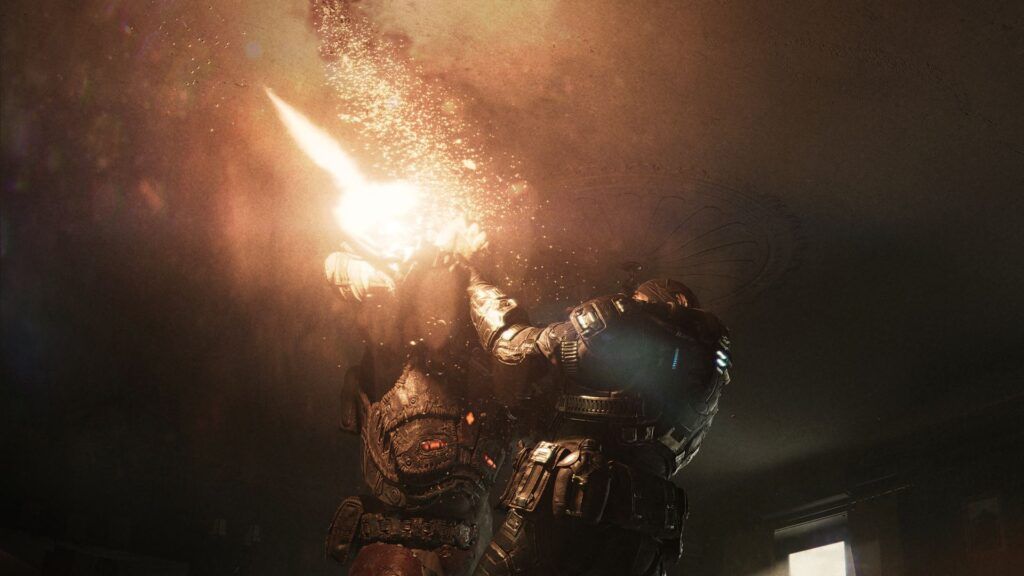

A reported Gears of War E-Day cost of more than $500 million before marketing has turned Xbox’s biggest exclusive push into a test of Game Pass economics, platform strategy, and blockbuster risk.
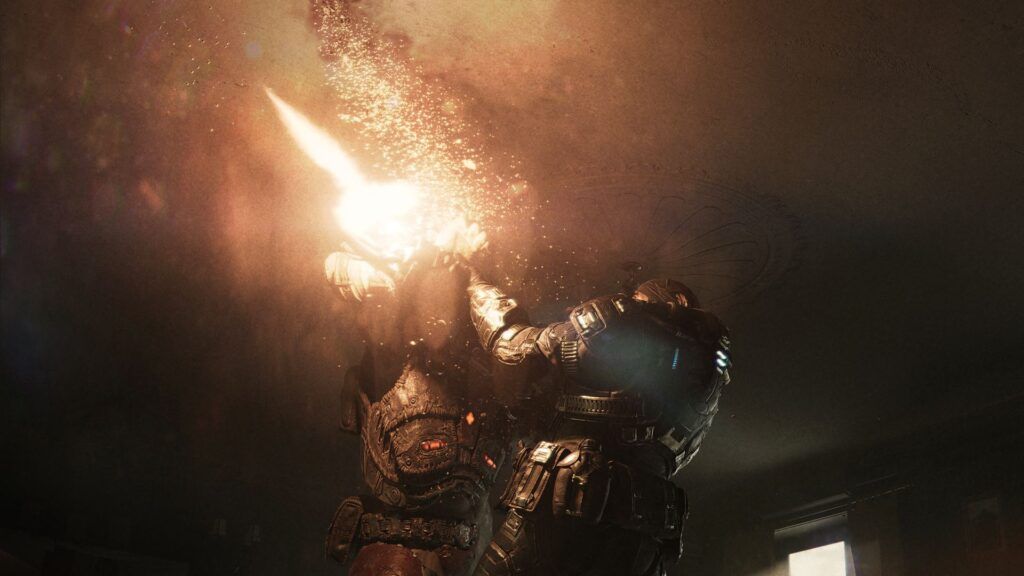
Image: wolfsgamingblog.com
A half-billion-dollar report with one very large caveat
Gears of War: E-Day reportedly cost more than $500 million to make before marketing, according to Kotaku, which cited one unnamed source familiar with Xbox’s business. Microsoft did not respond to Kotaku’s request for comment, and GameSpot separately said it had contacted Xbox about the reported budget.
That caveat matters. The Gears of War E-Day budget is not an official number from Microsoft, Xbox, or The Coalition. Kotaku’s report does not include a cost breakdown, and the reporting around the figure is already tangled in a key accounting question: does the number represent the game itself, or does it fold in broader studio and technology costs tied to The Coalition?
GameSpot reported that both Kotaku and Chris Dring of The Game Business pointed to a $500 million figure. GameSpot also cited Windows Central’s Jez Corden, who said the figure is “not wrong,” but that his own sources could not definitively say whether it covers only the game’s budget or also additional costs tied to running The Coalition. Earlier, after Insider Gaming’s Tom Henderson said in June that he had heard E-Day’s budget was above $400 million, Corden disputed that framing on the Xbox Two podcast, arguing that The Coalition’s role inside Xbox complicates any clean read of the number.
So the confirmed fact is narrower than the headline shock suggests: multiple reports are now circling an extraordinary Gears of War E-Day cost, with Kotaku specifically saying it was over $500 million before marketing, but Microsoft has not verified the figure and the accounting boundaries remain unclear.
The Coalition’s role makes the budget argument messier
The most important dispute is not whether E-Day was expensive. The available reporting points in that direction. The dispute is what Xbox counted when money was attached to the project.
Corden’s pushback, as summarized by Wolf’s Gaming Blog and GameSpot, is that The Coalition is not simply a one-game studio in the narrowest sense. Corden described the team as technological support for Xbox, with work connected to development tools, Unreal Engine, and assistance for other Xbox projects. If those costs are booked near E-Day, a raw figure can make the game look like a larger single-product bet than it actually was.
That does not make the spending irrelevant. Tools, engine work, pipeline improvements, and studio overhead are real development costs. A feature or tool built during E-Day production can still benefit other Xbox teams later, but it still had to be funded somewhere. From a strategy angle, this is the same problem publishers face when a studio becomes both a content team and a platform technology hub. The budget line stops behaving like a clean box score.
The sharper question is whether Xbox expected E-Day itself to carry the full commercial burden. Kotaku’s source reportedly said E-Day was unlikely to recoup its costs regardless of platform mix, but that as a console exclusive it could help rebuild Xbox user activity in key areas. That framing turns the Gears of War report from a simple “too expensive” story into a portfolio strategy problem. If the game is partly a flagship, partly a Game Pass driver, partly a technology investment, and partly an exclusivity statement, then judging it only by unit sales is incomplete. Judging it without unit sales is also risky.
Early sales estimates make the risk visible
The tension is sharpest when the reported budget is placed beside early performance estimates. Alinea Analytics estimated, as cited by Kotaku, Wolf’s Gaming Blog, and GameSpot, that Gears of War: E-Day sold 230,000 copies in its first week. Kotaku said Alinea estimated $37 million in revenue, with a significant share coming from Game Pass subscribers buying the $30 Premium Edition Upgrade for early access.
Wolf’s Gaming Blog cited Alinea’s October 9 estimate that E-Day had sold 168,000 copies on Steam and 62,000 across Xbox console and PC. The same report said Alinea estimated 1.7 million people had accessed the game through Game Pass, including 722,000 who paid for the $30 upgrade. GameSpot described the audience as nearly 2 million people out of the gate, while noting that the boxed-sale style number does not tell the whole story because E-Day is included with Xbox Game Pass.
That distinction is the heart of the Xbox exclusive cost debate. If E-Day were evaluated like a traditional premium-only blockbuster, 230,000 reported early sales against a reported development cost north of $500 million would look brutal. If it is evaluated as part of a subscription ecosystem, the calculation becomes murkier. Game Pass creates recurring revenue and changes player behavior, but it also makes direct game-by-game profitability harder to read from the outside.
GameSpot noted that Xbox Game Pass generates almost $5 billion annually based on the latest data it cited, and that a $500 million development budget would equal about 10% of that annual Game Pass revenue. That comparison does not prove E-Day is profitable or unprofitable. It does show the scale of the bet. A single exclusive with a reported budget at that level has to justify itself through a combination of sales, upgrades, retention, engagement, brand value, and platform activity.
Exclusivity is the pressure point, especially with PS5 absent
E-Day’s platform strategy is the part of the story with the most obvious business consequences. GameSpot reported that the game was expected to come to PS5 and that Microsoft’s own presentational materials showed that version, but E-Day did not release on Sony’s console. GameSpot also cited reports that Microsoft canceled a PS5 edition late, while noting Xbox denied that skipping PS5 was a last-minute decision.
That leaves an unresolved conflict. The public outcome is clear: E-Day launched without PS5. The path to that outcome is not settled by the source material. The result, however, is easy to analyze. If the reported budget is even close to accurate, keeping the game away from PlayStation removes a major pool of potential premium buyers at the exact moment Microsoft would need scale.
Industry analyst Mike Futter reacted to Kotaku’s report by saying that console exclusivity “simply does not make sense right now,” even if the development budget were half the reported amount, according to GameSpot. That is an interpretation, not a financial disclosure, but it captures the central market pressure. Development costs have risen to the point where the old exclusive playbook has to work harder. A platform holder can still choose exclusivity to strengthen its own ecosystem, but that choice has an opportunity cost.
The complication is that Xbox’s strategy has been moving in several directions at once. GameSpot reported that Xbox CEO Asha Sharma has said one of her ambitions is to bring back exclusives, following prior leadership under Phil Spencer and Sarah Bond embracing multiplatform releases. E-Day now sits directly inside that strategic pivot. If it drives Game Pass engagement and Xbox activity, exclusivity can be defended as an ecosystem move. If early momentum fades and premium sales remain modest, the decision becomes much harder to justify.
A strong reception does not automatically solve the math
The sources describe E-Day as a well-received release, but positive reception and blockbuster economics are no longer the same conversation. Kotaku called Gears of War: E-Day a terrific game and said it has the highest Metacritic score for the franchise since the original Xbox 360 trilogy. GameSpot said the game received generally solid review scores and pointed to its own 7/10 review.
That matters because the reported budget discussion is not built around a failed product. The pressure exists even with good reviews, a recognizable brand, returning characters, and Game Pass access. In strategic terms, that is the alarming version of the problem. If a major first-party franchise can launch well critically and still face questions about recouping a reported half-billion-dollar development cost, the ceiling for acceptable blockbuster spending may be shifting.
The comparison to Gears 5 adds useful context. Kotaku noted that Microsoft publicly shared launch metrics for Gears 5 in 2019, saying that entry reached more than 3 million players at launch and doubled the first-week debut of Gears of War 4. For E-Day, Microsoft has not released official performance metrics in the source material provided. That silence does not prove poor performance, but it leaves outside estimates from Alinea carrying much of the public discussion.
For players, the practical read is simpler. E-Day is available through Game Pass, and Alinea’s estimates suggest a large share of early access came through that route rather than standard purchases. The $30 Premium Edition Upgrade appears to have been a meaningful revenue lever among subscribers, based on the reported 722,000 upgrade figure cited by Wolf’s Gaming Blog. Anyone deciding whether to buy outright or subscribe should treat the game less like a traditional retail-only launch and more like a layered Xbox release, where access, upgrades, and platform choice all change the value equation.
The next phase depends on transparency and tail performance
The unanswered questions are now bigger than one launch window. Microsoft has not confirmed the reported Gears of War E-Day budget, has not provided an official cost breakdown, and has not released its own full performance metrics in the material cited here. Without those numbers, outside observers are left comparing reported spending, third-party sales estimates, Game Pass reach, and platform-strategy signals.
The long tail will matter. GameSpot noted that the game’s early audience number is sure to grow over time, and that is a fair expectation for a Game Pass title. Subscription availability can extend discovery, seasonal updates can revive attention, and premium upgrades can keep generating revenue after launch. But a reported pre-marketing cost above $500 million sets a high bar. The longer the tail needs to be, the less room there is for weak retention or a quiet content plan.
From an Xbox strategy standpoint, E-Day is now a case study in how first-party blockbusters are judged when the platform holder also runs a subscription service. A premium publisher would mostly chase sell-through. A subscription platform can justify a game through engagement, retention, upgrades, and brand strength. The danger is that those benefits are harder to measure publicly, which creates a vacuum quickly filled by leaked budgets and analyst estimates.
The cleanest conclusion is also the most cautious one: the reported Gears of War E-Day cost is unconfirmed by Microsoft, but the consistency of recent reporting has made the number impossible to ignore. If Xbox wants exclusives to anchor its future, E-Day shows the burden those exclusives now carry. They have to satisfy fans, validate Game Pass economics, support hardware and PC engagement, and make sense against development budgets that may be approaching movie-franchise scale before marketing even begins.