
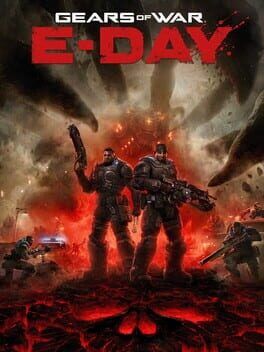

Reports put Gears of War: E-Day near $500 million, but follow-up reporting says that figure may include Unreal Engine support, canceled prototypes, and other Xbox studio work by The Coalition.
Image: IGDB
Store links: Gears of War: E-Day on Steam
The $500 million number is real to multiple reporters, but the label is the problem
The loudest number around Gears of War: E-Day is now half a billion dollars. Kotaku reported that the game cost more than $500 million before marketing, IGN cited Bloomberg reporter Jason Schreier saying the figure was real, and GameSpot reported that Windows Central’s Jez Corden had spoken with sources about the money paid to The Coalition across several years. The immediate tension is simple: if readers treat that as a clean game budget, E-Day looks like one of the most expensive shooters ever made. If the figure also covers The Coalition’s Unreal Engine work, support for other Xbox studios, and at least one canceled prototype, the story changes fast.
That distinction is the center of the current Gears of War E-Day budget debate. The most careful version of the reporting does not say Microsoft cut one $500 million check for one campaign, one multiplayer suite, and one launch. GamingBolt’s summary of Corden’s reporting says the amount was allocated to The Coalition between Gears 5 and Gears of War: E-Day, with disagreement among sources about how much belonged to E-Day itself versus broader studio operations and Xbox technology contributions.
For a shooter audience, this is not accounting trivia. Budgets get used to judge creative risk, multiplayer support, platform strategy, and whether a studio is in trouble. A number that includes engine engineering and cross-studio support can make one game look bloated even if some of that spending helped other Xbox projects ship or build their tech base.
What is reported, what is confirmed, and where the sales talk gets shaky
The core facts remain reported, not confirmed by Microsoft. Kotaku’s Ethan Gach reported that E-Day cost over $500 million to develop before marketing, according to an unnamed source familiar with Xbox’s business. IGN said it asked Microsoft for comment and had not received a response at the time of its report. GameSpot also framed the amount as an apparent production cost based on recent reporting, not an official disclosure.
The sales side is equally messy. IGN cited The Verge reporting that E-Day had sold over 400,000 copies across console and PC. Other analysis in the source material points to Alinea Analytics estimating around 230,000 paid copies earlier in the launch window. Those figures are not the same, and they are not official. They also measure only sales, which is a limited lens for a Microsoft first-party release that also launched day one on Xbox Game Pass.
That Game Pass factor is where a lot of bad math enters the room. A copy sold at retail, a PC purchase, a subscriber playing through Game Pass, and a subscriber buying a premium upgrade do not represent the same revenue path. The source material notes that E-Day was available on Xbox Series X|S and PC, and IGN says it launched day one on Xbox Game Pass. Shattered’s analysis adds that the standard edition was priced at $70 and that Alinea described a $30 Premium Edition upgrade for Game Pass subscribers with early access. Those details matter because a paid-copy estimate can miss a large share of the player base while still failing to prove that Microsoft got a good return.
So the cleanest wording is this: the Gears E-Day 500 million rumor has been backed by multiple reporters as a real internal figure, but Microsoft has not confirmed it, and follow-up reporting disputes the idea that the whole amount should be assigned to E-Day as a single-game production bill.
The Coalition was carrying Xbox’s Unreal Engine work, according to the reporting
The strongest correction to the headline number comes from the technical side. Wolf’s Gaming Blog cited former Xbox senior product manager Derek Reese, who wrote on Bluesky that much of the cost came from The Coalition being responsible for the Microsoft branch of Unreal and a flagship title. GamingBolt also cited Reese’s comment and Corden’s reporting that The Coalition had been helping other Xbox studios with Unreal Engine work.
That is the key difference between a normal game budget story and The Coalition Unreal Engine budget question. The Coalition is not described in these reports as a studio that spent years only building E-Day maps, weapons, AI encounters, and cinematics. GameSpot’s summary of Corden’s reporting says the studio worked with Epic Games on Unreal Engine 5 demonstrations, including The Matrix Awakens and Alpha Point, then used that knowledge to support other Xbox teams.
This kind of work is expensive, and it is hard to assign cleanly. Engine support is not as visible as a shotgun reload animation or a multiplayer map rotation, but it can shape how other teams handle lighting, streaming, animation, tools, performance profiling, and platform certification. If a studio is effectively acting as an internal technology group while also preparing a flagship shooter, the payroll and overhead can land in one place even when the benefits are spread across multiple projects.
That does not make the spending good or bad on its own. It does mean the phrase “E-Day cost $500 million” may be too blunt. The reporting supports a narrower claim: The Coalition had roughly that scale of spending allocated across the post-Gears 5 period, and sources disagree over how much of it should be charged to E-Day specifically.
A canceled prototype and support work complicate the timeline
The timeline also weakens the simple one-game reading. GamingBolt reports, citing Corden, that The Coalition spent time after Gears 5 in a dormant state while Microsoft figured out the studio’s future, with the period also shaped by the global pandemic and the departure of longtime Gears figure Rod Fergusson. GameSpot’s summary says that once Mike Crump was appointed studio head, development on Gears of War: E-Day kicked into full gear.
Between those points, the source material says The Coalition worked for more than a year and a half on a prototype that was ultimately canceled. That matters because canceled work does not disappear from the books. If staff were building a separate concept, exploring mechanics, developing tools, or solving technical problems for a game that never shipped, that cost can still become part of the broader studio spend attached to the years between Gears 5 and E-Day.
The support list is also substantial. GameSpot reports that The Coalition assisted on Avowed, Hellblade 2, Clockwork Revolution, State of Decay 3, Grounded, Grounded 2, and an upcoming StarCraft project at Blizzard. GamingBolt lists similar support work and says The Coalition continued contributing to projects while also working as the lead engineering team for Microsoft’s branch of Unreal Engine. Wolf’s Gaming Blog points to public evidence from Xbox Wire that Undead Labs drew on The Coalition’s Unreal Engine 5 expertise for State of Decay 3, and says The Coalition appears in credits for Avowed and Hellblade 2.
That is the throughline missing from the sharpest budget takes. If one studio’s budget line includes a flagship game, a canceled prototype, Unreal Engine branch work, tech demos, and support for other Xbox studios, then using the total to grade only E-Day’s commercial performance is a rough cut. It may still be an alarming total. It is also a different claim from saying every dollar bought E-Day content.
Low reported sales would still create pressure, even with the better context
The correction does not turn the story into good news for Xbox. If E-Day sold around 400,000 copies across Xbox and PC as The Verge reportedly claimed, or if earlier estimates around 230,000 paid copies were close at that stage, those are modest numbers for a marquee Gears release. IGN called the sales figure poor for a triple-A game of the series’ scope and prestige, while also noting the Game Pass launch. GameSpot pointed to additional context: E-Day was released only for PC and Xbox Series X|S, launched into a crowded release period, and was available through Game Pass.
From a shooter-market view, platform reach and timing matter. A competitive or co-op shooter lives on population, matchmaking health, post-launch cadence, and whether friends can actually play together. The source material does not provide E-Day’s concurrency, retention, attachment rate for upgrades, or Game Pass engagement, so no one outside Microsoft can close the revenue equation. Paid copies alone are a weak stat for a subscription-first first-party game, but they are still a signal when attached to a premium franchise.
There is also the business backdrop. GameSpot quotes Corden saying he felt the $500 million figure being shared internally could be used to justify possible cuts, layoffs, or worse, though he added that he had not heard Xbox was planning to close The Coalition. GamingBolt similarly raised the possibility that Xbox cuts could put The Coalition under scrutiny, while framing that as a concern around rumored future cost-cutting, not a confirmed plan.
That is the sober read. The Gears of War E-Day report may be misleading if it treats the full $500 million as one game’s budget, but it still points to a brutal problem for big-budget North American development. Even when a studio is doing valuable engine and support work, the public scoreboard usually reduces everything to launch sales, Metacritic chatter, Game Pass narratives, and whether the next layoff wave is coming.
Players should separate buying advice from budget drama
For players, the practical takeaway is to avoid letting the accounting rumor do work it cannot do. The available sources say E-Day released on Xbox Series X|S and PC, with IGN reporting a day-one Xbox Game Pass launch. Shattered’s source text says the full release followed on October 6, 2026, after early access tied to a Premium Edition upgrade for Game Pass subscribers. None of the provided reporting gives performance results, netcode quality, campaign length, weapon balance, map quality, or long-term multiplayer population data.
That means the budget story should not decide whether you play it. If you have Game Pass, the cost of sampling E-Day is different from buying a $70 standard edition. If you are buying outright, you should look for current player counts, technical analysis, and post-launch support details before treating the game like a safe full-price shooter purchase. The budget rumor can explain why Xbox watchers are tense, but it does not tell you whether the Lancer feels right, whether cover movement holds up, or whether matchmaking has enough bodies in your region.
For readers tracking the business side, the cleanest question is no longer “did E-Day cost $500 million?” The better question is how Microsoft allocates The Coalition’s costs across game development, Unreal Engine support, canceled work, and assistance to other studios. Until Microsoft comments or a fuller breakdown appears, the $500 million figure should be treated as a reported internal spending number tied to The Coalition’s wider role, not a fully verified single-game budget.
The unanswered question is allocation, not whether the number sounds huge
The current reporting has narrowed the real mystery. The half-billion figure has enough backing from named reporters and cited sources that it cannot be dismissed as random message-board noise. At the same time, Corden’s reporting, Reese’s public comment, and the list of Coalition support work all point in the same direction: the spending bucket appears broader than Gears of War: E-Day alone.
That leaves the question Microsoft has not answered. How much of that reported total went into the shipped E-Day product? How much funded The Coalition’s Unreal Engine responsibilities for Xbox? How much was absorbed by the canceled prototype? How much should be considered shared R&D for other first-party games rather than the cost of one shooter?
Without those answers, the headline number is useful as a warning about scale but weak as a verdict. E-Day may still have underperformed against Microsoft’s expectations. The Coalition may still face pressure in a cost-cutting environment. But the available source material supports a more careful conclusion: the $500 million figure may describe the weight Microsoft put on The Coalition across several years, not the price tag of one Gears game standing alone.