
What NetEase’s decision to pull funding from Nagoshi Studio means for Gang of Dragon, how externally funded AAA projects end up at risk, and why this move fits a wider retreat from big-budget development.
A Dream Project Hits A Wall
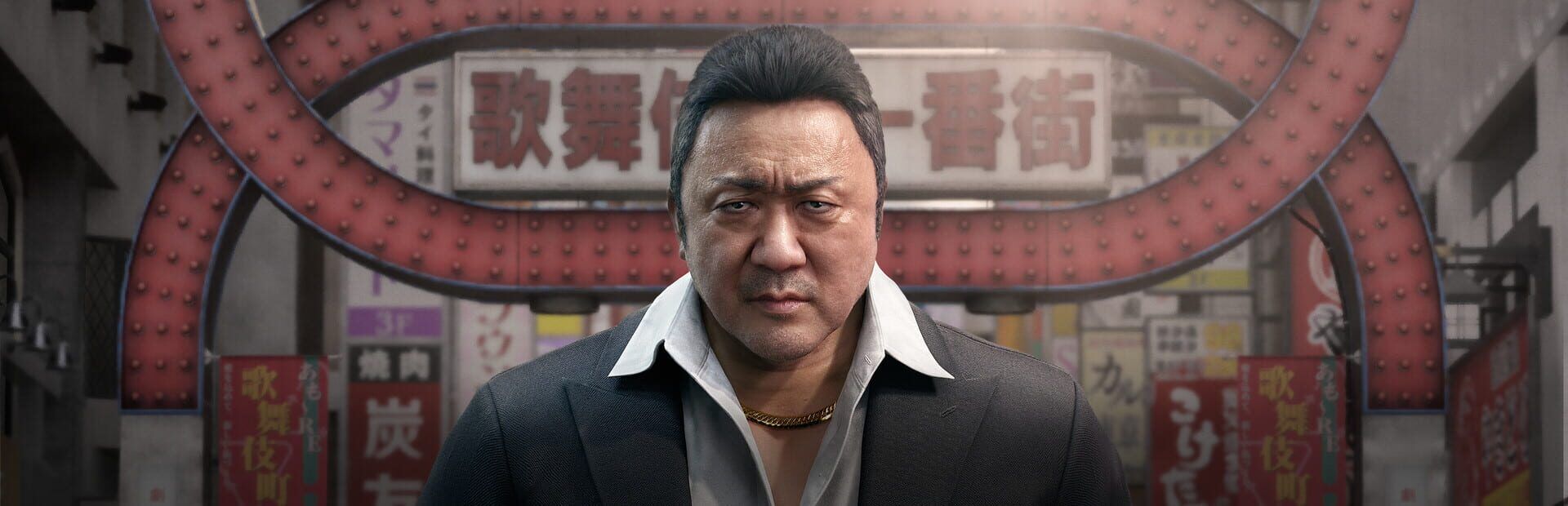
Gang of Dragon was pitched as exactly what fans expected from Toshihiro Nagoshi after Yakuza and Like a Dragon. A gritty crime drama set in a neon-drenched Tokyo district, fronted by Korean star Ma Dong-seok, built by a handpicked team under the new Nagoshi Studio banner. Revealed at The Game Awards 2025, it looked like a spiritual successor with a bigger budget and broader international ambitions.
Just three months later, that dream is hanging by a thread.
According to multiple reports drawing on Bloomberg’s investigation, NetEase has told staff it will stop financing Nagoshi Studio in May. Internally, developers were reportedly informed that Gang of Dragon would require at least another ¥7 billion, roughly 44 million dollars, to reach completion. Rather than commit to that final stretch, NetEase is exiting the project completely, and Nagoshi Studio is now described as facing possible closure.
For a debut title that had already reached a public reveal and was being positioned as a flagship console project, the timing could hardly be worse.
What NetEase’s Exit Means For Gang of Dragon
The immediate impact is brutal in its simplicity. Without NetEase, Gang of Dragon currently has no confirmed publisher, no long term funding source and no clear runway to ship. Nagoshi is reportedly seeking new investors or a buyout, but nothing appears to be close.
From a production standpoint, the loss of funding this late in development is particularly damaging. The expensive phase of AAA production is the back half, when a team is fully staffed up, content creation is peaking and technical polish, performance optimization and marketing planning overlap. Reports suggest Gang of Dragon was right in that zone when the extra 44 million dollar need came into focus.
If no replacement backer emerges quickly, there are a few likely scenarios.
The project could be frozen in place, with development halted but assets and code preserved in the hope of a rescue deal. This avoids burning additional cash but risks staff departures as developers seek stable employment elsewhere. It also complicates any eventual restart, because rebuilding a senior team around partially completed systems is rarely smooth.
Alternatively, if Nagoshi Studio itself is wound down, Gang of Dragon could be shopped as an asset package. Another publisher or platform holder might acquire the IP, tech and key staff, then either finish the existing vision or retool the project into something more manageable. That path is possible, but acquiring a nearly finished but expensive game is a narrower fit for most buyers than signing a project from day one around their own greenlight process.
The bleakest outcome is simple cancellation. If NetEase winds down the studio and retains ownership of the IP and code, and no external party is willing to buy at a viable price, Gang of Dragon may never see release despite the months or years of work already sunk into it.
In the short term, all three outcomes have something in common: uncertainty. Until funding is secured, the people building the game cannot count on long term employment, and the project itself exists in limbo.
Why Externally Funded AAA Projects Are So Exposed
Gang of Dragon’s crisis is not a simple story about an overambitious director or one capricious investor. It is a case study in how fragile externally funded AAA development has become.
Modern big budget console projects routinely take four to six years and absorb budgets well into nine figures when marketing is included. That scale pushes more veteran creators toward external capital, whether it comes from major publishers, platform holders or tech giants building content portfolios. The trade is straightforward: creative freedom and large budgets in exchange for giving up ownership and control over funding decisions.
Nagoshi Studio exemplified that model. After decades inside Sega, Nagoshi left for a new studio backed entirely by NetEase. The upside was clear: a clean slate, a global launch target and the ability to build a team and new IP without the constraints of an existing corporate catalog. The downside is equally clear now that the funding tap is turning off.
When a single external investor controls the studio’s runway, the project inherits the investor’s risk tolerance and timeline. Cost overruns that might trigger a difficult internal conversation at a platform holder can become a hard stop for an investor whose priorities have shifted. The moment NetEase concluded that the extra 44 million dollars was not worth it, Gang of Dragon’s status went from upcoming tentpole to distressed asset.
There are structural reasons these situations are becoming more common.
Budgets are front-loaded with preproduction and tooling, but the actual risk often only becomes fully visible once full production reveals the true scope of content, animation, voice acting and technical demands. If a game leans on expensive licensed talent, densely simulated city spaces or complex combat systems, any slip in schedule multiplies costs. By the time that reality surfaces, the investor has already spent tens of millions. Pulling out late is painful, but some will still decide it is better than chasing a moving finish line.
For independent or semi-independent studios, this creates a paradox. The very ambitions that attract outside capital also increase the odds of a late stage pullback. Unless contracts guarantee completion funding or include clear contingency plans, teams are effectively betting their long term survival on a partner’s shifting appetite for risk.
How This Fits NetEase’s Wider Retreat From Big Budget Development
NetEase’s decision does not exist in a vacuum. Over the last couple of years, the company has been steadily trimming its global development ambitions. Multiple reports and public statements have pointed to a strategy of pulling back from far flung, high cost console and PC projects, and focusing more on safer investments and live service titles with clearer monetization paths.
High profile external studios were once a key part of NetEase’s push to be seen alongside the biggest global game companies. Signing celebrated creators from Japan and Europe to new studios, bankrolling experimental AAA projects and funding splashy reveals at showcases and awards shows all served that goal.
Now, with Gang of Dragon, the calculus appears to have flipped. Instead of treating Nagoshi Studio as a long term brand-building investment, NetEase is looking primarily at short to medium term financial exposure. An additional 44 million dollars on a single premium console title, with no guarantees in a crowded market, becomes a risk the company no longer wants to hold.
For developers under the NetEase umbrella, the message is hard to ignore. If a studio led by the creator of Yakuza, attached to a game that already had global visibility, can still see its funding pulled three months after a major show reveal, few projects are truly safe. That perception alone can make it harder to recruit talent or pitch ambitious designs under the same banner.
The Human And Creative Cost For Nagoshi Studio
Behind the budget figures are the people at Nagoshi Studio who signed on precisely because they believed in a long haul project like Gang of Dragon. Reports indicate that staff were only recently informed of NetEase’s decision, and many now face the prospect of their debut title being shelved just as it was entering its most visible phase.
For Nagoshi himself, the stakes are uniquely high. Gang of Dragon was both a creative statement and a proof of concept that his work could succeed outside Sega’s ecosystem. A successful launch would have cemented Nagoshi Studio as a new pillar in the Japanese console scene. A cancellation, by contrast, raises difficult questions about whether similarly ambitious projects can be mounted without returning to more traditional publisher arrangements.
Fans are caught in the crossfire. Gang of Dragon’s reveal trailer suggested exactly the kind of stylish, melodramatic action that made the Yakuza series a cult phenomenon before it hit the mainstream. Seeing that momentum stall so abruptly underscores how little visibility players really have into the financial scaffolding that keeps large scale games alive.
Can Gang of Dragon Still Be Saved?
Despite the grim headlines, a complete write off is not guaranteed.
Interest from other publishers or platform holders is possible. Gang of Dragon already has a clear identity, a recognizable director and a level of production that made it showcase ready in December. For a company looking to strengthen its lineup with a ready made narrative action game, stepping in with completion funding and marketing support could make sense, particularly if the acquisition price reflects the distressed state of the asset.
The challenge is that any new backer would inherit not just the creative upside but the production risk that NetEase walked away from. That means very close scrutiny of the internal schedule, remaining feature set and technical state of the build. A new partner might demand cuts, redesigns or scope reductions to ship the game faster and cheaper, which could clash with the original vision that drew staff and fans in the first place.
There is also the possibility of a smaller scale revival down the line, if Nagoshi retains the ability to rework the IP. Systems, narrative concepts and character designs created for Gang of Dragon could be repurposed into a more modestly budgeted project at a future studio. This would not rescue the current build, but it could preserve some of the creative DNA.
Until a concrete deal is announced, however, the working assumption has to be that Gang of Dragon is at risk of never releasing in its current form.
What This Moment Signals For Big Budget Game Development
The situation around Gang of Dragon is a clear warning sign for externally funded AAA games. A high profile creator, a buzzy new IP and a major global investor are no longer enough to guarantee that a project will make it across the finish line once budgets climb past an uncomfortable threshold.
For studios, it highlights the importance of negotiating stronger protections in funding agreements, such as milestone structures that include completion guarantees, rights reversion if a publisher exits, or contingency access to key technologies and IP. Those clauses will not always be achievable, but recent events are likely to make developers more willing to walk away from deals that leave them completely exposed.
For players, it is a reminder that the trailers and showcases they see represent only a small slice of a much longer and more precarious journey. Gang of Dragon may still find a way to release, perhaps under a different label or in a reshaped form. But right now, the game stands as a symbol of how quickly even the most promising big budget project can find itself on life support when a single backer decides the numbers no longer add up.
Whatever happens next, the message to ambitious independent studios is sobering. In today’s market, the hardest part of shipping a new AAA IP may not be designing combat systems or writing scripts. It may be surviving your own funding model.