
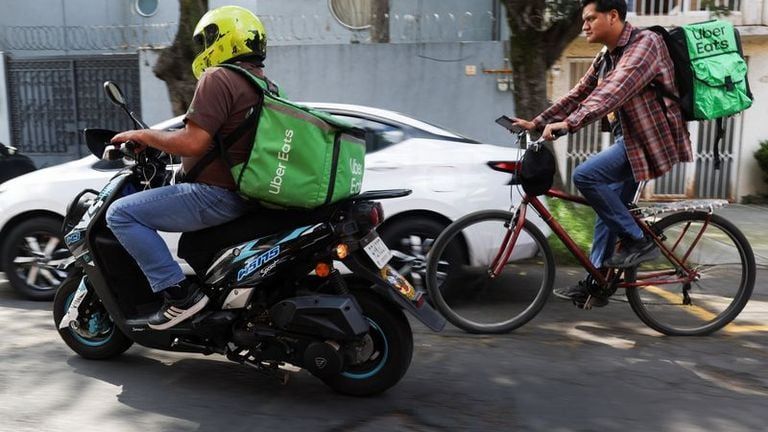

GameStop has joined Uber Eats nationwide, putting games, consoles, accessories, and collectibles in the delivery app as physical game retail keeps contracting.
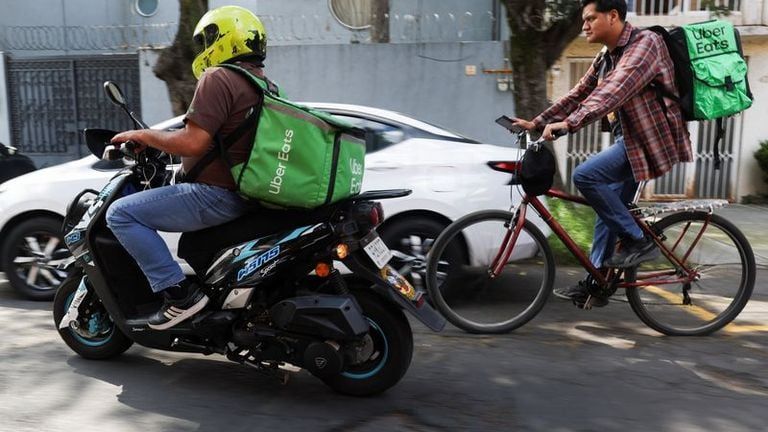
Image: it.marketscreener.com
GameStop enters the delivery lane as the disc aisle gets smaller
GameStop and Uber announced on July 15, 2026 that GameStop products are now available through Uber Eats nationwide, letting customers order video games, consoles, accessories, collectibles, and other items from local GameStop stores for scheduled or on-demand delivery. The announcement, issued by Uber Technologies and GameStop through Business Wire and Uber’s investor site, puts one of the most recognizable names in physical game retail inside an app built around speed, convenience, and impulse purchases.
The timing gives the rollout its edge. GameStop is expanding its storefront into delivery at the same moment that the traditional physical game business is under pressure. Polygon and GameSpot both framed the move against Sony’s recently reported plan to end physical disc production for new games in 2028, while Polygon also noted that many modern physical releases already arrive as boxes containing download codes rather than discs. GameStop is still selling games, but the battlefield around those games is changing fast.
That makes this partnership feel less like a side quest and more like a positioning move. Uber Eats gains another retail category with recognizable electronics and gaming inventory. GameStop gets a same-day channel for products that still benefit from immediacy: a controller before game night, a launch-day pickup, a last-minute gift, or a collectible someone would rather receive at the door than hunt down in person.
How GameStop Uber Eats ordering works
Uber’s press release lays out the basic flow. Customers open Uber Eats, go to the Retail or Electronics category, search for GameStop, browse available products, add items to the cart, choose a delivery time, place the order, and track the courier in real time. Uber says orders can be scheduled or placed for on-demand delivery from GameStop locations nationwide.
GameSpot checked the process inside the Uber Eats app and reported that the service behaves like a normal food order in key ways. Buyers can choose ASAP delivery or set a specific delivery time, then watch the driver’s progress through the app. GameSpot’s local app showed a $6 delivery fee, though that should be treated as one example rather than a universal price. Uber Eats fees vary by location, account, order size, promotions, and retailer setup.
The important practical limit is inventory. GameSpot reported that local inventories will vary, which is exactly the part buyers should pay attention to before treating this like a guaranteed launch-day solution. If your nearby GameStop has a console, controller, or boxed game in stock and it appears in Uber Eats, delivery may be an option. If the local store does not have it, the app will not magically turn the chain’s national inventory into same-day stock.
What buyers can actually order from GameStop on Uber Eats
The confirmed categories are broad. Uber and GameStop say customers can order video games, gaming consoles, accessories, collectibles, and more. Yahoo Finance’s publication of the Business Wire release identifies GameStop as a retailer of video games, trading cards, and collectibles, which tracks with the company’s wider shift toward physical products beyond boxed software.
GameSpot’s local Uber Eats listing showed a more concrete snapshot: Ubisoft’s newly launched Assassin’s Creed Black Flag Resynced, assorted collectibles, consoles including Switch 2, PS5, and Xbox Series X|S, and even Red Bull cans. That makes the “Uber Eats games consoles” pitch literal in at least some markets, though again, those were GameSpot’s observed listings and not a promise that every store will show every console.
For anyone searching “Switch 2 Uber Eats,” the cleanest answer is cautious. GameSpot saw Switch 2 listed through its local Uber Eats app, alongside PS5 and Xbox Series X|S. Uber’s announcement confirms consoles as a supported category. Neither source guarantees Switch 2 availability in every region or every GameStop location. If you are trying to score hardware, the app listing is the source of truth for your local store at that moment.
Convenience has a price, and early examples show the gap
Same-day delivery changes the rhythm of a purchase, but it can also change the final bill. Kotaku tested a local GameStop listing through Uber Eats and reported that a new PS5 copy of Assassin’s Creed Black Flag Resynced appeared in the app for $65, while the same game was listed at $60 at the local GameStop website. After fees, Kotaku said the Uber Eats total came to $85, roughly $20 more than picking up the copy in store.
That is one reported cart, not a full pricing survey. It does, however, show the tradeoff clearly. GameStop game delivery through Uber Eats is built for immediacy, not necessarily savings. A buyer replacing a dead controller before friends arrive may accept the premium. A buyer who can wait, drive to the store, or order through another retailer should compare the Uber Eats total against GameStop’s own listing before tapping checkout.
GameSpot’s $6 delivery-fee example and Kotaku’s $85 total also show that the headline price of the item is only the opening beat. Delivery fees, service fees, possible price differences, taxes, and tips can turn a $60 game into a meaningfully different purchase. The app makes the transaction frictionless, but buyers should pause at the cart screen the same way they would before buying a deluxe edition they did not plan on.
Uber gets another retail aisle, GameStop gets another front door
Uber describes GameStop as the latest retailer to join a marketplace that now includes thousands of storefronts across grocery, convenience, beauty, home improvement, office supplies, pet supplies, electronics, and other categories. GameSpot also notes that Uber Eats already includes retailers such as Best Buy, Home Depot, PetSmart, and Target. In that context, GameStop is part of Uber’s larger attempt to make the app a general on-demand shopping hub rather than a meal-delivery tool.
Hashim Amin, Uber’s head of grocery and retail for North America, said in the announcement that consumers increasingly expect gaming essentials and collectibles to be available on demand, citing examples such as replacing a controller before game night, picking up a new release on launch day, or grabbing a last-minute gift. That quote is the sales pitch for the partnership: gaming purchases often have a clock attached.
For GameStop, the move creates another path to customers without requiring them to walk into a mall, strip-center store, or standalone location. That matters because Polygon reported that GameStop shuttered nearly 400 physical stores at the beginning of 2026. A delivery partnership does not replace a store network, since it still depends on local GameStop inventory, but it can turn each participating store into a dispatch point for customers who were never going to make the trip.
The physical games problem follows GameStop into the app
The tension is that GameStop physical games are no longer the center of the industry the way they were in the Xbox 360, PS3, Wii, and early PS4 eras. GameSpot reported that after Sony’s plans to end physical game discs in 2028 became public, some observers expected bad news for GameStop because of its history selling boxed games. GameSpot also reported that GameStop’s stock did not fall after that news and instead rose, with one possible reason being that software is now the smallest part of GameStop’s business and the company has become more focused on collectibles.
Polygon made a similar connection, pointing to GameStop’s focus on physical products such as collectible card games as the disc business weakens. That helps explain why the Uber Eats catalog is not limited to new releases. The stronger version of this service may be a mixed cart: a controller, a Pokémon-related collectible, a trading card product, a headset, a figure, or a console accessory. Those items still fit the retail box and bag model, even if the games themselves keep sliding toward digital.
There is also a strategic backdrop around GameStop’s broader ambitions. GameSpot reported that CEO Ryan Cohen has continued pursuing an ambitious buyout of eBay, with eBay saying it does not plan to sell. Polygon reported Cohen attempted to buy eBay earlier in 2026 for $55.5 billion and that the offer was rejected. Investing.com reported that GameStop shareholders approved an amendment increasing authorized Class A common shares tied to the proposed eBay acquisition, while Cohen expressed willingness to take the offer directly to shareholders after eBay’s board rejected it. The Uber Eats deal is smaller than that corporate drama, but it points in the same direction: GameStop is looking for new distribution and resale angles as the old software rack loses force.
Who should use it now, and who should wait
For players, the service makes the most sense when time is the boss fight. If a controller breaks before a co-op session, if a gift is needed today, or if a local GameStop has a console in stock that would otherwise require a trip across town, Uber Eats can be a useful tool. The same goes for accessories and collectibles, where availability is local and speed may matter more than shaving every dollar off the total.
For planned purchases, the smarter move is comparison. Check the Uber Eats price, then check GameStop directly and any other retailer you would normally use. Pay attention to item price, delivery fee, service fee, taxes, tip, and arrival window. Kotaku’s reported Assassin’s Creed Black Flag Resynced example shows that the premium can be large enough to matter, especially for boxed games that are easy to pick up or ship.
The rollout is live now according to Uber and GameStop, but its value will vary store by store. The partnership gives GameStop a faster front door and gives Uber Eats another category with high-intent shoppers. It does not reverse the decline of discs, and it does not guarantee that every hot console or launch game will be waiting in your local app. It does make the modern shape of physical game retail clearer: fewer reasons to browse aisles, more reasons to turn nearby stores into instant-delivery nodes.