
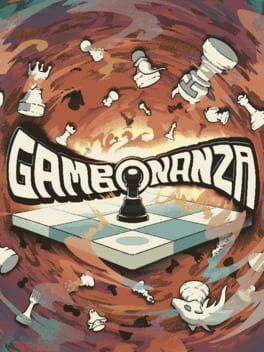

In a post-Balatro world, Gambonanza turns chess into a tiny-board roguelike deckbuilder. We dig into how it bends the rules, how runs are structured, and whether this is a sharp homage or just "Balatro but chess" – plus why mobile might be its natural home.
If Balatro proved anything, it is that you can take a rigid ruleset, shuffle it into a roguelike structure, and end up with something hypnotic rather than sacrilegious. Gambonanza aims to do the same for chess, but it does not just slap poker-style multipliers on an 8x8 board. It compresses, mutates, and weaponises classic chess until what is left feels closer to Shotgun King and Balatro meeting in a smoke-filled backroom.
A tiny, vicious board where checkmate does not matter
The first and most important twist is that Gambonanza is not about checkmating a king. Most runs play out on a much smaller board and your objective is to capture every enemy piece. That change alone tears away decades of opening theory and endgame patterns. Without a king to protect or hunt, you are playing tempo and trading efficiency more than lines you memorised on lichess.
The cramped board sells the roguelike tone. There is very little room to turtle up, pieces run into each other quickly, and sacrifices feel meaningful because every square is contested. It lands closer to Shotgun King’s dense danger puzzle than a traditional chess puzzle book. You still move like a rook or knight, but the context is so violent and constrained that familiar movement patterns feel newly risky.
This is also where the deckbuilding flavour seeps in. Rather than trying to replicate a full opening, Gambonanza is about short, sharp tactical bursts that you assemble from a growing pool of rules and modifiers. You are not learning decades of theory, you are learning the properties of this particular run’s messed up version of chess.
Gambits, reserves and tile upgrades instead of Jokers and hands
If Balatro’s heart is its Jokers, Gambonanza’s soul lives in its Gambits. These are the run-defining modifiers you draft between battles, the things that break the clean geometry of chess. Some strengthen specific pieces, such as a bishop that suddenly becomes a terrifying long range cleaner. Others toy with turn order, such as letting you skip an opponent’s move if you capture a piece with a pawn.
Individually these sound like cute variants. Layered together across a run they become the equivalent of a Balatro scoring engine, only here you are building a positional monstrosity. A pawn skipping enemy turns, sitting on a buffed tile, backed up by a superbishop lurking in reserve, is the sort of emergent combo that gives Gambonanza its pitch.
The reserve system is another smart twist on how a board game can behave like a deckbuilder. Instead of clinging to the pieces you were dealt, you can stash units off the board, then swap them in when the situation demands. It is reminiscent of sideboarding in a card game. You are effectively managing a hand of pieces, but information is perfect. Every trade or sacrifice is made with a future pivot in mind, and that extra layer of planning feels distinct from Balatro’s hidden draw pile.
Tile upgrades deepen that expression again. Certain squares can be enhanced to add effects when pieces stand on or move through them. This lets you construct little engines on the board itself, the closest the game gets to Balatro’s chip multipliers. Where Shotgun King makes the king more powerful to survive against a swarm of pawns, Gambonanza lets you turn the board into a weapon. The core moves of chess remain, but they are routed through a knot of environmental rules that you sculpt across a run.
How a Gambonanza run actually feels
Structurally Gambonanza is a classic roguelike ladder. You start a run with a small selection of pieces and modest Gambits, then fight your way through a sequence of increasingly cruel boards. Victories pay out currency you can pour into new Gambits, tile upgrades, and expanded reserves. Losses kick you back to the start with a slightly deeper understanding of what synergies exist.
In practice that means decisions that would be automatic in normal chess become questions you have to stop and think about. Is it worth trading a knight for a rook if that rook was the key to triggering one of your Gambits. Do you push material advantage, or keep a specific piece alive so its passive effect can amp your next few captures. You are constantly weighing traditional notions of piece value against the invisible value of your run-specific build.
Boss encounters lean into the spectacle. Expect enemies that break even more rules than you do, sometimes wielding extra powers or occupying hostile tiles that turn the whole board into a hazard. This is where the Shotgun King comparison fits best. You are not playing a fair game of chess against a symmetric opponent. You are testing how far your rules-breaking build can stretch before a nastier set of constraints snaps it in half.
Meta progression looks closer to Balatro than to a traditional tactics game campaign. Unlocks focus on widening the pool of Gambits and variants rather than raw power boosts. New possibilities appear, but your actual power in any single run still comes from the choices you make and the risks you accept.
Homage or clone in a post Balatro world
The Balatro influence is not subtle. Gambonanza’s colour palette, its trippy backgrounds, the slot machine buzz of picking new Gambits between battles, all echo the vibes of last year’s breakout deckbuilder. There is even a similar emotional rhythm, that slow build from cautious early moves into absurd late run turns where you crumple a board position in a single combo.
What stops it from feeling purely derivative is how rooted it is in chess rather than in Balatro’s math puzzles. Balatro is about hand evaluation and probabilistic risk. Gambonanza is about spatial tension and perfect information. When you line up a big turn, it is less about hitting the right draw and more about having engineered several moves in advance so that every capture triggers your Gambits in just the right order.
The other key distinction is friction. Chess has a heavy cultural weight, and Gambonanza is not trying to teach you a new abstract ruleset out of nowhere. It relies on your existing knowledge then proceeds to corrupt it. That creates a very different texture of surprise from Balatro. When the game says that a pawn can now skip enemy turns or a tile now saps pieces every time they cross it, you feel the twist as a betrayal of something you know intimately.
Still, the line is thin. Visually and structurally it presents itself as a Balatro style run-based upgrade machine, and some players will glance at it and see only “Balatro but chess.” Whether you read it as homage or clone will likely depend on how much you value the way it interrogates chess specifically. From what is playable so far it lands on the “influenced by” side rather than the “ripoff” side, but the comparison is impossible to escape.
Where it fits for Balatro and Shotgun King fans
If Balatro taught you to love coaxing synergies out of a rigid system, Gambonanza feels like the obvious next stop. It offers that same pleasure of watching a simple set of rules spiral into nonsense, but puts tactics and forward calculation ahead of probability. Runs play out more like puzzles than casino spins, which will either be a selling point or a turn off depending on how much you enjoyed the gambling element of Balatro.
For Shotgun King players, Gambonanza is a natural cousin. Both games thrive on the tension of a small board where every move could be fatal. Shotgun King is more immediate and twitchy, almost a bullet hell refracted through chess notation. Gambonanza is slower and more about the meta layer, but it scratches a similar itch of breaking the board’s sanctity for mechanical drama.
It also quietly belongs in the same conversation as smaller experiments like Pawnbarian, Passant or the wider wave of “rules broken chesslikes” that have appeared since auto battlers borrowed the grid. Gambonanza distinguishes itself by going wider on its upgrade space than most of those, letting you meddle with tiles, reserves and Gambits at once. That breadth is both its hook and the biggest question mark. If the game can keep that sandbox readable under pressure, it could become the go to chess roguelike for systems nerds.
The coming mobile angle
On mobile, Gambonanza might make its strongest case for existing at all. Balatro already proved that a run-based, thinky game works superbly on handheld devices. Gambonanza is built around small boards and discrete turns, which naturally break into short sessions on a phone or tablet. You can clear a fight or two on the bus, pocket your currency, then return later to shop for new Gambits and ponder your next layout.
Touch controls also suit its design. Dragging pieces, tapping tiles to upgrade them and swiping through Gambit cards all map cleanly to a phone screen, while the reduced board size keeps mis-taps from becoming a constant threat. If the UI exposes enough information at a glance, this could become the sort of comfort game that lives on your home screen next to your daily roguelike fix.
The other upside is audience reach. Mobile is full of extremely lightweight chess apps, but very few that take big swings at the rules themselves. A polished, premium-feeling roguelike could carve out the same niche Balatro did on PC: something that looks like a time waster but reveals sharp teeth if you stick around.
Early verdict
Gambonanza walks straight into the comparison trap by wearing its influences on its sleeve, but underneath the psychedelic veneer lies a genuinely interesting attempt to interrogate chess. It is not trying to replace standard chess or Balatro. Instead it wants to give you another way to obsess over combinations, only this time your combos are knight forks and pawn chains juiced up with bizarre, run specific powers.
If you bounced off Balatro’s card counting or wanted more structural depth from chesslikes like Shotgun King, Gambonanza is worth keeping an eye on as it heads toward release on PC and mobile. Whether it ends up as a staple in the genre or a curious footnote will depend on how many of its ideas can coexist without collapsing into noise. For now it looks like a promising little engine of calculated chaos, and a sign that post Balatro deckbuilders are only getting weirder.