
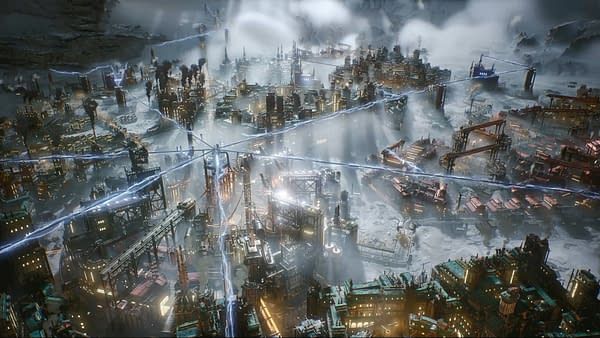

Frostpunk 2: The Surge launches December 14, bringing storm-driven automation, a new story scenario, and a crucial winter retention test for 11 bit studios' strategy sequel.
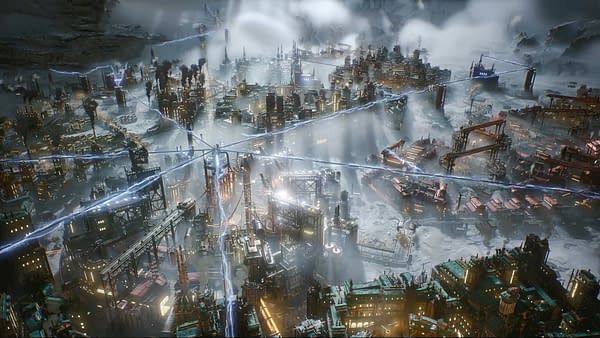
Image: bleedingcool.com
The Surge locks Frostpunk 2 into a high-stakes December window
11 bit studios has set December 14, 2026 as the release date for Frostpunk 2: The Surge, the third expansion for its society survival strategy sequel. Multiple outlets covering the announcement, including Invision Community, Bleeding Cool, Too Much Gaming, and TechTimes, report that the Frostpunk 2 DLC is coming to PC and consoles, with TechTimes naming Steam, Epic Games Store, GOG, Microsoft Store, PlayStation 5, and Xbox Series X|S as the target platforms.
That date gives The Surge a sharper role than a routine content drop. December is a strong window for strategy games because players have time to return, relearn systems, and commit to longer campaigns. It is also a brutal window for retention. A Frostpunk 2 expansion arriving in mid-December has to pull lapsed players back from the holiday backlog, convince active city-builders that its systems are worth mastering, and give console players a clear reason to invest in another scenario.
The immediate hook is concrete: The Surge is built around a new story-driven campaign in a mysterious valley, a resource that can push city automation to new levels, and technology that turns catastrophic whiteouts into harvested and stored resources. The open question is whether that is enough to make Frostpunk 2 feel strategically renewed at the exact moment 11 bit studios appears to be closing the game’s major expansion arc.
A new valley, a relic, and another fight over control
According to the announcement details relayed by Invision Community and Bleeding Cool, The Surge sends players beyond previously explored borders into a mysterious valley after years spent leading survivors through the frozen remnants of the United States. The premise centers on rumors of a marvel or relic left behind by “history’s greatest mind,” with the discovery described as powerful enough to reshape the world.
The expansion’s scenario is described as highly story-driven and built around branching choices. Players will investigate caves, ruins, hidden locations, and secrets buried beneath the ice. As usual for Frostpunk 2, the central pressure is political as much as logistical. The new resource promises prosperity, but factions disagree over who should control it and how it should be used.
That setup matters for strategy players because Frostpunk 2’s core identity is faction management under scarcity. The base game moved the series away from the first Frostpunk’s tighter settlement-survival focus and toward a broader society simulator where districts, ideological blocs, and political legitimacy drive the long game. The Surge’s premise appears designed to test that structure with a new prize on the board. If automation becomes the central reward, faction conflict over access to that reward could become the expansion’s real economy.
The storm is becoming a resource, not only a disaster
The most important mechanical detail in Frostpunk 2: The Surge is storm-driven technology. Invision Community, Bleeding Cool, Too Much Gaming, and TechTimes all describe a system that lets players harness catastrophic whiteouts, converting destructive weather into harvested and stored resources. TechTimes frames this as a major design inversion for the franchise, because the blizzard has traditionally functioned as the thing players prepare for, endure, and fear.
The distinction is worth watching. In most survival city-builders, environmental disasters create downtime, reserve checks, and triage. If The Surge lets players actively profit from those events, the optimal rhythm could change. A whiteout may become a window for extraction, not only a stress test for heat, supplies, and morale. That has obvious balance implications. Make storm harvesting too safe and Frostpunk loses some of its teeth. Make it too costly and players may treat the new system as a trap rather than a viable strategic path.
The announcement language says the new resource can elevate city automation to unprecedented levels. That is a loaded phrase in a game about labor, scarcity, political control, and social compromise. Automation in Frostpunk is never a neutral upgrade. It changes workforce pressure, resource routing, and the moral accounting behind progress. The Surge appears to put that pressure into a new loop: survive the storm, capture its output, automate more of the city, then manage the factions fighting over the result.
The retention test is really about systems depth
For returning players, the December 14 launch is less about having another map and more about whether The Surge meaningfully changes the decision tree. Frostpunk 2 already asks players to balance economy, heat, expansion, faction demands, and long-term legitimacy. A strong strategy game DLC needs to alter priorities without burying the player under isolated mechanics that only matter inside one scenario.
The Surge has the pieces to do that. A new region creates exploration incentives. Caves and ruins give players reasons to push outward. A relic-driven story provides political stakes. Storm harvesting changes the relationship between disaster timing and production planning. Automation potentially changes labor math and settlement scaling. If those systems interlock, The Surge could become the expansion that brings players back for experimentation rather than completion.
The risk is that the expansion’s biggest idea may be scenario-bound. The sources describe The Surge as a new story-driven campaign, but they do not confirm whether storm-driven technology, the new resource, or automation changes will carry into broader modes or reshape Frostpunk 2 outside the campaign. That is the key unanswered question for long-term retention. Strategy players tend to stay when a DLC changes the meta, not when it provides a one-time narrative detour.
Platforms are clear enough, but price and scope are still practical gaps
The confirmed release timing is straightforward: The Surge release date is December 14, 2026. Invision Community and Too Much Gaming say it launches on PC and consoles. TechTimes provides the most specific platform breakdown, listing PC storefronts Steam, Epic Games Store, GOG, and Microsoft Store, alongside PlayStation 5 and Xbox Series X|S. Bleeding Cool’s article text also refers to PC and consoles, though its headline and summary language put particular emphasis on PC and Steam.
What is still missing from the provided source material is equally important for buyers. No listed source gives a price, install size, system requirement change, console performance target, bundle upgrade path, or Game Pass status. Too Much Gaming calls The Surge a paid expansion, and TechTimes describes it as the third and final paid expansion, but the supplied materials do not include pricing details.
That makes the practical advice simple: wishlist it if you know you want more Frostpunk 2, but wait for the store page and launch notes if your decision depends on value, performance, or whether the new systems affect the wider game. The Steam link surfaced in coverage for The Surge, but the available source text does not provide enough information to judge edition ownership, discounts, or upgrade eligibility.
A final-expansion signal changes the stakes
Several reports frame The Surge as the end of Frostpunk 2’s major paid expansion run. TechTimes calls it the third and final paid expansion, while Too Much Gaming reports that after The Surge, future Frostpunk 2 support will be limited to maintenance. Invision Community similarly says future support for Frostpunk 2 will be limited to maintenance, while noting that the Frostpunk universe is continuing through Frostpunk 1886 and another unannounced title in a new genre.
That context makes The Surge feel less like a mid-cycle addition and more like a closing exam for the sequel’s post-launch model. Frostpunk 2 has already received Fractured Utopias and Breach of Trust, according to Too Much Gaming. The Surge now has to serve players who want one last substantial reason to return, while also leaving the sequel in a stable enough place for maintenance mode.
For 11 bit studios, that is a delicate handoff. A final expansion that lands well can consolidate the audience before the franchise branches into Frostpunk 1886 and the unnamed project. A final expansion that feels narrow risks confirming that the most interesting ideas arrived as isolated campaigns rather than durable systems. The premise of weaponizing winter is strong. The December test is whether it keeps the city alive after the announcement glow fades.