

Frontier Developments has confirmed a new Disney management sim, but the Planet Coaster studio has left the biggest questions unanswered.
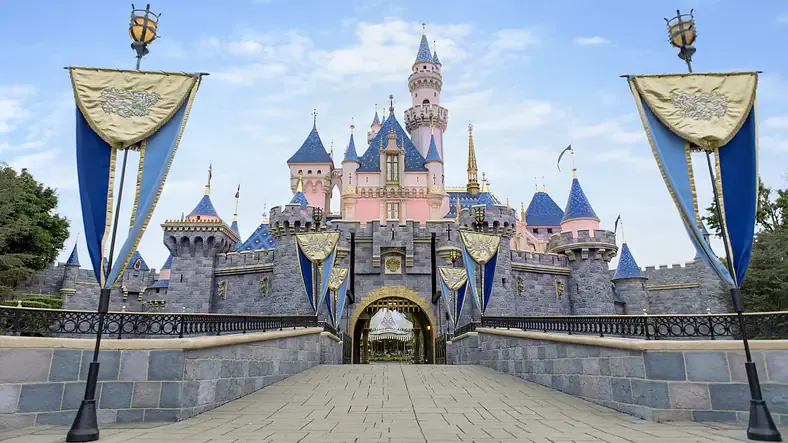
Image: gamewatcher.com
Frontier’s Disney deal is real, but the game itself is still mostly hidden
Frontier Developments has confirmed it is working with Disney on a new game built around Disney intellectual property, and the most important detail for sim players is the genre: Frontier says the project will build on its experience in creative management simulation. That puts the new Disney simulation game in the same broad strategic territory as Planet Coaster, Planet Zoo, and Jurassic World Evolution, rather than in the action-adventure or character crossover lane many Disney games occupy.
The tension is that Frontier has announced the deal before announcing the game. According to GamesIndustry.biz and Gematsu, Frontier will develop and publish the project, and it will be fully funded by Frontier. Eurogamer also reported that no release window has been established. Aroged noted that platforms remain unclear, and the source announcement did not name any specific Disney franchises, parks, films, rides, or characters that will appear.
That leaves management sim fans with a rare combination: a confirmed Frontier Disney game, a confirmed CMS direction, and almost no confirmed design shape. Frontier CEO Jo Cooke framed the collaboration as part of the company’s “clearly defined strategy of developing and nurturing world-class creative management simulation game franchises,” and said the goal is to connect “a passionate creative community of players” with “one of the world’s most iconic and beloved brands.” The statement tells us Frontier sees this as a core sim project, not a side experiment. It does not tell us whether players will run a Disney-style park, manage attractions based on multiple IPs, or operate within one particular Disney setting.
The confirmed facts point to a creative management sim, not a named Disney park game
The safest read is also the narrowest one: Frontier has a Disney licence, the project draws on Disney’s portfolio of intellectual property, and the game will build on Frontier’s CMS experience. VGC described Frontier’s creative management sim identity as games where players run an attraction, often by designing look and layout while managing finances. That description fits Frontier’s existing public examples, but it is still not a full feature list for this Disney project.
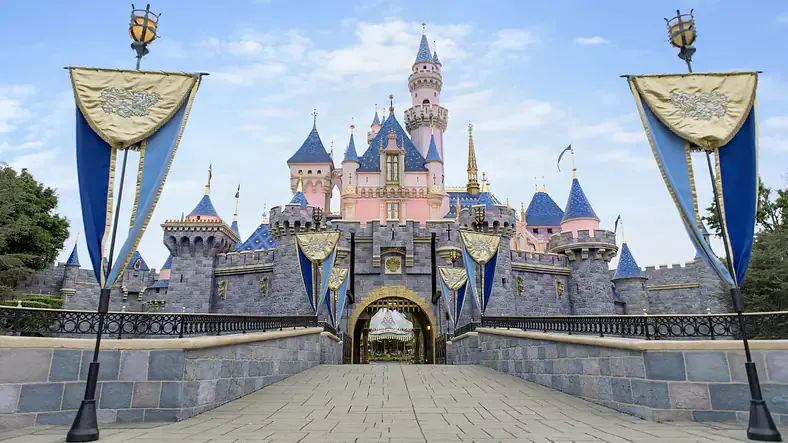
Several outlets immediately noted the obvious speculation: a Disney theme park management game would fit Frontier’s history and Disney’s real-world park identity. VGC reported that speculation has already built around the possibility of a theme park sim using rides and scenery from Disney parks. Eurogamer’s coverage also treated that as the fun, hopeful guess. But neither Frontier nor Disney has confirmed a Disney World, Disneyland, or Disney Parks management sim.
That distinction matters because Disney’s IP portfolio is wider than its parks. Frontier could theoretically build a CMS around attractions, zoos, resorts, cruise-like hubs, fantasy locations, or fictional ecosystems, but none of those formats is confirmed. Even the word “portfolio” is broad. It could mean multiple Disney brands. It could mean selected properties. It could include Pixar, Marvel, Star Wars, or none of those depending on the licensing scope, which has not been disclosed in the provided announcement coverage.
For now, the confirmed phrase to anchor expectations is “creative management simulation.” The unconfirmed phrase is “Disney park builder.” Fans can reasonably watch for that possibility, but treating it as announced would be getting ahead of the sources.
Why the Planet Coaster studio pedigree raises expectations and design risk
Frontier’s history is the reason this announcement is being read differently than a standard licensed game reveal. VGC traced the studio’s park and coaster lineage back through its original Xbox port of RollerCoaster Tycoon, the Wacky Worlds and Time Twister expansions for RollerCoaster Tycoon 2, RollerCoaster Tycoon 3 and its expansions, Thrillville, Thrillville: Off the Rails, Screamride, Coaster Crazy, Planet Coaster in 2016, and Planet Coaster 2 in 2024. That is an unusually long institutional memory for park-building, guest-flow, scenery, ride construction, and attraction-economy systems.
The Jurassic World Evolution connection adds a different kind of relevance. That series is not a freeform coaster toolbox in the same way Planet Coaster is, but it is Frontier’s clearest example of building a management framework around a heavyweight entertainment licence. The studio has already had to translate recognizable IP into player-facing systems, where fantasy must coexist with budgets, enclosures, guest satisfaction, containment problems, and mission structure. Eurogamer said Jurassic World Evolution 3 proved popular among management fans and dinosaur enthusiasts, while GamesIndustry.biz listed Jurassic World Evolution alongside Planet Coaster and Planet Zoo as part of Frontier’s CMS identity.
That pedigree creates a useful expectation, but also a pressure point. Disney’s brand is tightly managed, and a strong management sim thrives on friction: unhappy guests, inefficient layouts, ugly bottlenecks, missed targets, poor pricing, staff problems, debt, breakdowns, and player-made chaos. The unanswered design question is how much messiness Disney will allow Frontier to simulate. A licensed CMS can become shallow if the licence demands constant polish and avoids consequences. It can become special if the developer is allowed to turn a beloved brand into a real system with tradeoffs.
Frontier’s business strategy makes this bigger than a one-off licence
GamesIndustry.biz’s reporting gives the announcement its business context. The outlet said Frontier recently reported its second-highest annual revenue, up 16 percent to £104.8 million, with operating profit rising 44 percent to £19 million. It also reported that Frontier credited its strategic focus on creative management simulation games for that growth, with the genre accounting for 90 percent of FY26 revenue.
That makes the Disney project easier to place on Frontier’s internal map. GamesIndustry.biz reported that Frontier announced a shift back toward CMS games in 2023 because the genre delivered “stronger and more predictable returns,” and that the company’s strategy is to deliver “one CMS title per year” while supporting long-term, evergreen franchises. The Disney collaboration sits directly inside that strategy, according to Cooke’s own wording.
The funding and publishing details are also significant. GamesIndustry.biz and Gematsu reported that Frontier will fund, develop, and publish the game. That suggests Frontier is not acting only as a work-for-hire studio on a Disney publishing slate. It is taking on the project as part of its own portfolio. For players, that may increase the odds that the game is supported like Frontier’s other management franchises, though the company has not announced any DLC model, edition structure, roadmap, or post-launch cadence for this project.
It also changes the risk profile. A Disney licence can expand the audience well beyond the usual management sim crowd, but it likely comes with approval processes, brand constraints, and expectations from players who may arrive for characters rather than spreadsheets. The best version of a Planet Coaster studio Disney game has to satisfy both groups without sanding down the management layer that made Frontier valuable to Disney in the first place.
Disneyland Adventures is useful history, but it is not a template yet
Frontier has worked with Disney before. VGC pointed back to Disneyland Adventures, the 2011 Xbox 360 game that recreated the original Disneyland park in Anaheim, California. That prior collaboration is relevant because it shows Frontier has previously handled Disney park spaces, characters, and the fantasy of being inside Disneyland.
It is also a warning against assuming too much. VGC noted that Disneyland Adventures was not a theme park management game. Players explored the park, met characters, completed fetch quests, and played mini-games based on rides. The newly announced project is being positioned differently because Frontier is explicitly tying it to its creative management simulation strengths.
That distinction should guide fan expectations at the next reveal. If Frontier shows first-person park exploration, character interaction, or ride-themed mini-games, that would echo Disneyland Adventures. If it shows pathing heatmaps, attraction placement, scenery tools, pricing, guest needs, queues, staff routing, and financial overlays, that would align more closely with Planet Coaster and the CMS language in the announcement. At the moment, the company has confirmed the latter direction in genre terms, but not the specific verbs players will use minute to minute.
For strategy players, the interface will be the first real tell. A Disney licence may sell the fantasy, but the UI will reveal the game. Management depth lives in the quality of information: demand forecasting, capacity pressure, scenario goals, guest behavior, construction limits, and whether creative building feeds the economy instead of sitting beside it as decoration.
The next signals management sim fans should watch
The biggest missing items are practical ones. No title has been announced. No platforms have been announced. No release window has been announced. No price, editions, system requirements, multiplayer features, console support, or early access plan have been confirmed in the provided reporting. Eurogamer specifically said a release window has not been established, and Aroged reported that platforms are unclear.
The first meaningful reveal should answer whether this is a park-builder, a broader Disney attractions game, or a management sim focused on selected IP worlds. The second should clarify Frontier’s tool philosophy. Planet Coaster fans will want to know if the Disney management sim supports deep building and scenery customization. Jurassic World Evolution players will look for structured campaigns, licence-driven objectives, and approachable systems. Planet Zoo fans will watch for simulation granularity, guest behavior, pathing, welfare-like systems if relevant, and long-term sandbox depth.
Platform strategy is another key signal. Eurogamer reported that Planet Zoo 2 is scheduled for October and will launch across a variety of platforms outside PC, unlike the first Planet Zoo, which reached other platforms gradually after its initial PC release. That does not confirm anything about the Disney project, but it makes platform plans worth watching closely. A Disney-branded management sim has obvious family and living-room appeal, yet Frontier’s deeper creative tools have historically had to solve the control and interface problem on console.
The final signal is scope. “Disney’s iconic portfolio of IP” sounds broad, but broad licences can become expensive, complicated, and uneven if every property needs bespoke mechanics and approvals. A focused sim with strong systems may serve management fans better than a checklist of recognizable properties. Until Frontier shows the game, the smart position is patience: the collaboration is confirmed, the CMS intent is confirmed, and the fantasy is easy to imagine, but the design, release timing, and platform reality are still unannounced.