

Hands-on impressions of the Front Mission 3: Remake demo on PS5/PS4, breaking down combat pacing, UI tweaks, visual overhaul, save-transfer plans, and how this console build stacks up against the earlier Switch release for strategy fans who skipped the PS1 original.
If you missed Front Mission 3 back on PS1, the new PS5 and PS4 demo for Front Mission 3: Remake is the cleanest way to find out whether its brand of deliberate, numbers-heavy mech warfare is for you.
This trial is generous enough to show how the remake plays on modern PlayStation hardware and to hint at how much work has gone into lifting a 1999 tactics RPG into 2026. It is also, for better and worse, very close to the Switch version that has already been out for months.
This guide breaks down what the PS5/PS4 demo actually feels like to play, how it differs in practice from the Switch build, and what strategy fans should know before sinking dozens of hours into Kazuki’s wandering career as a Wanzer pilot.
A slower, more methodical tactics game than modern SRPGs
Front Mission 3 has always been on the slower, more methodical side of the tactics spectrum, and the remake keeps that core intact.
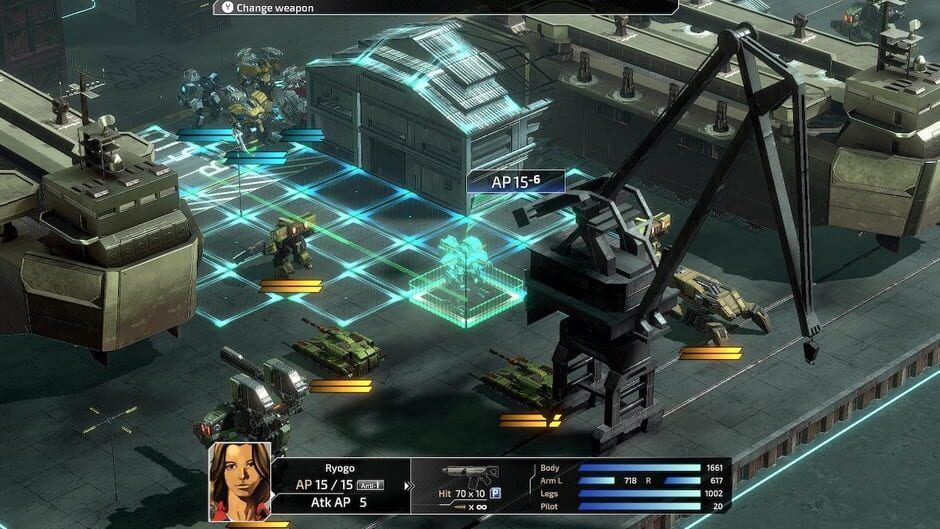
The opening missions in the demo drop you into small urban skirmishes and military facilities. You move your Wanzers across a grid, spending Action Points on movement and attacks, and you watch long, weighty attack animations play out in a separate battle view. Even with the remake’s modest quality-of-life tuning, each exchange is meant to feel like a considered commitment rather than a quick chip of damage.
Coming from something like Fire Emblem Engage or Triangle Strategy, the pace is noticeably more deliberate. Units trudging into range, the camera pulling in tight for a barrage of machine gun fire, individual Wanzer parts taking damage across multiple plates of armor, pilots potentially getting popped out of their machines: it all takes time.
The PS5 and PS4 versions benefit from faster loading than the original hardware and the Switch, which helps a lot between missions and when jumping into shops or the internet browser. But within a battle you should expect extended back-and-forth animations, plenty of hit percentage checking, and a lot of time spent zoomed into hulking machines trading body-part damage.
If you enjoy dwelling on positioning, cover, and build synergies, the pacing supports that. If you want snappy, bite-sized skirmishes you can clear in minutes, the rhythm of Front Mission 3 may feel stubbornly old school.
Combat flow and what makes fights tick
Even the short demo highlights why Front Mission 3’s combat is still interesting in 2026.
Every Wanzer is built out of separate components: body, left arm, right arm, and legs. Destroy the body and the unit goes down, but taking out limbs can disarm enemies, strip their shields, or slow them to a crawl. Attacks spread damage semi-randomly across parts, so you are constantly weighing weapon type, angle of attack, and risk of overcommitting.
The remake keeps the original’s action point economy and skill system largely intact. Skills can trigger automatically during combat and can dramatically swing an encounter, something the demo makes clear once your pilots start proccing double shots or damage boosts. It is still the kind of tactics game where a lucky skill trigger can obliterate an enemy’s arm in one go, and where you will occasionally swear at the randomness when your shots keep chewing up the wrong plate of armor.
On PS5 and PS4, input latency feels snappy, with menus responding quickly to d-pad or analog navigation. Camera control during combat is smooth and sharper than on Switch, particularly on PS5, which makes it easier to keep track of who is covering which lane and which unit is exposed. The net effect is that the same foundational combat flows better moment to moment on PlayStation hardware than it did on Nintendo’s older Tegra-based system.
UI changes for newcomers
MegaPixel Studio has kept the overall UI layout very close to the PS1 original, but the remake layers sharper fonts, standardized icons, and cleaner windows on top.
On PS5 in particular, the interface is crisp at higher resolution. Unit data, action point totals, weapon ammo counts, and hit percentages are far easier to parse at a glance than on the original hardware. Even compared to the Switch version, the added clarity that comes from native higher resolution output gives the UI more breathing room.
The demo keeps text dense and numbers forward, which will delight min-maxers and might be intimidating for players used to more stripped-back tactics games. Weapon stats, armor values per body part, skill triggers, and pilot experience are all a button press away. Once you learn where everything lives, it is straightforward to read a battlefield and understand why a particular matchup favors or punishes a given Wanzer loadout.
A few legacy quirks remain. The flow from move to attack to confirmation still requires a couple of redundant button presses, and the targeting window can feel old-fashioned compared to the single-screen previews in newer SRPGs. But the PlayStation demo’s higher resolution and steadier performance make those quirks easier to live with than on Switch, where text size and slight blur could make busy screens tiring over longer sessions.
Visual overhaul on PS5 and PS4
Front Mission 3: Remake takes the low-poly PS1 aesthetic and rebuilds it with cleaner, more detailed geometry and modern lighting while trying to keep the same silhouettes and layouts.
On PS5, that means sharp, clean mech models with clear part separation, readable silhouettes, and smoother animation. The camera can pull in very close when machine guns open up or missiles streak across the map, and those moments look and feel more cinematic than they did on Switch. Textures on buildings and terrain are still on the simple side, but they are no longer a blurry smear like on late 90s hardware.
On PS4, the visual upgrade is still evident, but resolutions and some effects are dialed back compared to PS5. You can see the difference in distant aliasing and texture sharpness, especially if you are playing on a 4K display. Even there though, the game looks cleaner than on Switch, with fewer jagged edges and a steadier image in handheld-equivalent viewing distance.
The cost of this remake direction is that the art can feel plain in places. Some fans of the original’s grimy, wobbly polygon look argue that the new clean metal tones sand off the grit and mood. The demo reflects that tension: you get better clarity and legibility, but the maps and units sometimes look more like functional tabletop miniatures than grungy military machines.
If you are arriving fresh without PS1 nostalgia, the PlayStation build is a functional, readable tactics game rather than an eye-popping showpiece. It is easy to see what is happening, which is ultimately what matters when you are juggling range bands, armor facings, and limb HP.
How the PS5/PS4 demo compares to the Switch version
If you already sampled or followed coverage of Front Mission 3: Remake on Switch, the most important takeaway is that the PlayStation demo feels extremely similar in content but better in execution.
Missions, scripting, and systems are identical. The scenario layout, branching paths, and customization depth are all drawn straight from the same remake base that Switch owners have been playing since mid 2025. There are no dramatic combat reworks, new mechanics, or rewritten story beats in the PS5/PS4 sample.
The differences are mostly technical and ergonomic. On PS5, load times are noticeably quicker when entering combat or jumping between menus, camera movement is smoother, and resolution is higher. Even on PS4, performance feels more consistent than the Switch build’s occasional hitches during busy attack animations.
Where the Switch version drew criticism for blurry visuals, uneven performance, and a sense that the remake work was constrained, the PlayStation demo still carries some of that budget feel but mitigates the worst of it simply by running on more powerful hardware. It still looks like a mid-budget tactics remaster, not a ground-up, lavish reimagining, but the PS5 and PS4 builds are the best-feeling console versions of that work.
If you bounced off the Switch version purely because of technical roughness, the PS5 demo is worth a second look. If your issues were with broader design choices or the way the remake handled art direction, this new build does not change those fundamentals.
Save data and what carries into the full game
The publisher’s cross-platform messaging is clear that the demo is intended as a slice of the full campaign. On consoles, the pattern with Forever Entertainment’s other Front Mission remakes has been straightforward: your save data from the demo can be carried over into the full release on the same platform.
The text around the new demo rollout indicates that this will once again be the case. Progress you make during the PS5 and PS4 trial, including pilot experience, early Wanzer builds, and story advancement within the demo boundaries, is expected to transfer directly into the full version when it launches.
For strategy fans, that makes the demo a safe place to experiment with early builds and skill setups without feeling like you are wasting time. If you decide to pick up the full game, you will likely be able to keep rolling with the same squad composition and pilot progression you dialed in during this free slice.
Who this demo is for
Front Mission 3: Remake on PS5 and PS4 is not trying to reinvent tactics games. It is a modernization of a late 90s design that keeps the deliberate pacing, heavy stat focus, and granular mech customization of the original.
If you are a strategy fan who skipped the PS1 version and you are curious what all the fuss is about, the demo is an ideal test. You will quickly see whether you vibe with battles that prioritize careful positioning and build tuning over flashy, fast-paced encounters.
If you already tried the Switch release, consider this a technical do-over. The combat, UI structure, and narrative flow are the same, but smoother performance and higher resolution on PlayStation make the experience more comfortable for long sessions.
Either way, the free trial is worth a download if the idea of slow-burning mech tactics, branching campaigns, and deep loadout tinkering appeals to you. Just come in expecting a faithful, slightly rough-around-the-edges resurrection of a cult classic, not a sweeping reimagining that bends the original into something new.