
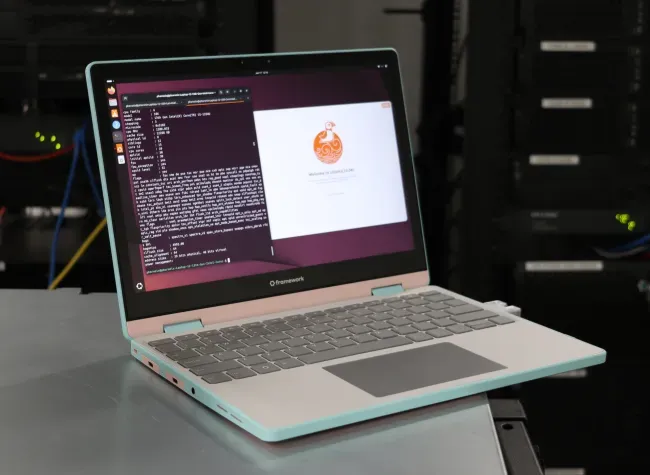

Framework Laptop 12 is getting Fedora KDE 44 as a prebuilt Linux option, Intel Core Series 3 processors, and an October first batch, but players should treat battery-life expectations carefully until gaming tests arrive.
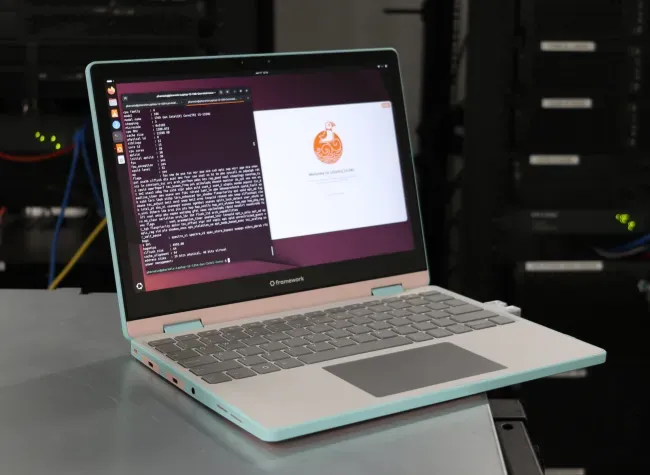
Image: phoronix.com
Framework turns the Laptop 12 into a Linux-first portable PC option
Framework Laptop 12 is getting a new prebuilt Linux configuration with Fedora KDE 44, according to GamingOnLinux, alongside new Intel Core Series 3 processor options and a first batch scheduled to ship in October. That is the strongest concrete shift here: the company is moving Linux from something many Framework Laptop 12 owners install themselves into something buyers can choose out of the box on a prebuilt machine.
The tension is that this is also a small, modular convertible being watched by players who want a repairable portable PC, not a conventional gaming laptop. Framework is widening the Laptop 12 lineup at the same time the gaming audience is increasingly comfortable with Linux through Steam, Proton, handheld PCs, Bazzite, and SteamOS-like setups. But the source material does not include gaming benchmarks, GPU details, frame-rate claims, or measured battery figures for games on the refreshed Framework Laptop 12. That makes this update meaningful, but it also demands restraint.
What is confirmed is the configuration change. GamingOnLinux reports that Framework announced Fedora KDE 44 for prebuilt Laptop 12 models, added Intel Core Series 3 to the processor stack, and now has Core 3, Core 5, and Core 7 choices available on the Framework Laptop 12. The same report lists pricing at $699 for the prebuilt model and $499 for the DIY model. For a player comparing this against a Windows ultraportable, a handheld gaming PC, or a budget gaming laptop, the decision starts with operating-system confidence and upgrade philosophy before it gets anywhere near raw performance.
Fedora KDE preinstalled changes the Linux risk profile
The Fedora KDE option matters because it reduces one of the most annoying early-game penalties in Linux laptop ownership: spending the first weekend validating suspend behavior, input devices, fingerprint support, touch behavior, pen behavior, firmware state, and kernel compatibility before any games are installed. GamingOnLinux reports that Framework says Linux kernel 7.1 or newer is needed for the best experience, which is a clear signal that the hardware support story depends on a current software stack.
Framework’s Linux push is also being shaped by its own customer base. GamingOnLinux quotes Framework’s customer research as finding that “Almost 80% of Framework Laptop 12 owners are running Linux across a range of distros.” That is an unusually direct incentive for a hardware company to prioritize Linux preloads. It suggests Framework is not chasing a theoretical Linux audience with this configuration. It is responding to owners who are already turning the Laptop 12 into a Linux machine after purchase.
The choice of Fedora KDE also lines up with the device’s convertible design. GamingOnLinux quotes Jef Spaleta, Fedora Project Lead, saying Fedora KDE Plasma Desktop contributors work to make that edition “the premier KDE experience for users” and that it is good to see Framework customers able to have it preinstalled. The report also quotes Aleix Pol, president of KDE e.V., saying it is “really exciting” to see the device become the first Framework device to ship with KDE and Plasma software, adding that KDE has worked to make its software “fun to use with touch and pen input.”
That touch-and-pen detail is not cosmetic for the Laptop 12. The Gadgeteer previously described the Framework Laptop 12 as a 12.2-inch convertible with a 360-degree hinge, touchscreen, and USI 2.0 stylus support. A preinstalled KDE Plasma desktop therefore has to serve a dual role: a traditional laptop desktop for keyboard and trackpad use, and a practical touch environment when the machine is folded into tablet mode. For players, that can matter around launchers, cloud gaming interfaces, Discord, browser guides, and remote play, even if the device is not being marketed in the supplied material as a dedicated gaming rig.
Intel Core Series 3 widens the lineup, but performance claims are still absent
The processor refresh is simpler to state than to judge. GamingOnLinux reports that the Framework Laptop 12 now has Intel Core 3, Core 5, and Core 7 options, with the new model adding Intel Core Series 3 processors. PC Gamer’s supplied headline frames the new Framework 12 laptop’s battery-life advantage as coming from Intel’s Wildcat Lake, but the available source excerpt does not provide test data, configuration details, or measured runtime results.
That distinction is important. A broader CPU stack gives buyers a clearer budget ladder. A Core 3 option can lower the entry point for a modular laptop, while Core 5 and Core 7 options serve buyers who want more headroom. But none of the supplied sources confirm how these chips perform in games inside the Laptop 12 chassis, how sustained clocks behave, how cooling is tuned, or how integrated graphics compare across the refreshed configurations.
The prior Laptop 12 context also shows the device’s lane. The Gadgeteer’s earlier coverage listed 13th-generation Intel Core i3 and i5 options, up to 48GB of upgradeable DDR5 memory, and up to 2TB of M.2 2230 NVMe storage, while stressing that the machine was not built to top benchmark charts. That older processor information has now been overtaken by the new GamingOnLinux report for the refreshed lineup, but the larger point still helps frame expectations: the Laptop 12 is a small convertible built around repairability, access, and ownership, rather than a thick chassis with a discrete gaming GPU.
For strategy-minded buyers, the question is whether the upgraded CPU platform improves the device’s long-term utility enough to justify buying into Framework’s modular ecosystem. The source material supports a practical answer only up to a point. It confirms new CPU choices and Linux preparation. It does not yet confirm the gaming performance delta between Core 3, Core 5, and Core 7 Laptop 12 models.
The battery-life pitch is promising, but players need the right benchmark
Battery life is the claim players should interrogate most carefully. PC Gamer’s supplied headline calls battery life the new Framework 12 laptop’s “secret weapon” and attributes that to Intel’s Wildcat Lake. Framework’s own Laptop 13 Pro page, for a different machine, shows how the company is now emphasizing endurance: it lists 20 hours of Netflix 4K streaming, 17 hours of active web usage, 11 hours of video conferencing, and seven days of standby without charging for the Framework Laptop 13 Pro, using Windows 11 for the first three tests and Ubuntu for standby. Those figures apply to the Laptop 13 Pro page in the supplied source, not to the Framework Laptop 12.
That comparison is useful because it shows the company’s broader pitch, but it should not be treated as a Laptop 12 promise. The supplied Framework Laptop 13 Pro material also ties its battery story to Intel Core Ultra Series 3 processors, a 21% increase in battery capacity, and higher-density cells. The GamingOnLinux report on the Laptop 12 confirms Intel Core Series 3 processors, not the same Laptop 13 Pro chassis, battery, or runtime figures.
For gaming laptop battery life, the workload matters more than the slogan. Local gaming is usually a heavier and less predictable workload than streaming video, browsing, or standby. The sources provided here do not include a Steam game loop test, Proton battery drain comparison, Bazzite runtime data, Windows-versus-Linux gaming endurance, or handheld-style wattage tuning figures. So the safe reading is this: improved platform efficiency may make the Framework Laptop 12 more attractive as a portable Linux PC, but players should wait for game-specific testing before treating battery life as a reason to choose it over a handheld or a conventional gaming laptop.
There is still a real player-facing advantage if the Linux stack is ready on day one. If Fedora KDE ships cleanly and kernel support is current, buyers spend less time fixing device support and more time tuning Steam, Proton, controller profiles, cloud saves, and power settings. In a strategy game, that is the equivalent of a cleaner opening build order. It does not win the match by itself, but it reduces wasted moves.
Modularity remains the long-term play
The Framework Laptop 12’s real differentiator is still the ownership model. Wikipedia describes Framework Computer as an American personal computer manufacturer that positions itself around the right-to-repair movement, with laptops designed to be easy to disassemble and to use replaceable parts. That context matches the Laptop 12 coverage from The Gadgeteer, which emphasized swappable ports, replaceable memory, replaceable storage, a touchscreen, a 360-degree hinge, and stylus support.
The Gadgeteer also reported repair-friendly internal design details from an iFixit teardown, including pogo pins and copper pads in place of ribbon cables between the keyboard and mainboard, a similar contact system for the battery, accessible fasteners for the fan and heatsink, and a tool-free retention clip for storage. Those details matter for a portable PC that may live in backpacks, classrooms, couches, and travel bags. A broken port or tired storage drive is less likely to become an automatic replacement event if the machine is designed around parts access.
That is the long-term strategy Framework is selling. A traditional gaming laptop often front-loads value into a GPU and screen, then declines as thermals, battery wear, storage needs, and platform requirements move on. A modular laptop shifts some of that value into repairability and component replacement. It will not erase the performance gap if a buyer needs a discrete GPU, but it can change the economics for players whose libraries are heavy on indies, older PC games, strategy titles, visual novels, emulation where legal and properly sourced, remote play, and cloud streaming.
The supplied Computer Compatibility guide, focused on Framework laptop upgrades, describes the broader Framework idea of user-replaceable displays, Wi-Fi modules, keyboards, and mainboards for generational CPU upgrades. That source is not specific enough to prove every path for this refreshed Laptop 12, so buyers should verify Laptop 12-specific marketplace parts before assuming a future upgrade route. Still, the update fits the company’s established pattern: keep the machine useful by making more of it serviceable.
Who should consider the Framework Laptop 12 now, and who should wait
Based on the confirmed information, the strongest candidate for the refreshed Framework Laptop 12 is a buyer who wants a small modular laptop, prefers Linux, values repairability, and sees gaming as one part of a broader portable PC workload. Fedora KDE preinstalled lowers setup friction, the reported October first batch gives the new model a near-term arrival window, and the $699 prebuilt starting price gives buyers a clearer comparison point against other ultraportables. The $499 DIY starting price, reported by GamingOnLinux, keeps the lower-cost route open for people comfortable configuring their own machine.
Players who mainly want maximum frame rates per dollar should wait. The supplied sources do not confirm discrete graphics, gaming benchmarks, display refresh details for the refreshed model, or game battery tests. They also do not tell us how Core 3, Core 5, and Core 7 versions differ under sustained gaming load. Without those numbers, the Laptop 12 should be treated as a modular portable PC with gaming potential, not as a proven gaming laptop replacement.
Linux-focused buyers have more reason to pay attention immediately. Framework reportedly supplied CachyOS and Bazzite with units to help ensure support is ready when the new model ships, according to GamingOnLinux. The same report says Framework has continued improving Linux support, including a new fingerprint reader sensor integrated into libfprint. Those are practical signals for anyone who wants to run Fedora KDE out of the box or experiment with gaming-oriented Linux distributions later.
The smart move is to decide which risk you are willing to carry. If OS support and repairability are the risks that usually scare you away from small laptops, Framework is directly addressing them. If gaming performance and unplugged runtime are your deciding factors, the public information is still incomplete. The Framework Laptop 12 refresh has the shape of a stronger Linux portable, but players should wait for independent testing before drafting it as their main gaming machine.