
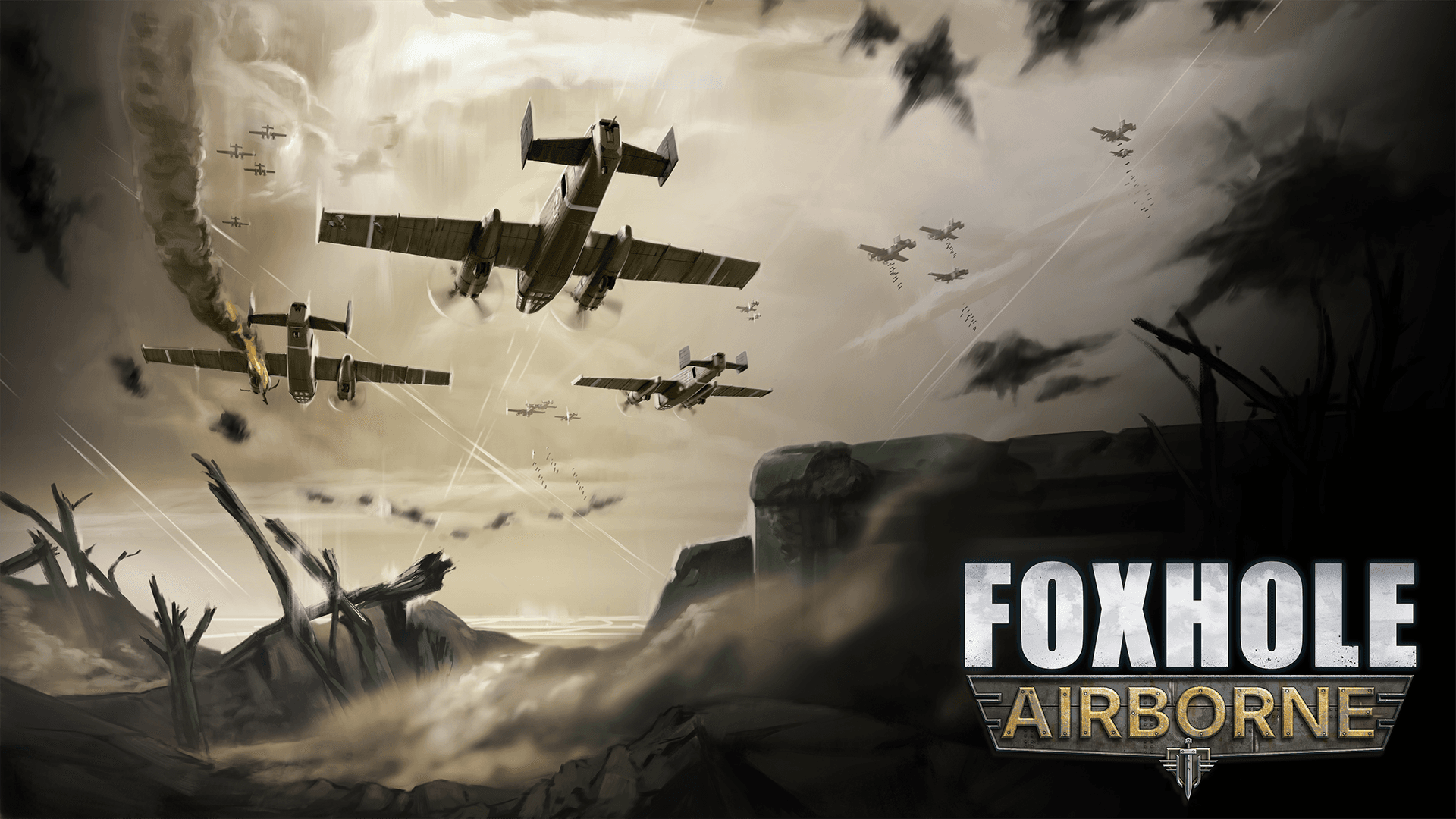

Foxhole Engines of War launches December 7, 2026 with light submarines, sonar boats, new aircraft, anti-air tanks, radar jammers, concrete trucks, infantry gear, and a Steam discount.
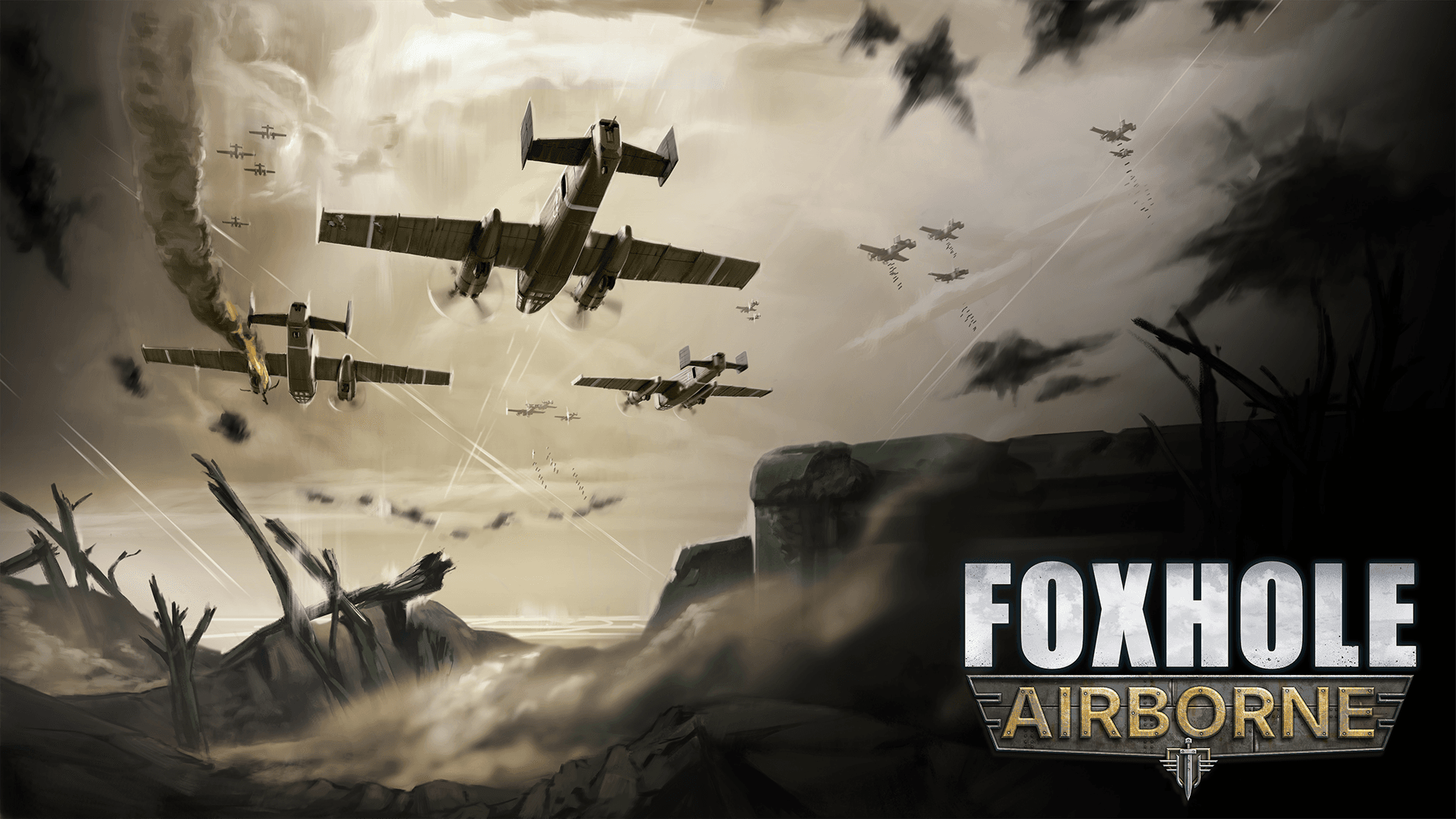
Image: spielemagazin.de
Engines of War expands Foxhole’s war machine on December 7
Siege Camp’s next major Foxhole update, Engines of War, is scheduled to launch on December 7, 2026, and the confirmed vehicle list is unusually broad: light submarines, sonar boats, aircraft, anti-air battle tanks, radar jammers, concrete trucks, and new infantry support tools are all part of the package. Games Press, citing the official announcement, describes it as Foxhole’s 68th update and says it adds weapons, vehicles, and equipment across logistics, engineering, naval combat, air combat, infantry, and armor.
That breadth is the real story. Foxhole is built around a persistent multiplayer war, so new equipment does not enter a closed match and disappear 30 minutes later. It enters a long-running strategic economy where players manufacture, transport, crew, counter, lose, and replace their tools. The Foxhole Engines of War update is therefore less about any single machine than about how many layers of the war are being touched at once.
The immediate tension is that Siege Camp is adding new offensive options and their counters in the same update. Light submarines arrive with mini-torpedoes and anti-air armaments, while sonar boats are being added to detect enemy submersibles and deploy depth charges. Torpedo bombers and ground-attack aircraft expand air power, while anti-air battle tanks are built to contest those planes. Radar jammers create new partisan utility behind enemy lines, while concrete trucks and infantry-support bunkers strengthen the defensive and engineering side of the war. On paper, Engines of War looks like a patch designed to widen the combined-arms problem rather than simply inflate the damage race.
Light submarines could make underwater warfare less exclusive
The most important naval addition is the light submarine. According to the official press release reproduced by Games Press and Saving Content, light submarines are a new class of subaquatic vessel intended to bring submarine gameplay to more players. Inven Global, citing the release, adds that they bring underwater play to more naval players and at earlier stages of the war.
That detail matters because timing is one of Foxhole’s hidden balance levers. A powerful asset that appears late in a war has a different strategic footprint from a vehicle that shapes the midgame, convoy planning, and coastal defense earlier. The sources do not provide production costs, crew requirements, research placement, or faction-specific differences, so it would be premature to say exactly how dominant light submarines will be. What is confirmed is that Siege Camp is making undersea operations more widely available and pairing that accessibility with a new counter-tool.
The counter is the sonar boat. The official feature description says sonar boats are patrol boats equipped with an advanced sonar array for scanning enemy submersibles and a launcher for depth charges. MMOHuts frames the change as submarines getting more options and more counters, which tracks with the listed toolset. A lighter submarine class could encourage more raiding, scouting, and threat projection around naval routes, but sonar boats mean that fleets will have a dedicated reason to screen waters instead of reacting only after a torpedo attack.
For the Foxhole persistent war meta, the practical question is not simply whether submarines are strong. It is whether the new submarine and sonar relationship creates a sustainable patrol economy. If light submarines are accessible enough to appear often, naval groups may need to budget manpower for anti-submarine patrols as a routine task. If sonar boats are easy to field, submarines may become a pressure tool rather than a guaranteed ambush machine. The announcement confirms the pieces, but the final balance will depend on costs, availability, map conditions, and player adoption after December 7.
Aircraft enter a battlefield that is already getting anti-air answers
Engines of War also expands air combat with two confirmed aircraft roles. Games Press lists a new torpedo bomber designed to disable enemy ships and a new ground-attack aircraft capable of firing waves of rockets at armored convoys. Inven Global describes the same pair as a torpedo bomber for ships and a ground-attack aircraft for armored columns.
Those roles point at two different pressure points in Foxhole’s war economy. A torpedo bomber threatens naval concentration, especially if fleets are already trying to manage submarines. A ground-attack aircraft threatens road movement and armored pushes, which are heavily dependent on coordination, repair, ammunition flow, and timing. A successful strike against a convoy can have effects beyond the destroyed vehicles, because the lost assets must be rebuilt and the frontline plan must be adjusted around the delay.
Siege Camp is not introducing air attack without air defense. The same sources confirm anti-air battle tanks fitted with anti-air rockets for countering bombers and other airborne threats. MMOHuts also notes specialized anti-air tanks that can target planes with missiles. That creates a triangle: ships and convoys receive new threats from aircraft, aircraft receive a dedicated armored counter, and land forces must decide whether anti-air coverage is worth the logistical footprint in a given operation.
The key unknown is how punishing aircraft will be in practice. The announcement does not provide sortie mechanics, payload limits, fuel constraints, production costs, or repair rules. Without those details, aircraft should be treated as a confirmed new layer rather than a confirmed dominant layer. Still, the design direction is clear. Engines of War gives commanders new reasons to think vertically, because the safest route for armor or shipping may depend on whether the enemy can put torpedo bombers, rocket aircraft, or anti-air tanks into the same operational window.
Radar jammers and concrete trucks may quietly reshape the support game
The headline vehicles are submarines and aircraft, but the support additions may be the patch’s most strategically disruptive pieces. Radar jammers are confirmed as advanced off-road vehicles equipped with radio jamming technology for disrupting transmissions behind enemy lines. Inven Global describes them as vehicles that disrupt radio transmissions behind enemy lines, and the official wording positions them as a partisan tool.
That makes the radar jammer a new kind of pressure unit. It is not described as a direct killing machine in the source material. Its value is informational and positional. Foxhole’s large-scale operations depend on awareness, map reading, supply tracking, and the ability to identify threats before they arrive. A jamming vehicle that can operate off-road behind enemy lines creates a new support role for small groups willing to trade firepower for disruption.
On the engineering side, concrete trucks are confirmed as heavy-duty trucks that can mix and transport concrete. The official release says they allow combat engineers to streamline fortification construction, while Inven Global says they let engineers build fortifications faster. In a persistent war, construction speed is not a minor comfort feature. Faster fortification work can affect how quickly a captured position is stabilized, how efficiently rear areas are hardened, and how much labor is required to convert supplies into defensive depth.
The pairing is interesting because one tool attacks the enemy’s information layer while the other improves the friendly construction layer. That is classic Foxhole strategy: a change in one role can ripple into several others. If jammers increase the success rate of raids, builders may need faster reinforcement cycles. If concrete trucks reduce the pain of fortification work, attackers may need more coordinated timing, heavier weapons, or better reconnaissance to crack positions before they harden.
Infantry gear and bunkers fill the gaps between vehicles
Engines of War is not limited to crewed vehicles. Games Press and Saving Content list heavy armor for field medics, advanced RPGs, and anti-tank mortars among the specialized infantry equipment coming in the update. Inven Global also names heavy armor for medics, advanced rocket-propelled grenades, and anti-tank mortars.
Those additions matter because the Foxhole new vehicles list could otherwise imply a patch dominated only by crews and factories. Infantry still hold ground, crew defenses, respond to armor, and keep pushes alive. Heavy armor for medics suggests greater survivability for a support role that often has to work near contested lines, although the sources do not specify armor values, movement penalties, crafting requirements, or faction availability. Advanced RPGs and anti-tank mortars point toward expanded infantry answers against armor, but again the announcement does not provide damage numbers or balance details.
The new infantry-support bunker adds another defensive piece. The official description calls it an entrenched bunker equipped with an infantry support gun capable of engaging armored threats from multiple incoming vectors. Inven Global similarly says the support gun can engage armored threats from several directions. That wording indicates a structure intended to reduce blind spots or improve multi-angle defense, but the sources do not explain firing arcs, ammunition needs, durability, or how it fits into existing bunker networks.
Taken together, the infantry and bunker additions suggest Siege Camp is trying to keep the ground war from being flattened by vehicle escalation. New aircraft, submarines, and armored tools can create spectacular moments, but the front still depends on players repairing, reviving, spotting, building, hauling, and holding terrain. Engines of War appears to add spectacle at the top while widening the support and anti-armor toolkit underneath it.
Quality-of-life changes could decide how usable the new toys feel
The confirmed quality-of-life changes are smaller on the feature sheet but important for daily play. Saving Content’s copy of the announcement lists a new ship throttle system, new map screen tools, and more. MMOHuts also reports improved ship throttle control and expanded map controls.
For naval players, throttle control is a usability detail with strategic consequences. Better control can affect formation movement, docking, patrol speed, and how comfortably crews handle larger or more specialized vessels. With submarines, sonar boats, and torpedo bombers all entering the same naval ecosystem, the handling layer becomes part of the balance experience. A powerful ship that feels awkward to operate can remain niche. A modest ship that is easy to coordinate can become standard doctrine.
Expanded map tools could also matter because Engines of War increases the number of threats commanders need to track. Submersibles, anti-submarine patrols, aircraft, anti-air tanks, radar jammers, concrete logistics, and new bunker placements all add demands on planning. The sources do not detail what the new map tools include, so players should wait for Siege Camp’s full developer materials or patch notes before assuming specific functions. The confirmed point is that the December 7 update includes interface and control improvements alongside its vehicle roster.
Release details, Steam discount, and the questions still open
The Foxhole update December 7 launch is confirmed across the official press release and multiple reports, including Inven Global, Saving Content, MMOHuts, and MassivelyOP. Inven Global identifies Siege Camp as the studio behind Foxhole and says Engines of War is the game’s 68th update. Saving Content and Inven Global both report that the update will launch alongside a 45% discount on Steam.
For players deciding whether to return, the practical appeal is clear: Engines of War touches nearly every major role category. Naval crews get light submarines and sonar boats. Air players get ship attack and ground attack roles. Armor groups get anti-air battle tanks. Partisans get radar jammers. Engineers get concrete trucks and a new infantry-support bunker. Infantry get new protection and anti-armor options. Logistics groups will likely feel the change because every new machine has to be produced, moved, fueled, armed, repaired, and replaced, although the sources do not yet provide the economy numbers that would let us judge that burden precisely.
The unanswered questions are the ones that will decide the Foxhole persistent war meta after launch. How early do light submarines appear in actual war progression? How costly are sonar boats compared with the submarines they counter? Can torpedo bombers disable ships reliably, or only punish unsupported fleets? Are anti-air battle tanks flexible enough to justify their place outside dedicated air-defense duty? How disruptive are radar jammers, and how quickly can defenders locate them? Siege Camp’s announcement confirms the direction, but the live war will test whether these systems produce layered combined-arms play or settle into a smaller set of efficient defaults.
For now, the safe read is that Foxhole Engines of War is a major systems update disguised as a vehicle update. The new hardware is the visible part. The deeper shift may be in how many specialists a successful operation needs on December 7: submarine crews, sonar patrols, pilots, anti-air armor, engineers, medics, map readers, partisans, and the logistics players who keep all of them supplied.