
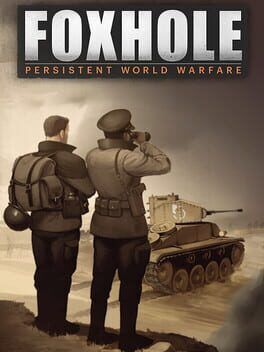

A systems-focused preview of Foxhole’s Airborne update, breaking down how air power and expanded naval warfare will transform logistics, front-line combat roles, and large scale coordination in its persistent wars.
If you have not logged into Foxhole since it was a purely ground and coastal war, the upcoming Airborne update is about to make the battlefield feel unfamiliar. Siege Camp is adding fully featured air and expanded naval warfare to its persistent campaigns, and that has deep consequences for every part of the game’s player run war machine, from the factory floor to the front trench.
PCGamesN describes Airborne as bringing “full aerial warfare to the game’s long running online conflicts,” with aircraft, paratroopers, radar and an aircraft carrier all woven into Foxhole’s existing logistics first design. Rather than a bolt on side mode, Airborne looks like a systemic layer that touches how every regiment, clan and solo quartermaster will operate.
Air power as a logistics problem first
Foxhole has always treated every new weapon as a logistical commitment and aircraft are no exception. According to the breakdowns, players will construct “airfields and hangars,” manage fueling and arming, and keep planes flying through organized ground crews. That fits the game’s ethos where guns, tanks and shells are only as useful as the supply lines feeding them.
The Escapist highlights that aircraft feature “location specific subsystem damage,” so hits to engines, control surfaces or fuel systems will degrade performance until repaired. That means forward airfields near the front will need spare parts, tools and dedicated mechanics, just as armor columns require field logistics today. Squadrons that sortie repeatedly without a coordinated supply backbone will find their planes grounded or flying half broken machines.
For lapsed players used to trucking crates to seaports and border depots, Airborne introduces new tiers of demand. Aviation fuel competes with diesel for trucks and tanks. Bomb payloads, rockets and specialized recon gear all need to be manufactured and moved to hangars. Even simple things like the location of airfields will matter since an airstrip too deep in the rear can turn an otherwise powerful bomber force into a slow reacting asset that arrives after a bridge has already been rebuilt.
In other large scale war games, aircraft are usually a matchmaking choice or a cooldown ability. In Foxhole’s Airborne update they become a supply chain that must be staffed and defended, which should strongly favor regiments that already run tight, spreadsheet driven logistics.
Paratroopers and the new shape of the front
The headline feature for many ground focused players will be paratroopers. The Escapist notes that teams will be able to “drop squads behind enemy lines to sabotage infrastructure and open new strategic opportunities.” This turns any rear logistics hub, safe house or lightly defended town into potential contested territory.
Before Airborne, cutting supply typically meant coordinated armor pushes, partisan raids on roads or artillery saturation. Now leadership can dial up vertical encirclements. A night operation might see recon aircraft identify a vulnerable railhead or storage depot, followed by a paratrooper drop to disable facilities and hold until friendly armor breaks through. Because every soldier is a player, these drops are not scripted events. They rely on volunteers willing to deploy into hostile territory with little hope of resupply.
The existence of paratroopers reshapes defensive doctrine too. Static walls and well sited bunkers are no longer enough if a determined enemy can bypass them from the air. Garrisons will need quick reaction forces pre staged in central locations, barracks with vehicles fueled and ready, and possibly pre built safe fall back positions deeper in friendly territory. Commanders will have to decide how many troops to keep on the line versus in reserve for counter drop duties.
This is a point where Foxhole begins to stand apart from other large scale shooters. In many games, a back cap is just a circle on a map changing color. In Foxhole, a successful paratrooper raid can mean a week of player built infrastructure and stockpiles going up in smoke. That raises the psychological stakes and reinforces the idea that logistics players are just as vulnerable and just as vital as front line riflemen.
Fighters, bombers and the evolution of combined arms
Airborne fleshes out the air domain with recon planes, fighters, bombers and “specialized aircraft” as PCGamesN reports. Each of these roles plugs into existing layers of combat in different ways.
Recon flights extend the information war. Instead of relying purely on scouts, spy cameras or listening posts, commanders can send planes to survey enemy fort lines, ship movements and convoy routes. That information advantage pairs naturally with artillery spotting and pre planned offensives. A clan that can keep recon flights cycling over key sectors will be in a better position to avoid walking into tank ambushes or naval gun batteries.
Fighters exist not only to duel other aircraft but to protect bombers and harass enemy logistics. Even just the threat of strafing runs on exposed roads will force truck drivers to consider route variance, night operations or heavier escort. Bombers, meanwhile, raise the ceiling on destructive capability against dense targets. The ability to strike storage yards, forward operating bases or bridgeheads from altitude encourages defenders to disperse stockpiles and invest in hardened infrastructure.
The result should be a more fluid front. Offensive pushes are no longer constrained solely by ground mobility and artillery arcs. A faction that coordinates its armor with air superiority can push faster and further, creating cascading breakthroughs when defenders fail to contest the skies.
Radar, anti air and the second war over information
Airborne is not just about the glamour of dogfights. Both articles emphasize new “radar installations” and recon tools that serve as early warning systems. In a game where campaigns last weeks, the ability to see a bomber wing forming up or a carrier task force approaching hours before it strikes is decisive.
Radar introduces a new building category for engineers and logistics players. These sites need to be placed on appropriate terrain, powered, supplied and defended, then integrated into the faction’s communication structure. The raw detection is only useful if someone is actually watching, relaying and acting on the data.
Anti air defenses also take on new importance. It is no longer enough to ring cities with static guns to fend off the occasional partisan truck. Key bridges, refineries, logistics hubs and airfields themselves will need layered protection. That in turn diverts materials and manpower from classic fortifications which alters how wide and deep any one faction can entrench.
Compared to other war games where radar and anti air often exist as simple tech unlocks, Foxhole’s approach turns them into player maintained systems. The effectiveness of air defense will be measured not by research trees but by how disciplined a faction is at manning flak guns, stockpiling shells and responding to radar calls.
Carriers and the naval air link
The Escapist highlights that the Airborne update “expands naval gameplay” with new ships, especially an “aircraft carrier” that acts as a forward base for air missions. This connects Foxhole’s coastal and island fighting to the air layer in a way ground campaigns have not previously experienced.
Carriers are essentially mobile airfields. They bring their own set of logistical headaches, including fuel for the ship, aviation fuel for aircraft, munitions storage, repair facilities and crew quarters. All of those resources must be ferried across increasingly contested seas. The addition of “new islands and maritime regions,” as both breakdowns mention, expands the battlespace into multi step operations where a faction might first secure a chain of islands, then move carriers forward, then begin serious air raids on a mainland coastline.
For logistics players, this means maritime convoys become more critical and more vulnerable. A lost freighter in the old meta might mean fewer tanks at the line. Losing a supply convoy bound for a carrier now could mean a grounded air wing and a stalled amphibious advance. Naval escorts take on new strategic weight as guardians not just of steel and oil but of local air superiority.
How coordination culture will need to change
Foxhole’s most dedicated regiments already operate like miniature staffs, with logistics officers, front line commanders and intel groups. Airborne increases the surface area of coordination. A successful operation will require synchronizing air sorties, naval positioning and ground pushes, often across time zones and language barriers.
For example, preparing a major offensive might involve days of effort. Industrial players ramp up production of bombs, rockets and aviation fuel. Logistics corps move those materials to inland airfields and coastal carriers. Recon squadrons map out air defenses and ship movements. Anti air crews pre register firing lanes to avoid friendly fire. Only then do bombers strike, fighters clear the airspace and armor advances through the gap created.
This kind of multi layer play is where Foxhole distinguishes itself from other large scale war games. Instead of match based coordination focused on a single forty minute round, its campaigns incentivize persistent planning and organization. The Airborne update amplifies that by offering more interlocking roles that each matter across days or weeks of real time.
At the same time, Airborne has room for more casual or returning players. Flying a single recon run, joining a paratrooper company for a risky raid or crewing an anti air gun during a defense are all discrete, satisfying tasks that plug into the larger machine. The difference is that each of those actions now exists as part of a more complex combined arms tapestry.
Foxhole’s niche among large scale war games
Foxhole has always sat in an unusual spot compared to popular shooters and tactical games. Where titles like Planetside 2 focus on instant respawns and territory captures, or Battlefield offers cinematic combined arms in short matches, Foxhole is a persistent war in which every rifle, vehicle and sandbag was produced, transported and placed by players.
With Airborne, Siege Camp is not just checking the box for air and naval content. The systems described in PCGamesN and The Escapist, from “subsystem damage” on aircraft to carriers as forward air bases, reinforce Foxhole’s existing identity. Air power is subject to the same constraints and opportunities as everything else in the game, which should preserve its gritty, player driven character rather than turning aircraft into arcade power ups.
For lapsed players considering a return, the Airborne update looks like a natural evolution of what Foxhole already does best. Logistics will be deeper and more demanding, front line roles will have new threats and tools, and the coordination game that happens in Discord channels and regimental planning docs will be even richer. If you step back onto the front after Airborne lands, expect the war to feel wider, taller and more interconnected than before, with the sky and sea finally playing as large a role as the ground beneath your boots.