

Playground’s open world racer finally goes multiplatform. Here’s what the Japanese setting, expanded car list, and staggered PS5 launch mean for the racing genre, Game Pass, and the sim‑vs‑arcade battle.
Forza Horizon 6 has finally been unveiled, and it might be the biggest inflection point the series has seen since it went open world in the first place. Playground’s next festival lands on Xbox Series X|S and PC on May 19, 2026, with Premium Edition early access on May 15, and then makes the jump to PS5 later in 2026.
On paper it is another Horizon: a new location, a bigger map, more cars. In practice this is the first time Microsoft’s flagship open world racer is releasing into three ecosystems at once. That gives Horizon 6 implications far beyond its gorgeous new Japanese skyline.
A new Horizon in Japan
Horizon 6’s setting is Japan, and Playground is pitching it as the most vertical, most varied map the series has ever had. This time you arrive not as an instant celebrity, but as a tourist dropped into a country obsessed with car culture.
The map stitches together dense urban Tokyo districts, coastal highways, countryside, and famous touge-style mountain passes. Tokyo City is the largest urban area the series has ever attempted, reportedly around five times the size of Guanajuato in Forza Horizon 5, with multiple districts from neon-lit commercial zones and tight side streets to docklands built for high speed runs and the new Horizon Rush obstacle events.
Outside the capital, Playground leans hard into Japanese driving fantasy. Long expressway-style loops inspired by the C1, tree-lined avenues that evoke Gingko Avenue, and passes based on the likes of Mt. Haruna and Bandai Azuma create a natural playground for late-night street runs and downhill touge battles. Verticality is a key selling point, with elevation changes that should give both cruising and competitive races a different rhythm than Mexico’s mostly sweeping terrain in Horizon 5.
Seasons return, along with a heavy focus on authenticity. Playground’s on-location capture work feeds into a world where cherry blossoms react to slipstreams and water spray and road surfaces change look and sound depending on weather and materials. It is still a stylized, festival-fied Japan, but it is clearly designed to be a long term canvas for both casual exploration and competitive racing.
Campaign, progression and a more grounded fantasy
Horizon 6 reframes the series’ power fantasy by starting you as a newcomer rather than the face of the festival. The campaign revolves around Horizon Qualifiers and a wristband system that tracks your climb through the ranks. Completing events, exploring, and taking part in showcases and Horizon Rush obstacle courses earns new wristbands, with a final push toward Gold unlocking Legend Island, an endgame region used for bespoke events and high end challenges.
That structure keeps the “do anything, go anywhere” freedom the series is known for, but overlays it with more clearly staged milestones. A Collection Journal tracks cars, houses, landmarks, mascots and more, turning wandering around Japan into a more explicitly progression-driven loop.
For players coming from Horizon 5, the pitch is not reinvention so much as refinement. The campaign is trying to offer a clearer sense of narrative and progression, while still avoiding the rigidity of a traditional sim career ladder.
550+ cars, deeper JDM focus and quiet handling tweaks
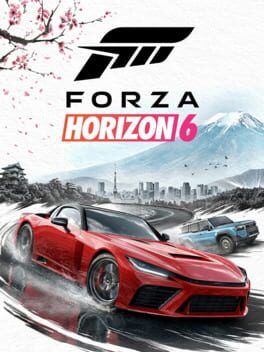
At launch, Forza Horizon 6 hits the road with more than 550 cars, the biggest day one roster in the franchise. Given the setting it is no surprise that Japanese manufacturers and JDM icons are pushed to the front. The cover pairing of the 2025 GR GT Prototype and 2025 Toyota Land Cruiser sends a clear signal: this is as much about celebrating modern Toyota performance and off-road heritage as it is about revisiting the drifting legends and kei curios fans expect.
Under the hood, Playground is using the fresh start to rebalance car classes and introduce a new R Class dedicated to track-focused machinery. That matters for the competitive end of Horizon, where top-tier lobbies in previous games often gravitated toward a narrow meta of A and S1 builds. A better spread of viable classes and more distinct performance envelopes should help both ranked and community-organized racing feel less samey.
Customization is getting a bump. Forza Aero parts are being refreshed, select cars are getting new body kits, and livery designers finally gain the ability to paint on windows, opening up more authentic recreations of real-world race and drift liveries. Cosmetic tire wear visually tracks how much you have driven a set of wheels, while revised steering animations reach up to 540 degrees of rotation for players using cockpit view.
Forza Edition cars return as wildly tuned, visually extreme variants, and a new Aftermarket Cars system scatters pre-customized builds around the open world. Finding a tuned car in a driveway, test-driving it on the spot, then buying it for relatively cheap effectively turns the map into a rolling used car lot and should lower the barrier to experiencing strong tunes without spending time in upgrade menus.
A denser open world for solo and social racing
The map is designed not just as a scenic backdrop, but as a social and creative hub. Tokyo’s vast city grid and the surrounding countryside host more than just race markers. Car Meets pop up in the open world, channeling real life spots like Daikoku PA. Here players can park up, show off cars and character cosmetics, grab other people’s tunes and liveries, or outright buy a copy of a build they see on display.
Player Houses now double as customizable garages where you can stage multi-car showrooms and freely place decor. Layouts are shareable, turning home spaces into another layer of user-generated content. The Estate, a large mountain valley you can gradually clear and build out, takes that idea into the wider world, letting you permanently alter a slice of the map for yourself and visiting friends.
EventLab, Playground’s powerful custom event creator, is being pulled even closer to the core experience. You can start building from anywhere in Japan, using the same toolset whether you are working on a circuit in Tokyo, a stunt park in the Estate or a themed display in your garage. Horizon CoLab allows multiple players to build in real time, which could dramatically increase the pace and ambition of community-made races, stunt arenas and mini games.
On the competitive side, Horizon 6 mixes returning modes such as The Eliminator and Hide & Seek with new layers like Touge Battles, night-time mountain pass duels that lean into Japan’s street racing folklore, and Horizon Time Attack Circuits that live directly in the open world rather than sitting behind separate matchmaking screens. Drag Meets and Spec Racing Championships aim to give more structure to driving disciplines that previously relied heavily on ad hoc community events.
Accessibility and Game Pass as a long-term foundation
Forza Horizon has quietly become one of Microsoft’s flagship examples of accessibility work, and Horizon 6 keeps that trajectory. ASL and BSL video support returns along with the full suite of options from Horizon 5, while new features include a Car Proximity Radar that helps cockpit drivers understand traffic around them, AutoDrive for more relaxed or assisted play, and a highly customizable High Contrast mode designed to keep Japan’s visually busy landscapes readable.
On Xbox and PC the game continues Microsoft’s day one on Game Pass strategy. Console players with Game Pass Ultimate, and PC players with PC Game Pass, get access to the standard edition at launch, with a paid Premium Upgrade unlocking early access. For the Xbox ecosystem this keeps Horizon 6 firmly in “platform pillar” territory: a recurring, large-scale open world racer that can be updated for years and offered as an evergreen subscription showpiece.
What Horizon going multiplatform means
The headline twist around Forza Horizon 6 is not just that it is set in Japan or that it is the biggest Horizon yet. It is that, for the first time, a new Horizon entry is confirmed for PlayStation 5, arriving later in 2026 after the Xbox and PC release.
For racing fans on PlayStation, Horizon 6 fills a gap. Gran Turismo 7 is a heavyweight in the simulation space, but Sony has not had an equivalent festival-style open world racer. Games like The Crew Motorfest and Need for Speed cover pieces of that fantasy, yet neither has quite matched Horizon’s blend of handling, event variety and live service cadence.
Bringing Horizon to PS5 gives PlayStation players a first party caliber arcade open world sandbox that sits alongside, rather than replaces, Gran Turismo. It may nudge Polyphony Digital to keep pushing GT’s more structured, sim-focused identity instead of chasing Horizon’s tone, effectively sharpening the contrast between the brands: GT as the serious garage and race weekend simulator, Horizon as the relaxed, social driving holiday.
For the broader genre, a multiplatform Horizon means the bar for technical polish, car audio, and open world integration will now be visible across all major consoles and PC. Ubisoft’s The Crew series, Need for Speed and even smaller-scale racers will be benchmarked by a Horizon that is no longer locked to one console family. Expect more publishers to treat big map racing games as cross-platform tentpoles rather than experiments.
From Microsoft’s perspective, the PS5 version is less about selling consoles and more about turning Horizon into a franchise that can earn across hardware. Game Pass remains the best value way to play on Xbox and PC, but PlayStation sales potentially expand the audience for DLC expansions, car packs and in-game marketplaces.
Sim vs arcade: how Horizon 6 pressures the competition
Horizon has always walked a line between sim and arcade, with Forza Motorsport and Gran Turismo owning the pure sim space and Need for Speed leaning fully into arcade spectacle. Horizon 6 looks set to widen that hybrid lane.
Physics updates, stronger class distinction with the new R Class, and a heavily Japan-focused car list give Horizon 6 more overlap with sim-adjacent enthusiasts. Touge Battles on realistic-feeling mountain passes, plus Time Attack circuits and Spec Racing Championships, effectively embed a lightweight sim career inside an open world arcade wrapper. That could pull some players who might otherwise spend their time in Motorsport or Gran Turismo into Horizon for its more social, less punitive environment.
At the same time, features like AutoDrive, elaborate accessibility settings and the continued emphasis on goofy EventLab creations keep the barrier to entry low. Newcomers who do not care about trail braking or tire temperatures can still have a good time jumping from drag events to stunt courses.
For sim racers on PS5, Horizon 6 may become the default “second game” that they play when they want a break from license tests and sweaty online lobbies. For arcade racing fans elsewhere, it will be the measuring stick future open world racers are compared against.
A staggered release that reshapes expectations
The staggered rollout is unusual. May 19, 2026 on Xbox and PC, followed months later by the PS5 version, effectively splits the community into early adopters and late arrivals. That has some clear implications.
On Xbox and PC, Game Pass ensures a huge day one player base, which is essential for social modes, Car Meets and EventLab discovery. The early window lets Playground stress test servers, tune balance and smooth rough edges before the game lands in an entirely new ecosystem.
For PS5 owners, the late 2026 launch means they will likely get a more mature version of Horizon 6, with patches, early content drops and community meta already in place. The risk is arriving to a festival where the fastest tunes and dominant builds are long since discovered. The opportunity is jumping in when Japan is fully populated with creative EventLab maps, elaborate Estates and tuned Aftermarket Cars pulled from a veteran community.
Either way, this is the moment Forza Horizon stops being “the open world racer you need an Xbox for” and starts being a genre anchor across platforms. With Japan as its stage, more than 550 cars ready at launch, and a structure designed to serve casual cruisers, creative builders and competitive racers alike, Horizon 6 is positioned to define what open world driving games look like for the rest of the generation.