
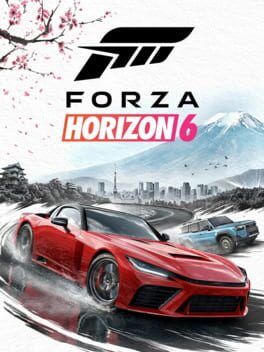

Playground’s long‑awaited jump to Japan brings Initial D style touge, deep JDM culture, and a quiet revolution in how Forza Horizon is released on Xbox, PC, and eventually PS5.
For over a decade, Forza Horizon has been the easy answer to a simple question: “What’s the king of open world racers on Xbox and PC?” With Forza Horizon 6, that question gets more complicated. Playground Games is finally going to Japan, leaning hard into Initial D style street racing and JDM culture, while Xbox experiments with a staggered multiplatform rollout that will eventually bring the Horizon festival to PlayStation 5.
The result is not just a new map or higher car count. Between the setting and the platform strategy, Forza Horizon 6 looks like the series’ biggest strategic pivot since it went full live service.
Why Japan Changes Everything For Horizon
Japan has been “the one that got away” for Horizon fans since the first game. Every new entry sparked the same speculation cycle: this has to be the Japan one, right? After Colorado, Europe, Australia, Britain, and Mexico, Playground is finally answering that call.
From early gameplay and previews, the Japan map is built around three pillars: a dense, neon‑lit city, coastal and rural roads, and a web of mountain passes that give the game a very different personality from Mexico’s wide‑open desert and jungle.
The city is being pitched as the largest urban environment in Horizon history, closer to a dedicated street‑racing playground than a simple hub area. Tight multi‑lane highways, stacked overpasses, and LED‑soaked districts are clearly designed for high‑speed traffic weaving and cruise culture, not just point‑to‑point races.
Head out of town and the tone flips. Mountain routes wind through forests, villages, and service stations that mirror Japan’s real highway rest stops. These roads are narrower, more technical, and intentionally claustrophobic compared with the broad Mexican routes in Forza Horizon 5. Playground is designing the environment to encourage controlling loss of traction rather than pure top‑speed efficiency.
That change alone solves one of Horizon 5’s biggest complaints from drift and street‑racing fans: Mexico was gorgeous, but it rarely felt built for touge battles. Japan does.
Initial D In Everything But Name
Operations Sports and other hands‑on previews make it clear Playground is not being subtle about its anime and manga inspirations. The Toyota Sprinter Trueno AE86 is front and center, shown sliding through misty night roads almost shot‑for‑shot like Initial D’s most iconic scenes. Headlights carve through the fog, taillights trace arcs across switchbacks, and the camera lingers on weight transfer mid‑drift.
More than fan service, the structure of events borrows from that style of racing. A new Touge Battle mode focuses on one‑on‑one runs down mountain passes. Instead of sprawling festival playlists, these are intimate, high‑stakes duels on narrow roads where overtakes are difficult and mistakes are punished instantly. The design is closer to a street‑racing anime rivalry than a festival heat.
Car culture spaces are getting the same treatment. Horizon 6 introduces dedicated Car Meets modeled after real Daikoku Parking Area gatherings, effectively turning a chunk of the map into a persistent social lobby. Players can roll in with JDM builds, park up, chat, rev, take photos, and organize informal runs without loading through menus.
The world itself is full of winks to Japanese pop culture, from a giant robot statue looming over parts of the city to signage and vistas that feel tailored for photo mode. It is the most self‑consciously “car‑otaku” Horizon yet.
None of this would land without a car list to match. While the full garage is still under wraps, early lineups lean heavily on:
Classic 80s and 90s Japanese sports icons like the AE86, Mazda RX‑7, Nissan Silvia variants, R32–R34 Skylines, early Evo and WRX generations, and boxy tuner favorites.
Modern halo cars such as the new Nissan Z, GR Supra, NSX Type S, and cutting‑edge GT‑R variants.
Tuner‑friendly compacts and sedans that invite body kits, stance builds, and drift conversions.
Previous Horizon games always included these cars, but they were sprinkled into a global mix. In Horizon 6, they are the cultural center of gravity. The game is pitched as a love letter to JDM fans first, with American muscle, European exotics, and off‑road heroes playing supporting roles.
If Playground nails the handling balance and customization depth, Horizon 6 has a real chance to become the definitive mainstream JDM sandbox, something even Gran Turismo 7 only approaches in a more serious, circuit‑driven way.
A Different Kind Of Festival: How The Map Reinforces Car Culture
Horizon has always sold itself as a music festival with cars. In Japan, that metaphor shifts a little closer to a car meet that swallowed a country.
The biggest change is how event design feeds specific subcultures. Touge routes are built with linked corners, varying gradients, and limited runoff that encourage rhythmic driving and drifting. City expressways emphasize lane‑switching and slipstreaming. Rural loops favor lower‑power cars that can stay in their power band without screaming down endless straights.
That tailored approach is important because it gives different cars and builds natural homes. An AE86 or S13 looks and feels correct threading a mountain pass at 90 km/h, while a Liberty Walk‑style widebody GT‑R finally has an urban playground where sheer grip and acceleration matter.
Meanwhile, the Daikoku‑inspired car meet spaces represent a quieter revolution. Horizon’s social content has historically lived in menus: lobbies, matchmaking, and playlists. Now, social play is being woven into the geography. If Playground follows through with robust tools to host drift trains, photo sessions, or custom events from those hubs, community‑driven culture could become as important as seasonal playlists.
The Multiplatform Rollout: Xbox First, PS5 Later
If Horizon’s approach to Japan is a love letter, its release strategy is more of a business memo. Forza Horizon 6 launches on May 19, 2026 for Xbox Series X|S and PC, including Steam and the Microsoft Store, and hits Game Pass day one. A PlayStation 5 version is planned for later in 2026.
That staggered rollout is a major philosophical shift. For a decade, Forza has functioned as a de facto platform exclusive, a core reason to own an Xbox or subscribe to Game Pass. Letting a mainline Horizon reach PS5, even months later, reshapes how Microsoft thinks about its racing crown jewel.
In practice, the strategy tries to have it both ways.
On one hand, early access is clearly meant as an Xbox and PC value play. Series X|S owners and Game Pass subscribers get the game at launch, with premium editions offering the usual early‑access window and bundled expansions. Steam players get parity, which keeps the large PC sim and modding audience in the loop.
On the other hand, a PS5 release ensures the game can tap into one of the healthiest console racing audiences in the world without requiring those players to buy separate hardware. Microsoft still controls the IP and the services around it, but the Horizon festival itself stops being “for Xbox owners only.”
It looks a lot like what we are starting to see across big Xbox franchises: use Game Pass and first‑day access to anchor the ecosystem, but stop leaving money on the table by ignoring rival platforms entirely.
What This Means For Game Pass
For Game Pass, Horizon 6 functions as both content and billboard.
Day‑one inclusion has two immediate effects. First, it reinforces the idea that if you care about big racing releases, Game Pass on console or PC remains the cheapest way to keep up. Second, it gives Playground a huge baseline audience to fuel seasonal content, online modes, and the social car culture spaces that define this entry.
The interesting wrinkle is what happens once the PS5 version launches. At that point, the subscription is no longer the only easy way to play Horizon 6. Xbox will need to emphasize the ongoing value: expansions, car passes, and future Forza entries that still hit Game Pass first.
If the Japan setting, Initial D nostalgia, and touge‑heavy design pull in lapsed or new players through PS5, those same players could become targets for PC Game Pass or cloud streaming if they want to sample the broader Forza ecosystem without buying extra copies. In other words, Horizon 6 on PS5 may actually serve as a marketing funnel back into Microsoft’s services, not just a one‑off sale.
Racing Fans Win On Choice And Variety
From a pure player perspective, the multiplatform move combined with the shift to Japan is overwhelmingly positive.
Xbox and PC players keep the traditional Horizon perks: first crack at the game, lowest friction via Game Pass, and the sense of being the “home crowd” for seasonal events and community building. If Playground repeats the pattern of timed expansion releases and live updates debuting in sync with Xbox marketing beats, that perception will only strengthen.
PS5 players, many of whom have lived primarily in the Gran Turismo ecosystem, suddenly gain access to a completely different flavor of racer. Where GT7 focuses on structured circuits, license tests, and simulation‑leaning handling, Horizon 6 is chaotic, social, and obsessed with spectacle.
That contrast is healthy. JDM and Initial D fans who bounced off GT7’s more serious tone might find their home in Horizon’s festival‑style chaos. Conversely, players who cut their teeth on Horizon’s looser physics may get curious about trying more grounded racing on the same console via GT7.
For the broader racing genre, having an open world juggernaut like Horizon sitting next to a heavyweight sim like Gran Turismo on the same hardware could raise expectations for both. Car sound quality, force feedback support, wheel compatibility, and online structure will be compared relentlessly, and both developers know it.
The New Front In The Gran Turismo Rivalry
Xbox bringing Forza to PlayStation reframes its long‑running rivalry with Gran Turismo. It is no longer a clean, platform‑exclusive face‑off. Instead, the two series may end up sharing a chunk of the same player base.
In that shared space, Horizon 6’s Japan focus is a direct shot at Gran Turismo’s historical heartland. GT built its identity around Japanese manufacturers, circuits, and driving tests long before JDM culture achieved global meme status. By taking Horizon to Japan with a heavy Initial D flavor, Microsoft is essentially saying: the most stylish version of Japanese car fantasy might now live in our game.
Gran Turismo 7 still holds the upper hand on licensed circuits, structured motorsport, and hardcore physics. That will not change. Where Horizon can compete is in everything Gran Turismo has traditionally treated as secondary: living, breathing environments, emergent social play, off‑beat events, and a willingness to blur the line between sim, arcade, and automotive tourism.
The touge angle in particular is an area where GT has been relatively conservative. Its mountain passes and drift events are folded into a broader simulation framework. Horizon 6, by contrast, is building its nighttime mountain battles and car meet culture into the core identity of the game.
If the PS5 port retains parity on visuals, performance, and features, the comparison videos and streamer coverage will write themselves. For the first time, console players will be able to switch between GT7 and a current Forza game without changing boxes, and that will put pressure on both franchises to refine their strengths.
A Strategic Bet On Culture And Reach
Looking at all the pieces together, Forza Horizon 6 feels like a calculated bet on two fronts.
Culturally, Playground is leaning harder into a specific scene than ever before. By centering Japan, Initial D energy, and JDM icons, the studio is accepting that some players will feel less catered to than in the past. That is the tradeoff that comes with depth over breadth. If it works, Horizon 6 becomes the definitive digital playground for that culture and sets a new standard for how authentically big games can treat car scenes.
Commercially, Microsoft is testing how far it can stretch the idea of a “platform flagship” without truly giving it up. Launch first on Xbox and PC, lock it into Game Pass, then release on PS5 once the early adoption curve has peaked. It is a softer, more service‑driven kind of exclusivity that fits with how the industry is moving.
For racing fans, that combination might be ideal. A Horizon built around touge battles, Daikoku‑style meets, and neon city expressways, available on nearly every major platform with robust online support, is the kind of scenario that would have sounded like fantasy back when the first Forza Horizon launched.
If Playground Games can deliver on the handling, progression, and live support to match its ambition, Forza Horizon 6’s trip to Japan and onto PS5 could mark the start of a new era where the Horizon festival is less about where you play, and more about how deeply it captures the culture you love.