
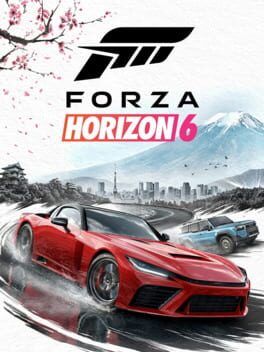
Forza Horizon 6 players say anime styled itasha liveries are being hit with bans. Here is what Forza Support says is allowed, what crosses into sexually suggestive content, and how creators should share designs more safely.

Image: IGDB
Store links: Forza Horizon 6 on Steam, Forza Horizon 6: Welcome Pack on Steam, Forza Horizon 6: Treasure Map on Steam
Forza Support says itasha is allowed, but the line is now drawn harder
Microsoft and Turn 10 Studios have updated Forza’s public moderation guidance after months of complaints that Forza Horizon 6 anime car designs are being removed and that some creators are being banned over itasha style liveries. The clearest official point is also the source of the current argument: Forza Support says itasha style designs are permitted, but explicit sexual content and sexually suggestive content are forbidden.
That clarification, reported by IGN, Operation Sports, TheGamer and Aroged from Forza Support’s updated guidance, does not amount to a blanket ban on anime decorated cars. It does, however, put anime liveries under a rule set that can be difficult to judge in a vinyl editor, especially when a character illustration is spread across a hood, door, quarter panel or roof and then viewed through photos, thumbnails and shared Creative Hub listings.
Forza Support’s specific imagery guidance says designs can be considered suggestive when they depict provocative poses, associated gestures and facial expressions, or when they draw attention to specific body parts. The support article also says it cannot show specific examples of suggestive imagery in that guidance. That leaves creators with a rule written in broad visual categories rather than a gallery of allowed and disallowed designs.
The backlash has landed harder because Forza Horizon 6 is set in a fictional version of Japan, where itasha culture originated. Itasha, often translated as “painful car,” refers to real cars decorated with anime, manga, video game and pop culture characters. Players have recreated that style in Forza for years, but the current wave of Forza Horizon 6 bans has turned a familiar customization niche into a moderation flashpoint.
Players say the bans go beyond obviously explicit liveries
The community complaint is not simply that Forza Horizon 6 sexually suggestive content rules exist. The dispute is whether enforcement is catching ordinary anime art alongside designs that break the code of conduct.
Automaton West reported that several Forza Horizon 6 players in Japan have described mass bans on custom paint jobs in the Creative Hub, with some itasha artists removing their shared work or refusing to upload new designs. Dot Esports similarly reported that creators have pulled liveries and that some players claim to have received permanent hardware bans. TheGamer reported accusations that entire accounts were banned immediately over false flags involving material harmful to children.
Those are player reports and community allegations, not confirmed technical findings from Microsoft or Playground Games. The distinction matters. Players have claimed that downloaded liveries, photos of cars using anime artwork and even unfinished work-in-progress files have led to penalties. Automaton West said some reports describe rough sketches or body line layouts being flagged as nude content, while Dot Esports noted that the circumstances around private unfinished artwork have not been independently verified.
The most credible framing from the available sources is that there is a visible enforcement controversy around itasha liveries, especially in Japan and Asian player communities, but the public evidence does not prove every claimed cause of every ban. Some players and outlets report that at least some banned designs may have violated policy, while the complaint from affected creators is that many ordinary anime liveries are being treated the same way.
Mass reporting and AI moderation are alleged, but Forza’s stated process says human review
A major reason the Forza Horizon 6 itasha ban debate has escalated is the belief among some players that coordinated reporting can force enforcement. Automaton West reported speculation that a reporting campaign may be responsible for bans across Forza titles, while Dot Esports cited community claims about blacklists, repeated reports and alleged Discord admissions from bad actors. IGN also reported that the controversy has fueled speculation about AI moderation and mass reporting.
Forza’s published position conflicts with that theory. In the updated Code of Conduct language cited by IGN, Operation Sports and Aroged, Microsoft and Turn 10 Studios say reported content is added to a queue and reviewed by a human moderator. The guidance also says the number of reports on a piece of content does not affect its prioritization or its position in that queue.
That statement does not answer every practical concern. A human review process can still be inconsistent, especially when moderators have to judge suggestive intent from stylized art, cropped characters, mirrored decals or a car photo where the framing changes the emphasis of the design. But it does mean the official system, as described by Forza Support, is not supposed to apply bans automatically because a design receives enough reports.
There is also a separate issue of trust. If players believe mass reports are functionally creating enforcement pressure, while the publisher says report volume does not change queue priority, the only way to narrow that gap is clearer communication on reviewed cases, appeal outcomes and examples of borderline content. The current public guidance tells creators the categories of risk, but it does not show where the line sits in actual Forza Horizon 6 livery work.
Steam reviews and Japanese community reaction turned moderation into a cultural dispute
The controversy has moved beyond individual ban appeals. Operation Sports reported that Forza Horizon 6’s Steam rating in Japan dropped to Mixed, citing a Reddit post connected to the backlash. Dot Esports also reported that the game dropped to Mixed reviews in Japan as negative reviews criticized the treatment of itasha creators.
Automaton West highlighted the cultural edge of the criticism. Japanese players quoted by the outlet argued that itasha has long been part of Horizon’s player expression and that punishing it in a Japan-set entry feels especially tone deaf. One user cited by Automaton West wrote that the game used Japanese culture as a selling point while failing to respect part of that culture in practice.
That argument should be separated from the moderation rule itself. Forza Support is not saying anime cars are banned because they are anime cars. The official language says itasha is allowed. The clash comes from how anime character art is being evaluated under sexual content rules, and from the perception that Forza Horizon 6 is more aggressive toward a car culture style that its own setting makes highly visible.
For a racing game, this matters in a very specific design sense. Horizon’s livery ecosystem is part of how players build identity around cars. A tuned R35, WRX or Silvia does not only communicate horsepower and drivetrain choice; the paint tells people what scene that car belongs to. If creators are afraid to upload designs, the Creative Hub loses variety, and the shared world becomes cleaner but less expressive.
What crosses the line under the current Forza Horizon 6 anime car design rules
The safest reading of Forza Support’s policy is that the subject matter alone is not the violation. Anime, manga and game characters are not banned under the quoted guidance. Itasha style designs are explicitly permitted. The enforcement risk begins when the artwork is explicit, sexualized or framed in a way that moderators may read as sexually suggestive.
Forza Support’s own categories give creators the practical checklist. Avoid provocative poses. Avoid gestures and facial expressions that are tied to sexual suggestion. Avoid layouts that draw attention to specific body parts. In livery terms, that means the issue may be the illustration and the car placement together: a character pose on a door panel, a cropped image across a rear quarter, or a camera angle used for a shared photo can emphasize details differently than the original flat decal.
Creators should also be cautious with partial anatomy sketches, swimsuit style art, lingerie coded outfits, exaggerated body proportions, pin-up compositions and any design where the central joke or appeal is sexual presentation. The sources do not provide an official list of banned clothing or poses, so those examples are interpretation based on the categories Forza Support published, not confirmed case law from Playground or Turn 10.
The harder area is ordinary fan art that someone else may view as suggestive. Because Forza Support says it cannot provide visual examples, there is no public safe harbor for a specific anime style, age-coded character type or cropping method. If the livery depends on a borderline pose looking acceptable in context, it is a poor candidate for public sharing under the current climate.
How livery creators should reduce risk before uploading or sharing photos
Forza Horizon 6 creators who want to keep making itasha should treat public sharing like a scrutineering bay. Before a design goes into the Creative Hub, look at it from the angles other players and moderators will see: thumbnail, side profile, photo mode crop, garage view and in-race camera. If any view turns the design into a body-part-focused image, revise it before uploading.
Use character art that reads as portraiture, action art or motorsport graphic design rather than pin-up composition. Keep faces, logos, typography, sponsor-style elements and color blocking in balance so the car does not visually center sexualized anatomy. When working with rough construction sketches, consider whether incomplete body outlines could be misunderstood if they are ever reported or reviewed, while remembering that reports of private work-in-progress bans remain unverified in the supplied sources.
Creators should also be careful when downloading and using other players’ designs. Dot Esports reported player claims that penalties have followed downloaded designs or shared photos, but those circumstances are not independently confirmed. The safer approach is to inspect a shared livery before equipping it publicly, especially if it uses anime character art that pushes suggestive framing.
If a ban has already happened, TheGamer pointed players toward the official appeal process. Playground’s Code of Conduct FAQ, as reported by TheGamer, says the studio is adding warnings for low-severity first-time violations, replacing the old three-strike system with categories of violations and reducing low-severity suspension lengths so they start at one day. That does not guarantee relief for any specific anime livery ban, and it does not override the sexual content rules, but it does show that Forza’s moderation framework is being revised while the controversy is active.
The unresolved issue is consistency, not whether anime cars can exist
The confirmed policy position is narrower than the anger around it: Forza Support says itasha style designs are allowed in Forza Horizon 6, while explicit sexual content and sexually suggestive content are banned. The confirmed community reaction is broader: players, especially in Japan, are reporting bans, removed liveries, pulled uploads, negative Steam reviews and fear around sharing anime styled designs.
Those two facts can coexist. A policy can permit a category in principle while enforcement makes creators feel the category is unsafe in practice. That is the current tension behind Forza Horizon 6 bans and the backlash around anime car designs.
For now, creators should not assume that “itasha” is the problem word. The risk is the combination of character art, pose, expression, body emphasis, crop and sharing context. Until Forza Support provides clearer examples or more transparent moderation outcomes, the safest anime livery is one that would still read as non-sexual if a moderator saw only the thumbnail, only the side panel, or only a photo mode crop.
That is a stricter creative environment than many Horizon painters expected from a Japan-set game, and it explains why the backlash has not faded after the guideline update. The rule says the lane is open. Players are arguing that the guardrails are too vague to drive it at speed.