
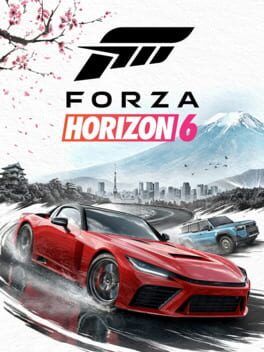
Some Forza Horizon 6 players say the live-service cadence feels leaner than expected, with British Automotive event design, treasure hunts, economy complaints, and communication gaps feeding wider series criticism.
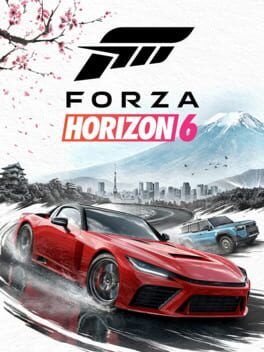
Image: IGDB
Store links: Forza Horizon 6 on Steam, Forza Horizon 6: Welcome Pack on Steam, Forza Horizon 6: Treasure Map on Steam
A strong launch is now running into a live-service trust problem
The latest official Forza Horizon 6 update added a full Series 5 slate on September 7, including Drift Attack, 10 Festival Playlist reward cars, four Car Pass cars, and a limited-time British Automotive theme, according to Forza Support. That should read like a healthy post-launch cadence. Instead, it has landed alongside a sharper community argument: some Forza Horizon 6 players believe the series is starting to feel leaner, more transactional, and less driven by car culture than earlier Horizon games.
The tension is important because the criticism is not coming from a failed launch narrative. Operation Sports reported on September 10 that Forza Horizon 6 arrived on PC and consoles earlier in 2026 to strong reception, citing a 90 Metacritic review average and an 8.3 user score. The same report noted that even critical players often say they enjoyed the game at launch. The complaint is about the long tail: the weekly and monthly rhythm after the honeymoon, the reward economy, the way events reuse locations, and whether the festival structure feels curated or merely maintained.
There is no official statement in the provided source material confirming cost-cutting at Playground Games, Turn 10, Xbox Game Studios, or any other Forza stakeholder. The phrase “Forza Horizon 6 cost cutting” is a community interpretation, amplified by Operation Sports’ coverage of Reddit discussion and by posts arguing that the ongoing experience has lost ambition. The confirmed facts are the update contents, the event formats, the bug-fix cadence, and the public criticism. The cost-cutting conclusion remains an allegation from players, not a documented internal strategy.
The British Automotive Series shows both content volume and perceived thrift
Forza Support’s September 7 release notes describe Series 5 as a sizeable update on paper. It added Drift Attack as a new feature, introduced the 1990 Jaguar XJ-S Forza Edition, added new paint car options for the 2025 McLaren W1, and listed 10 unlockable Festival Playlist reward cars available from September 10 onward. The same notes list four Car Pass cars available from September 10 through October 1, restricted to the Forza Horizon 6 Car Pass, Deluxe, Premium, and Premium Upgrade Editions.
That split between earnable rewards and paid-entitlement cars is where some of the argument begins. A live racing game can sustain itself through a mixed pipeline of free playlist cars, premium pass cars, cosmetics, and limited-time activities. Forza’s September notes clearly show all of those systems operating at once. But to players already sensitive to monetization, the presence of four Car Pass cars beside the 10 playlist cars can read less like abundance and more like a reminder that the post-launch garage is partitioned.
The limited-time British Automotive features also show the modern Horizon formula in compact form. Forza Support lists an “Aftermarket Takeover” evolving world theme, a Drift Tyre collectible, several clothing items, one player badge, and one emote. Those are legitimate additions, but they are not the same kind of headline as a new map, a large expansion, or a major driving-system overhaul. For a player logging in primarily for routes, physics challenges, rivals depth, or distinctive cars, cosmetics and collectibles can feel like filler in the racing line.
That does not prove development has been cut back. It does help explain why the Forza Horizon 6 series criticism is sticking. The update has content, but its shape emphasizes playlist retention, collectibles, and reward scheduling. In motorsport terms, the car is still circulating, but some players are questioning whether the team is pushing development pace or simply managing tire wear.
Event reuse is efficient, but it can make a festival feel smaller
Recent guides around the British Automotive Series illustrate how Forza Horizon 6 event design is feeding the concern. Polygon’s guide to Shimanoyama Circuit says the location is one of many road races in the game, but it is also used for the summer Drift Attack challenge and the #JaguarSnap photo challenge. Polygon describes Drift Attack as a new permanent race type that functions similarly to Time Attack, except players chase drift points rather than lap speed.
On its own, that is sensible design. A circuit that already has clean boundaries, corner flow, and readable entry speeds is an obvious place to stage a drift-point challenge. Shimanoyama Circuit can support different objectives without needing a new venue every week. Forza Horizon’s open-world format has always depended on remixing roads, surfaces, weather, cars, and restrictions.
The perception problem comes from repetition. When a playlist asks players to visit an existing circuit, complete a new drift objective there, and also take a manufacturer-specific photo at the same site, the design can feel like a layered checklist. That is efficient live-service production, but efficiency is exactly what skeptical players are reading as evidence of thrift. The event may play well, especially if the drift scoring rewards angle control and throttle discipline rather than raw speed, but the structure still signals reuse.
The Forza Horizon 6 treasure hunt discussion fits the same pattern. PC Gamer published a guide focused on where to find the Ito region Treasure Hunt as the British Automotive Festival Series began. The supplied PC Gamer text does not include the full solution, so it would be wrong to claim details beyond the existence of that guide and its connection to the new series. Still, the need for location guides around treasure hunts, photo objectives, and named circuit challenges shows how the weekly loop is being consumed: players are often navigating tasks as a checklist rather than discovering a bespoke automotive event organically.
Economy complaints have a narrow official paper trail and a broader community reading
Operation Sports reported that players in the Reddit discussion pointed to decisions they believe make it harder to earn currency without spending real money. The same report says players complained about cars being ported from Forza Motorsport rather than receiving fresh drops, and about community-facing features such as official community activity and Forzathon being treated as expendable unless they generate major revenue. Those are player claims as reported by Operation Sports, not confirmed admissions from the developer or publisher in the source material.
The official patch notes do show that Forza Horizon 6’s economy and car ownership systems have required post-launch adjustment. In the July 13 release notes, Forza Support said it fixed an issue where Treasure Cars could be removed from My Cars and told affected players to submit a support ticket. The same update changed a Credit cap that was “incorrectly applied” to non-Auto Show cars in the Auction House and adjusted the price of the 1998 Subaru Impreza 22B-STi Version to better reflect the value of the car.
Those notes do not validate the wider claim that the economy has been deliberately tightened to push spending. They do confirm that credits, Auction House rules, Treasure Cars, and car values are active maintenance points in FH6. In a racing game built around collecting, tuning, and rotating cars through seasonal restrictions, even small economy friction can change how players read the whole product. If a reward car feels scarce, if an auction rule changes, or if desirable cars sit behind pass ownership, the question quickly shifts from “Can I drive this?” to “What system is keeping me from driving this?”
That distinction is central to the cost-cutting argument. Players are not only counting cars. They are judging whether the garage feels generous, whether progression respects their time, and whether the festival still behaves like a celebration of vehicles rather than a content funnel.
Communication has become part of the criticism, not a side issue
A separate Reddit post supplied in the source material, titled “An Analytical Breakdown of FH6’s Retention Crisis,” argues that Playground Games and Turn 10 have avoided communication with players and contrasts that with what the poster describes as more visible developer touchpoints during Forza Horizon 4 and Forza Horizon 5. That is a community claim, and the source material does not include a developer response confirming or disputing it.
The same post cites SteamCharts links and Alinea Analytics figures to argue that Forza Horizon 6 suffered a sharper four-month concurrent-player drop on Steam than Forza Horizon 5. According to the Reddit author’s calculation, FH5 fell from a 39.9k launch peak to 9.4k concurrent players after four months, while FH6 fell from 198.6k to 24.3k in the same window. The post further claims, citing Alinea Analytics, that Steam represented roughly 44 percent of FH6’s 6.4 million sales.
Those figures should be handled carefully. Steam concurrency is not the full Forza audience, especially for a Microsoft-published series with Xbox console and Windows PC Xbox app versions listed in the official release notes. SteamCharts can show a real pattern on one storefront, but it cannot by itself prove total retention across Game Pass, Xbox Series X|S, Windows Store, or other platform channels. The Reddit post’s conclusion that FH6 has a retention crisis is therefore an interpretation built on partial public data.
Still, the communication complaint matters because silence leaves room for players to build their own telemetry. When official channels provide patch notes but little visible explanation of design priorities, players fill the gap with Steam graphs, car-list comparisons, reward spreadsheets, and assumptions about budget. In a technical racing community, that vacuum is combustible. People who can feel a traction-model tweak or spot a recycled car audio sample are also going to notice when the live-service message lacks a clear development roadmap.
The patch cadence shows maintenance, but not necessarily renewed ambition
Forza Support’s recent notes show regular maintenance across platforms. The July 13 update included performance and stability fixes, AI improvements intended to reduce excessive collisions on corner entries, audio performance improvements, radio rotation fixes, car-specific fixes, and EventLab exploit fixes. The August 24 hotfix addressed lost Road Discovery Progress caused by the Series 4 update and fixed an issue where Vinyls could be downloaded and edited by anyone. The September 7 Series 5 update again included performance and stability fixes, accessibility improvements, and a pop-up for corrupted Prefabs.
For players who care about the driving experience, those details are not trivial. AI cars overcommitting into corner entries can ruin road-race flow, especially in street layouts where braking zones are already compressed. Audio fixes also matter in a series where engine note, exhaust character, and shift feedback are part of how players identify cars before the HUD catches up. Stability work is essential for an open-world racer with EventLab creations, fast travel, photo challenges, collectibles, and online playlist tasks all sharing the same ecosystem.
The issue is that maintenance and ambition are judged differently. Patch notes can prove the game is being serviced, but they do not always persuade players that the festival is evolving in a meaningful way. If a monthly update’s most visible elements are a drift variant, cosmetics, collectibles, reward cars, and Car Pass entries, while the deeper fixes sit in support notes, the public-facing impression can skew toward a leaner operation even when engineers are actively improving the game.
That is the gap Forza Horizon 6 now has to manage. The official record supports an active update pipeline. The community criticism argues that the pipeline is increasingly optimized for retention mechanics and monetized car delivery rather than memorable automotive moments. Both can be true at the same time: a game can be well maintained and still feel less generous or less passionate to its most invested players.
How to read the criticism if you are playing or deciding whether to wait
If you already enjoy Forza Horizon 6 for its core arcade handling, car collecting, and open-world racing, the supplied sources do not show a collapse. Operation Sports itself framed the game as well reviewed and still enjoyable even among some critics. The official September update confirms new events and reward cars are continuing, and Forza Support’s platform notes show active support across Xbox Series X|S, Windows PC through the Xbox app, and Steam.
If your main interest is the live-service layer, it is worth being more selective. The British Automotive Series appears to lean on familiar Horizon structures: playlist reward cars, paid Car Pass drops, limited-time collectibles, cosmetics, photo objectives, treasure-hunt style tasks, and a new Drift Attack format using existing circuit space. That may be enough if you like weekly targets and garage completion. It may feel thin if you are waiting for larger systemic changes, clearer communication, or a stronger sense that each series is built around cars first and retention second.
The safest reading is to separate evidence from mood. Confirmed: Series 5 added Drift Attack, 10 Festival Playlist reward cars, four Car Pass cars, limited-time British Automotive features, and multiple fixes. Confirmed: guides from Polygon and PC Gamer are already helping players locate specific seasonal objectives such as Shimanoyama Circuit challenges and the Ito region Treasure Hunt. Reported by Operation Sports: some players believe FH6 has become more corporate, more profit-focused, and less passionate. Unconfirmed: that these choices are the result of deliberate cost-cutting.
Forza Horizon 6’s risk is not that one treasure hunt or one drift challenge will define the game. The risk is cumulative. When reused venues, pass-gated cars, economy anxiety, checklist events, and quieter communication all arrive in the same season, players start reading efficiency as direction. For a racing series built on the fantasy of abundance, that perception can be as damaging as a missed apex.