
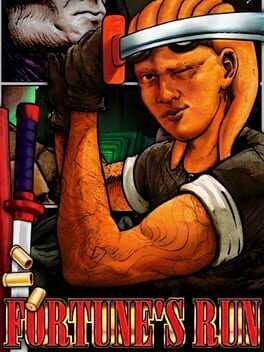
After a year-long pause while its creator served prison time, Fortune’s Run is back in active development. Here’s the state the early access immersive sim was left in, what’s planned next, and whether it can realistically win back players’ attention.
Fortune’s Run was already a cult favorite before development suddenly stopped. The scrappy, low-fi immersive sim blended Thief style stealth, fists-out brawling and Deus Ex style multi-path levels into something rough but striking. Then, not long after its 2023 early access launch, work on the game effectively froze when lead developer Dizzie went to prison.
Now, about a year later, she has been granted parole and is back working on Fortune’s Run from a halfway house. That puts this strange, fiercely loved project in a rare position. It is both an early access game returning from an enforced coma and a test of whether a tiny team can claw back momentum after real life nearly killed the project.
The state Fortune’s Run was left in
When development paused, Fortune’s Run was in classic early access shape. The core ideas were there and already compelling. You could sneak through dense industrial corridors, kick foes into hazards, and navigate surprisingly open levels that rewarded improvisation. Its art style, all chunky pixels and grime, helped it stand out in a field of retro shooters.
But it was also undeniably incomplete. The campaign stopped short of a full story arc. Some story critical missions simply did not exist yet, and several systems, including netcode, were in an unfinished or experimental state. The early access version felt more like a bold proof of concept than a fully fleshed campaign.
That is the build many players bounced off or shelved, intending to wait for a 1.0 that suddenly looked very far away once news of the developer’s sentence broke. In practical terms, Fortune’s Run was left with an engaged but anxious community, a short campaign slice, a strong mechanical base, and huge question marks over whether it would ever be finished.
Development resumes after parole
With parole granted, Dizzie has publicly confirmed that she is back on Fortune’s Run. Her latest updates have a blunt, almost weary tone. She talks about writing from a halfway house, about a year inside that went worse than expected, and about wanting to move forward by focusing on finishing the game.
The team itself is smaller and different. Long-time collaborator Arachne, who had already stepped back from production after serious health issues, is no longer in a critical role for Fortune’s Run. Another developer, Kim, has become an important support, both financially and creatively. In practice, that means there is still a small core backing the project rather than a solo attempt to push to 1.0.
The reality is that Fortune’s Run is now a project trying to restart in the middle of a live release. There is no clean pre launch period to quietly build in. Every update is happening under the eyes of early access buyers who have already ridden through one very public disruption.
What the developer says is next
Despite that baggage, the roadmap being described is surprisingly straightforward. Dizzie’s focus is on shepherding Fortune’s Run to a full 1.0 release instead of expanding it in every direction.
She outlines a few concrete goals. First is finishing the missing story critical levels, the missions that will turn the current run of content into a complete narrative. On top of that, she wants to rework and re release the club level that previously existed as a demo, folding in new features and presumably tightening pacing and layout based on feedback.
At the far end of the campaign sits a final level that still needs to be built out to deliver a proper climax. There are also ideas for two side missions, but these sound like stretch goals rather than certainties. Their fate depends on time, energy and whether the game’s sales can justify that extra scope.
Multiplayer and netcode remain openly tentative. Dizzie talks about the netcode as something that could be revisited, not a guaranteed pillar. If Fortune’s Run sees a meaningful uptick in attention and revenue, more robust online features might be feasible. If not, the priority is clearly to get a polished single player campaign in front of players.
Timewise, the messaging is cautious. She points to a likely window of about twelve months for the next substantial release, with a hopeful target around six months if things go well. Given the reality of re entering development life from a halfway house and the need to stabilize her own situation, the longer estimate feels more realistic even if the shorter one remains aspirational.
The challenge of regaining momentum
The big question hanging over Fortune’s Run is not just whether it can be finished. It is whether it can become a conversation piece again in a crowded market that has moved on over the last year.
Immersive sim fans are unusually patient and loyal. They rally around experiments that feel ambitious and personal, and Fortune’s Run definitely fits that mold. The game already has a reputation in those circles for wild systemic play, strange tone and uncompromising design. That gives it a foothold most small early access projects never get.
At the same time, early access is merciless. A long silence often gets read as abandonment, especially when it coincides with serious legal trouble for the lead developer. Some players will have written the game off. Others will be wary of re investing time or spreading the word until they see clear, sustained progress.
From a purely practical perspective, regaining momentum will likely hinge on two things. First is delivering a meaty, coherent content update that shows Fortune’s Run is structurally moving toward completion, not just patching systems. Second is consistent communication that sticks to development updates rather than personal drama.
There is also the question of trust. Dizzie has been forthright in recent statements about her past, describing herself as having been violent and having hurt people. That level of directness may help some players separate the art from the creator’s history, but for others the context will remain uncomfortable. The game’s reputation will probably live in that tension, where enthusiasm for the design shares space with unease about its history.
A realistic path forward for a cult immersive sim
Despite all of that, Fortune’s Run is better positioned than many troubled early access titles. It has a distinct identity, mechanical depth, and a small but vocal fanbase that still talks about its best moments. The immersive sim community does not get many new toys, and fortune often favors the weird.
The most realistic scenario is not a sudden breakout, but a slow burn comeback. If the next year brings a substantial campaign expansion, a polished rework of earlier content, and a clear line of sight to 1.0, word of mouth can reignite. Steam updates, focused trailers and coverage from outlets that have followed the story will help, but the real catalyst will be players rediscovering that the game is fun and significantly more complete than it was.
On the other hand, the risks are obvious. Life instability, limited resources, and the weight of expectations could easily drag the schedule out again. Another long gap in updates or a roadmap that repeatedly slips without explanation would likely cement Fortune’s Run as a promising but permanently unfinished curiosity.
Right now, though, the project has something it did not have a few months ago. It has an active developer, a concrete set of goals for early access, and a path, however narrow, to a 1.0 release. For a cult immersive sim that narrowly avoided being frozen in time, even that much of a comeback is significant. What happens next will depend less on the notoriety of its circumstances and more on whether the next build can remind players why they cared in the first place.