
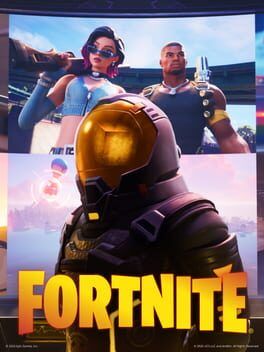

Epic is relaunching Fortnite’s original co-op mode as a true free-to-play experience on April 16, complete with a Switch 2 debut. Here’s what that means for onboarding, launch content, and the future of Fortnite’s PvE identity in 2026.
Fortnite’s most overlooked mode is about to get a second shot.
On April 16, 2026, Fortnite: Save the World drops its paywall and becomes fully free-to-play across PC, PlayStation, Xbox and cloud platforms, while finally landing on Nintendo’s Switch 2. It is a pivot that arrives almost nine years after Save the World first launched as Fortnite’s core experience, and nearly as long after Epic first floated the idea of a free transition that never came.
This time, Epic is treating it less like a token make-good and more like a relaunch. There is pre-registration, platform parity with the newest console on the market and rewards both for returning founders and brand-new players. Underneath that marketing is a bigger question: can Epic meaningfully reposition Fortnite’s PvE in 2026, and is there still an audience that wants it?
A long-delayed promise finally kept
When Fortnite debuted in 2017, Save the World was the pitch. A co-op PvE game where squads of up to four players scavenge, build forts and defend objectives against waves of Husks, wrapped in a light, self-aware apocalypse.
Then Battle Royale happened, and everything changed.
Battle Royale’s explosion left Save the World stranded as a paid add-on inside a free ecosystem. Epic repeatedly told players it would eventually go free, then quietly walked that back and let the mode coast as a niche for dedicated grinders and V-Bucks farmers.
The April 16 switch is Epic finally cashing that old check. Purchasable packs that included Save the World access have already disappeared from storefronts. On launch day, any Fortnite account on a supported platform simply has the mode in the menu, no buy-in required.
The timing is not an accident. Fortnite in 2026 is a platform with Lego Fortnite, Festival, Rocket Racing and Creative, not just a single BR queue. Making Save the World free now turns an awkward relic into another pillar that fits Epic’s "play anything under one launcher" strategy.
What new players see on day one
From April 16, onboarding into Save the World looks very different from its early access years, largely because it starts where most modern Fortnite experiences do: with zero friction.
If you are a completely new player on any platform, the process is straightforward. Download Fortnite, log in and Save the World sits beside Battle Royale, Lego Fortnite and the rest as a mode tile. No separate SKU, no store hunt, no Founder’s Pack math.
Once you boot into it, the structure is familiar to anyone who has played a co-op looter or live-service RPG in the last decade. You pick from hero archetypes like Soldiers, Constructors, Outlanders and Ninjas, then jump into PvE missions that blend horde-mode survival with scavenging and light tower-defense. Objectives range from classic "defend the Atlas" holds to data retrieval, storm shield defenses, escort missions and more.
The full legacy campaign will be available. This includes the original multi-zone progression that takes you from the early suburban maps into denser, more difficult biomes with tougher Husks and modifiers. For players who skipped the mode entirely when it was paid, this is essentially an entire separate co-op game bolted onto Fortnite, with years of weapons, traps and heroes already in the pool.
Pre-registration through Epic’s campaign site sweetens the start. The more players sign up before April 16, the more milestone rewards roll out to pre-registrants at launch, culminating in a new Save the World hero, Snowstrike, if the community hits Epic’s upper target. That gives curious Battle Royale regulars a reason to at least claim the mode even if they are unsure how much time they will invest.
For returning founders, April 16 is not just a price drop but a thank-you package. Epic is handing out Superchargers to push gear and heroes past normal level caps, recruitment and weapon vouchers to fill out collections and a chunk of Gold to immediately buy from the PvE store rotation. It shows that Epic understands the risk of alienating the players who supported the mode for years while it was paid.
Switch 2: the PvE mode finally goes handheld
The Switch 2 arrival may be just as important as going free. Save the World has never been playable on Nintendo hardware before, and its absence on the original Switch helped cement the idea that Fortnite on Nintendo was "Battle Royale only."
On Switch 2, Save the World launches day-and-date with the wider free-to-play rollout. It comes with cross-play and cross-progression across the rest of Fortnite’s ecosystem, so a player can grind missions on a living-room console or PC and then continue their PvE questline on the go.
Hardware matters here. The first Switch struggled with Fortnite’s performance even in Battle Royale, and Save the World is heavier on AI, structures and systemic chaos. Switch 2’s upgraded CPU and GPU headroom should make co-op missions far smoother, especially in four-player lobbies that fill the screen with forts, traps, particle effects and hordes of Husks.
For Epic, the Switch 2 version also plugs an important gap in Fortnite’s grid of modes. Parents and younger players looking for a less sweaty alternative to Battle Royale now have an officially supported, co-op-first option on Nintendo’s most visible platform. That widens the potential funnel for Save the World in ways the original PC and console-only release never could.
Repositioning Fortnite’s PvE identity in 2026
The bigger strategic story is how Epic is reframing Save the World inside a much busier Fortnite.
In 2017, Save the World was the game and Battle Royale was a bold experiment. By 2026, Fortnite is a metagame of modes: competitive PvP, social rhythm games, racing, blocky survival and endless Creative maps. The risk for any one mode is getting lost in that noise.
Epic’s answer appears to be leaning into what makes Save the World distinct instead of trying to turn it into a PvE-flavored Battle Royale. The co-op structure is closer to a session-based ARPG or a light MMO, where the thrill is in long-term progression through cards, survivors, schematics and a skill-tree web, not in last-circle clutch wins.
Making it free removes the most obvious barrier to experimentation. A Battle Royale player who has sunk hundreds of hours into zero build or ranked now has no financial reason not to jump into PvE when a cosmetic questline or crossover event sends them there.
It also gives Epic room to use Save the World as a narrative and mechanical lab again. Before the focus shifted fully to BR, the PvE campaign seeded much of Fortnite’s lore and tone. In 2026, that could extend to limited-time story arcs that intersect with island-wide events, unique co-op mechanics that later bleed into other modes or cross-mode rewards that ask players to spend a few evenings defending storm shields before a season finale.
Launch content and how it actually plays now
One of the more striking things about this free-to-play turn is how fully formed Save the World already is. This is not a barebones early access launch. It is the cumulative result of years of content drops, balance passes and quality-of-life work that continued even when the mode seemed forgotten.
At free-to-play launch, players have access to:
The full story campaign that escorts you through multiple regions with escalating storm threats, enemy types and modifiers.
A deep roster of heroes across classes, each with unique perks and team synergies that dramatically change how you build and fight.
A large library of weapons and traps, including elemental variants, crowd control tools and long-range options for players who prefer to snipe from their latest cobbled-together fort.
Daily and weekly missions, event quests and rotating alerts that offer resources, schematics and unique heroes, echoing Fortnite’s seasonal cadence but tuned for co-op grind.
Over time, live-service bloat made Save the World’s menus and upgrade trees intimidating. Epic knows this is a pain point for onboarding, and the free relaunch is the best opportunity it has had in years to simplify early progression. Expect a more guided first few hours, faster access to fun hero builds and clearer signposting of what to do next so that the game feels like co-op action first and spreadsheet management second.
If Epic nails this, the content ceiling for new players is enormous. A fresh account in April can easily spend dozens of hours climbing up to higher-tier zones, experimenting with builds and unlocking the backlog of event heroes and schematics without ever touching Battle Royale.
Onboarding in a game built for veterans
The hardest design problem for Save the World in 2026 is not a lack of things to do. It is how to teach years of systems to players who are used to Fortnite’s much lighter friction elsewhere.
Epic has already hinted that the free release will be paired with streamlined tutorials and a more modern quest flow. The goal is a funnel where players understand how heroes, survivors, schematics and resources interact inside a few sessions, instead of being overwhelmed by a wall of icons and currencies.
Community incentives do some of the heavy lifting. Pre-registration rewards, launch quests and cross-mode cosmetics give entrenched Battle Royale and Creative players a reason to act as tour guides for friends trying the mode for the first time. With cross-play turned on by default, a veteran commander on PC can carry a new Switch 2 friend through early missions and explain loadouts and base-building in real time.
There is still a risk of friction at the edges. Save the World’s power-level system and long-tail progression were built for players who enjoy grinding the same mission types repeatedly while slowly min-maxing gear. Newcomers conditioned by Fortnite’s snappy matches may bounce if the first impression feels like homework.
How aggressively Epic tunes early game rewards, mission variety and time-to-fun will determine whether the new audience sticks. A generous, fast-moving early game that showcases spectacular storms, big builds and wild hero abilities will do more for long-term retention than any single cosmetic tie-in.
Can this actually revive interest in Fortnite’s PvE side?
The obvious upside of going free on every major platform, with a marquee Switch 2 debut, is a flood of curious players. It is almost certain that concurrent player counts in Save the World will spike on April 16 and in the weeks that follow.
The more interesting question is what happens by the summer.
There is a believable path where Save the World becomes Fortnite’s "third place" experience. Battle Royale remains the competitive heartbeat. Lego Fortnite and Creative scratch the sandbox itch. Save the World slots in as the chill, grindy co-op mode where squads go to talk, farm and slowly power up.
If Epic supports it with:
Regular seasonal questlines that tie into the broader Fortnite story without demanding that you keep up with PvP metas.
Occasional crossovers that debut enemies or mechanics in PvE before they ripple into the island at large.
Healthy, non-predatory monetization that respects the existing player base and does not lean entirely on V-Bucks spreadsheets.
Then yes, this relaunch can absolutely give Fortnite’s non-BR side a meaningful pulse again.
The ceiling is realistic rather than explosive. Save the World will not dethrone Battle Royale or become the primary reason most people install Fortnite in 2026. What it can be is a genuinely robust co-op alternative that finally lives up to Epic’s original promise: a full game in its own right, not just a strange, paid annex to the mode that took over the world.
After nine years, dropping the paywall and expanding to Switch 2 is the cleanest chance Epic will ever get to prove that there is still room in Fortnite for fighting storms instead of just chasing victory royales.