
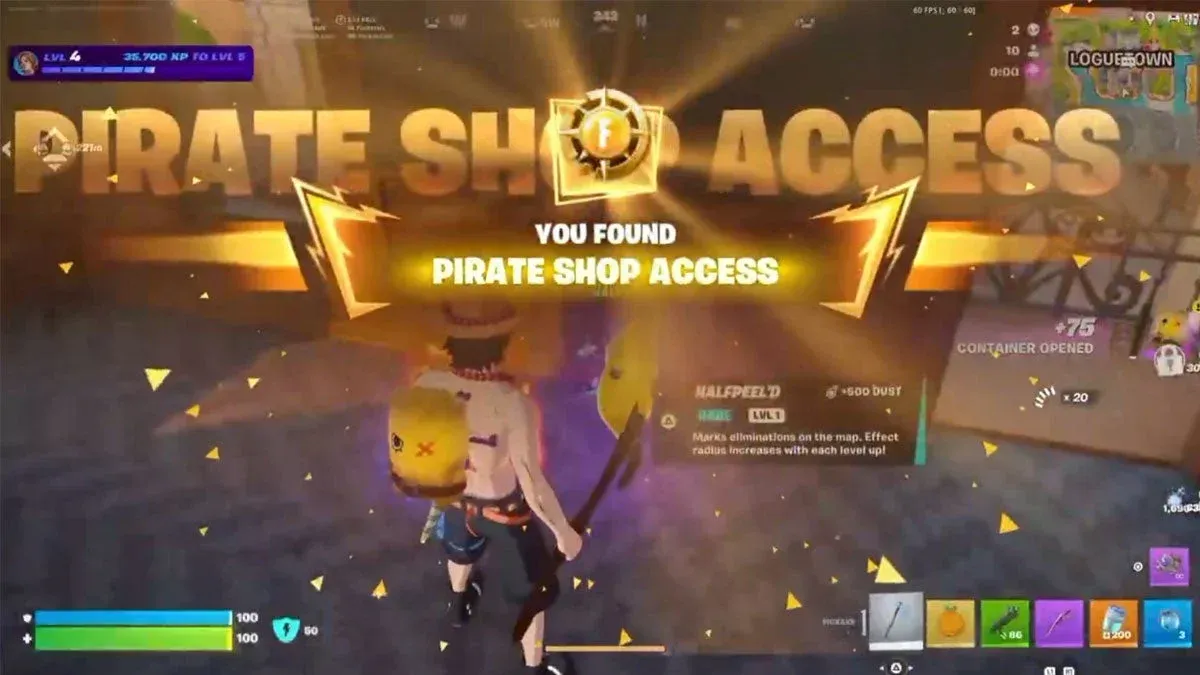

Fortnite players are racing to find the rare Pirate Shop token from the Treasure Hunters mini-season, while paid carries, tool sellers, and account listings push Epic to clarify safe access.
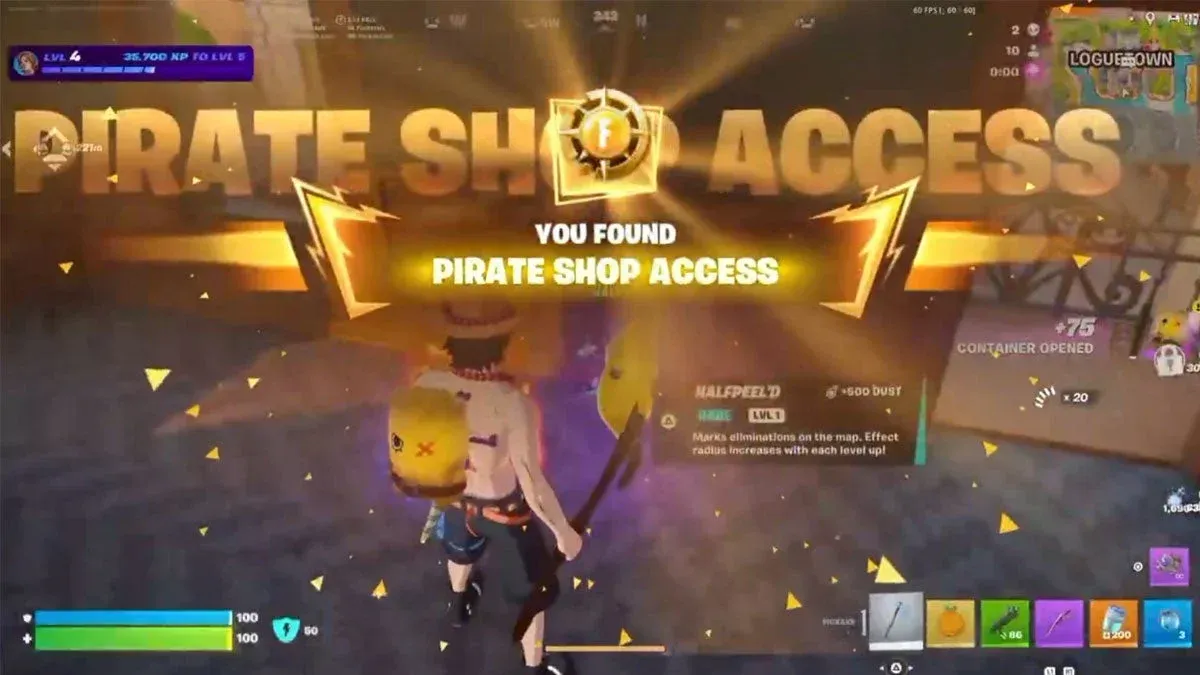
Image: ign.com
A free Item Shop pass has turned Fortnite into a chest-opening sprint
Fortnite’s Treasure Hunters mini-season has produced a chase bigger than the One Piece skins it launched beside: the Fortnite Pirate Shop token, a rare chest reward that can unlock a 14-day window of free Item Shop claims. IGN, Kotaku, Polygon, Shacknews, and Last Word on Gaming all report that the token has sent players into Battle Royale matches to open as many chests as possible, with the prize valuable enough to create paid carry offers, tool ads, and eBay account listings.
The confirmed appeal is straightforward. According to IGN, players who find Pirate Shop access can claim almost everything available for V-Bucks during a two-week period, while real-money offers, gifting, and Battle Pass rewards are excluded. IGN also reports that claimed items stay permanently on the player’s account. Kotaku similarly says Pirate Shop token holders can claim skins, emotes, and other V-Bucks items for free for two weeks, with real-money items and gifts off the table.
That is why this has become a Fortnite token hunt rather than a normal event grind. The reward is not a pickaxe locked behind quests or a limited-time cosmetic for logging in. It is a temporary override on the game’s main cosmetic economy, and the community is treating every unopened chest like a lottery ticket.
What the Pirate Shop token actually gives you
The token’s value comes from access, timing, and party sharing. Last Word on Gaming reports that one token grants Pirate Shop Access for 2026 and 2027. Polygon also reports that the access can be activated once before Dec. 15, 2026, and again before Dec. 15, 2027. Kotaku describes that as two separate 14-day spans, one in 2026 and one in 2027.
The party detail is the part pushing the frenzy into matchmaking behavior. Shacknews reports that when the first player discoveries confirmed early leaks, the item let the player and anyone in their party at the time of acquisition redeem eligible Item Shop items. Kotaku likewise reports that free shop access is granted to everyone in a party if one person finds it. That creates an obvious incentive for squads to farm together, but it also creates the opening for paid chaperones promising to bring customers along while they grind chests.
There are still boundaries. IGN says the access does not apply to real-money offers, gifting, or Battle Pass rewards. That matters for players who see wild claims on social feeds or listings and assume the token unlocks the entire Fortnite economy. Based on the reporting available, the Pirate Shop is powerful, but it is not a blank check for every paid product tied to Fortnite.
The drop rate is the biggest unanswered number
Epic has not announced an official drop rate for the Fortnite Pirate Shop token, and that vacuum is driving confusion. Multiple outlets cite a widely repeated community estimate of one token per 700,000 chests. Last Word on Gaming describes that number as a rumor from social media. IGN says players have estimated the token appears in one out of every 700,000 chests. Kotaku calls the rate a community guesstimate.
Polygon adds a conflicting signal, reporting that dataminer Blortzen’s calculations indicate the token is likely to drop about once in every 2,000 chests, while community estimates point to one in 700,000. Those two figures describe completely different grinds. One suggests a brutal but plausible squad farming target. The other suggests a reward most players will never see even with aggressive routing.
The only safe read is that the Fortnite One Piece token is rare and that its exact odds remain unconfirmed. Until Epic publishes the rate or explains the event logic, players are left measuring luck through clips, social posts, and secondhand math. In a shooter where players normally optimize rotations, loot paths, and fight timing, that uncertainty changes the pace of matches. Some players are reportedly skipping fights to rip through chest routes instead of playing for eliminations or wins, according to Shacknews.
How players are farming it, and where the line gets risky
The legitimate path, as described by the available reports, is simple: open Battle Royale chests during the Treasure Hunters mini-season. Last Word on Gaming says Pirate Shop Access Tokens can only be claimed from treasure chests during a Fortnite Battle Royale match. It recommends high chest-density areas, naming the Chest POI in the northwest of the Crossbones Isle map, plus Arlong Park and Loguetown routes, and says Fortune Sprites or Plundarrgh can help reveal nearby chests.
That advice fits how competitive Fortnite players think about any high-value loot chase. You want chest volume per minute, fast resets when an area is drained, and routes that do not waste half the match crossing empty ground. The catch is that every obvious chest route becomes a hot drop. Last Word on Gaming notes that the Chest POI has become a popular drop zone because of its open areas and loot, while Arlong Park and Loguetown contain many buildings with chests. In practical terms, anyone chasing the token should expect early fights, campers near buildings, and squads that care less about storm position than chest control.
Reported behavior has already gone past normal optimization. IGN says players have used grenades and cannonballs to destroy chests inside locked vaults so they can trigger many chest openings without getting a key. IGN also cites a player sharing an overlay showing chest locations while offering paid help. Polygon reports AFK tools being sold to farm chests while players stand idle. Those are not the same as choosing a better drop spot. They raise enforcement risk, and they are exactly the kind of behavior Epic is likely to watch closely when a reward can translate into hundreds of dollars of V-Bucks value.
Paid carries and eBay listings are where the hunt turns ugly
The profiteering around Fortnite Pirate Shop access has moved quickly. IGN reports that players are sharing exploits, selling tools to automatically farm the token, and offering to chaperone other players for a fee. Kotaku reports accounts with shop access being sold on eBay, along with mod tools that automate treasure hunting. Polygon also reports account sales and paid carrying services tied to the token.
IGN identified eBay listings for Fortnite accounts with Pirate Shop access priced at $9,000 and $10,000 or nearest offer, with no bids at the time of its report. BestGamesWorld, drawing on IGN, repeats those asking prices and says neither listing had bids when updated. Those listings show the gap between asking price and actual market demand, but they also show how quickly a rare in-game access item can attract account sellers.
Epic’s rules are the hard stop here. IGN reports that Epic’s terms of service prohibit buying and selling Fortnite accounts, along with cheating or exploiting, and warns that anyone trying to cash in could face an account ban. BestGamesWorld adds that buyers could lose access if an account is banned or if a previous owner reports it stolen. For players, that makes third-party access a bad trade: you can pay real money for an account or service, still fail to get the token, and risk losing the account anyway.
Epic has warned players, but the access rules still need a cleaner public explanation
Epic has already addressed the scam angle. Kotaku quotes the official Fortnite Status account telling a player, “Buying an account or using fake tools is a scam.” The same post says Pirate Shop Access works like other Battle Royale chests, giving every player an equal opportunity to find it. BestGamesWorld reports the same Epic statement.
That warning is useful, but players still need a cleaner official breakdown of the system. The current picture is assembled through outlet reporting, player clips, social posts, dataminer claims, and store behavior. The most urgent missing details are the official drop rate, whether any bad-luck protection exists, how party eligibility is determined at the exact moment of acquisition, and whether Epic considers vault-destruction farming an exploit it will punish. Those are practical access questions, not lore questions.
Epic also has a timing issue. IGN and BestGamesWorld report that the season is scheduled to end on Dec. 4, while Polygon and Last Word on Gaming report activation deadlines of Dec. 15, 2026, and Dec. 15, 2027. Those dates can coexist, but Epic would reduce confusion by explaining the difference between earning the token during the event and activating Pirate Shop access after earning it. When an item is this rare and this valuable, unclear timing becomes fuel for scams.
Safe guidance for players chasing the Fortnite Pirate Shop token
If you want the token, the safest reported method is still the boring one: play Battle Royale, hit chest-heavy routes, and avoid third-party sellers. Last Word on Gaming’s advice to prioritize high-density POIs and chest-revealing Sprites makes sense for maximizing attempts, but it does not change the central risk. There is no confirmed official drop rate, and no source in the provided material confirms a guaranteed path to the Pirate Shop token.
Do not buy an account, do not pay for a fake tool, and do not assume a paid carry is safe. Epic has publicly warned that buying accounts or using fake tools is a scam, according to Kotaku and BestGamesWorld. IGN and Polygon both report that account trading, cheating, exploiting, and automation can violate Epic’s terms and lead to bans.
For now, Fortnite Pirate Shop access is best treated like a rare event jackpot with unusually high stakes. The prize is real enough that players are changing how they move through matches, but the odds are still officially undisclosed. Until Epic publishes firmer rules, the clean play is to farm chests with your own squad, ignore sellers, and assume any offer promising guaranteed Pirate Shop access is selling risk rather than certainty.