
From Brainrot to Blitz Royale, Winterfest 2025, Creative’s breakout hits and the return of mobile, Fortnite’s wildest year yet shows both the promise and the risks of Epic’s metaverse experiment.
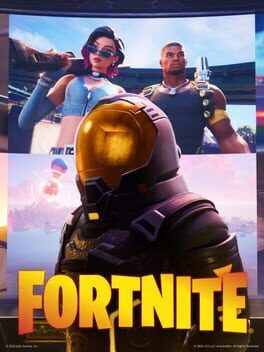
Fortnite in 2025 does not feel like a single game anymore. It is a launcher, a social hub, a Roblox competitor, a celebrity billboard and somewhere underneath all of that, still one of the best battle royales ever made. Epic’s long running promise of a Fortnite “metaverse” finally feels real this year, but the result is a crowded, frequently confusing ecosystem where the original Battle Royale now has to fight for your attention like any other mode.
This was the year Fortnite got bigger, bolder and undeniably messier.
Battle Royale, By Committee
For years “Fortnite” was basically shorthand for its main Battle Royale playlist. In 2025, that is no longer true. Epic spent the year splintering that experience into a handful of overlapping variants, each solving a different problem or chasing a different audience.
OG Fortnite settled into a permanent nostalgia machine, a looping tour of Chapter 1 seasons complete with its own OG Pass. It is no longer a limited time event or one off throwback. It lives alongside the main Chapter 7 island as a parallel track, with progress, cosmetics and even marketing copy that can feel more prominent than the current season.
Blitz Royale became Epic’s laboratory. What started as a hard pivot toward short, mobile friendly matches on a smaller island slowly morphed across the year. Early experiments like universal medallions and over tuned loot were dialed back, and Blitz now feels closer to a “mini BR” that is faster but recognizably Fortnite. Its real significance is strategic. On mobile, where match time matters most, Blitz is the mode Epic pushes as the on ramp, and it quietly explains a lot of the pacing changes we have seen across the ecosystem.
Then there is Delulu, the weekend only social chaos playlist where proximity voice chat and ad hoc truces turn every circle into a reality show. It exists almost as a reaction to sweaty lobbies and ranked anxiety. You drop in, you talk, you betray, and if it goes horribly you know it disappears again on Monday. The fact that Delulu is time limited feels like a quiet admission that Epic has hit saturation on permanent BR variants. There is only so much player population to spread around.
Reload, Zero Build and the core Battle Royale still anchor the experience, but the net effect is that “Fortnite BR” is now a family of overlapping rule sets. From the outside this is impressive. From the inside, especially if you just want to queue for whatever the “main” Fortnite is, it can feel like walking into a food court when all you wanted was a single restaurant.
Creative’s First True Blockbuster
While Epic was busy fracturing its own playlists, the biggest story of 2025 may be that Creative finally produced a mode big enough to rival them. Steal the Brainrot, a licensed riff on a popular Roblox trend, turned what had been Fortnite’s side hustle into a genuine platform success.
Brainrot’s pitch is simple: fast, noisy, meme soaked matches built around a pop culture joke. Its impact is anything but simple. For the first time, a user made island in Unreal Editor for Fortnite routinely sits next to Battle Royale in concurrent player charts. Epic responded by drenching the game’s menus, news tiles and Discover tab with Brainrot promotion.
That is where the friction starts. In theory Fortnite’s metaverse future depends on creators like the team behind Steal the Brainrot. In practice, the way Epic surfaces that content can feel hostile to anyone who bounced off the trend. The Discover tab remains a noisy, barely customizable catalog of modes that blends Epic playlists, branded experiences and creator islands into one overwhelming grid. You can favorite your picks but you cannot hide things you dislike. If you are not a Brainrot fan, you still see it every day.
The stakes only get higher in 2026 as Epic rolls out direct V Bucks monetization for UEFN islands. Roblox proved how powerful a creator economy can be. Fortnite is now openly chasing that model, with Brainrot as its proof of concept. The question is whether Epic can empower creators without turning the front end into a permanent ad reel for whatever is trending with nine year olds this week.
Winterfest 2025: The Metaverse Holiday Special
Nothing embodies Fortnite’s new identity like Winterfest 2025. It is still the familiar login incentive event, running from December 18 to January 5 with a cozy cabin, a present per day and a pair of free outfits for players who show up regularly. You crack open 14 gifts across the event, unlocking the frosty Glacial Dummy after seven and Cheeks after thirteen, with pickaxes and back blings sprinkled between them.
Around that familiar spine, though, Winterfest is pure metaverse. The theme this year is “Golden Coast sunshine meets snow,” a mashup that lets Epic keep the current seasonal island identity while burying it in tinsel. The item shop is as important as the challenges. Sabrina Carpenter shows up in full Santa Brina form, Hatsune Miku gets a Snow Miku variant, and Hogwarts house themed outfits let you role play Gryffindor or Slytherin between matches.
It is festive, generous and more than a little surreal. You can queue into a Zero Build match as a Lego flavored Jonesy, flanked by a reactive pet, next to Santa Brina and a Ravenclaw student, while a Brainrot emote loops in the pre game lobby. Winterfest used to be a holiday reskin for Fortnite. In 2025 it plays like a crossover convention that happens to include some snowball launchers and blizzard grenades.
That is the core trade off of the modern game. The rewards are excellent if you treat Fortnite as a lifestyle platform to log into every day of December. If you only care about the tension of a top ten circle, the holiday event mostly adds more noise to menus that already feel overcrowded.
Celebrities, Sidekicks and the Monetization Layer
Epic’s metaverse strategy is not just about modes. It is also about what you wear, what follows you and which artists show up in your locker. 2025 doubled down on Fortnite as a stage for celebrity culture.
Fortnite Festival, Epic’s rhythm game spinoff, did not become the next Battle Royale, but it quietly reshaped the item shop. Music collaborations from 2023 and 2024 paved the way for 2025’s full on celebrity wave, from Deadmau5 and Daft Punk to Doja Cat, Tyler, The Creator and Playboi Carti. By December, the headline was Kim Kardashian, whose skin quickly turned into a roaming advertisement every time you dropped from the bus.
At the same time Epic experimented with new cosmetic categories. Earlier attempts like chapter 5’s vehicle and instrument cosmetics were expensive misfires, with prices so high that Epic eventually had to backpedal. Kicks and sidekicks, by contrast, found their audience fast. Premium sneaker cosmetics drew plenty of eye rolls from players who do not collect shoes in real life, and sidekicks frustrated some fans by only allowing a single customization pass before locking in. Yet in actual matches, pets are now everywhere. For long time players who already own more skins than they can reasonably cycle through, these new layers of expression feel refreshing.
This is the version of the metaverse Epic can ship today. More famous faces in the locker, more reasons to buy cosmetic side items, more tie in passes that thread through Battle Royale, Festival and Creative hubs. It is not subtle, but it is effective.
Mobile’s Return And The Roblox Shadow
Fortnite’s quiet but crucial story this year was its return to mobile in most regions. After years in legal limbo, the game resurfaced on app stores and alternative storefronts, and you can feel that audience reshaping design priorities.
Shorter matches in Blitz Royale, heavy promotion of kid friendly Creative hits like Brainrot, and a constant stream of licensed content all dovetail with a younger, more casual, more mobile first player base. Epic no longer seems content with Fortnite as a console and PC titan. It wants Fortnite as the place you default to on whatever screen you have, the way Roblox is for an entire generation.
That Roblox influence shows up in more than just Brainrot’s DNA. Epic’s plan to let UEFN creators sell items directly for V Bucks mirrors Roblox’s developer marketplace. The risk is the same too. Chasing infinite engagement and user generated content can pull a platform toward cheap trends and away from curated, cohesive experiences.
We saw hints of that in 2025’s flirtation with AI generated assets, from odd looking posters and music tracks that sound like algorithmic slop to an uncanny Darth Vader NPC that responded to player voice chat. None of it broke the game, but in combination with Epic leadership openly shrugging at the idea of AI labeling rules, it painted a picture of a company willing to lean into automation to keep the content treadmill moving.
Is There Still A “Main” Fortnite?
So where does that leave the core Battle Royale in 2025? The good news is that when you actually load into a standard match, the fundamentals remain sharp. Gunplay is still crunchy, building and Zero Build each have clear identities, and Epic continues to rotate interesting loot, mobility and POIs at a pace most live service games would kill for.
The tension sits around the edges. Every time you boot the game you wade through a Discover page full of modes you might never touch. Promotional rows for Brainrot or festival passes crowd out simple paths to “just play BR.” You are nudged toward daily check ins for presents, sidekick quests or music track unlocks that live outside the circle you actually care about.
For some players this is a feature. Fortnite is their digital home base, a place to hang out with friends between modes, chase limited cosmetics and occasionally sweat in ranked. For others it is a problem. The brilliant 20 minutes of Battle Royale at the center is now surrounded by a thick layer of menus, promotions and side experiences that you have to mentally tune out.
That is the story of Fortnite’s metaverse year. Epic succeeded in turning the game into a many headed platform with a thriving Creative scene, a genuine breakout UEFN hit, a resurgent mobile audience and an item shop full of celebrities. In doing so, it made Fortnite harder to define and sometimes harder to love.
Heading into 2026, the key question is whether Epic will invest as much in giving players control over that sprawl as it does in expanding it. Better Discover filters, clearer paths to core modes and a lighter promotional touch would go a long way toward making this messy, ambitious metaverse feel less like a shopping mall and more like a world you want to live in.