
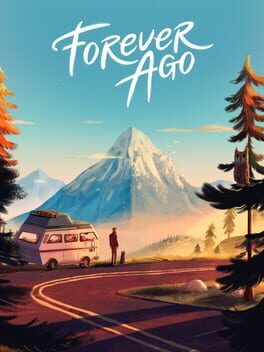

Annapurna and Third Shift’s Forever Ago is shaping up to be a Firewatch‑flavoured, camera‑driven road trip about memory, regret, and late‑life reinvention – and it could be one of the defining narrative adventures on Switch 2 this autumn.
Publisher Annapurna Interactive has a particular knack for finding stories that linger with you after the credits. With Forever Ago, the debut project from German two‑person studio Third Shift, it looks like that streak is set to continue. Re‑introduced at the Xbox Partner Preview and now confirmed for Switch 2 this autumn, Forever Ago is a third‑person narrative adventure that trades bombast for quiet, reflective heartbreak.
At its center is Alfred, an elderly man who has already lived a full life and then watched it quietly fracture. Following a devastating personal loss that the marketing only hints at, he packs up his aging minivan, grabs an instant camera, and points the nose of the car north. The trip is part escape, part pilgrimage, and part attempt to relive an earlier journey he once took with a lover. Forever Ago is not a coming‑of‑age tale; it is a late‑life course correction, the kind of road trip you take when you are running out of time to make sense of what you have done.
That premise gives the whole game a very specific tone. Trailers and early impressions are steeped in melancholy, but it is not misery for its own sake. The road itself becomes a space for small, human moments. You pull over at viewpoints to frame photos, rummage through abandoned shacks for clues about the people who lived there, and swap stories with strangers who cross your path for a single night. The camera is more than a gimmick: every shot Alfred takes is a deliberate attempt to pin a feeling to paper, to prove that a fleeting connection or a half‑remembered vista really existed.
Visually and tonally, this is where the Firewatch comparisons start to make sense. Forever Ago has a similarly curated look, with hand‑detailed environments that push realism just far enough into stylisation to feel painterly. Sunsets wash forests and deserts alike in saturated oranges and pinks, while lonely gas stations glow like small beacons in the night. Like Campo Santo’s classic, a lot of the emotional work here happens in the gaps between big plot beats, in the way a conversation dies out, or how long you choose to linger at a campsite before starting the engine again.
The Firewatch parallel also comes through in how contained the game feels. This is not a sprawling open world stuffed with icons. Instead, it is a sequence of carefully framed spaces stitched together by the road, each one anchored by its own emotional or thematic focus. One stop might be all about confronting a shared memory with your late partner, another about meeting a hitchhiker who forces Alfred to reconsider the way he tells his own story. Annapurna is very clearly positioning Forever Ago as a compact, deliberate experience where pacing and mood matter more than mechanical complexity.
Mechanically, what we have seen suggests a blend of exploratory walking sim and light adventure game. You move Alfred through diverse locations, examine objects, talk to people, and occasionally solve low‑pressure environmental puzzles. The camera features heavily, both as a storytelling tool and, it seems, as a way to gate progress in certain scenes. Snap the right angle, capture a detail that Alfred fixates on, and you might unlock a memory or a new dialogue thread. It is slow, deliberate play that encourages you to observe, listen, and soak in the atmosphere.
That focus on a much older protagonist is quietly radical in a space that usually defaults to teens and twenty‑somethings. Annapurna’s own catalog has skewed introspective and art‑house, but even within that stable Forever Ago stands out. Alfred is written as someone carrying a lifetime of choices, not just one or two bad decisions. The stakes are interior and emotional rather than world ending. That gives Third Shift room to explore themes of regret, forgiveness, and the fragile ways we try to preserve our memories when we fear they are slipping away.
It also explains why Annapurna keeps emphasizing words like “heartfelt,” “poignant,” and “road trip of redemption” in its messaging. Forever Ago is being framed less as a puzzle box narrative and more as an emotional journey you inhabit for a few evenings. It is the kind of game Annapurna likes to point to when it makes the case that video games can sit comfortably alongside indie cinema, the interactive equivalent of a slow, thoughtful drama about an old man on the road trying to make peace with his past.
All of this makes Forever Ago feel surprisingly well suited to Switch 2 in particular. The hybrid nature of Nintendo’s next system is a natural match for narrative adventures that benefit from being played in shorter, reflective bursts. This is the sort of game you might chip away at during a commute, a late‑night session in bed, or a lazy Sunday afternoon, taking one stretch of highway or one conversation at a time. The camera‑driven, exploration‑first design does not rely on twitch reflexes, so it should feel equally at home docked on a TV or in handheld mode.
Switch 2’s expected bump in power should help, too. The art direction in Forever Ago leans heavily on moody lighting and long draw distances across forests, deserts, and mountains. On older hardware that kind of look can suffer from aggressive resolution scaling or cut‑back effects. On Switch 2, there is a better chance that the game’s painterly vistas and time‑of‑day shifts will survive intact, preserving the cohesion between how the world looks and what Alfred is feeling as he drives through it. With an original soundtrack from Clark Aboud, who previously scored Slay the Spire and Kind Words, strong audio support on Nintendo’s updated hardware should only deepen the sense of place.
Perhaps the biggest reason Forever Ago could stand out on Switch 2 this autumn is how specific its emotional hook is. The platform’s narrative library is already strong, but few games center someone like Alfred or commit so fully to the road trip as a metaphor for end‑of‑life reflection. Where many story‑driven indies on Switch lean into youth, nostalgia, or high‑concept sci‑fi, Forever Ago is quieter and more grounded. Its big swings are in the conversations you have, the photos you choose to keep, and the way the journey subtly reshapes the way Alfred sees the years he has left.
That focus on small moments should resonate with players looking for something intimate in between the larger tentpole releases that will define Switch 2’s first holiday season. The game’s multi‑platform release means it will not be exclusive, but on a handheld‑capable device it may well find its most natural audience: players willing to meet a subdued, bittersweet road trip on its own terms, one stretch of highway at a time. If the final game can follow through on the promise of its tone and premise, Forever Ago could easily become one of the system’s defining narrative adventures when it pulls into Switch 2 this autumn.