
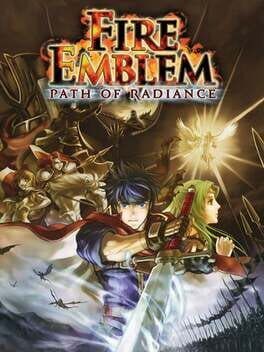
With Fire Emblem: Path of Radiance finally joining the Nintendo Switch 2 GameCube – Nintendo Classics library, Tellius is no longer a white whale. Here’s why this release matters, how the NSO version stacks up to original GameCube play, and how it sets the table for Fire Emblem: Fortune’s Weave.
A white whale finally surfaces on Switch 2
Fire Emblem: Path of Radiance has spent years as one of the GameCube’s most infamous “you either own it or you watch a YouTube playthrough” RPGs. Secondhand prices ballooned, Radiant Dawn on Wii became awkward to revisit without its predecessor, and Tellius veterans had to explain over and over why this one entry mattered so much.
With the GameCube – Nintendo Classics app on Nintendo Switch 2, that wall is finally gone. If you have Nintendo Switch Online + Expansion Pack, you can boot Path of Radiance right now from the GameCube library, complete with modern comforts like save states, rewind, and suspend play. For most players, this is the first truly accessible way to experience Ike’s origin story legally since 2005.
Why Tellius is such a big deal to Fire Emblem fans
For many modern Fire Emblem fans, the series begins with Awakening or Three Houses. For long‑timers, Tellius is where Fire Emblem fully figured out its identity in 3D. Path of Radiance marks a turning point on several fronts.
Narratively, Tellius is still one of the series’ most cohesive worlds. The continent is divided between beorc (humans) and laguz (shapeshifters), and the story pushes directly into themes of racism, classism, and the scars of war. It is not just window dressing. Support conversations, base dialogue, and map objectives keep looping back to the same tensions between nations and races, and that consistency is a big reason fans still hold the game up as peak Fire Emblem storytelling.
Ike himself is another reason this game looms so large. Before he became the Super Smash Bros. mainstay, Path of Radiance introduced him as a nobody mercenary shouldering his father’s legacy. He is not a blue‑blooded lord and the narrative keeps that in focus, whether he is negotiating pay, questioning nobles, or standing up to people far above his station. Later games have experimented with different protagonists, but Ike’s arc from hired sword to legendary commander remains one of the cleanest and most grounded in the series.
Then there is the cast breadth. Path of Radiance features one of the most balanced and memorable groups of units Intelligent Systems has ever written. From the Greil Mercenaries to Crimean knights and laguz royalty, the roster is packed with characters whose personalities are sold both in story scenes and on the battlefield, where class, movement, and skills reinforce who they are. Tellius fans are still campaigning for their favorites to get Fire Emblem Heroes alts years later, and that persistence speaks volumes.
Finally, for strategy fans, Tellius is where Fire Emblem’s map design and campaign pacing hit a sweet spot. Fog of war maps, varied objectives, defend missions, stealth‑adjacent chapters, and long endurance battles are all here, and they feel like they belong to one continuous war effort instead of a grab‑bag of one‑offs. Radiant Dawn would scale the conflict up, but Path of Radiance is where it all starts feeling like a single, carefully plotted campaign.
How the Switch 2 NSO version compares to original GameCube play
At its core, this is the 2005 GameCube game running in Nintendo’s GameCube – Nintendo Classics environment, so the design and content are intact. What has changed is the way you interact with it. Compared to playing on original hardware, the Switch 2 version is easier to see, easier to manage, and much easier to live with if you are not ready to embrace full classic‑mode suffering.
Visuals and performance
On GameCube, Path of Radiance targeted 480p on a CRT. Through Nintendo Classics, the game now outputs at a higher resolution that looks far cleaner on modern displays. Character and battle models are still those chunky mid‑2000s polygons, but edges are sharper, UI elements are crisp, and text is more legible than it ever was on an SD television.
Importantly, Nintendo has not “touched up” the visuals in a way that breaks the original aesthetic. This is not a remaster with new textures or lighting. It is closer to a clean, accurate upscale, which suits a strategy RPG that leans heavily on its portraits, UI, and grid readability.
Performance wise, the GameCube Classics version aims to mirror the original. Animations, camera pans, and battle cut‑ins feel the same in motion, only now without the analog blur that used to do some unintentional smoothing work on GameCube.
Rewind, save states, and suspend play
Where the NSO version truly diverges from original hardware is in its feature set.
The GameCube app includes the standard Nintendo Switch Online emulation layer, which means fast save and load functionality on top of the game’s built‑in save system. You can drop a save state before a risky push, try a strategy, and revert if it collapses, instead of resetting the entire console or living with a permanent death.
Rewind support is the real game changer. Mistake a movement tile, miscount an enemy’s range, or accidentally end your turn with Ike in archer range, and you can scrub back a few actions and correct the error. That is a massive quality‑of‑life improvement in a series defined by permadeath and long maps. For returning fans who already “proved themselves” on GameCube, it is an invitation to play more aggressively and experiment without the dread that used to hang over every misclick.
Suspend play integrates neatly with Switch 2’s broader OS. You can put the console to sleep mid‑chapter, wake it up, or even bounce between games without worrying about losing progress, something the original hardware definitely did not accommodate.
Controls and comfort
The original Path of Radiance was built around the GameCube controller, and that layout still feels natural on Switch 2. Nintendo’s wireless GameCube‑style pad slots in as the most authentic choice, mapping the big green A for confirms, red B for cancels, and the C‑stick for camera control the way veterans remember.
If you would rather use standard Joy‑Con or a Switch 2 Pro Controller, the grid‑based nature of the game makes it very forgiving. D‑pad or stick movement both work fine for cursor control, and menu navigation remains snappy. There are no touch controls or rewired command layouts to relearn, which keeps the experience faithful.
What’s missing
Despite the nice suite of NSO conveniences, this is not a “definitive edition” in the modern sense. There is no new story content, no option to switch to Japanese voices, no built‑in difficulty rebalancing, and no direct integration with Radiant Dawn. If you loved things like Three Houses’ Casual mode or Engage’s Time Crystal, you are approximating those features here through emulator tools rather than native systems.
That said, because everything is additive, purists can simply ignore rewind and save states, lean on the in‑game save system, and recreate the GameCube experience almost exactly.
The accessibility story: from $200 discs to subscription play
One of the throughlines in coverage of this release has been just how scarce Path of Radiance became in physical form. For years, copies regularly crept well over the $200 mark on resale sites, and that was before factoring in a functioning GameCube or a backward‑compatible Wii and the right cables for modern TVs.
With Nintendo GameCube – Nintendo Classics on Switch 2, Path of Radiance is now folded into the broader NSO + Expansion Pack subscription. That is not “free” in any absolute sense, but it reshapes the barrier to entry. Newer fans who bonded with Ike in Smash, or who arrived via Awakening or Three Houses, can now actually see why older fans talk about Tellius the way they do, without pirating or hunting down old hardware.
This is also significant for series preservation. Until this drop, the only mainline console Fire Emblem that remained locked to obsolete hardware worldwide was Radiant Dawn, and its storyline assumes you have played Path of Radiance. Now Tellius is at least half accessible on a current platform, which matters for anyone interested in running through the series in order and understanding its narrative arcs.
Setting the stage for Fire Emblem: Fortune’s Weave
Nintendo has been explicit in promotional materials that adding Path of Radiance to the Switch 2 GameCube library is meant to help build momentum for Fire Emblem: Fortune’s Weave, the new mainline entry planned for later this year. On the surface, Fortune’s Weave looks more aligned visually with the Three Houses and Engage era of Fire Emblem, but the timing here is not an accident.
Fortune’s Weave, judging from what Nintendo has shown so far, emphasizes long‑form campaigns, branching routes, and a heavier political focus. Those are all pillars that Path of Radiance executed on nearly two decades ago. Putting Tellius back in circulation gives younger players a touchstone for how Fire Emblem handles sprawling campaigns when it is less concerned with calendar systems and monastery life and more with front lines, logistics, and geopolitics.
There is also the matter of tone. Over the last decade, Fire Emblem has oscillated between grounded war stories and more anime‑inflected, relationship‑driven entries. Tellius sits firmly in the former camp, with its beorc‑laguz conflict mapped closely to discrimination allegories and war crimes that the script actually lingers on. If Fortune’s Weave is indeed positioning itself as a more mature, conflict‑driven installment, then reminding the fanbase of Tellius right now is a smart piece of expectation setting.
Finally, from a marketing perspective, NSO GameCube drops give Nintendo a way to prime players without massive new dev investment. Path of Radiance arriving in January gives fans months to work through a lengthy campaign, talk about Ike, and fill social feeds with Tellius discourse, all before Fortune’s Weave gets its inevitable pre‑launch marketing blitz. It is an organic hype cycle that also doubles as series onboarding.
Why you should play it in 2026
The question for anyone eyeing Fortune’s Weave is whether it is worth committing to a 2005 strategy RPG in the meantime. In Path of Radiance’s case, the answer is still yes.
Mechanically, it holds up because the fundamentals are timeless. Movement, positioning, terrain, weapon triangle considerations, and rescue chains remain satisfying tactical puzzles. Map objectives vary enough to keep the campaign from stagnating, and the difficulty curve is readable even if you are new to classic‑mode Fire Emblem.
Narratively, the game has aged better than many of its peers. There are clunky moments and old‑school tropes, but the core themes of prejudice, leadership, and responsibility are delivered with more restraint than you might expect from a 2005 GameCube RPG.
Most importantly, the Switch 2 release removes the friction that used to make this a tough recommendation. Visual clarity is better, session management is easier, and NSO’s modern features provide a safety net for players who love the idea of permadeath but do not have the schedule for hard resets.
If Fortune’s Weave sticks the landing later this year, Path of Radiance is going to feel like essential context. If it does not, Tellius will still stand on its own as one of the series’ most fully realized worlds. Either way, having Ike’s defining campaign readily available on current hardware is a win for Fire Emblem fans, strategy RPG enjoyers, and anyone curious about how the series became what it is today.