
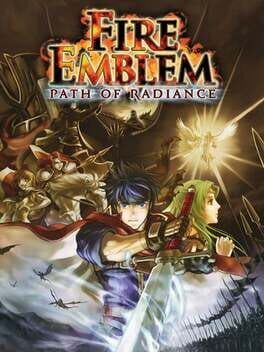

Why Ike’s long-awaited return on the Nintendo Switch 2 GameCube – Nintendo Classics app matters, how the NSO release stacks up to original hardware and emulation, and what it signals for Fire Emblem’s future.
Fire Emblem: Path of Radiance was a cult classic for nearly two decades, trapped on original GameCube discs and steadily climbing in price on the second-hand market. Its arrival on the Nintendo Switch 2 GameCube – Nintendo Classics NSO app finally cracks that vault open, and for Tellius-era fans, it feels like a course correction that has been a long time coming.
For players who discovered Fire Emblem through Awakening, Three Houses or Engage, this release is a chance to see where a lot of the series’ modern storytelling DNA really snapped into focus. For veterans who have been hanging onto aging GameCube hardware or tinkering with PC emulators, it is the most convenient and official way to revisit one of the series’ most beloved campaigns.
Why this NSO release is a big deal for Tellius fans
Path of Radiance is the opening chapter of the Tellius saga, a two-game arc that continues in Radiant Dawn on Wii. For years, that duology has been one of Nintendo’s most inaccessible storylines. Physical copies became notoriously expensive, and outside of importing or emulation, there was no clean way to experience Ike’s origins.
Ike himself has always been visible. Super Smash Bros. kept him in the public eye, and Fire Emblem Heroes filled its roster with Tellius characters. Yet the games that defined him were difficult to actually play. The Switch 2 GameCube NSO release finally reunites character and context. New players get to understand why Ike’s grounded, mercenary-to-hero journey resonated so strongly, and returning fans can revisit a story that many still rank as one of Fire Emblem’s best.
Tellius is also where Fire Emblem began seriously exploring bigger, messier themes: racism and distrust between beorc and laguz, the political rot beneath royal courts, and the emotional toll of war on ordinary soldiers. On handhelds the series had hinted at this scope, but Path of Radiance, as the first home-console entry, had the canvas to go further. Seeing that narrative preserved and spotlighted on a modern platform validates a corner of the series that had started to feel like forgotten history.
For long-time fans there is also a quieter victory here. Years of speculation about remakes or HD ports never went anywhere. The NSO release is not a remaster, but it is official recognition that GameCube Fire Emblem still matters. You no longer need a rare disc, a CRT, and a memory card full of anxiety about laser failure to play it.
NSO vs original hardware: the GameCube experience in 2026
Compared to original GameCube hardware, the NSO version of Path of Radiance is fundamentally the same game, with a handful of quality-of-life benefits and one very familiar omission.
Most importantly, the underlying pacing and feel are intact. This is still classic Fire Emblem: grid-based maps, the rock-paper-scissors weapon triangle, permadeath, and a methodical tempo that rewards careful positioning. Nintendo’s NSO emulator keeps that intact, and the game’s UI and portrait artwork still look crisp on modern screens. Portraits, menus, and environments remain surprisingly readable, even as the 3D combat cut-ins show their age.
On GameCube in 2005 those 3D animations were the showpiece. Today they are the main element that feels dated. The NSO version benefits from one of Path of Radiance’s smartest original design decisions: you can simply disable battle cutaways and keep everything on the map. Doing that on Switch 2 makes the game feel far snappier than its age suggests, and it hides most of the early-2000s rough edges in character models and camera work.
Input latency is solid enough that strategy fans will feel at home. Because Path of Radiance is turn-based, it was never going to be as sensitive to input delay as an action game, and the Switch 2’s controllers map comfortably to the original GameCube layout. Rumble support is intact, helping combat and critical hits retain their tactile punch.
One notable holdover from the original Western release is the absence of the Japanese-only Maniac difficulty. This was cut on GameCube and it remains missing on NSO. For series veterans, especially those coming from Maddening in recent entries, that means the hardest available difficulty will still feel relatively gentle and sometimes even exploitable. Battles are not trivial, but they are significantly more forgiving than the series’ most punishing outings.
The upside of that softer curve is that Path of Radiance works very well as an on-ramp for players who only know the series from its modern, social-sim heavy phase. The tension of permadeath is still there, but the game gives you room to learn its systems. Bonus Experience and flexible unit promotion let you correct early mistakes and experiment with your roster without feeling locked into a perfect run.
NSO vs fan emulation: convenience over configuration
For the last decade, the only way many fans could realistically play Path of Radiance was through emulation. High-resolution rendering, widescreen hacks, and shader tweaks let the game look far sharper than on native GameCube hardware, and in the right conditions it can be a genuinely impressive upgrade.
That flexibility comes with a cost. You need capable hardware, a legal disc rip, and the patience to tinker with settings to avoid audio glitches, timing quirks, or visual bugs. Save management is manual, and controller configuration can be a puzzle of its own, especially if you want the feel of a GameCube pad.
The NSO version trades that visual potential for frictionless access. You launch the GameCube – Nintendo Classics app on Switch 2, select Path of Radiance, and you are in. There are no configuration menus, no plugin searches, no wondering whether your latest emulator build broke something. Cloud saves and local save states soften the blows of permadeath and help busy players fit a long tactical campaign into a modern schedule.
Critically, NSO makes Path of Radiance legal and straightforward again. The price of GameCube discs pushed a lot of curious fans toward emulation as their only real option. Now anyone with an NSO Expansion Pack sub can see the game in its original form, without needing to hunt for hardware or engage with grey-area workarounds.
You do sacrifice some niceties. The NSO release is locked to the original resolution and aspect ratio. There is no modern rewind option like in some other retro offerings, which will surprise players used to rolling back bad moves in NES or SNES Fire Emblem rereleases. Features like turbo speed or user-defined visual filters are not part of the package.
Even with those limits, there is a clear tradeoff: emulation can still deliver the best-looking version of Path of Radiance if you are willing to do the work, but NSO delivers the least complicated and most consistent version. For most players curious about Ike’s origins, that consistency will outweigh the visual concessions.
How Path of Radiance points to Fire Emblem’s future
Path of Radiance is arriving on the Switch 2 GameCube app at a time when Fire Emblem is wrestling with what it wants to be. Three Houses leaned hard into relationship-building and school-life structure, while Engage swung the pendulum back toward pure tactical systems and fanservice. Putting Tellius back in circulation quietly reminds players and designers alike where many of the series’ long-term strengths lie.
First, it underlines how much a coherent, character-driven war story can elevate the tactics. Ike’s arc from hired blade to reluctant leader, the Greil Mercenaries’ found-family dynamic, and the nuanced politics between beorc and laguz give context to every deployment. Modern entries have experimented with branching routes and overlapping perspectives, but Path of Radiance shows the power of a single, well-paced campaign with a strong central cast.
Second, it highlights mechanics that could be ripe for revisiting. Laguz units remain one of Fire Emblem’s most distinctive ideas, changing shape on a rhythm that forces you to plan around transformation turns. The Bonus Experience system lets players reward efficient play and sculpt their roster in ways that differ from simply fielding the same core squad every map. Seeing how elegantly these systems support the core tactics could inspire future games to revisit or reimagine them.
Third, the release opens the door for Radiant Dawn. Nintendo has rarely put only the first half of a narrative duology on a service like NSO for long. Radiant Dawn is still trapped on Wii discs and is just as expensive, if not more so, than Path of Radiance on the second-hand market. Now that newcomers can meet Ike and his world properly, there is a natural expectation that the sequel will follow.
If that happens, the Tellius saga would be fully playable on a single contemporary system for the first time. That in turn could test the waters for a broader Tellius remaster or even a new project that revisits the continent, much like how remakes revived Archanea and Valentia.
Finally, this release gives Nintendo another way to bridge newer fans back to the series’ roots in the run-up to whatever Fire Emblem looks like on Switch 2 and beyond. A player who arrived via Three Houses can now play Path of Radiance on the same console and see how the series balanced story, tactics, and cast management in a pre-avatar era. The contrast is instructive, both for fans debating what they want from future games and for a development team watching what resonates.
A new starting point for an old favorite
Fire Emblem: Path of Radiance on the Switch 2 GameCube – Nintendo Classics app is not a flashy remake. It is a faithful, convenient preservation of one of the series’ most important campaigns, quietly correcting years of scarcity and speculation.
For Tellius-era fans it is a homecoming, a chance to retire fragile discs and aging consoles and play Ike’s story wherever the Switch 2 can go. For newer players it is an accessible point of comparison, an invitation to see how Fire Emblem’s modern identity was forged on an unassuming 2005 GameCube release.
And for Fire Emblem as a whole, it is a reminder that sometimes the most important step toward the future is simply making sure the best parts of the past are easy to reach.