
Fire Emblem: Fortune’s Weave lets players skip the War Arc after Act 1. Here is how the Act 2 skip works, what it preserves, and what story and build control players give up.
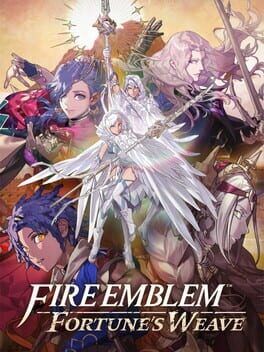
Image: IGDB
Fortune’s Weave lets you bypass an entire war campaign, but the shortcut has a cost
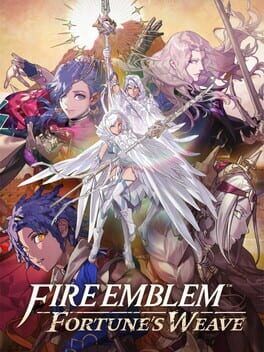
Fire Emblem: Fortune’s Weave includes a formal skip for its Act 2 War Arc, a substantial midgame section that multiple outlets report can be bypassed after clearing one Part 1 route. That is the concrete surprise at the center of the new Switch 2 entry: Intelligent Systems has built a very large Fire Emblem around four protagonist routes, then given players a sanctioned way to compress one of its biggest connective chapters.
The skip is not a cheat code or an exploit. Polygon reports that the option appears through the Strife Obelisk after completing Act 1 as any of the four Flame Lords. Siliconera likewise says the obelisk lights up once players finish a full Part 1 Heroic Games route, letting them either play the War Arc as one of the four heroes or skip forward to assemble an army for the third and final portion of the game. VGC also describes the War Arc as available from the Strife Obelisk and says players are explicitly given the option to skip it.
The tension is obvious for a series that usually treats campaign maps, supports, class growth, and story context as inseparable. Fortune’s Weave is asking players to decide whether they want authored war drama, hands-on unit development, or a faster route into Act 3’s endgame systems. For first-time players, the sources are broadly aligned: do not skip it the first time. For returning players, route optimizers, and anyone rebuilding armies across multiple Flame Lords, the calculus changes.
How the Fire Emblem war arc skip works
The confirmed flow is this: Fortune’s Weave opens around four separate Part 1 story arcs starring the Flame Lords Cai, Dietrich, Theodora, and Leda. GameSpot reports that these four arcs can be played in any order, and that each individual campaign can last around 10 to 20 hours. After completing one of those routes, players can move into the next arc, where the separate threads begin to converge.
That second phase is the War Arc, also described by Polygon as Act 2 and by Siliconera and VGC as Part 2. If players interact with the Strife Obelisk, they can skip the War Arc instead of playing it manually. Polygon reports that skipping automatically raises every character to level 45, which it describes as the minimum recommended threshold for the final act. GameSpot similarly says the game summarizes the missed events and auto-levels characters so they are scaled for the last battles. Siliconera says skipped routes are marked as cleared, the character becomes fully available in the third part, and players receive a quick summary from Saint Cichol covering the events.
The skip also has a flexible structure. Polygon says players can skip at any point during Act 2 and return later to pick up where they left off, so the decision is not framed as a permanent lockout. Siliconera also says players can return and replay that section as the relevant character later. That makes the system less like refusing content and closer to a route-management tool, especially in a game asking players to consider multiple armies across multiple protagonist paths.
There is an even more extreme option. GameSpot reports that after the prologue, players can turn Eshmel toward the Door of Destiny and attempt to defeat the Demon King immediately. According to GameSpot, Fortuna, the goddess of fate, warns the player that this is a terrible idea, but does not prevent it. That option sounds less like the recommended structure and more like Fortune’s Weave exposing its campaign spine to players who want challenge runs or sequence breaks.
Act 2 is the bridge into the final campaign, not a disposable chapter
Every source that gives practical advice lands on some version of the same recommendation: play the War Arc once. Polygon calls it an essential bridge between the Flame Lords’ opening acts and Act 3, and says the battles become bigger and more demanding from that point forward. Siliconera says the section explains what happened in Dagda between the first and third portions of the game, while VGC says Part 2 centers on Theodora and the war between Saramis and Dagda.
That story framing matters because Fortune’s Weave appears to be built around convergence. GameSpot says the broader endgame brings the cast together to defeat the Demon King under Eshmel, described as a futuristic warrior construct made to gather the legendary heroes under their banner. If Part 1 is where players attach to a Flame Lord’s personal route, Act 2 is where the campaign explains how those separate fortunes become a shared military crisis.
The practical reason to play it once is just as important. Siliconera notes that the War Arc removes some of the broader routine from Part 1, saying there is no Dagsion exploration, no sidequest layer, and no shopping. Instead, items and class advancement materials are automatically distributed between battles for use in the hub. That makes Act 2 sound more linear, but also more concentrated: fewer errands, more maps, more army maintenance.
For players who care about builds, that concentration is valuable. Siliconera highlights Training Drills for bringing units to a similar level, Group Drills for improving skill stats and learning new abilities, and Group Service for raising Blessing levels with the gods to unlock higher Blessing Effect tiers. Those are not flavor systems if Act 3 is as demanding as Polygon and GameSpot describe. They are the tools that turn a roster from merely eligible into shaped, specialized, and ready.
What skipping preserves, and what it cannot replace
The skip preserves access and baseline readiness. Based on Polygon’s reporting, characters are raised to level 45 when the War Arc is skipped. Siliconera says the chosen individual is marked as cleared and becomes fully available in the third part. GameSpot says the game provides a summary of missed events. VGC says the skip still grants appropriate EXP and skills, making the army strong enough to enter Part 3’s harsher challenges.
What it cannot replace is player-directed growth. Polygon notes that playing Act 2 manually can get main characters to around level 50 through enemies and reinforcements, putting them ahead of the skip’s minimum threshold. More importantly, manual play gives players more opportunities to grow units, swap classes, and run drills to improve skill ranks. Those decisions are central to Fire Emblem’s long-tail satisfaction: a unit is rarely defined only by level, because weapon ranks, class access, learned abilities, and stat variance all shape whether they can hold a flank, rescue a mistake, or secure a boss kill.
The story tradeoff is narrower after one complete War Arc run. Polygon reports that Act 2’s maps and story are the same for every character except for a unique scene at the start and very end. VGC is even more direct, saying the story plays out identically after one run, with only small amounts of different dialogue from the chosen protagonist, and that there are no side quests or overworld map to explore. Siliconera recommends taking the character with the largest number of recruited allies through the War Arc once, then skipping the other three.
That creates a clean split for different kinds of players. If Fortune’s Weave is your first pass, skipping means losing the first-hand version of the war that sets up Act 3. If you are replaying Part 1, correcting recruitment choices, or preparing several armies after already seeing the War Arc, the skip looks deliberately tuned to respect your time without leaving your roster unusable.
Nintendo and Intelligent Systems may be speaking to lapsed Three Houses players
No provided source includes a statement from Nintendo or Intelligent Systems saying the Act 2 skip was designed for returning players. That motive remains interpretation. Still, the public details around Fortune’s Weave point toward a game aware of two audiences at once: players who want a huge, interlocking tactical RPG, and players who loved route-based Fire Emblem but may not want to replay the same connective material four times.
The Three Houses comparison is hard to avoid, and Nintendo Life reports a literal physical-edition callback. According to Nintendo Life, the Switch 2 physical copy of Fortune’s Weave uses an inner sleeve layout that closely resembles Fire Emblem: Three Houses, with the protagonist figure on the right and a cluster of other party members on the left. Nintendo Life contrasts that with Fire Emblem Engage, which used dragon art on the inner sleeve instead. That packaging detail does not prove design intent, but it does show that Fortune’s Weave is being positioned with visible awareness of Three Houses’ place in the series memory.
The War Arc skip also fits a lesson that route-heavy RPGs often learn the hard way: repetition can turn abundance into friction. Fortune’s Weave’s Part 1 structure gives each Flame Lord room to stand apart, but Act 2 appears to narrow into shared material. If that section is largely identical across protagonists, as Polygon and VGC report, then asking completion-minded players to repeat it four times could risk draining enthusiasm before Act 3. The skip solves that in system language rather than menu language. You still clear the route, you still receive a summary, and your army still arrives at the final act, but the game no longer insists that repeated context be replayed at full length.
There is also a business-facing context. Siliconera reports that Intelligent Systems launched a dedicated online shop for its games on September 17, 2026, the same date it says Fortune’s Weave released, and debuted new Fortune’s Weave merchandise alongside it. The shop’s early Fortune’s Weave goods mostly feature Cai, Theodora, Dietrich, and Leda, while the store also carries older Fire Emblem merchandise, including an Ike-themed Path of Radiance watch. Siliconera notes the shop does not offer international shipping and generally does not provide refunds outside limited circumstances. Taken together, the shop and the Switch 2 physical nods suggest a launch built for fans who recognize older Fire Emblem signifiers as much as for newcomers buying a new console RPG.
The best route depends on whether you value lore, builds, or time
For a first playthrough, the safest recommendation is to play Fortunes Weave Act 2 manually. That is the only way to see the War Arc unfold directly, learn how Dagda and Saramis fit into the final campaign, and train your army with full control over classes, skills, Blessings, and map experience. The sources consistently describe Act 3 as a step up in pressure, and entering it with a roster you personally tuned is different from accepting an automated baseline.
For a second, third, or fourth Flame Lord route, skipping becomes much easier to justify. Siliconera, Polygon, and VGC all frame repeat War Arc runs as optional once you have seen the section once, because the maps and broad story do not appear to change significantly between protagonists. The remaining differences, according to Polygon and VGC, are limited scenes or dialogue tied to the chosen lead. Completionists will still want to return eventually for those variations, but progression-focused players can bank the clear and move into Act 3.
The main warning is that auto-leveling is not the same as optimization. A level 45 unit delivered by the skip may satisfy the campaign’s minimum expectations, but it may lack the class path, weapon development, drill investment, or Blessing setup you would have built by hand. In a Fire Emblem game, that can be the difference between a unit that survives and a unit that defines a strategy.
So the practical answer is measured. Play the Fire Emblem war arc skip as a tool, not a default. Use it after you understand what Act 2 contributes, after you have at least one well-developed army, or when you are deliberately speeding through route cleanup. If Fortune’s Weave is your first trip through its fate-tangled campaign, let the war play out once. The shortcut will still be waiting when you start thinking like a returning player.