
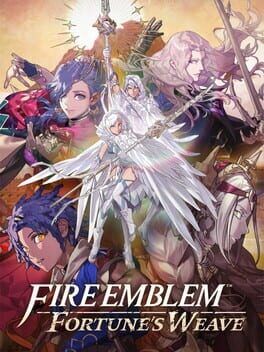

Fire Emblem: Fortune’s Weave launches with a 1.0.1 patch, strong early reviews, a one-save structure, and a long campaign built around merged character data.
Image: IGDB
Version 1.0.1 is small, but it touches progression
Fire Emblem: Fortune’s Weave is launching with a version 1.0.1 update that adds special weapons from across the Fire Emblem series and fixes “several issues” that Nintendo has not itemized in detail. Nintendo Everything reported the Fire Emblem Fortunes Weave update is tied to launch, and RPG Site adds a practical detail for players buying physical or skipping pre-loads: the day-one patch is 297MB on top of the base game.
That is the concrete launch development. The tension is in how little the Fire Emblem Fortunes Weave patch notes actually say. Nintendo’s published rundown, as relayed by Nintendo Everything and RPG Site, confirms that the bonus weapons can be received “in places like Dagsion” as players progress through the story. It does not name the weapons, list their stats, specify whether they are account-wide rewards, or explain which bugs were fixed.
For a tactical RPG, even a small weapon drop can matter. Fire Emblem’s early chapters often teach players how tightly resources, weapon access, unit roles, and risk management fit together. Without confirmed weapon names or balance data, the safe reading is narrow: version 1.0.1 adds series-themed equipment and general gameplay fixes, but there is no sourced evidence yet that it changes class balance, enemy tuning, recruitment routes, or campaign structure.
Pre-load players should already have the patch, physical buyers should check
Nintendo Everything says players who pre-loaded Fire Emblem: Fortune’s Weave should be able to access the update now. RPG Site similarly reports that the patch is included with pre-loads, which it says went live about a week before launch. For everyone else, especially physical copy buyers, RPG Site’s 297MB figure is the clearest available download guidance.
That makes this a low-friction day-one update rather than a major install hurdle, but it is still worth checking before starting. Fortune’s Weave is structured around long-term decisions, route progress, recruitment, and character development across multiple arcs. If version 1.0.1 is the intended launch build, beginning on an unpatched physical copy could mean missing the bonus weapon access until after an update, and potentially playing before Nintendo’s unspecified fixes are applied.
The game itself launches September 17, 2026, for Nintendo Switch 2, according to Nintendo Everything, RPG Site, and IGN’s game listing. Nintendo Everything frames it as the first brand-new Fire Emblem entry on Switch 2 and a follow-up “of sorts” to Fire Emblem: Three Houses. That lineage matters because early coverage is already judging Fortune’s Weave as a sprawling management-heavy RPG rather than a compact tactics campaign.
Reviews are praising scale, strategy, and structure, with one recurring caution
The early Fire Emblem Fortunes Weave reviews are unusually strong by the numbers available in the provided material. IGN lists its review as a 10, an Editors’ Choice, and calls the game a “masterpiece,” praising the pairing of combat strategy and management and the way stories across the four heroes combine into a single RPG. A r/fireemblem review megathread recorded OpenCritic at a 90 average with 94 percent recommending across 18 reviews, and Metacritic at an 89 average across 45 reviews. Because those aggregate figures come from a Reddit megathread rather than the aggregator pages directly, treat them as a community snapshot of launch reception rather than a permanent critical record.
Siliconera’s review is similarly positive, calling Fortune’s Weave a “massive epic” and one of the series’ meatiest entries. Its praise is especially relevant for strategy-minded players: the outlet says some campaign and paralogue maps left the reviewer as satisfied as Fire Emblem Fates: Conquest maps, which is a pointed comparison given Conquest’s reputation among tactics fans for demanding map design.
The caution is scale. Siliconera says the game’s size can work against some characters, particularly in the Support system. The review notes that many characters have minimal Support conversations and argues that non-focal characters can suffer as a result. That does not contradict IGN’s broader praise of the four-hero structure; it sharpens the buyer question. If you come to Fire Emblem mainly for layered tactical campaigns and long-term unit planning, reviews suggest Fortune’s Weave is landing well. If Supports, pairings, and deep side-character writing are your core reason to play, Siliconera’s criticism is the warning to take seriously.
The campaign is built around four heroes, time, and a collapsing empire
Nintendo Everything’s review roundup lays out the premise: Fortune’s Weave begins in the Dagdan Empire, with Dagsion hosting the Heroic Games, a competition whose winner is granted one wish. The story involves four heroes tied to the fate of the world. Five years later, the Dagdan Empire faces destruction after the revived demon god Balor returns, the four heroes have vanished, and Sothis charges the player’s soul with saving the world.
Siliconera’s review gives more shape to that structure. The player-avatar Eshmel returns to a ruined Dagsion and works with the goddess Fortuna to influence events in the past Heroic Games so the four main competitors survive and can become the lords needed to repair the timeline. The four named protagonists in Siliconera’s coverage are Cai, Dietrich, Leda, and Theodora, each tied to a personal arc: Cai’s incarcerated father, Dietrich’s pursuit of the beast that left him shipwrecked, Leda’s murdered father, and Theodora’s claim as queen of Saramis.
Mechanically, Nintendo Everything says the Heroic Games include arena training, townsfolk quests, warrior recruitment, dungeon exploration, and other activities. This is where the Three Houses comparison becomes functional rather than cosmetic. Early coverage describes a game asking players to manage time, unit growth, exploration, recruitment, and tactical combat over a long arc. New players should expect the commitment to come from planning pressure as much as chapter count.
The one-save decision is less punishing than it first sounds
One of the most important pre-launch clarifications came through Siliconera’s report on Nintendo’s official Ask the Developers interview. Intelligent Systems Director Toshiyuki Kusakihara, IS Producer Masahiro Higuchi, Nintendo Associate Producer Kenta Nakanishi, and Nintendo Producer Genki Yokota discussed how Fortune’s Weave handles repeated routes and character data. According to that interview, data tied to characters across multiple playthroughs or routes can merge in later parts of the game.
Yokota gave the example of completing one playthrough with a protagonist developed as a mage, then another with the same protagonist developed around melee combat. Later, that character can acquire strengths from both versions. Higuchi said the system applies beyond the main lords to faction members, other allies, and mercenaries. If the same character is recruited and built differently in Cai’s route and Dietrich’s route, the later merged version can become stronger.
That design choice changes how new players should think about mistakes. Fortune’s Weave has one save file, and Nakanishi said multiple save files would have created system-related complications. To soften that, he said the team preserved save data from the start of every chapter for each main protagonist and made it possible to jump back to those points. He also confirmed, according to Siliconera, that there are no permanently missable elements. For a long tactical RPG, that is a major anxiety reducer: imperfect builds may become part of a broader growth web instead of dead-end decisions.
Early strategy guidance: update, experiment, and do not over-optimize the first route
Based on the confirmed structure, the smartest first-run approach is to install Fire Emblem Fortunes Weave 1.0.1, then play with long-term flexibility in mind. The data-merge system described by Nintendo and Intelligent Systems rewards seeing different sides of a character rather than forcing every unit into one perfect route from hour one. If a lord or recruit can carry forward strengths from multiple builds, then rigid early optimization may be less valuable than learning how each route’s economy, maps, and recruits fit together.
The 1.0.1 weapons should be treated as progression bonuses until players can verify their stats in-game. Since Nintendo only says they are special weapons from the Fire Emblem series available in places like Dagsion as the story advances, there is no firm basis yet for tier-listing them or assuming they replace normal weapon planning. In practical terms, check Dagsion and other progression hubs after updating, but do not build an entire strategy around unconfirmed reward timing.
Players sensitive to monetization should also note a small unresolved signal. Siliconera’s review mentions that the Nintendo eShop page’s ESRB rating references “in-game purchases,” then speculates that this could relate to seeing what less prominent factions were doing during certain periods. That connection is the reviewer’s speculation, not an announced DLC plan in the supplied sources. As of the provided material, there is no confirmed post-launch content roadmap here.
Whether to start now or wait depends on what you value most
The launch picture is clearer than the short Fire Emblem Fortunes Weave patch notes make it seem. The update is available, pre-loads should already include it, physical buyers have a modest 297MB download, and the confirmed patch contents are bonus series weapons plus unspecified fixes. The review picture is also strong: IGN’s 10, Siliconera’s glowing but qualified review, and the Reddit-recorded aggregator snapshot all point to a well-received Switch 2 debut.
For players ready to commit to a dense tactical RPG, the risk is less about launch stability, at least from the provided sources, and more about appetite. Fortune’s Weave appears designed around scale: four heroes, timeline intervention, management systems, dungeons, recruitment, quests, and merged unit data across routes. That is promising if you enjoy long-form strategic planning. It may be exhausting if you want a lean campaign with every side character receiving substantial Support development.
My read as a strategy player is simple: start now if you are excited by route experimentation and can accept that some social writing may be thinner than the campaign’s best arcs. Wait for deeper player reports if your purchase hinges on Support depth, exact patch changes, or post-launch content clarity. Either way, update to 1.0.1 before beginning. In a game built around accumulated decisions, you want the launch rule set in place from the first move.