
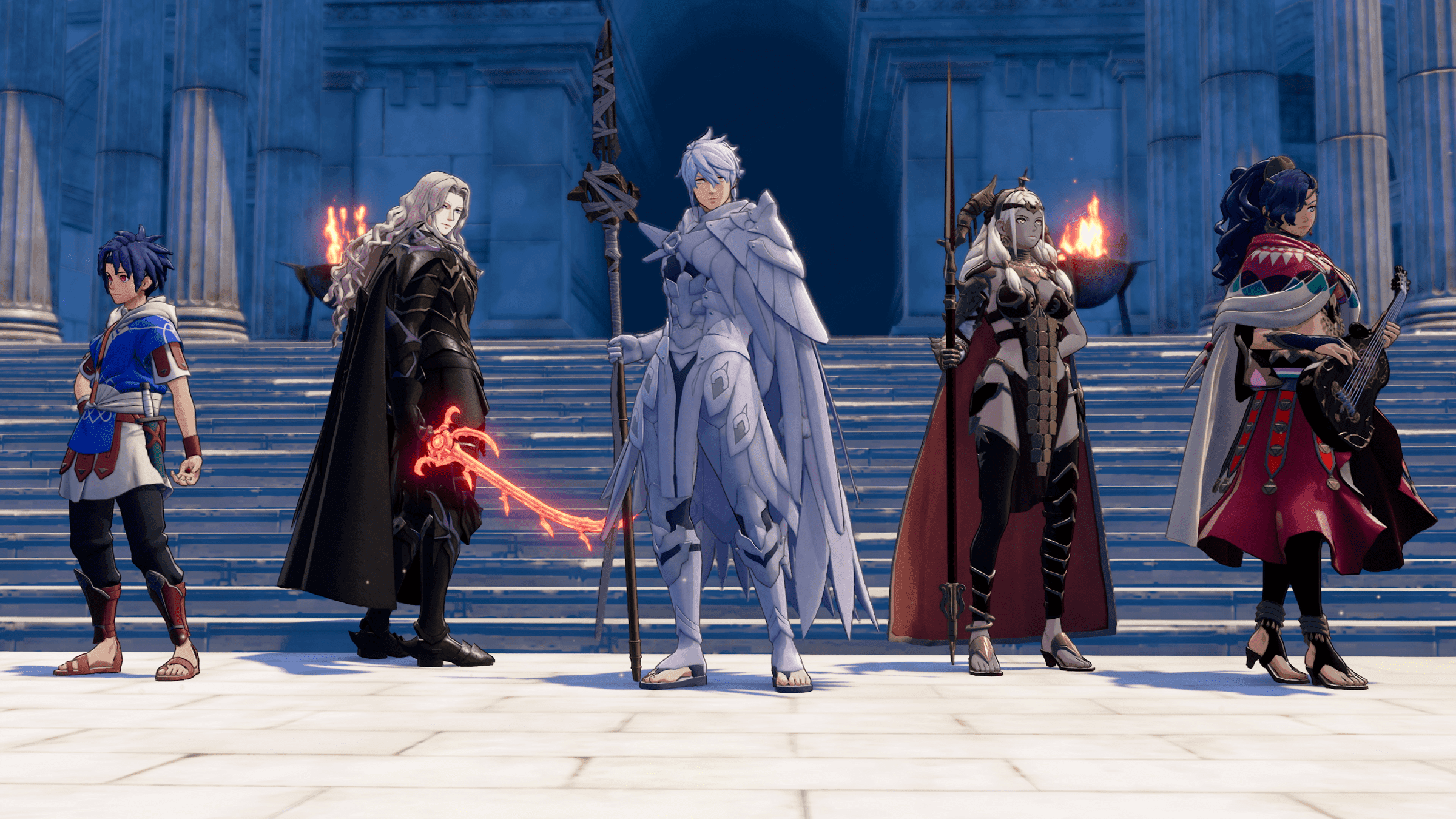

Nintendo has confirmed optional Joy-Con 2 mouse controls for Fire Emblem: Fortune’s Weave, while a new Japanese trailer appears to hint at a time skip through altered character designs.
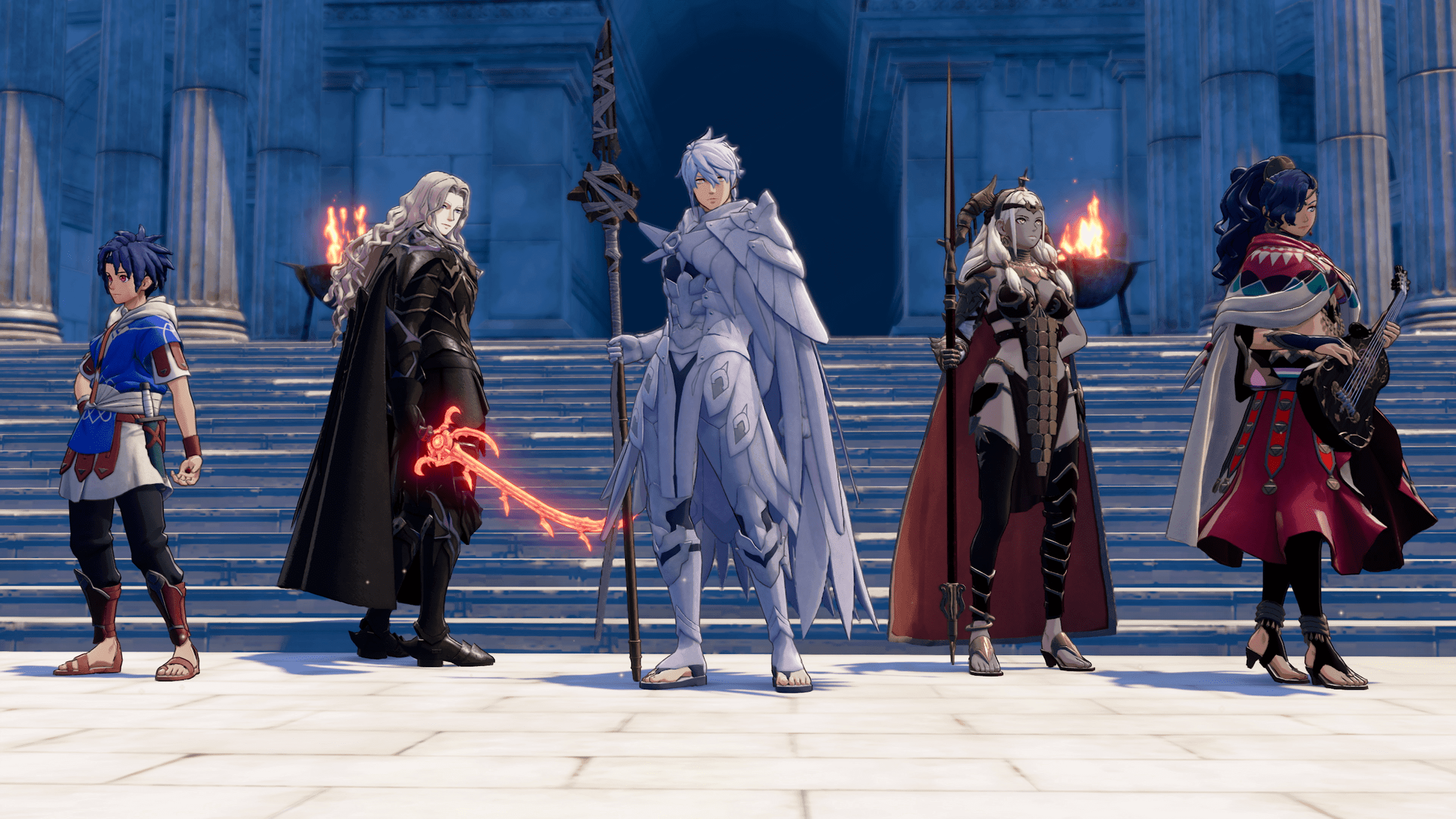
Image: theverge.com
Nintendo has confirmed the control experiment, but the story turn is still a signal
Nintendo’s official product listing for Fire Emblem: Fortune’s Weave confirms that the Switch 2 tactics RPG will support Joy-Con 2 mouse controls, a first for the Fire Emblem series. The same marketing beat has landed alongside new Japanese trailer footage that, according to Polygon, appears to show older or redesigned versions of several characters, raising the possibility of a Fire Emblem time skip.
Those two details are operating on different levels of certainty. The Fire Emblem mouse controls are confirmed by Nintendo’s own wording, quoted by Nintendo Life and Nintendo Everything, which says players can use Joy-Con 2 controllers to move units across the battlefield, access helpful information, and switch between button and mouse controls whenever they like. The apparent time skip is not confirmed. Polygon’s read is based on visible character-design changes in trailer footage, especially hair, height, and build, not on a formal announcement from Nintendo or Intelligent Systems.
That split is the real story for tactical RPG fans. One feature changes how players may parse a battlefield turn by turn. The other could change how builds, relationships, faction loyalties, and long-term character progression are framed across the campaign. Fire Emblem: Fortune’s Weave is already positioned by Nintendo as a game about changing the past to save the future, with the official overview placing the story in the year 1454 as the Dagdan Empire faces ruin after the return of Balor, a resurrected demon god. Nintendo also says a soul descends from the heavens at the behest of Sothis. A time-skip structure would fit that premise neatly, but fitting is not confirmation.
Joy-Con 2 mouse support sounds modest until the map gets crowded
Nintendo’s confirmed description keeps the Fire Emblem Switch 2 control option deliberately practical: move units, pull up information, and swap seamlessly back to buttons. Nintendo Life quotes the listing as saying, “For the first time in the Fire Emblem series, you can play with mouse controls using Joy-Con 2 controllers.” Nintendo Everything likewise reports that the feature is optional and that the full game can be played without using it.
That optionality matters because Fire Emblem has spent decades proving that a grid, a D-pad, and careful menu hierarchy can carry a full tactics campaign. Mouse input does not automatically make a console tactics game deeper. What it can do, if implemented well, is reduce the friction between intent and comparison. Fire Emblem’s hardest decisions often happen before a command is locked in: checking enemy reach, comparing damage thresholds, protecting fliers from archers, deciding whether a healer can stand one tile farther forward, and verifying which unit can survive a counterattack.
Eurogamer’s preview argues that Fortune’s Weave benefits from that exact kind of low-friction navigation. After trying a preview build, the outlet says scrolling menus, tabbing through information panes, selecting units, hovering over threats, and moving the camera with the right mouse Joy-Con began to feel natural after roughly 10 minutes. The preview specifically praises battle use, where clicking a unit on the grid, reviewing movement and attack ranges, and quickly hovering between combatants made comparisons feel faster than cycling through deployed units with shoulder buttons.
For players who treat Fire Emblem like a spreadsheet with heartbreak attached, that is not a small quality-of-life change. On higher difficulty, the entire turn can collapse because one enemy archer, mage, or cavalry unit was misread. Eurogamer says its Hard difficulty encounters were punishing enough that it repeatedly had to verify a kill to prevent a pegasus-mounted unit from dying. The appeal of mouse controls is not that they rewrite the rules. It is that they may let the player read those rules with less mental overhead.
Previewers disagree on whether the mouse mode goes far enough
The early reaction is not uniform. Eurogamer came away calling mouse controls its favorite way to play Fire Emblem: Fortune’s Weave, while Gizmodo’s preview was far colder on the same feature. Gizmodo says the game does not use a traditional on-screen mouse cursor. Instead, the player rolls selection across characters and tiles and uses the Z1 button as a pseudo-click, which the outlet argues makes mouse mode feel close to joystick navigation rather than a distinct control scheme.
That disagreement is useful because it narrows the question prospective players should ask. This does not sound like a PC-style tactics interface transplanted wholesale to Switch 2. Based on the previews and Nintendo’s listing, mouse mode appears to sit on top of Fire Emblem’s existing tile-and-menu logic. Eurogamer reads that as a success because it preserves the series’ rhythm while making selection and comparison more immediate. Gizmodo reads it as a missed opportunity because the input does not behave like a conventional cursor-driven strategy game.
The difference may come down to what a player wants from Fire Emblem mouse controls. If the goal is faster unit selection, easier range checking, and smoother menu inspection from a couch or tabletop setup, the previews suggest there is a real benefit. If the goal is a full mouse-and-keyboard-style tactics interface with free cursor behavior and radically different menu flow, Gizmodo’s account suggests expectations should be kept in check.
Shane the Gamer also notes that Joy-Con 2 mouse functionality relies on the controller’s optical sensor, with shoulder buttons serving as mouse inputs, citing TechRadar’s breakdown of the Switch 2 hardware. That makes the physical play environment part of the equation. Nintendo has confirmed that button controls remain available at any moment, so players who prefer handheld play, traditional pad movement, or accessibility through familiar inputs are not being pushed into the new mode.
The trailer’s time-skip clues are visible, but Nintendo has not named them yet
The Fire Emblem Fortune’s Weave trailer discussion is murkier because it comes from interpretation of footage rather than a store listing. Polygon reports that the latest Japanese trailer shows the player avatar fighting dark forces in the future alongside characters who appear to have changed designs. The outlet singles out Cai, who appears mounted with a lance and, on closer inspection, seems taller, broader in the arms, and different in hairstyle. Polygon also points to Dietrich, who appears taller and has cropped hair while still being recognizable through his sword, described by Polygon as a Heroes’ Relic.
There are other explanations. Fire Emblem class changes frequently alter outfits, armor silhouettes, weapon loadouts, and battlefield posture. Polygon acknowledges that point directly. A character promoted into a mounted class, armored class, or specialist role can look very different in combat scenes. The stronger clue, in Polygon’s reading, is hair. Class outfits can change clothing, but they usually do not rewrite a character’s hairstyle in the same way.
That is why the possible Fire Emblem time skip is plausible, not confirmed. Polygon also notes that Reddit users have discussed the changed designs after zooming in on the footage, but fan analysis is still fan analysis. Nintendo has not announced a five-year gap, a post-war phase, split campaign eras, or aged character portraits in the supplied material.
Still, the series context gives the theory weight. Polygon compares the possible structure to Fire Emblem: Three Houses, where a five-year skip reframed the cast after the academy phase and gave the students adult designs. Fortune’s Weave already uses future-facing language in Nintendo’s overview, including “change the past to save the future.” If the trailer is indeed showing later versions of the cast, the design shift would likely carry mechanical and narrative consequences rather than serving as a cosmetic flourish.
A time skip would reshape progression, supports, and party planning
For tactical RPG players, the appeal of a time skip is not limited to new portraits. It can alter the entire cadence of growth. In a Fire Emblem campaign, early chapters teach you who a unit is: their base stats, weapon comfort zone, support network, recruitment context, and class trajectory. A later-era version can complicate that read. Characters may return with different priorities, different loyalties, new default classes, changed proficiencies, or emotional baggage that makes earlier support choices feel heavier.
None of those systems have been confirmed for Fortune’s Weave in the provided sources, so they should remain expectations rather than facts. The reason fans are watching the trailer so closely is that Fire Emblem often ties character identity to mechanical identity. A lance user on horseback is not merely wearing a different costume. A mounted role changes threat range, rescue or reposition potential depending on the ruleset, terrain interaction, weakness management, and how safely that unit can contribute to enemy-phase pressure.
The mention of Sothis in Nintendo’s official overview and Polygon’s note about a Heroes’ Relic also invite lore-aware caution. Those names carry heavy associations for Three Houses players, but the supplied sources do not establish whether Fortune’s Weave is a sequel, prequel, alternate continuity, or something else. Polygon raises those questions without answering them. Until Nintendo or Intelligent Systems defines the relationship, the safe reading is that the trailer is inviting comparison while withholding the framework that would make those connections firm.
If a time skip is real, completionist-minded players should also be alert to missable supports, route choices, and training investments before any major story break. Three Houses made pre-skip planning central to long-term builds. Fortune’s Weave may not follow that model, but the apparent future battle footage is enough reason to treat early character development as potentially consequential rather than disposable tutorial pacing.
Fortune’s Weave is using Switch 2 power in safer ways than its controls suggest
The control feature may be divisive, but previews agree that Fortune’s Weave is a technically ambitious Fire Emblem release. Gizmodo describes it as a massive game that pushes the Switch 2, especially visually, and says it looks strong in handheld mode and on a TV at 4K. The outlet also praises the high production values of combat scenes, where the camera zooms into attacks, spells, dodges, and misses in a way that made it reluctant to fast-forward battles.
That matters because Intelligent Systems is balancing two different kinds of modernization. The first is interface modernization, represented by optional mouse input. The second is presentation modernization, represented by more elaborate battlefield animation and Switch 2 visual targets. The former can be swapped off instantly, according to Nintendo’s listing. The latter is part of how every player experiences the campaign, regardless of control method.
Eurogamer’s and Gizmodo’s disagreement suggests mouse support is a quality-of-life layer rather than the central identity of Fortune’s Weave. That may disappoint players hoping Switch 2 would turn Fire Emblem into a living-room PC tactics game. It may reassure longtime fans who want Intelligent Systems to refine the interface without disturbing the deliberate tile-by-tile structure that makes the series legible.
The most promising reading is also the most measured one: Fortune’s Weave appears to be testing whether Fire Emblem can absorb a new Switch 2 input method without making the pad layout feel secondary. Nintendo’s listing says the player can change between button and mouse controls whenever they like, which is the right design principle for a tactics game built around precision. A control experiment should never become another enemy phase.
Release timing and the questions to watch before launch
Nintendo Everything reports that Fire Emblem: Fortune’s Weave is slated for September 17, 2026, and the outlet links the date to Nintendo’s game overview. The supplied sources identify it as a Switch 2 release. They do not provide a price, edition breakdown, upgrade path, or confirmation of additional difficulty modes beyond Eurogamer’s preview comment that the game ships with two difficulties in a Three Houses-like fashion. Eurogamer speculates that Maddening could arrive later, but there is no supplied Nintendo confirmation of that.
For players deciding whether to follow the game closely now, the confirmed information is already useful. Mouse controls are optional, they are a series first, and they are aimed at battlefield movement and information access rather than replacing Fire Emblem’s core command structure. Early previews split on their value, which means this is likely to be preference-sensitive rather than universally transformative.
The time-skip question is the one to keep unresolved. Polygon’s trailer analysis presents credible visual clues, especially altered hair and apparent age differences, but Nintendo has not said that Fire Emblem: Fortune’s Weave contains a formal time jump. If one exists, the next details to watch are whether it affects recruitment, supports, class access, route structure, and character availability. Those are the systems that turn a story reveal into a planning problem.
For tactical RPG fans, that combination is exactly why the latest Fire Emblem Fortune’s Weave trailer and listing updates deserve attention. The confirmed mouse controls could make difficult turns easier to read. The apparent time skip could make long-term decisions more loaded. One is a control option you can ignore. The other, if confirmed, may be the spine of the campaign.