
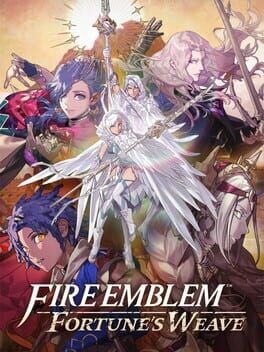
Early Fire Emblem: Fortune’s Weave previews frame the Switch 2 tactics RPG as a dense, Three Houses-adjacent game of schedules, routes, training, recruitment, and battlefield planning.
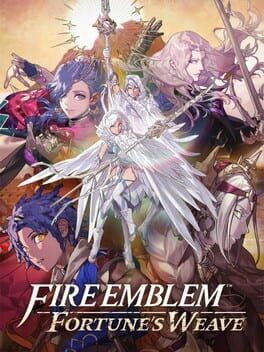
Image: IGDB
Fortune’s Weave is being previewed as a schedule-first Fire Emblem
The strongest throughline from the latest Fire Emblem: Fortune’s Weave preview coverage is clear: Intelligent Systems appears to be building its next tactical RPG around the pressure of spending time well between major battles. Siliconera’s hands-on preview says the game alerts players when a plot mission or Heroic Games fight is scheduled, then tells them how many turns will pass before that date arrives. That turns the downtime loop into an active planning problem rather than a simple menu break between maps.
For Fire Emblem fans trying to place this new Fire Emblem game beside Three Houses, that is the key comparison point. Nintendo Life describes Fortune’s Weave as feeling like an amplified version of the Three Houses structure, with a large hub city, multiple plot threads, recruitable allies, training programs, side quests, turn-based dungeons, crop farming, and optional activities competing for attention before the next required match. Siliconera, after playing part of Leda’s campaign, says the game seemed to reward plotting things out so strongly that the writer expected to keep a notebook for the full release.
That does not mean the preview materials describe a direct return to Garreg Mach or a traditional academy setting. The reported setting is Dagda, with the capital city of Dagsion hosting the Heroic Games. But the structure being described will sound familiar to anyone who spent Three Houses weekends deciding between instruction, supports, faculty training, paralogues, shopping, meals, and monastery errands. Fortune’s Weave appears to take that academy-style planning logic and move it into a gladiatorial city and world-map campaign.
The free-time loop looks broader and less rigid than Three Houses
Siliconera’s Fire Emblem Fortune’s Weave preview gives the clearest account of the moment-to-moment schedule loop. After Leda reaches Dagsion and enters the Heroic Games structure, the game begins pushing the player to manage time through a calendar, a quick recommendations screen, fast travel, and visible map markers. The preview notes that side quests are marked with red dots on map icons, and fast travel can place the player near objectives or specific people.
The order Siliconera describes is revealing because it links preparation directly to tactical consequences. The writer first checks the Pale Raven’s Perch and uses Foresight to preview what the next main campaign fight may look like. That information can then influence weapon purchases, unit training, and magic preparation. After that, the player can collect side quests, visit taverns for Leda’s performances, build her repertoire of special dances for battle buffs, check possible recruits, inspect their stats, give gifts, and recruit if requirements are met.
Nintendo Life’s preview widens that picture. It reports that, between Heroic Games matches, players can spend time on recruitable allies, training programs, side quests, turn-based dungeons, crop farming, and other diversions, or proceed directly to the next main mission. The same preview mentions the pressure of having, for example, 70 in-game days to fit in everything. That number is from Nintendo Life’s hands-on account, not a universal campaign length claim, but it illustrates the design tension previews keep circling: the game gives players freedom, then makes that freedom costly by attaching it to limited time.
The Three Houses comparison is real, but the setting and route structure differ
The Fire Emblem Three Houses comparison is unavoidable because several previews frame Fortune’s Weave in relation to that 2019 entry rather than to 2023’s Engage. Nintendo Life says trailers and a dedicated presentation made Fortune’s Weave look like a Three Houses sequel in spirit, while Eurogamer writes that players coming from Three Houses or Engage may be surprised by the new game’s scale. IGN is even more direct, saying Fire Emblem is returning to the world introduced in Three Houses and that Fortune’s Weave shares structural similarities with it.
There is also an important setting distinction in the same batch of coverage. Nintendo Life describes Dagda as a continent notably different from Three Houses and Three Hopes’ Fódlan, while RPGFan’s report on Nintendo’s Direct says the presentation shifted to Dagda in 1449 and the capital city of Dagsion. RPGFan also identifies Dietrich as hailing from Fódlan before being shipwrecked on Dagda. Taken together, the supplied sources point to a shared broader world connection rather than a simple return to the same school, continent, and class-house premise.
That makes Fortune’s Weave closer to Three Houses in structure than in scenery. The comparison rests on how players divide time, build relationships, recruit allies, train units, and choose routes. The fiction around those choices is different: a massive contest called the Heroic Games, held in honor of the Dagdan Empire’s founding, with the Divine Sovereign Solel offering to grant the winner a wish, according to RPGFan’s Direct report. The academy fantasy gives way to a tournament structure where each protagonist has a personal reason to enter.
Four protagonists turn planning into a route-management problem
Fortune’s Weave previews also suggest that player choice is not limited to daily scheduling. The game’s structure revolves around four protagonists tied to the Heroic Games: Cai, Dietrich, Theodora, and Leda. RPGFan, summarizing Nintendo’s Direct, says Cai enters after his father Castor is charged with unspecified crimes and imprisoned beneath Dagsion. Dietrich, from Fódlan, comes to Dagda after a sea monster attack and joins to test himself against powerful opponents. Theodora enters to restore the reputation of her goddess and reduce conflict with neighboring peoples. Leda joins to pursue revenge against the White-Maned Demon, the man connected to her father’s death.
IGN’s preview says Fortune’s Weave appears to front-load more of its individual heroes’ stories than Three Houses did. In its hands-on account, Cai’s early path quickly leads to his father’s imprisonment and a qualifying event, while Leda’s path centers on a revenge plot and reaches the Heroic Games by a different route. That is significant for completion-focused players because it implies early route selection may shape the rhythm, party access, and narrative context well before the game converges around a larger threat.
There is one caution attached to that ambition. IGN praises the ability to hop between story paths but flags the save-game system as a possible annoyance for players who want to see everything. The supplied text does not specify exactly how saves are limited or structured, so it would be premature to call it a confirmed deal-breaker. Still, for a Fire Emblem with multiple protagonists, recruit conditions, calendars, and side activities, save handling is a practical concern. Route completion, missable conversations, and build experimentation all become harder to manage if the game is stingy about clean branch points.
Preparation seems tightly linked to combat performance
The best Fire Emblem time-management systems work because the calendar is never separate from the grid. Fortune’s Weave previews suggest Intelligent Systems understands that connection. Siliconera’s use of Foresight before a main fight is the clearest example: if the player can inspect an upcoming battle’s shape, then decisions about weapons, magic, training, recruits, and Leda’s dances become tactical investments rather than checklist chores.
Eurogamer’s preview describes the core combat as familiar turn-based, grid-restricted Fire Emblem play, but with new battlefield wrinkles. The outlet mentions units such as chariots with special skills that can mow down rows of enemies, advanced classes that combine offensive weapons with utility such as white magic, and protagonist-specific abilities. Eurogamer also says some of these abilities cost HP, which introduces a resource tradeoff during combat rather than a free heroic button.
IGN highlights Blaze Arts as a new risk-reward combat system, though the supplied preview excerpt does not provide a full mechanical breakdown. The broad picture across sources is still useful: Fortune’s Weave gameplay appears to reward players who connect long-term planning to short-term map execution. A player who enjoys build crafting will likely care about when to train weapon ranks, whether to recruit now or spend time elsewhere, which side quests are worth the calendar cost, and how support-style social actions feed into battlefield readiness. A player who mostly wants lean, map-to-map strategy may appreciate that Nintendo Life says you can proceed directly to the next main mission, but the previews make the optional layer sound central to progression.
Scale is the opportunity and the risk
The preview consensus is enthusiastic about scope, but not blind to overload. Eurogamer calls Fortune’s Weave massive and says the first 10 hours reveal choices that broaden the game’s scope, with multiple avenues opening in a complex pattern of consequence, intrigue, and narrative. Nintendo Life says it played through the opening five chapters with a large portion of the protagonists for more than 20 hours, and that the game felt dense enough to overwhelm at points before its complexity became appealing. Metro, after playing up to Chapter 5 of Part I across the four main playable characters, says the game is packed with features, content, and plotlines, sometimes to its own detriment because so much is introduced at once.
That density changes who should be excited. Three Houses fans who liked optimizing weeks, planning recruitment, squeezing supports out of limited free days, and building units toward specific class goals have the strongest reason to watch Fortune’s Weave closely. The preview material repeatedly points toward a campaign where foreknowledge, errands, training, and social choices stack into meaningful advantages. Players who preferred Engage because it moved faster between battles should treat the previews as a warning as much as a promise.
Metro also reports an unusual early sci-fi element, including laser pistols, laser turrets, artificial-being implications, and crashed spaceships, while saying that side of the story barely returned in the roughly 10 hours it played after the prologue. IGN similarly frames the player character Eshmel as being connected to a future threat involving the undead before the story sends the player back to assist one of the four heroes. Those details are confirmed only as preview impressions from early-game access, and the supplied sources do not resolve how these elements connect to the Heroic Games structure. For lore-minded Fire Emblem fans, that unanswered connection may be part of the draw.
Practical guidance before release
Based on the supplied sources, Fire Emblem: Fortune’s Weave is a Switch 2 tactical RPG from Intelligent Systems, with multiple previews tying it closely to the systems legacy of Three Houses while distinguishing it from Engage’s more combat-forward structure. IGN describes it as the 18th mainline Fire Emblem, and Eurogamer identifies it as Intelligent Systems’ Switch 2 RPG. The Fire Emblem Wiki listing included in the source materials currently describes it as an upcoming worldwide Switch 2 release dated September 17, 2026, but that is a wiki listing rather than a publisher statement in the provided material.
There are still practical gaps. The supplied sources do not include eShop pricing, edition details from Nintendo, performance targets, upgrade paths, accessibility options, or final review verdicts. These are hands-on previews, not finished reviews, and none of them can fully answer late-game pacing, route convergence, save restrictions, or whether the schedule loop remains satisfying after dozens of hours.
For now, the safest read is this: Fortune’s Weave looks closest to Three Houses when you examine its planning economy, relationship management, route choice, and training pressure, but it is using a different tournament-driven setting and a much broader four-protagonist structure. If your ideal Fire Emblem is a long RPG where every free day can become a build decision, the early Fire Emblem Fortune’s Weave gameplay impressions are promising. If you bounced off calendars and hub chores before, wait for full reviews to clarify how optional those systems truly remain.