
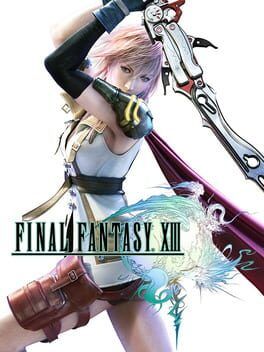
Lightning is returning in crossover form, but Square Enix still has not announced a Final Fantasy XIII HD remaster. Here is why the trilogy remains such an obvious candidate and what a modern release would need to fix.
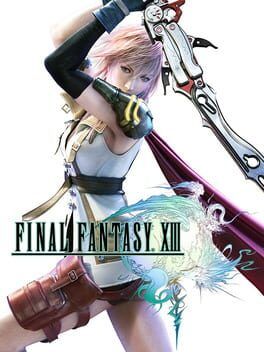
Image: IGDB
Store links: Final Fantasy XIII on Steam, Lightning Returns: Final Fantasy XIII on Steam
Lightning is visible again, but her own trilogy is still absent
Lightning is set to appear again in Final Fantasy Resonance, according to GameRant, which reports that the HD-2D RPG releases on October 22 and uses a Vision system to bring characters from earlier Final Fantasy games into a new crossover story. That gives Final Fantasy XIII representation beside figures such as Cloud, Tidus, Squall, Terra, Zidane, Noctis, and Final Fantasy XVI’s Clive. It also sharpens an awkward contrast: Square Enix’s XIII-era lead is still marketable enough for a new ensemble appearance, yet her own trilogy has no announced modern remaster.
That absence is the concrete tension behind renewed Final Fantasy XIII HD remaster demand. Siliconera recently argued that Final Fantasy XIII, Final Fantasy XIII-2, and Lightning Returns: Final Fantasy XIII have been left behind while much of the wider series has been reissued, remastered, remade, or otherwise kept alive on current storefronts. The outlet’s point is not that the original game vanished completely. Depending on platform, older versions can still be found. The issue is that there is no clean, current, trilogy-wide Square Enix remaster package that treats the XIII games as a completed arc.
Nothing in the provided sources confirms that Square Enix is developing a Final Fantasy XIII remaster, an FF13 remaster, or a Lightning trilogy remaster. There is no announced release window, platform list, price, upgrade path, or feature set. The story right now is demand, visibility, and omission. Lightning can return through a crossover, but the games that made her central to the franchise remain stuck in a strange preservation gap.
Final Fantasy XIII is old enough to need curation, but recent enough to look salvageable
Final Fantasy XIII occupies an unusual place in Square Enix’s back catalog. Wikipedia lists it as a 2009 role-playing game developed and published by Square Enix for PlayStation 3 and Xbox 360, with a Windows version following in 2014. It launched in Japan on PlayStation 3 on December 17, 2009, then internationally on PlayStation 3 and Xbox 360 on March 9, 2010. That puts the original release deep into seventh-generation history, but not so far back that it reads as a lost 2D artifact or a candidate for a full conceptual remake by default.
That timing is exactly why the Square Enix remaster conversation fits XIII so neatly. The game was built for HD consoles from the beginning. Its art direction, elaborate environments, cinematic presentation, and character models were designed for screens that are still legible to modern players, even if the underlying releases now show their age in access, platform coverage, and technical polish. Siliconera specifically points to the game’s detailed backdrops, creative environments, and Masashi Hamauzu’s soundtrack as reasons the original still has strong presentational value.
The contradiction is that Final Fantasy XIII is simultaneously too modern to be treated like a museum piece and too old to feel properly served by its original release footprint. Its original PlayStation 3 and Xbox 360 context is no longer the center of Square Enix’s audience. The Windows version exists, and the Steam listing for FINAL FANTASY XIII is live behind an age gate, but that does not answer the console question for players who expect current hardware support. Siliconera also notes that there are platforms, including Nintendo Switch 2, where players cannot find any version of the trilogy at all.
That platform gap matters because Final Fantasy’s reissue history has trained players to expect access. PCGamingWiki’s Final Fantasy series page places Final Fantasy XIII and XIII-2 on Windows in 2014, Lightning Returns on Windows in 2015, Final Fantasy X/X-2 HD Remaster in 2016, Final Fantasy XII: The Zodiac Age in 2018, and Final Fantasy VIII Remastered in 2019. The list does not prove a XIII remaster is coming, but it shows why the omission stands out. Other neighboring eras have been given clearer modern shelves. XIII has not.
The strongest case for a remaster is mechanical, not nostalgic
As an RPG, Final Fantasy XIII is often reduced to its corridor reputation, but the systems underneath are more specific than that shorthand allows. Wikipedia describes the game’s fast-paced combat, its Crystarium character-development system, and its customizable Paradigm system, which determines which abilities characters use in battle. Those systems remain the most interesting argument for a modern release because they were always built around rhythm, role-swapping, and party composition rather than open-ended town-to-town wandering.
The Paradigm system is the heart of that argument. In practical terms, XIII is less about manually selecting every command for every party member and more about reading pressure, stagger timing, healing windows, and defensive pivots. A good fight asks whether the player understands when to build a chain, when to cash out damage, when to stabilize, and when to accept a slower setup for a safer finish. That is a different lineage from menu-heavy ATB nostalgia, and it deserves to be judged cleanly on modern hardware with responsive performance, legible UI scaling, and reduced friction around battle flow.
The Crystarium is equally important to the remaster conversation because it reveals both XIII’s strengths and its limits. It provides a controlled progression path that prevents early build chaos, but that same control can make the opening hours feel constrained. A thoughtful Final Fantasy XIII remaster would not need to turn the game into an open build sandbox. It would need to present its progression curve more transparently, communicate role identity earlier, and make it easier for returning players to see how party options evolve across chapters.
This is where a remaster could do useful work without pretending XIII was a different game. Faster retry options, clearer paradigm loadout management, smoother tutorials, better explanation of role interactions, and modernized menus would support the systems that already exist. The goal would not be to sand away the identity of Final Fantasy XIII. It would be to let players reach the parts where its combat logic becomes expressive before the structure exhausts them.
A modern release would have to confront the same criticisms that hurt the original
Any serious Final Fantasy XIII remaster discussion has to acknowledge the game’s reception problems rather than treat them as old discourse. Siliconera’s case for a remaster includes a blunt summary of the complaints: the game takes a long time to get going, can feel heavily tutorialized, and spends much of its running time sending players down narrow routes with small branches before opening up on Gran Pulse. The outlet also notes that the story’s heightened tone and cast did not win over players as broadly as some other Final Fantasy ensembles.
Those criticisms are not small cosmetic issues. They go directly to pacing, agency, and trust. XIII asks players to accept a long runway before it shows the full shape of its combat and world structure. For some, that slow reveal creates focus. For others, it makes the game feel withheld from them. A remaster that only increases resolution would preserve the art, music, and combat, but it would also preserve the old onboarding problem.
The challenge is that aggressive changes could damage the game as much as help it. If Square Enix ever revisits XIII, the safest expectation would be an HD remaster, not a full redesign, because nothing in the sources indicates a remake or reimagining. That means the most realistic improvements would be quality-of-life features rather than rewritten chapters. Chapter select after completion, improved datalog usability, cleaner quest tracking on Gran Pulse, better checkpoint behavior, and more flexible camera or control settings would all address friction without making unsupported promises about new content.
Gran Pulse is the pressure point. Siliconera frames the first arrival on the surface as a glimpse of where RPGs would go in later years. Mechanically, it is where hunting, party tuning, and encounter choice finally breathe. A remaster would benefit from presenting that transition more clearly to new players, because Gran Pulse is also the moment many lapsed defenders cite when explaining why the game is worth staying with. If players quit before the systems open, the remaster has failed even if the texture work is beautiful.
The trilogy question is bigger than Final Fantasy XIII alone
A Final Fantasy XIII remaster would be incomplete as a preservation argument if it stopped with the first game. Siliconera emphasizes that XIII is one of the few mainline Final Fantasy entries to receive two direct sequels, Final Fantasy XIII-2 and Lightning Returns: Final Fantasy XIII. That makes the trilogy unusual in the series: for several years, Lightning’s world was not a side note but an active pillar of Final Fantasy’s release identity.
The sequels also complicate what fans mean when they ask for a Lightning trilogy remaster. Final Fantasy XIII-2 and Lightning Returns are not simple content extensions of the first game. Siliconera describes them as entries that put their own spin on the material while continuing the storylines and characters and introducing engaging systems. PCGamingWiki lists Lightning Returns: Final Fantasy XIII with a Windows release date of December 10, 2015, placing the full trilogy on PC across the 2014 to 2015 period. That gives Square Enix an existing PC baseline, but it does not equal a current unified product across console ecosystems.
From a completionist RPG perspective, the trilogy format is the real opportunity. XIII is a linear, party-driven combat game. XIII-2 shifts the shape of progression and continuation. Lightning Returns changes the structure again around its own systems. A modern package could present that evolution coherently, with shared launcher support, consistent display options, standardized controller behavior, bundled downloadable content where applicable if Square Enix chose to include it, and save-management conveniences that make the trilogy feel intentionally archived.
The risk is fragmentation. If Square Enix released only the first game, it would satisfy part of the Final Fantasy XIII remaster demand while leaving the larger Lightning arc in the same half-preserved state. If it released the trilogy unevenly across platforms, the access problem would remain. The reason fans keep using phrases like Lightning trilogy remaster is practical as much as sentimental: the three games make the most sense when they are sold, maintained, and explained as a connected set.
Players should treat a remaster as unannounced until Square Enix says otherwise
For now, the practical guidance is simple: do not make buying decisions around an unconfirmed Final Fantasy XIII HD remaster. Square Enix has not announced one in the supplied material. There is no confirmed PS5, Xbox Series, Nintendo Switch 2, or PC remaster release. There is no confirmed price, physical edition, collector’s edition, upgrade discount, or save-transfer path. The existing Steam page confirms that FINAL FANTASY XIII remains listed on Valve’s storefront, though the captured store text is an age-gate page rather than a full technical breakdown.
If you want to play today, the available options depend on the hardware and storefronts you use. Siliconera notes that original releases may still be available depending on platform, while also highlighting that some newer consoles lack the trilogy entirely. PC players have had Windows versions of the XIII games since the mid-2010s, based on Wikipedia’s 2014 Windows date for Final Fantasy XIII and PCGamingWiki’s 2015 Windows date for Lightning Returns. Console players looking for a native modern package have no confirmed solution from these sources.
That leaves the FF13 remaster conversation in an unusual but clear position. The demand is understandable because the candidate is obvious: a visually ambitious HD-era mainline Final Fantasy, a complete trilogy built around one protagonist’s mythos, a combat system that could benefit from modern responsiveness, and an access gap that stands out beside other Final Fantasy reissues. The caution is equally important. Lightning’s appearance in Final Fantasy Resonance, as reported by GameRant, is a sign of character visibility, not evidence of a remaster project.
If Square Enix does move, the bar should be higher than a bare resolution bump. A good Lightning trilogy remaster would preserve the art direction and music, stabilize performance, modernize menus, improve onboarding, respect the Paradigm and Crystarium systems, and package all three games in a way that makes their progression across the trilogy legible. Until then, Final Fantasy XIII remains one of the company’s most conspicuous missing remaster candidates: visible in memory, visible in crossover rosters, and still waiting for a proper modern home.