
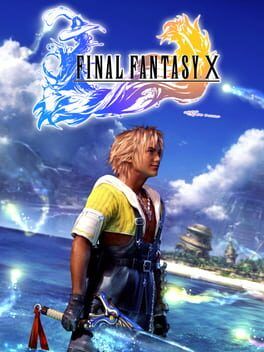

A 25th anniversary look at Final Fantasy X development, from PS2 hardware constraints and water rendering to its Lord of the Rings-era fantasy pivot and CTB battle pacing.
Image: IGDB
A sci-fi Final Fantasy became a PS2 fantasy under pressure
Final Fantasy X, now being revisited around its 25th anniversary, began from a different creative angle than the one players remember. In a Square Enix interview cited by Kotaku, director Yoshinori Kitase said the team initially leaned toward a more sci-fi approach before shifting toward fantasy after learning that Peter Jackson’s The Lord of the Rings was in production and expecting fantasy to become a major global trend around the game’s release window.
That is the concrete development worth sitting with, because Final Fantasy X can feel inevitable in hindsight. Its bright oceans, temple pilgrimage, summoners, pyreflies, blitzball stadiums and sorrowful spiritual architecture are now inseparable from its identity. According to Kitase, though, the final direction came from a collision of factors: Kazushige Nojima’s interest in a fantasy atmosphere outside medieval Europe, Hollywood’s coming fantasy wave, and the opportunities and risks of moving Final Fantasy to PlayStation 2.
The result was a game remembered as a clean break in Final Fantasy X JRPG history. Wikipedia identifies it as the first mainline Final Fantasy with fully three-dimensional areas, while noting some areas were still pre-rendered, and the first with voice acting. It also replaced the series’ Active Time Battle system with Conditional Turn-Based Battle and introduced the Sphere Grid. Those systems and presentation choices were not isolated innovations. They fit a production trying to make a new console look cinematic without losing the readable pace that had made menu-driven Final Fantasy combat work.
The PS2 offered spectacle, but it also forced priorities
The PlayStation 2 was a promise and a trap for Square. Kotaku’s anniversary piece frames the hardware jump as Final Fantasy X’s largest challenge: next-generation specs gave the team new tools, but choosing which features to push became a gamble. VGTimes, summarizing the same Square Enix interview, reports that as higher-resolution PS2 games began appearing, the Final Fantasy X team adapted by giving up part of its original color-palette vision and prioritizing resolution.
That tradeoff helps explain why Final Fantasy 10 PS2 hardware discussions still matter. Final Fantasy X is often praised for its presentation, but its look came from constraints as much as ambition. The team was not simply turning every dial upward. It had to decide where the new machine’s power would be most visible to players: character faces, cinematic staging, water, backgrounds, battle animation, voice-driven scenes, and a world that could feel cohesive without relying on the same large continent structure as prior entries.
Kotaku notes that Final Fantasy X arrived as Square’s first PlayStation 2 entry and alongside the box-office failure of Final Fantasy: The Spirits Within, a film whose consequences would later reshape the company, including the merger behind the Square Enix name. Wikipedia lists the original game as developed and published by Square, which matters historically: this was a late-Square production reaching for filmic impact at a moment when the company’s movie ambitions had become financially dangerous. In that context, Final Fantasy X’s restraint becomes as interesting as its spectacle.
Spira’s water was a technical showcase and a structural solution
One of Final Fantasy X’s defining breaks from earlier entries was geographic. Kotaku reports that, unlike previous Final Fantasy games built mainly around large continents, Final Fantasy X moved players into a world dominated by water and small pockets of land. Takashi Tokita, who was directing The Bouncer at the time, recalled a desire to take on realistic water rendering and simulation because advances in CG and hardware had made fluid simulation possible.
That technical goal shaped Spira’s fiction. A water-heavy world supports the game’s visual identity, from coastal villages to underwater blitzball, but it also encourages a more guided structure. Rather than framing the adventure as a sprawling continental sweep, Final Fantasy X channels players through destinations that feel like ritual stops, settlements, temples and arenas placed across a fragile world. The hardware-driven desire to render water did not merely decorate Spira. It helped define how movement through Spira would feel.
There were limits. Kitase said, according to Kotaku, that the team wanted battles both on land and underwater, but underwater combat required different animations because characters moved differently. As a result, underwater battles could only be included in certain locations. That is the clearest example of Final Fantasy X’s production bargain: the game sells water as a world-defining element, then contains its most expensive implications so the broader RPG can function. The constraint is visible, but it is also elegant. Spira feels aquatic without demanding that every enemy encounter support a second full animation language.
The Lord of the Rings influence was about timing, not imitation
The Final Fantasy X Lord of the Rings influence is easy to misread if treated as a simple aesthetic debt. The source material points to something more specific. Kitase told Square Enix, as quoted by Kotaku and VGTimes, that the team learned The Lord of the Rings was in production and expected fantasy to be the next major global trend. That helped push Final Fantasy X away from sci-fi, but Nojima’s starting point was already a fantasy atmosphere that avoided medieval European roots after Final Fantasy VII and Final Fantasy VIII had maintained a sci-fi tone.
Wikipedia’s overview of the setting aligns with that distinction, describing Spira as influenced by the South Pacific, Thailand and Japan, with Samarkand in Uzbekistan cited as an inspiration for Zanarkand. Those influences separate Final Fantasy X from a Tolkien-like medieval template. Its fantasy is ceremonial, coastal and spiritual. Its ruins are tied to memory and punishment. Its central journey follows a summoner and guardians against Sin, the colossal monster that destroys Tidus’s home city of Zanarkand and terrorizes Spira.
The historical tension is that Final Fantasy X used a Western fantasy market signal to justify a setting that does not look like the dominant Western fantasy shorthand. That decision still benefits the game. It arrived in a moment when cinematic fantasy was about to gain global heat, yet it preserved the series’ appetite for strange architecture, invented religions, hybrid sports, pop spectacle and personal tragedy. The fantasy pivot made commercial sense, while the non-European texture kept Spira from feeling like a chase after Hollywood.
Voice acting changed the rhythm of the RPG, even before the pipeline matured
Final Fantasy X was the first mainline entry to feature voice acting, according to Wikipedia, and that fact changed how the series could pace story scenes. Dialogue no longer existed only as text boxes the player advanced at a private rhythm. Scenes now had performance timing, pauses, awkwardness, comedy, breath and silence. That gave the pilgrimage a different texture from the PlayStation-era games, especially because the game’s cinematic presentation asked players to look closely at faces and body language.
The production process behind that leap was not fully mature. VGTimes reports that Kitase described the voice-acting stage as amateurish, citing a lack of streamlined casting and proper studio rentals. That detail is useful because it undercuts the idea that Final Fantasy X’s voice work arrived from a fully settled AAA pipeline. It was an experiment conducted while the series was learning how to sound like a voiced cinematic RPG.
The result can feel uneven to modern players, but unevenness is part of the historical footprint. Final Fantasy X’s voiced scenes are bound to early-PS2 performance capture, localization demands and cinematic ambition arriving at the same time. Its pacing slows down in places because the game is giving scenes room to play as scenes rather than text delivery. For a retrospective, that is essential: the presentation stands out because the game commits to voiced drama while its developers were still building the tools and habits needed for that commitment.
Conditional Turn-Based Battle kept the cinematic game readable
The battle system is where Final Fantasy X’s structure and hardware-era presentation most clearly meet player control. Wikipedia states that Final Fantasy X replaced Active Time Battle with Conditional Turn-Based Battle and introduced the Sphere Grid as its leveling system. Those two changes made the game feel less frantic than the ATB lineage while still giving character growth a visible, systems-heavy form.
CTB matters for battle pacing because it creates a deliberate rhythm. Instead of asking players to react under the continuous pressure of ATB, it frames combat around turn conditions and order. That makes encounters easier to read, which pairs well with a game that was also asking players to absorb new visual density, voice performances, camera staging and fully 3D spaces. The spectacle could increase because the decision layer stayed legible.
The Sphere Grid also fits the same philosophy. It turns progression into a map of future decisions rather than a simple level-up receipt. For an RPG player, that gives Final Fantasy X a particular long-term pleasure: the pilgrimage may be narratively directed, but character development still carries a sense of route planning. The game’s linearity and its build system push in different directions, and the friction is productive. You are often moving along a clear story path, yet you are still watching your party’s capabilities unfold through a progression board.
That is one reason Final Fantasy X still occupies a distinct place in Final Fantasy 10 retrospective discussions. Its cinematic form did not erase its systems identity. The game slowed battles down, clarified turns, and moved character growth onto an explicit board at the same time it was pushing water rendering, voice acting and PS2-era presentation.
The version to revisit depends on what you want to study
The provided sources do not give current pricing, performance data, upgrade paths or a complete platform buying guide, so any practical recommendation has to stay narrow. What they do support is the case for revisiting Final Fantasy X as a production shaped by decisions that are still visible in play. Final Fantasy Wiki’s page structure lists Final Fantasy X/X-2 HD Remaster releases, including sections for Steam, iOS and Android, Xbox One, Xbox Series X|S and Windows 10, while Wikipedia documents the original PlayStation 2 release history beginning in Japan on July 19, 2001.
If your interest is historical, the PS2 context is the key lens. Final Fantasy X was built as Square’s first mainline Final Fantasy for the hardware, and its strengths come from how carefully it spent that generational leap. It chose water as a showcase, contained underwater combat where animation demands allowed it, moved away from ATB toward CTB, introduced voice acting before the pipeline was fully polished, and fused Nojima’s non-medieval fantasy instinct with a market read shaped by The Lord of the Rings.
For modern players, that means the game is best approached with its structure in mind. Do not expect the older world-map freedom associated with some prior Final Fantasy entries. Expect a guided pilgrimage whose pacing is reinforced by cinematic scenes, staged environments and deliberate battles. Its standout quality in JRPG history comes from that alignment. Final Fantasy X is a game where hardware limits, fantasy fashion, animation budgets and RPG systems all pressed against each other until Spira took shape.