
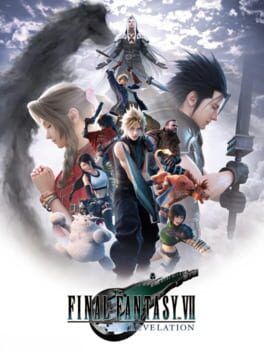
A deep dive into Final Fantasy VII Revelation’s first trailer, its simultaneous multi-platform launch, Highwind exploration, and the story clues that set up the end of Square Enix’s remake trilogy.
The first trailer for Final Fantasy VII Revelation finally answers one of the biggest questions hanging over Square Enix’s remake project: how is this trilogy going to stick the landing? Shown during Summer Game Fest, the debut footage of the finale leans hard into planetary crisis, Highwind freedom, and the looming confrontation with Sephiroth, while also quietly confirming some big structural changes to how players will experience the world.
A first trailer that screams “endgame”
Revelation’s trailer wastes no time establishing that this is the final march. Meteor dominates the sky, cities are in chaos, and the Planet’s last line of defense, the WEAPONs, take center stage. Instead of just brief cameos, the colossal guardians are framed as active targets, suggesting an arc built around tracking and taking each one down.
Cloud’s narration is heavier and more reflective than in Remake or Rebirth, drawing attention to the consequences of the party’s choices across multiple timelines. Scenes cut between the Highwind’s deck, ground-level devastation, and close-ups of key characters, hinting that the story is finally collapsing its branching possibilities into a single decisive path.
Combat footage underlines that this is a culmination, not a reset. The hybrid real-time and Tactical Mode system returns, but players can now chain multiple coordinated commands across the full party in a single slow-mo window. That visual rhythm of back-to-back Limit breaks and synchronized magic is the clearest statement yet that Revelation wants every major battle to feel like a carefully orchestrated climax rather than just a difficult encounter.
A simultaneous multi-platform launch changes the conversation
One of the most important reveals in the initial announcement is not in the trailer’s visuals, but in the release plan. Unlike Remake and Rebirth, which launched first on PlayStation before coming to PC and other platforms later, Final Fantasy VII Revelation is set for a simultaneous worldwide launch on PlayStation 5, Xbox Series X|S, PC, and Nintendo Switch 2.
That decision closes the gap between fanbases that have been experiencing this story at different times. For the finale, social media and community discussions will finally move in sync. Spoiler-heavy conversations around the ending, Aerith, Zack, and the nature of the timelines will not be gated by platform.
It also suggests a high degree of technical confidence from Square Enix. Designing around a shared launch across three console families and PC means the studio has locked in its production pipeline and performance targets earlier than before. Players on any platform can go into Revelation knowing they are not waiting in line for the conclusion of a saga they have been following since 2020.
Story hints: WEAPONs, timelines, and the meaning of “Revelation”
Even in a short slice, the trailer gives several strong clues about how the finale might structure its narrative.
The emphasis on WEAPON battles implies a globe-spanning hunt that naturally pushes the party across the full world map. In the original Final Fantasy VII, encounters like Diamond and Emerald WEAPON felt like side tests of strength. Here, the way they are framed suggests they are woven into the main plot, likely as milestones that mark the Planet’s escalating desperation.
Rebirth’s most controversial element, the divergence of timelines and the expanded role of Zack Fair, hangs heavy over every cut. The trailer does not explicitly spell out how many realities are still in play, but the tone points toward consolidation. The title “Revelation” hints that characters and players alike will finally understand what the Whispers, Sephiroth’s manipulations, and the off-script survival of certain characters have been building toward.
Expect several things from this setup. First, answers about whether Aerith’s fate at the Forgotten Capital can truly be changed or whether Rebirth’s events were always heading toward a single outcome. Second, some kind of resolution to Zack’s journey that ties him into Cloud’s final confrontation with Sephiroth rather than leaving him as a disconnected what-if. Third, a clearer explanation of Sephiroth’s awareness across timelines, which has been the quiet driver of the trilogy’s deviations from 1997’s script.
Highwind exploration turns the world into a playground
One of the standout moments in the trailer is the reveal of full Highwind control. Instead of using the airship as a late-game fast-travel menu, Revelation positions it as the hub of an open-world structure. The footage shows players piloting the Highwind across the globe and, crucially, parachuting down to specific locations.
That single mechanic says a lot about the game’s priorities. By letting players jump directly from the airship to the surface, Revelation keeps the sense of scale that an airship implies while avoiding the friction of constant landing cutscenes and limited docking points. It also opens the door to more vertical encounter design, where some secrets, optional bosses, or side quests are best approached from above.
As an anchor for exploration, the Highwind gives the finale a natural rhythm. Players will likely return to the airship between major story beats, check in with party members, plan their next move against WEAPON targets, and scan the map for optional activities. This fits with Square Enix’s promise that Wutai, snowboarding, and an expanded Queen’s Blood card game will all sit alongside the main path, accessible as the world opens up rather than gated behind a strict chapter structure.
Evolving combat: coordinated commands and a full party
The trailer’s combat slices make it clear that Revelation builds on the mechanical foundation of Remake and Rebirth instead of reinventing it. Real-time attacks keep the flow fast, ATB bars still gate abilities and spells, and Tactical Mode slows down time to let you queue precise actions.
The new twist is the ability to string multiple commands across the entire party while Tactical Mode is active. In practice, this turns every ATB window into an opportunity to design a miniature combo: Cloud launches an enemy, Tifa stacks stagger pressure, Aerith drops a buffed spell, and Cid or Vincent follow up with a finishing blow. Visually, the trailer leans into this with chained particle effects and cinematic camera pulls when big sequences land.
Cid Highwind and Vincent Valentine stepping in as fully playable characters completes the roster that many fans have been waiting for since Remake’s reveal. Their fighting styles bring new tactical toys, from Cid’s aerial and spear-focused kit to Vincent’s shapeshifting and gunplay. With the expanded command system, Revelation is poised to make party composition matter more than ever, especially if WEAPON fights demand specific setups.
What fans should expect from the trilogy’s finale
Between the trailer and the initial round of details, a few expectations for Final Fantasy VII Revelation are already safe bets.
Players should look forward to a true open-world phase that takes advantage of the Highwind not just as transportation, but as a narrative and mechanical hub. Expect the world map to be denser than in the original, with side content like snowboarding, Wutai’s storyline, and Queen’s Blood expansions woven into the flow of chasing WEAPONs and racing against Meteor.
Narratively, this is set up as the point where all of the trilogy’s experiments pay off. The unknown journey that began at the end of Remake and spiraled outward in Rebirth cannot afford to stay ambiguous. Revelation will have to commit to answers about Aerith, Zack, and the nature of fate in this reimagined universe. Fans of the original should be prepared for familiar destinations and iconic moments, but also for some of them to land differently as a result of the timelines colliding.
The simultaneous multi-platform launch means that everyone arrives at that ending together. Whether you have followed the project on PlayStation, waited for PC or Xbox releases, or plan to join in on Nintendo’s next system, Revelation is being positioned as a shared event.
If the first trailer is any indication, Square Enix’s goal is to fuse the nostalgia of the 1997 climax with the bolder, stranger ideas introduced over the past two games, all while giving players more freedom to chart their own course through the final days before Meteor falls. The result should be a finale that feels both recognizable and genuinely new, built around the simple thrill of taking the Highwind into the sky and deciding where this story is finally going to land.