
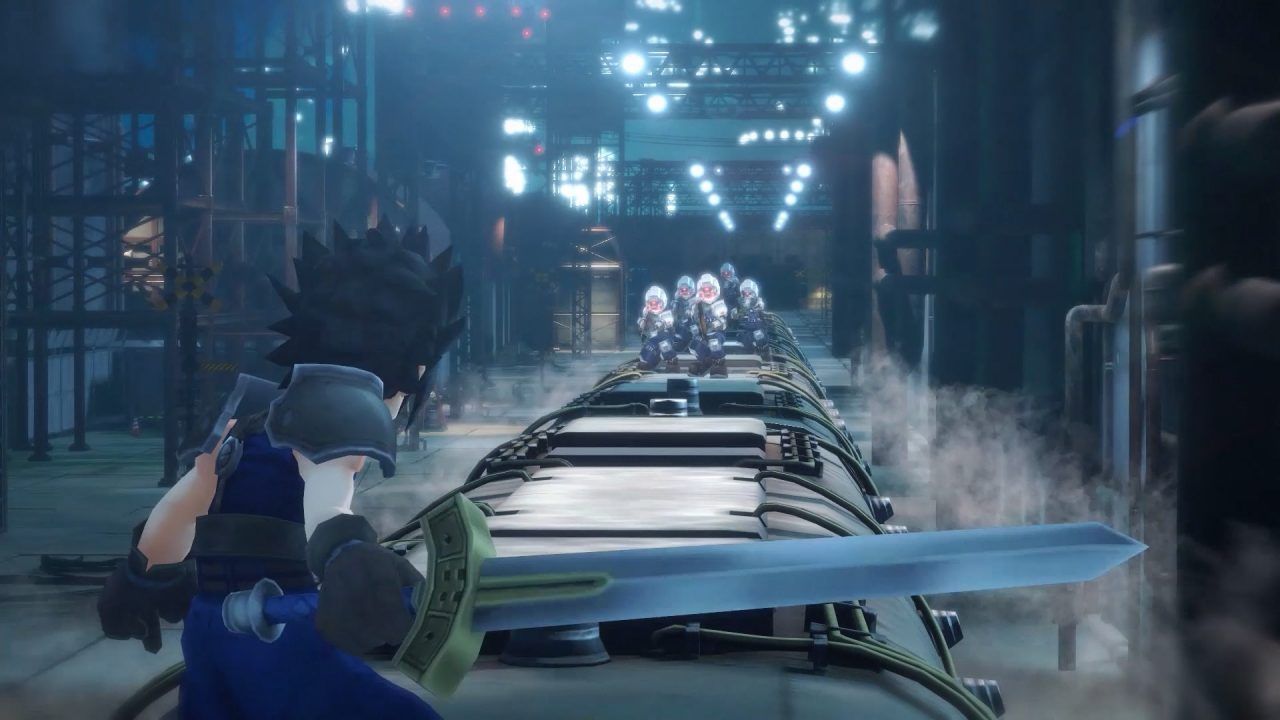

Cloud voice actor Cody Christian is promising a tearful Final Fantasy VII Revelation, while FFVII Ever Crisis prepares to add Before Crisis for the first time worldwide before its October 2026 shutdown.
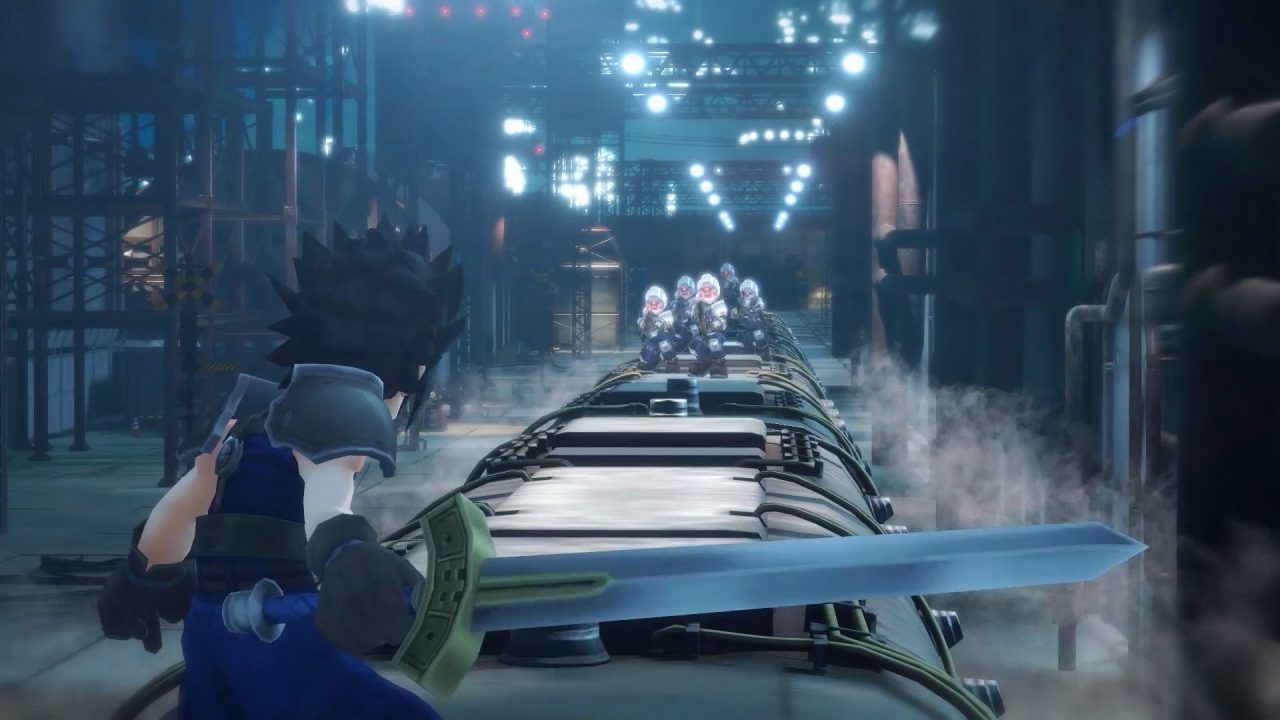
Image: rpgfan.com
Cloud’s actor is selling Revelation as the trilogy’s emotional payoff
The strongest new Final Fantasy VII news this week is also the most precarious for fans trying to separate tease from text: Cloud Strife’s English voice actor Cody Christian has said Final Fantasy VII Revelation contains moments that will leave players “sobbing,” while Square Enix is preparing to shut down Final Fantasy VII Ever Crisis shortly after it finally releases Before Crisis Final Fantasy VII worldwide.
My Nintendo News, citing GamesRadar, reported that Christian said, “There are moments in this that if you haven’t cried in the first two yet, I guarantee you’ll be sobbing in this third one.” That is a performer’s confidence in the finale, not a plot confirmation. It does not confirm who lives, who dies, which 1997 scenes are preserved, or how Revelation resolves Rebirth’s most disputed ending material. Still, it is easy to see why fans are treating the comment as an emotional FFVII Remake Part 3 signal.
Final Fantasy VII Revelation is positioned as the concluding entry of the remake trilogy. A public listing describes it as the sequel to Final Fantasy VII Rebirth and the final installment of the Final Fantasy VII Remake trilogy, with action RPG combat continuing the real-time and strategic structure of its predecessors. My Nintendo News says the game is due next spring on Nintendo Switch 2 and other formats. The supplied sources do not include a Square Enix price, a complete platform list, edition details, PC requirements, or performance targets.
That gap matters because Christian’s tease lands in a fanbase already trained to read every official and adjacent comment as a map. Remake changed the terms of adaptation. Rebirth widened the uncertainty. Revelation now carries two parallel expectations: it must finish a modern RPG trilogy with its own internal rules, and it must answer decades of player memory surrounding the original Final Fantasy VII.
The “sobbing” line is being read through Rebirth’s unresolved grief
Christian’s quote is powerful because it points toward feeling rather than mechanics. It suggests a finale built around payoff, but it does not identify the source of that payoff. For a systems-minded RPG player, that distinction is important. Revelation may deliver its emotional weight through cinematic story beats, party composition, relationship resolution, boss structure, playable perspective shifts, or the way it handles late-game progression. None of that is confirmed by the actor’s remark.
The fan reading, however, is already visible in the discussion around the report. My Nintendo News’ comment section includes players talking about the ending of Rebirth, whether Revelation can top those reactions, and concern over how the finale handles one of Final Fantasy VII’s most famous losses. Those are fan interpretations, not sourced story details. They show where the audience’s anxiety is aimed: not at whether the finale will be big, but whether it will make choices that feel earned after two games of altered chronology, expanded characterization, and deliberate ambiguity.
That is the tension around Final Fantasy VII Revelation. The remake trilogy has never been a simple asset replacement project. It has asked players to invest in builds, side quests, affinity moments, combat roles, and new scenes while also inviting comparison with a story many fans can recite from memory. When Cloud’s voice actor says the third game will make players cry, longtime players immediately sort that claim into a mental checklist of Northern Crater fallout, Meteor, the Weapons, Shinra’s endgame, Sephiroth’s role, and the trilogy’s treatment of Aerith. The sources confirm none of those outcomes for Revelation beyond the broad public listing that the party journeys toward the Northern Crater, faces Shinra and the awakened Weapons, and prepares for a final stand against Sephiroth as Meteor looms.
The practical read is narrower but useful: Christian is signaling confidence in the finale’s emotional delivery. Players should not treat the quote as a spoiler. They should treat it as evidence that the English cast and promotional orbit are now speaking about Revelation as the payoff chapter, which is exactly how Square Enix needs the final entry to be understood.
Ever Crisis is closing just as it becomes more important to FFVII lore hunters
The other half of the week’s Final Fantasy VII story is less speculative and more urgent. Square Enix has announced that Final Fantasy VII Ever Crisis will end service at 11pm PT on October 6, 2026, according to Siliconera’s report on the end-of-service notice. GameSpot likewise reports the October 6 shutdown and notes that real-money transactions have been suspended. Siliconera says sales of Red Crystals have already ended.
Ever Crisis launched as a free-to-play mobile and PC project that retold and reframed material from across the Final Fantasy VII compilation. GameSpot describes it as covering Final Fantasy VII, Crisis Core, Dirge of Cerberus, and Before Crisis while also adding a new story about SOLDIERs and a young Sephiroth. The same report notes that original writer Katsushige Nojima and creative director Tetsuya Nomura were heavily involved, which is part of why lore-focused players have treated Ever Crisis as something with more franchise weight than a disposable mobile adaptation.
That weight creates the preservation problem. If Ever Crisis goes offline with no offline version, its unique scenes, its version of compilation events, and its original character work become harder for future players to access through legitimate play. Siliconera reports that Square Enix’s end-of-service statement did not mention an offline version. GameSpot adds that characters introduced in Ever Crisis, including Glenn Lodbrok, have crossed into the remake games, making the shutdown awkward for players who want to trace the connective tissue before Revelation arrives.
There is also a source nuance worth preserving. Siliconera says Square Enix did not offer a reason in the shutdown notice beyond saying it would be difficult to “provide the best experience” going forward. GameSpot, citing a Producer’s Letter from Shoichi Ishikawa, reports a more detailed explanation: Ishikawa wrote that it had become difficult to balance production costs with demand for character weapons and gear, while also maintaining equipment visual quality and gameplay balance that encouraged party diversity. Those are not actually contradictory claims. They refer to different Square Enix communications: a broad end-of-service notice on one side, and a producer explanation on the other.
Before Crisis finally gets a worldwide release, but inside a ticking clock
The most preservation-relevant detail is that Before Crisis Final Fantasy VII is arriving in Ever Crisis before the shutdown. Siliconera reports that Square Enix’s final Ever Crisis roadmap includes the first worldwide release of Before Crisis FFVII across three chapters in the game’s last months. Chapter 1 is scheduled for July 2026, Chapter 2 for August 2026, and the storyline’s conclusion for September 2026. The full service closure follows on October 6.
Before Crisis has always occupied an unusual place in Final Fantasy VII history. Siliconera describes it as a mobile prequel that only appeared on mobile phones in Japan. It follows original Turks characters alongside Reno, Rude, Tseng, and Cissnei, with one of its original characters identified as Elena’s older sister. That makes its Ever Crisis appearance significant for international players who have spent years encountering Before Crisis through summaries, fan documentation, and secondhand references rather than an official worldwide release.
The timing is the catch. This is not a preserved compilation release on modern storefronts. It is a limited-window addition to a live-service game already scheduled to disappear. For players who care about the Turks, Cissnei’s connective role across Crisis Core and Rebirth, or the broader Shinra-side perspective on the prequel era, Ever Crisis is about to become the easiest official way to see Before Crisis material and then lose that status almost immediately.
Siliconera’s roadmap details also place Before Crisis beside Ever Crisis’ own ending cadence. July includes Before Crisis Chapter 1 and a Beach Festival Fun event. August adds Before Crisis Chapter 2, Chapter 12 of the main FFVII storyline, and another event. September includes a 3rd Anniversary Tower event, a general event, and the end of both the original and prequel storylines. In progression terms, that is a compressed final season: story completion, event rotation, anniversary content, and archival urgency all occupying the same three-month stretch.
For completionists, the shutdown changes how to prioritize playtime
For anyone approaching this as a checklist, the answer is simple but inconvenient: if you want to experience Before Crisis through an official worldwide release, plan to play Ever Crisis between July and September 2026, before service ends on October 6. Waiting for a later offline version is a gamble because the provided sources do not confirm one. Siliconera specifically notes that Square Enix’s end-of-service statement did not mention any offline version.
The end of Red Crystal sales also changes the shape of the remaining game. GameSpot describes Ever Crisis as a gacha title where players could spend money on crystals to draw random gear, and reports that real-money transactions have been suspended because of the shutdown. That does not remove the existing progression systems, but it does place a ceiling on how players can engage with the economy in the final months. Anyone returning purely for story should be careful not to assume the same long-term gearing goals make sense when the service has a fixed end date.
The useful route for preservation-minded players is to focus on story access first. Prioritize the Before Crisis chapters as they arrive, then the remaining FFVII storyline content, then any Ever Crisis-exclusive young Sephiroth or SOLDIER material you have not seen. Events may be enjoyable, and the 3rd Anniversary Tower could be a final challenge marker for built accounts, but the irreplaceable material is the story content that may not be playable afterward.
There is no confirmed upgrade path from Ever Crisis to Revelation, no announced save transfer, and no source-supported reason to expect account progress to matter in FFVII Remake Part 3. Treat Ever Crisis as its own live-service archive with a deadline, not as homework that will mechanically reward you in Revelation. The narrative context may enrich your read on the finale, especially where Turks, Shinra history, and young Sephiroth material are concerned, but the sources do not say Revelation requires it.
Revelation’s marketing now has to coexist with a disappearing archive
The collision between Christian’s emotional tease and Ever Crisis’ shutdown gives Square Enix an unusual Final Fantasy VII problem. On one side, Revelation is being discussed as the grand conclusion to a trilogy that began with Final Fantasy VII Remake and continued through Rebirth. On the other, an official FFVII project containing compilation retellings, new story material, and the first worldwide release of Before Crisis is counting down to closure months before the finale’s reported next-spring launch window.
That sequencing could sharpen fan attention. Players who want to enter Final Fantasy VII Revelation with the widest official context now have a reason to revisit Ever Crisis quickly. But it also underscores a recurring live-service risk: story content can become fragile when access depends on servers, event schedules, and a business model that no longer balances production cost against demand. Ishikawa’s producer explanation, as reported by GameSpot, frames that risk in practical production terms: high-quality character gear and visual expectations cost money, and maintaining gameplay balance around party diversity added pressure.
For RPG players, this is not abstract. Ever Crisis tied lore consumption to character weapons, gear, materia, events, and account growth. That structure can be rewarding while a service is alive, but it is a poor long-term container for material as historically elusive as Before Crisis. A traditional rerelease, a story archive, an offline conversion, or a compilation viewer would all answer different parts of the preservation problem. None has been announced in the supplied sources.
So the present guidance is restrained. Believe that Cody Christian is confident Final Fantasy VII Revelation will hit hard emotionally, but do not turn his quote into a plot leak. Believe Square Enix’s shutdown date for FFVII Ever Crisis, and treat the Before Crisis rollout as time-sensitive. If you are a preservation-minded FFVII player, the next three months of Ever Crisis are the window to see an official worldwide version of a once Japan-only prequel before the game goes dark.