
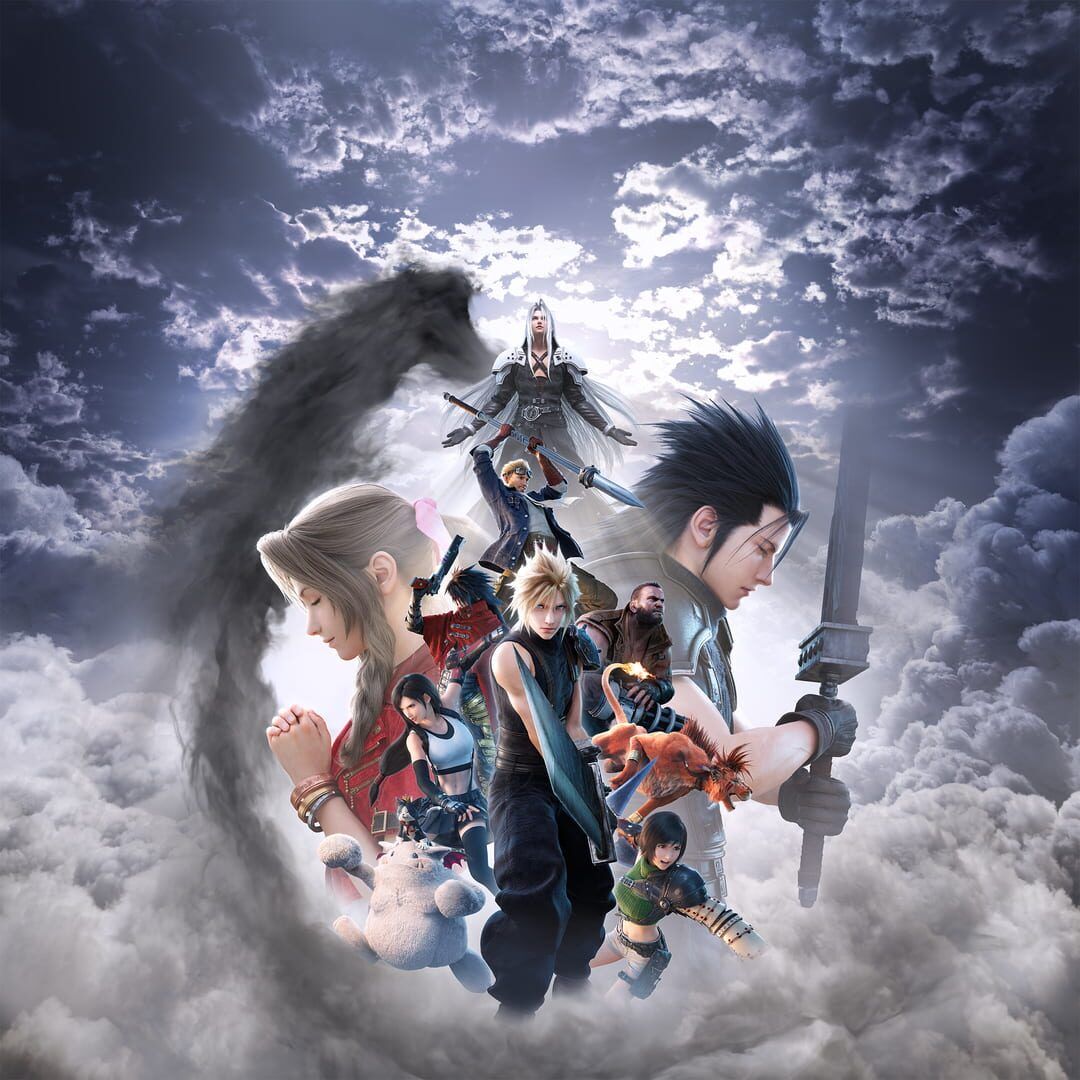

Naoki Hamaguchi explains why the third game is called Final Fantasy VII Revelation even though its core theme is “resolve,” and what that title hints about the trilogy’s ending.
Naoki Hamaguchi has finally explained why the third game in the Final Fantasy VII Remake project is titled Final Fantasy VII Revelation. On paper, its core theme is actually something else entirely: resolve. That split between theme and subtitle is not an accident, and it says a lot about how Square Enix wants to close out this trilogy.
In recent interviews, Hamaguchi describes Revelation as the point where "all the mysteries" built up in Remake and Rebirth are finally answered. It is the last stop on a journey that has gradually peeled away assumptions about what Final Fantasy VII even is. If Remake cracked the story open and Rebirth reveled in alternate possibilities, Revelation is positioned as the moment where truth finally settles over all those branching futures.
"Revelation" vs. "Resolve"
Hamaguchi is clear that resolve is the story’s guiding idea. Revelation follows Cloud and the party as they commit to their paths with full knowledge of the stakes. By this point they have seen visions, timelines and consequences, and they can no longer pretend they do not understand what their choices mean.
Yet Square Enix never seriously considered calling the game Final Fantasy VII Resolve. Hamaguchi calls the double “Re” of Remake, Rebirth and Revelation a coincidence, but the team still favored a word that points outward to what the game does for the audience, not just inward to what the characters feel.
Resolve is something the cast experiences. Revelation is something the player receives.
That distinction matters. This trilogy has spent two games throwing questions at players. Who controls fate in this version of the story. How much of the original timeline still exists beneath the surface. What, exactly, did defeating the Whispers actually change. A subtitle focused solely on resolve would emphasize how characters endure that uncertainty. Revelation promises that the uncertainty itself is temporary.
Not a Biblical apocalypse, but still an ending
Given the weight of the word, some fans assumed a direct Biblical reference. Hamaguchi downplays that angle. For the team, Revelation is not about a religious apocalypse. It is about disclosure. The title signals that the story is entering a phase where information is finally complete.
From a narrative design perspective, that fits how the Remake project has evolved. Final Fantasy VII Remake weaponized mystery, cutting off at the edge of Midgar and layering its last act with meta twists. Rebirth expanded the world and cranked speculation into overdrive by playing with memory, causality and player knowledge of the 1997 original. By the time Revelation begins, the developers know players are carrying two games’ worth of theories.
Calling the finale Revelation is a promise to clean the slate. Even if there is only one canonical ending, Hamaguchi has hinted that players will influence how specific events play out. That means the game has to juggle variable routes with a single final statement. Revelation is the moment where every divergent possibility points back toward a coherent truth about what happened and what this version of Final Fantasy VII ultimately means.
How the subtitle reflects the trilogy’s structure
Looked at across the trilogy, the subtitles form a kind of thematic staircase.
Remake is the act of taking something familiar and rebuilding it from the ground up. Mechanically, it updates a 90s RPG into an action-heavy hybrid. Narratively, it tears open the original story and inserts entities like the Whispers, literal manifestations of canon enforcement. “Remake” describes both the production reality and the in-universe struggle between fate and creative reinterpretation.
Rebirth focuses on the world’s second chance. Midgar is gone. The cast walks under an open sky and pushes beyond the rails of the old script. They pursue Sephiroth across a continent while confronting the idea that events can play out differently this time. The subtitle keys into themes of renewal and cyclical history, with timelines seemingly looping and colliding.
Revelation, in turn, is about recognition and acceptance. After the rebuilding and the rebirth, someone has to look at the result and understand what it is. In that sense, it is the only subtitle that points directly to the player’s headspace. It suggests that Square Enix wants the ending to change how you see the other two games, as if the trilogy was always a three-part riddle whose answer only becomes legible in the final chapter.
Resolve inside Revelation
Even if it is not on the box, resolve is woven through everything Hamaguchi describes about Revelation.
As Meteor hangs in the sky and Weapons roam the planet, the party faces choices that are less about tactics and more about personal conviction. Cloud, who has spent two games grappling with fractured identity and unreliable memory, now has to decide what he believes about himself and Sephiroth when all the veils are finally lifted. Aerith and Tifa confront what they are willing to sacrifice once they understand the real shape of the battle they are in. Barret, Red XIII and the rest of the cast channel their doubts and grief into a final stance on what future they are actually fighting for.
That is where resolve and revelation intersect. The story cannot ask its characters to take a final stand until they know what they are standing against and what is at stake. Likewise, the player cannot fully grasp the weight of their decisions until the game stops strategically withholding information. Revelation is the point where knowledge and determination arrive together.
What the title hints about the ending
Hamaguchi has said that Revelation is "the end of everything" in this project. It is the last word on the specific branch of Final Fantasy VII that Remake and Rebirth carved out. That does not mean it will overwrite the original 1997 story, but it strongly implies that trying to keep every possibility equally alive would dilute the finale.
The subtitle suggests three key ideas about how the trilogy might conclude.
First, expect explicit answers to the mysteries that have driven fan speculation. The title itself functions as a contract that the major questions raised across the first two games will be addressed, not endlessly deferred. What happened to the timelines. How the Whispers really work. Whether certain characters can genuinely escape the fates players remember. Revelation points to closure on those fronts.
Second, it frames the ending as interpretive, not purely reactive. Revelation is not just about plot twists. It is about meaning. When the credits roll, the expectation is that players will be able to look back and say, "This is what Square Enix was telling us about fate, authorship and memory by remaking this story in this way." The subtitle almost invites post-game reappraisal of scenes that seemed opaque or purely fan-service-oriented in the first two entries.
Third, it hints that the finale will differentiate between what can change and what cannot. Throughout the project, certain events have seemed flexible while others feel inevitable. A game titled Revelation implies that by the end you will know which is which, and why. That clarity is a form of revelation in itself, particularly for a remake that has spent so much time flirting with the idea of defying destiny.
Revelation as a conversation with the original
One of the most intriguing aspects of the subtitle is how it positions this game in dialogue with 1997’s Final Fantasy VII. For long-time fans, the original was itself a revelation. It showed what a console RPG could do with 3D storytelling, cinematic pacing and heavy themes. The Remake project has turned that cultural impact into in-universe text, making knowledge of the original story part of the tension.
When Hamaguchi talks about Revelation, he is also talking about reconciling those two experiences. The new trilogy cannot simply mimic the shock of the original, because the story is already known. Instead, it has to reveal the purpose behind revisiting it. By tying the title to the idea of long-awaited answers, Square Enix is effectively promising an explanation not only for in-universe mysteries, but also for the creative choices that have defined the project.
In other words, Revelation might not just tell you what happens to Cloud and Sephiroth. It might also clarify what Final Fantasy VII means to Square Enix and to the series in 2027.
Conclusion
Final Fantasy VII Revelation carries a subtitle that speaks directly to how the Remake trilogy wants to leave players. Resolve is the emotion driving Cloud and his friends as they enter their final battle. Revelation is the effect the game aims to have on you when the dust settles. By separating those ideas, Square Enix is signposting a finale that is both character-focused and meta-aware, closing the loop on years of speculation while making a statement about why this story was worth retelling.
If Remake taught players to question what they thought they knew, and Rebirth reveled in the thrill of possibility, Revelation is poised to show its hand. The title promises that when the last cutscene fades, the mysteries will not be lingering loose threads, but part of a deliberate pattern you can finally see in full.