
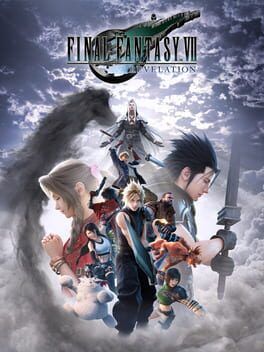

Final Fantasy VII Revelation changes the PS1 endgame with open-world airship travel, reordered set pieces, mandatory Vincent and Yuffie arcs, FITS combat, and an especially extravagant Sephiroth finale.
Image: IGDB
Store links: Final Fantasy VII Revelation on Steam
Revelation is making the PS1 endgame a trilogy-scale problem
The most concrete shift around Final Fantasy VII Revelation is also the one that frames every other change: Square Enix is treating the final confrontation with Sephiroth as the payoff to a three-game remake project, and director Naoki Hamaguchi has described that last Sephiroth battle as "very extravagant" in PC Gamer's interview framing. That is a tonal promise rather than a full mechanical reveal, but it lands alongside confirmed changes that make Revelation a very different endgame from the 1997 PlayStation original.
PlayStation.Blog says Final Fantasy VII Revelation launches April 8, 2027 on PlayStation 5 and calls it the final chapter in the remake trilogy after Final Fantasy VII Remake and Final Fantasy VII Rebirth. Square Enix's official Revelation page uses equally direct endgame language: "The final battle to decide the fate of the world has begun," and tells players to "take to the skies, chart your course, and stand with your companions against Sephiroth one last time."
The tension is that this trilogy has already spent two full games changing the weight of familiar events, expanding party roles, and turning late-game destinations into much larger systems spaces. Kotaku's roundup of Final Fantasy VII Revelation changes from the PS1 original points to a fully open and explorable world, airship traversal, location gating through weather and closed airspaces, a new job-like FITS system, and story arcs for characters who were optional in 1997. PlayStation.Blog's hands-on report then shows those ideas in motion inside the Whirlwind Maze, where Vincent and Cid are already playable and the party is moving toward Sephiroth.
So the real story is not whether Revelation reaches the Northern Crater, Meteor, Weapons, or Sephiroth. Public listings and official copy say it does. The story is how much scaffolding Square Enix is building around that destination, and how many PS1 assumptions it is willing to rewrite on the way there.
The Highwind opens the world, but Revelation is adding authored gates
One of the biggest FF7 Revelation story differences begins with movement. Square Enix's official site tells players to "take to the skies" and "chart your course," while Kotaku reports that Revelation offers a true open world from the jump and lets players use the Highwind airship to fly where they want. That is a major escalation from the more segmented structure of Remake and Rebirth, and it places Revelation closer to the global endgame fantasy many players associate with the original Final Fantasy VII.
The important caveat, according to Kotaku, is that Revelation will not mirror the PS1 version's late-game freedom exactly. In the original, Kotaku notes, once the Highwind was unlocked, "everything everywhere became available." Revelation is reportedly more controlled: some locations will be blocked by weather events and closed airspaces until the game is ready for players to reach them.
That is a design change with story consequences. On PS1, the Highwind helped Final Fantasy VII feel like it had opened its map all at once. In Revelation, the airship appears to be both a vehicle for freedom and a tool for pacing. The player can travel across a vast planet, but Square Enix can still hold back specific destinations, reveals, and quest chains. For a remake trilogy ending, that gives the developer room to preserve dramatic escalation while advertising a broader world.
From a systems perspective, this is also the difference between a map that simply unlocks and a progression layer that can be tuned. Weather gates and restricted airspace can be used to stage late-game side content, optional bosses, party quests, and main scenario beats without surrendering the sense that the planet has opened up. The confirmed facts stop short of listing every gated region, so players should not assume the PS1 flight path is a reliable route guide this time.
Vincent and Yuffie have moved from optional recruits to required story anchors
The cleanest confirmed departure from the PS1 original concerns party structure. Kotaku notes that Yuffie Kisaragi and Vincent Valentine were optional characters in the 1997 game. In Revelation, their stories have been woven into the main narrative, with Kotaku specifically saying players will visit Wutai and learn more about Vincent's background as a Turk whether they opt into that material or not.
That shift matters because optional characters in a 1997 RPG could only carry so much mandatory plot weight. If a player could miss Vincent entirely, the original game had to keep his deepest lore at the margins. Revelation does not have that constraint. Yuffie already moved into the remake trilogy's center through Remake Intergrade's Episode INTERmission and Rebirth's main party, and Vincent's role is expanding from guest presence to fully playable combatant.
PlayStation.Blog confirms Vincent and Cid are newly added playable characters in Revelation's Tokyo Game Show 2026 demo. In that hands-on session, Cid joins Cloud and the rest of the party at the beginning of the demo, creating an eight-member group heading into the Whirlwind Maze where Sephiroth awaits. That is a very different baseline from the old optional-character model.
The post-launch plan reinforces the same emphasis. Polygon reports that Square Enix's Premium Edition information lists a Story Expansion Pass containing "Story DLC 1: Sephiroth" and "Story DLC 2: Vincent & the Turks." Polygon attributes the timing to an official Square Enix press release, saying both DLC pieces are planned between Winter 2027 and Spring 2028 and will also be sold individually.
There is an open question here. Revelation is billed by PlayStation.Blog as the final chapter of the trilogy, while Polygon correctly points out that story DLC means the release will not be the actual end of new remake-trilogy story content. For completion-minded players, the main game's ending and the later DLC chapters may become separate parts of the broader Final Fantasy 7 remake trilogy ending conversation.
Combat changes make the finale a roster and buildcraft payoff
Revelation is also changing the texture of the endgame by expanding what party members do in battle. Kotaku describes an augmented battle system that layers a job class mechanic called FITS over the remake trilogy's real-time action. The source material provided does not explain the full FITS ruleset, so it would be premature to treat it like a known job board or materia replacement. What is confirmed is that hands-on impressions and PlayStation.Blog both identify FITS as a major new system in Revelation.
The PlayStation.Blog demo gives the clearest look at how the expanded roster is being differentiated. Vincent fights through gunplay and monster transformation. His firearm attacks evolve his unique abilities from Blood Moon to Execration and then Retribution as consecutive hit counts rise. Holding R1 transforms him into a monster form that moves quickly on all fours, slashes with claws, and can stagger enemies faster by holding Triangle. The tradeoff is that monster form raises a Chaos level over time, reducing Vincent's maximum HP.
That detail is important for players who think in builds and party roles. Vincent's transformation is not simply a cinematic callback. It is a resource-risk loop: stay transformed to pressure enemies and build stagger, but accept a shrinking HP ceiling if you overcommit. Kotaku also reports that Vincent's original Galian Beast Limit Break is now part of his regular combat kit, which shows how Revelation is converting late-1990s special attacks into modern character identity.
Cid, according to PlayStation.Blog, is built around airborne spear combat. He chains standard attacks into derivative moves such as Dragon Spin, Hyper Dive, and Ground Pound when timed with a blue aura, while his Target Spear can be charged to launch up to five spears. That gives the FF7 Revelation Sephiroth fight a practical design challenge: the final encounter has to account for a large roster, aerial options, transformations, FITS layering, and the trilogy's established ATB-action hybrid. Hamaguchi's "very extravagant" description makes sense in that context, even though Square Enix has not yet shown the final battle's structure.
Revelation is reordering familiar PS1 set pieces rather than copying the itinerary
Square Enix is not simply scaling up the original route. Kotaku reports that snowboarding, Icicle Inn, and the hypothermia minigame are present in Revelation, but previews suggest they do not appear in the same order as the PS1 game. In the original sequence, as Kotaku summarizes it, Cloud follows Sephiroth after the events at the Forgotten City, goes through Corel Valley Cave to Icicle Town, and needs to complete a snowboarding minigame to continue.
That is a small-sounding change with large pacing implications. The PS1 version used abrupt tonal turns frequently, and the snowboarding sequence remains one of the most famous examples: a minigame placed directly after one of the story's heaviest moments. If Revelation moves that material, it may be trying to preserve the content while changing the emotional rhythm around it. The sources do not say exactly where snowboarding now falls, so the safe read is that the sequence exists, but the old order should not be treated as confirmed.
PlayStation.Blog's Whirlwind Maze demo shows another way Revelation is reworking familiar spaces. The report describes cliff-face shimmying, ledge vaulting, aurora-like ribbons of light, howling winds, and black-robed figures lingering along the path. The demo culminates in a fight against Jenova Deathmourner, with Vincent and Cid available for combat.
For players revisiting FF7 with a memory of the PS1 disc structure, this creates a useful rule of thumb: expect names, places, and broad conflicts to remain recognizable, but do not plan around old sequencing. Revelation appears designed to make veterans feel the pull of recognition while still controlling when systems, scenes, and destinations become available. That is where many of the biggest Final Fantasy VII Revelation changes seem to live, in the order and framing around familiar events.
The Sephiroth finale is being sold as a culmination, but its exact form is still hidden
PC Gamer's interview headline says Hamaguchi discussed Revelation's "very extravagant" final Sephiroth fight and the unusual ambition of pulling off a trilogy like this. The available source text does not include a full quote or a mechanical breakdown, so there are limits to what can be reported. Square Enix has not, in the provided materials, detailed the phases, playable parties, locations, difficulty structure, or postgame implications of the final battle.
What is confirmed is the scale of the runway leading into it. Square Enix's own page says everything leads here and positions the game around standing with companions against Sephiroth one last time. PlayStation.Blog places the demo in the Whirlwind Maze, explicitly noting that Sephiroth awaits there. Public descriptions collected on Wikipedia identify Revelation as the final installment of the Final Fantasy VII Remake trilogy, following Remake and Rebirth, and set its story immediately after Rebirth as Cloud's party heads toward the Northern Crater, confronts Shinra and the awakened Weapons, and tries to avert Meteor.
The extravagance, then, is not only a question of spectacle. It is a production and systems problem. Revelation has to close the Sephiroth conflict for players who began with Remake in Midgar, satisfy veterans measuring the ending against the 1997 game, integrate altered story material from Rebirth, and give a newly expanded playable party meaningful roles. It also has to do that while Square Enix is reserving additional Sephiroth and Vincent-focused story DLC for after launch, according to Polygon's reporting on the Premium Edition and Expansion Pass.
That DLC plan complicates the word "final" in a way players should notice. The main game is still being marketed as the trilogy's conclusion and the last stand against Sephiroth. At the same time, Square Enix is selling later story chapters tied to Sephiroth and Vincent & the Turks. Until Square Enix explains where those episodes sit chronologically, the safest expectation is that Revelation will deliver the core finale in April 2027, with supplementary story material following afterward.
What to plan for before launch
The practical information is straightforward where official sources have spoken. PlayStation.Blog says Final Fantasy VII Revelation launches April 8, 2027 on PlayStation 5. Polygon reports, based on Square Enix's edition and pre-order information, that a Premium Edition includes the main game and Story Expansion Pass. Polygon also reports that the two story DLC chapters, labeled Sephiroth and Vincent & the Turks in the edition graphic, are planned for release between Winter 2027 and Spring 2028 and will be available for individual purchase.
The provided sources do not confirm a PC release date, performance modes, upgrade paths, file size, demo availability, or whether save data will materially affect story progression. Players deciding when to buy should separate the confirmed launch from assumptions built on Remake and Rebirth's release history. Based only on the supplied material, PS5 is the dated platform.
For series veterans, the best preparation is mental rather than mechanical. Revelation is clearly using the PS1 game as its foundation, but the known FF7 Revelation story differences are substantial: open-world airship exploration with new gates, reordered snowboarding and Icicle-area material, mandatory Yuffie and Vincent narrative content, playable Cid and Vincent, FITS system layering, and post-launch story DLC. For newer players, the key is that Revelation is the third act of a trilogy, not a clean entry point. Its Sephiroth finale is being built as a payoff to two previous games' worth of character arcs, combat vocabulary, and timeline questions.
If you want the main Final Fantasy 7 remake trilogy ending as soon as possible, April 2027 is the date to watch. If you want the broadest version of Revelation's story, including the announced Sephiroth and Vincent DLC, the complete picture is scheduled to extend into 2028.