
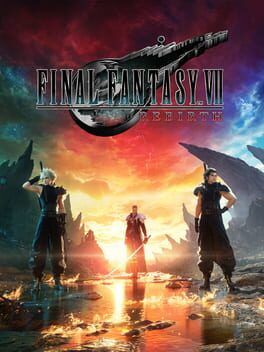

Breaking down Final Fantasy VII Rebirth’s newly announced Nintendo Switch 2 and Xbox versions: release date, massive file size, performance expectations, pricing quirks, and how it reflects Square Enix’s changing approach to exclusivity for the Remake trilogy.
Final Fantasy VII Rebirth is finally breaking out of its PlayStation 5 bubble. Square Enix has confirmed that the second entry in the Remake trilogy is heading to Nintendo’s next-gen hardware and Microsoft’s ecosystem, marking a major shift for one of the most closely associated “PlayStation” RPGs of the last generation.
Below is a platform-focused look at what to expect from the newly announced Nintendo Switch 2 and Xbox releases, and how this move fits into Square Enix’s broader exclusivity strategy.
Release date and platforms
Square Enix is lining up a simultaneous launch for the new versions. Final Fantasy VII Rebirth arrives on Nintendo Switch 2 and on Xbox Series X|S (with Xbox Play Anywhere support for PC and Xbox Cloud Gaming) on June 3, 2026. Digital pre-orders are already live across storefronts.
The game was originally released on PlayStation 5 in February 2024, with PC following later. Bringing the game to Switch 2 and Xbox more than two years after its debut extends its lifecycle while also setting the stage for the trilogy’s finale to arrive as a truly multi-platform event.
File size and storage implications
The headline number for the Switch 2 version is its size. Final Fantasy VII Rebirth on Nintendo’s new hardware weighs in at roughly 102 GB, according to the latest eShop listing and reporting from Nintendo-focused outlets.
For a portable-first platform, that has real consequences. Even if Switch 2 ships with larger internal storage than its predecessor, a single 100 GB class game eats a substantial chunk of available space. Players who plan to keep Rebirth installed alongside other big third-party releases will almost certainly need a high-capacity microSD card, and cheaper low-speed cards may introduce longer load times or streaming hitches.
On Xbox Series X|S, the final install size has not been officially detailed in the same way, but it is reasonable to expect a comparable footprint. The PS5 version already pushes into very large territory due to high-resolution assets, large open regions and generous cinematics. Xbox owners relying on the smaller internal SSD of the Series S, or on the proprietary expansion cards, will be juggling installs if they also keep Game Pass staples and other big titles on the drive.
In both ecosystems, Rebirth is the kind of game that turns “storage management” into an active part of the ownership experience. The move to multi-platform does not make that easier, but it underlines how modern cinematic RPGs are now routinely in the triple-digit gigabyte range.
Visual and performance expectations on Switch 2
Square Enix has not published a detailed spec sheet for Switch 2, but the announced file size tells its own story. A 102 GB install suggests that the Switch 2 version is trying to preserve a significant amount of the high-resolution texture work, cinematic quality and asset density that defined the PS5 release.
On Nintendo hardware, the game will also ship with the Streamlined Progression option that has appeared in recent ports of Final Fantasy VII Remake Intergrade. While this mode is about systems rather than frame rate, it is telling: Square Enix expects some players to treat the Switch 2 version as a cinematic, story-forward experience, where 60 frames per second performance is nice but not mandatory.
Realistically, most expectations point to a 30 fps target in a quality-focused mode, with dynamic resolution scaling doing the heavy lifting to keep visual parity respectable. Given that Switch 2 is reported to be significantly more powerful than the original Switch, a performance mode aiming for 60 fps in smaller areas is possible, but open regions are likely to settle near 30 in order to keep image quality and effects in line with the vision of the PS5 release.
If Square Enix leans into the hybrid nature of the device, portable play will benefit the most from these trade-offs. Dense foliage, detailed character models and full-fat cutscenes will look impressive on a smaller handheld screen, even at resolutions below what current home consoles push to 4K televisions.
Visual and performance expectations on Xbox Series X|S
On Xbox Series X|S, parity with PS5 is the clear goal. Rebirth was built with high-end consoles in mind, and Microsoft’s hardware gives Square Enix more than enough headroom to offer the now-standard choice between graphics and performance.
On Series X, players can reasonably expect a 60 fps performance mode with a reconstruction solution targeting a sharp presentation on 4K displays, alongside a higher-resolution quality mode that prioritizes detail over frame rate. On Series S, the trade-offs will be steeper, with lower internal resolutions and potentially more visible pop-in, but the core experience should remain aligned with the PS5 version.
Where Xbox has a unique angle is ecosystem features. Support for Xbox Play Anywhere and Xbox Cloud Gaming means that the Series X|S release is not confined to the living room. Players can move their progress between console and PC in Microsoft’s ecosystem, or stream to handheld PCs and mobile devices. That flexibility complements the Switch 2 release, which provides native portable play, and positions Rebirth as a game that can follow you almost anywhere regardless of platform preference.
Pricing and regional quirks
Rebirth’s new platform push is arriving alongside a broader price recalibration. Square Enix is introducing permanent price reductions for the existing PS5 and PC versions, including the standard and Digital Deluxe editions, upgrade paths and the Twin Pack that bundles Remake Intergrade with Rebirth.
On Xbox, the digital versions are launching with a limited-time 20 percent discount window that runs through June 10, 2026. That effectively lowers the barrier to entry for early adopters and lines up with Microsoft’s frequent digital promotions, which may help the game gain traction on a platform that has historically seen fewer big Japanese RPG releases.
The Nintendo side is more nuanced. UK eShop watchers have already highlighted periods where Rebirth’s pricing dips below the expected “next-gen blockbuster” level, making it surprisingly competitive for a release of its scale. That is unusual for a new Final Fantasy on Nintendo hardware and suggests that Square Enix is willing to test more aggressive digital pricing as a way of building an audience on a platform where traditional boxed sales for long, storage-heavy RPGs can be a tougher sell.
On top of that, physical Switch 2 copies include a limited promotional bonus in the form of a Magic: The Gathering Final Fantasy Zack Fair card, with new art by Tetsuya Nomura, while supplies last. This pushes collectors toward the boxed version even as the massive file size nudges many players toward going fully digital with a big microSD upgrade.
How this fits into Square Enix’s shifting exclusivity strategy
Final Fantasy VII Remake launched as a timed PlayStation exclusive, and for a long time Rebirth looked like it would follow the same pattern. The jump to Switch 2 and Xbox marks a clear inflection point in Square Enix’s strategy.
First, it acknowledges the ceiling the company hit by keeping the Remake project tied so closely to a single console. Rebirth earned critical acclaim and strong early sales on PS5, but stretching a huge development budget across more platforms is the simplest way to extend the game’s commercial tail. The timing of the ports, arriving more than two years later, honors existing exclusivity agreements while still letting the game feel relevant when it hits new hardware.
Second, it prepares the ground for the trilogy’s conclusion to be more synchronized. By ensuring that Remake Intergrade, Rebirth and eventually the final chapter all exist on PlayStation, PC, Switch 2 and Xbox, Square Enix can market the finale as a global event for the entire console audience rather than a repeat of the “PlayStation first, everyone else later” rollout.
Third, it reflects broader internal course corrections. In recent years Square Enix has spoken openly about reassessing its financial performance and the risks of leaning too hard on narrow platform deals. Moving a prestige flagship like Final Fantasy VII Rebirth to more ecosystems while also lowering the asking price on existing versions sends a message that reach matters more now than short-term exclusivity payments.
Finally, the Switch 2 version in particular hints at a future where Square Enix designs its biggest projects with cross-platform scalability in mind from day one. The original Switch struggled with large, visually intensive multiplatform games, which made pure parity with PS4 and PS5 difficult. With Switch 2 promising more modern hardware and Rebirth showing up relatively early in its life, the Remake trilogy’s finale is likely being scoped from the outset to land cleanly on Nintendo’s system, Xbox and PlayStation at the same time.
The takeaway for platform-focused players
For Nintendo players, Final Fantasy VII Rebirth on Switch 2 looks like a statement of intent. The file size is massive, the expectations for visual fidelity are high, and Square Enix is willing to treat the system as a home for full-scale, current-generation Final Fantasy, rather than a cut-down side experience.
For Xbox players, Rebirth signals a long overdue repair of the series’ relationship with Microsoft platforms. Day one parity with Play Anywhere support and cloud integration, coupled with an introductory discount, should make the ecosystem feel far less like an afterthought.
For Square Enix, the move is a step away from narrow exclusivity and a step toward using the Remake trilogy as a multi-platform flagship. Rebirth’s PS5 origins are still visible in its design and structure, but once it lands on Switch 2 and Xbox, Cloud and company will finally be where they arguably always should have been: everywhere.