
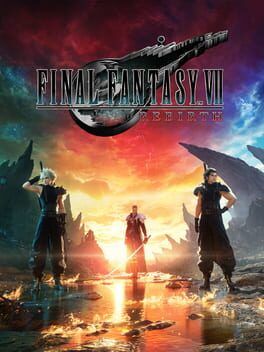

Everything you need to know about Final Fantasy VII Rebirth on Nintendo Switch 2, including file size, performance targets, pricing, how it compares to PS5, and what it signals for Square Enix’s future Switch 2 support.
Release date, versions, and price on Switch 2
Final Fantasy VII Rebirth is coming to Nintendo Switch 2 on June 3, 2026 as a native version built specifically for Nintendo’s next‑gen hardware. It is not playable on the original Switch.
On the Nintendo eShop, the standard digital edition is listed at $49.99 USD. That is notably below the typical $69.99 launch price of the PS5 version, making Switch 2 the cheaper way to buy the game at launch, at least digitally. A separate Digital Deluxe Edition DLC Pack is also listed for Switch 2, mirroring the PS5 offerings with cosmetic and soundtrack extras bundled on Sony’s platform.
At launch you can expect the following options on Switch 2:
Pre‑purchase on the Nintendo eShop for Switch 2.
Standard Edition (digital) at $49.99.
Separate Digital Deluxe DLC pack, or a full Digital Deluxe Edition bundle that includes the base game plus DLC.
Because pre‑orders are tied to Switch 2 specifically, double‑check that your Nintendo Account is linked to a Switch 2 console and not an original Switch, since Rebirth is marked as incompatible with the older system.
Pre‑order bonuses and save‑data rewards
If you pre‑purchase the Switch 2 version before June 2, 2026 at 23:59 EDT, your copy is flagged with the same early‑purchase incentives seen on other platforms.
On Switch 2, pre‑order bonuses include:
Summon Materia: Moogle Trio
Summon Materia: Posh Chocobo
Armor: Shinra Bangle Mk. II
Armor: Midgar Bangle Mk. II
Nintendo’s store page notes that these may be sold later as standalone digital content, so they are not permanently exclusive, but they are free if you commit early.
Just like on PS5, players are also rewarded for being invested in the remake project already. If your account has recognized save data from Final Fantasy VII Remake Intergrade, you unlock extra summons at the start of Rebirth:
Save from the main story of Intergrade: Leviathan summon materia
Save from the INTERmission Yuffie episode: Ramuh summon materia
On PS5 this linkage is handled automatically across the same PSN account. On Switch 2, Square Enix is replicating the idea through Square Enix account recognition and platform‑specific save detection, reinforcing the trilogy as one long, interlinked project regardless of your hardware.
A huge file size: storage planning for Switch 2
The Nintendo eShop lists Final Fantasy VII Rebirth at roughly 102.5 GB on Switch 2. That number alone tells you how ambitious this port is compared with traditional Nintendo releases.
On PS5 the base install of Rebirth sits in the same 100 GB ballpark once all content is installed. Square Enix is not shaving the game down to fit Nintendo’s hardware. Instead, it is bringing the full world, cutscene count, and voice data over, with optimizations focused on streaming and rendering rather than aggressive content cuts.
For Switch 2 owners this has two major implications.
First you almost certainly need a sizeable microSD card. Even if Switch 2 ships with a more generous internal SSD, a single 100 GB title eats a large chunk of space. Players who plan to keep other big third‑party releases installed alongside Rebirth should budget for high‑capacity, fast cards.
Second cartridge versus digital will matter if a physical release is announced. PS5 discs still require a huge on‑SSD install, and the same is likely on Switch 2. Even if Nintendo and Square Enix opt for a high‑capacity cart, Rebirth’s streaming‑heavy structure means significant data will live on internal storage. Digital buyers will simply download all 100 GB directly.
The headline: Rebirth is one of the largest single installs yet on a Nintendo platform and it is being treated like a current‑gen AAA release rather than cut down for portability.
Performance targets on PS5 and what that implies for Switch 2
To understand what to expect on Switch 2, it helps to look at how Rebirth runs on PS5, where the game was originally designed.
On PS5 Rebirth offers two familiar modes.
A Graphics or Quality mode that targets 4K and 30 frames per second, with higher‑quality shadows, ambient occlusion, and texture filtering.
A Performance mode that targets 60 frames per second at a dynamic resolution that typically ranges between roughly 1080p and 1530p depending on scene complexity, according to technical breakdowns from outlets like Digital Foundry and VG Tech.
In either mode PS5 is pushing dense foliage, heavy alpha effects, volumetric clouds, long‑distance shadows, and detailed character models with high‑quality facial animation. Even there the developers made compromises, like running aggressive temporal reconstruction and dynamic resolution, to keep the open areas smooth.
Switch 2 is newer than the base PS5, but it is also a hybrid system with stricter power and thermal limits. Early showings of Final Fantasy VII Remake Intergrade on Switch 2 at events like Gamescom suggested visual quality somewhat above PS4’s version, but still behind PS5’s 60 fps performance mode.
That context points toward realistic expectations for Rebirth on Switch 2.
Expect a 30 fps target rather than 60 fps. Square Enix already accepts 30 fps as normal for Graphics mode on PS5, and Switch 2’s portable design makes that frame rate the safe baseline for a large open‑zone RPG.
Expect a dynamic resolution somewhere in the 900p to 1440p range when docked, reconstructed to a sharper output using modern upscaling. In handheld mode, the internal resolution will likely drop further, with the upscaler doing most of the work.
Expect some cuts to shadow draw distance, vegetation density, screen‑space reflections, and ambient occlusion compared with PS5. Large open routes and dense towns will be the stress tests, and Switch 2 is likely to run them with slightly simplified lighting and geometry.
What you probably should not expect is a fully equivalent dual‑mode setup like PS5. It is more plausible that Switch 2 ships with a single, balanced mode tuned for a stable 30 fps and consistent image quality in both docked and handheld play, perhaps with only minor toggles for motion blur and depth of field.
Visual compromises and handheld advantages
The Nintendo store description emphasizes that Rebirth supports TV, tabletop, and handheld play on Switch 2. PS5 has remote play and cloud streaming but does not offer native portable play. That is the biggest advantage of the Switch 2 port.
To make that work, Square Enix must adapt its streaming system. On PS5 the game relies on a very fast SSD to stream big environments seamlessly, with frequent cinematic transitions in and out of gameplay. Switch 2’s storage and memory bandwidth are believed to be lower than PS5 but significantly higher than the original Switch.
In practice you can expect.
More visible pop in for grass, rocks, and small props when sprinting across the largest regions.
Slightly longer elevator rides, door interactions, or fade‑to‑black transitions used as disguised loading between heavy story segments.
Reduced texture resolution for some environmental surfaces, especially in far distance views when in handheld mode.
The tradeoff is that this is a complete, native version of Rebirth that you can play entirely on the go without streaming. For some players that portability outweighs softer shadows or slightly blurrier backgrounds. It also opens up more flexible play sessions, letting you chip away at hunts, side quests, and minigames during commutes or breaks rather than being tethered to a TV.
Content parity with PS5
Everything Square Enix and Nintendo have published about the Switch 2 edition points to full content parity with PS5.
The Switch 2 listing describes the same narrative scope, taking Cloud and company from the escape from Midgar through the iconic events at the Forgotten Capital. Zack’s parallel storyline, Wutai’s resistance against Shinra, the black‑robed figures transporting Jenova, and the awakening of the Planet’s Weapons all match the PS5 marketing beat for beat.
Mini‑games, side activities, and the large explorable regions are also called out in Nintendo’s copy. There is no mention of exclusive Switch 2 content, but just as importantly there is no suggestion of missing quests, zones, or story scenes.
Multilingual voice and text support likewise matches the PS5 version, with Japanese and English audio and regionalized subtitles across major European and American languages.
The pre‑purchase bonuses and save‑data rewards mirror Sony’s ecosystem as well, which underlines Square’s goal to treat Switch 2 as another current platform in step with PS5, Xbox Series, and PC, rather than a cut‑down side port.
How price and performance stack up: Switch 2 versus PS5
For players who own both a PS5 and a future Switch 2, choosing a platform comes down to a handful of practical tradeoffs.
PS5 gives you higher performance and sharper image quality. In Performance mode you are getting a 60 fps target and better motion clarity in combat, which is valuable in an action‑heavy RPG. The GPU and storage bandwidth let Rebirth show its best face, with more stable detail and fewer pop in artifacts.
Switch 2 trades away that top‑end performance for portability and a lower entry price. At $49.99 digital it is considerably cheaper than the original PS5 launch price, with the catch that it will be capped at 30 fps and reduced fidelity. For long play sessions on the couch with a big TV and sound system, PS5 is the better experience. For daily commutes, shared TVs, or players who prioritize flexibility, Switch 2 wins.
If you are deeply sensitive to frame rate and input response, the PS5 version is the safer bet. If you value being able to chip away at the Golden Saucer’s minigames or side content wherever you are, the Switch 2 port offers something PS5 simply cannot replicate.
What Rebirth on Switch 2 signals about Square Enix’s strategy
Rebirth’s Switch 2 listing does not exist in a vacuum. It follows Square Enix’s gradual pivot back to Nintendo hardware with titles like Octopath Traveler, Dragon Quest XI S, and the cloud versions of Kingdom Hearts on the original Switch. The key difference now is that Switch 2’s power level makes full native current‑gen ports realistic.
Bringing a 100 GB, visually dense, Unreal Engine 4 action RPG like Rebirth to Switch 2 with full content parity signals a few important things about Square Enix’s broader strategy.
First, Square Enix sees Switch 2 as a pillar platform, not an afterthought. Rebirth is not launching years later as an experimental spin off. It is arriving within the remake trilogy’s active lifecycle, in parallel with continued support on PS5, PC, and Xbox.
Second, the company is willing to optimize its heaviest flagship games for Nintendo’s ecosystem as long as the hardware will support them. If Rebirth can fit, future Unreal Engine projects like the final entry in the FFVII remake trilogy, and potentially mainline Final Fantasy entries, are now realistic candidates.
Third, the pricing and pre‑order structure suggest Square Enix understands that Switch audiences are price sensitive but extremely broad. Positioning Rebirth at $49.99 with optional deluxe DLC nudges it closer to traditional Nintendo first‑party pricing while still maintaining a premium feel.
Combined with technical impressions of Final Fantasy VII Remake Intergrade on Switch 2, which already show Square’s engineers learning how to squeeze Sony and PC‑level games into the hybrid form factor, Rebirth looks like a statement release. It is Square Enix telling players that if you buy a Switch 2, you are not giving up access to the company’s headline RPGs.
Should you pre‑order Rebirth on Switch 2?
With all that in mind, whether you should lock in a Switch 2 pre‑order comes down to your priorities.
If you only own Nintendo hardware and want the full FFVII remake saga, the Switch 2 version of Rebirth is positioned as a first‑class port. You will sacrifice some visual sharpness compared with PS5, but you gain complete portability and pay less up front.
If you own both PS5 and plan to pick up a Switch 2, decide which matters more: 60 fps combat and the sharpest image, or being able to play anywhere. For pure technical quality, PS5 is the better place to experience Rebirth’s cinematics and large vistas. For flexibility, Switch 2 wins comfortably.
And if you are undecided, consider waiting for final tech breakdowns once the Switch 2 version is in reviewers’ hands. Early tests of Intergrade on Switch 2 have been promising, and Rebirth’s huge file size suggests Square Enix is not cutting corners on content. Real measurements of frame pacing, resolution ranges, and docked versus handheld behavior will make the platform choice easier when launch gets closer.
What is clear already is that Final Fantasy VII Rebirth on Switch 2 is not a side story or a cloud compromise. It is the full game, adapted for Nintendo’s next‑gen hybrid in a way that hints at Square Enix’s long‑term commitment to the platform.