
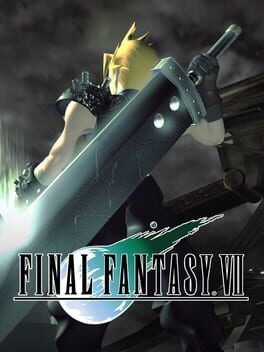
Square Enix has quietly replaced the old PC port of the original Final Fantasy VII with a new edition on Steam and GOG. Here’s what’s actually changed, why so many early players are unhappy, and clear buying advice for newcomers and veteran FF7 modders.
Square Enix has rolled out a new PC build of the original Final Fantasy VII on Steam and GOG, positioning it as a modernized version of the 1997 classic. On paper it adds the same convenience features seen in recent console ports. In practice it has already become one of the most controversial Final Fantasy PC launches in years.
This guide breaks down what has actually changed, why early players are so frustrated, and which version makes the most sense depending on how you plan to play: clean, vanilla, or heavily modded.
What this new PC edition actually is
On Steam, the old PC port has been renamed “FINAL FANTASY VII (2013)” and delisted from new purchases. The new build replaces it as the default store page. If you owned the 2013 release already, you keep access to both versions in your library, and the new edition is added for free. On GOG, only the new build is available, sold DRM free.
Under the hood, this is not a ground up remaster or a new codebase. It is essentially a lightly revised version of the prior PC port brought into line with the feature set found on modern console releases.
New features and quality of life changes
The headlining changes are all about making FF7 faster and less grindy for players who want to see the story with minimal friction:
- A global 3x speed option that lets you fast forward through field exploration and battles.
- A toggle to disable random encounters so you only fight scripted story battles.
- A battle enhancement mode that fully restores HP and MP during fights and keeps your Limit gauge permanently filled.
- Autosave support so you are not as dependent on manual save points.
These are the same “boosters” long time fans will recognize from recent console ports of FF7 and other classic Final Fantasy titles. They do not change the story, dialogue, or core battle system, but they can radically change difficulty and pacing.
It is also important to note that saves from the 2013 PC version do not carry over to the new build. If you switch you are starting fresh.
What has not meaningfully changed
Outside of those boosters and autosave, the new edition is very conservative.
The game still uses the same underlying assets, pre rendered backgrounds, and 3D models. It is not a visual overhaul or a new set of PC specific graphics options. There is no widescreen rework of the original fields and no native support for fan favorite high resolution texture packs. Think “small patch with new toggles” rather than “PC remaster.”
Why the new release is getting slammed
Despite the feature list sounding straightforward, the Steam version in particular has been hit with a wave of negative user reviews. Early reception on GOG is more muted but carries many of the same complaints.
Soft focus visuals and heavy filtering
The most common criticism is that the new build looks worse than the 2013 edition. Players report heavier bilinear filtering on the pre rendered backgrounds and a harsh filter on sprites and UI text. The net effect is a smeared, blurry look that robs FF7 of the sharp pixel edges many fans prefer on modern displays.
The 2013 build at least offered an “original graphics” style presentation without aggressive filtering. In the new version there is no way in the in game settings to turn those filters off, so you are stuck with the fuzzier image.
Technical and audio problems
User reports on Steam and coverage from sites like Kotaku point to several technical issues that make this build feel rough compared with a fully patched 2013 install.
Players have flagged stuttering and misfiring sound effects, especially in menus and after battles. Some have noted mismatched sound libraries that make certain noises feel out of place compared to the PlayStation original and prior PC port. There are also complaints about FMV cutscenes hitching or lagging on hardware that has no trouble with the older version.
At launch, an internal change to battle frame rate briefly caused some scenes and animations to play at double speed before Square Enix pushed a fix. That incident has contributed to a wider sense that the release was not thoroughly tested before it was pushed live.
Limited visual settings and a clumsy launcher
The new edition uses a mandatory Square Enix launcher that sits between your storefront and the game. Steam players in particular have complained that it feels unnecessary and occasionally intrusive, capturing input or focus when it should not and adding friction to simply starting a 1990s JRPG.
On top of that, visual settings are sparse. Resolution options do not always appear to apply cleanly, and there are no toggles for the aforementioned filters. Compared with what PC players expect in 2026 especially those used to modding FF7 this feels extremely restrictive.
A step back for the modding scene
For a decade, the 2013 Steam build has been the standard foundation for FF7 modding. Tools like 7th Heaven, model and background overhauls, custom translations, and difficulty rebalances were all written with that version in mind.
By delisting the 2013 build from sale and pushing an only slightly different executable, Square Enix has created uncertainty around long term mod support. Existing owners can still download the 2013 version, so current mod setups are safe for now, but new PC players who only buy this revised build may find that many community tools simply do not recognize it or require patches and workarounds that are not yet mature.
Modders will almost certainly adapt, but that will take time and effort, and the early experience for newcomers wanting a heavily customized FF7 is messier than it was a month ago.
Pros and cons for different kinds of players
Whether this new edition is worth buying depends heavily on what you want from FF7 and how much you care about modding.
If you are new to FF7 and just want a convenient, legal PC copy
For a first time player who does not intend to mod, the new Steam and GOG release has some clear positives.
You can turn on autosave and battle boosters to smooth over old school grinding without touching any third party tools. The 3x speed toggle is perfect for quickly moving through random encounters or revisiting areas when you get lost. Having the game on GOG with no third party DRM at all is also a genuine win for preservation minded buyers.
The tradeoff is that you are stuck with mixed technical performance and blurrier visuals than most classic JRPG ports on PC in 2026. If you are sensitive to smeared backgrounds, over filtered sprites, or janky audio, there is a real chance you will notice and be annoyed.
For these players the question is less “Is this port terrible?” and more “Does it clear a baseline of acceptability?” On a mid range PC or handheld, and if you are not comparing side by side to the 2013 build or fan mods, it likely will. But this is far from the definitive way to experience FF7.
If you are a long time FF7 PC player or modder
Veteran PC players, especially those who have invested time into modding, have much stronger reasons to avoid this build for now.
The launcher adds nothing you need. Visual filters cannot be disabled. Sound quirks and FMV stutters are all regressions from a well understood, heavily documented 2013 port. Most importantly, the mod ecosystem is built around that older build and its specific file layout and executable behavior.
If you already own the 2013 edition on Steam, you are in a relatively good position. You can safely ignore the new build, keep launching the old version, and continue using 7th Heaven and other tools exactly as before. Since both versions sit side by side in your library, there is no need to uninstall anything. You can experiment with the new booster features on a separate save if curiosity strikes, then go straight back to your modded install.
If you do not have the 2013 Steam build and care deeply about modding, your best move today is to hold off. Mod authors may add explicit support for this new executable, or Square Enix may quietly patch some of the worst visual and audio issues. Until that happens, any attempt to recreate the richly modded FF7 setups you see in screenshots and videos will be significantly more painful on the new edition than on the older one.
Buying advice: which version should you actually play?
Given the current state of the new PC edition across Steam and GOG, here is the clearest way to think about your choices.
If you already own FF7 on Steam from before this change, the old 2013 build remains the best default for serious play and modding. Make that your primary install, keep your 7th Heaven or manual mod pipeline pointed at it, and treat the new edition as an optional curiosity. You are not missing out on any content by doing so. Its boosters can be replicated or surpassed with mods, and community tools can already provide save backups and fast forwarding features.
If you are a newcomer who just wants to experience FF7 with minimal fuss, the new GOG or Steam edition is serviceable but flawed. It offers convenient in game aids and runs on modern systems without third party patches, but early reports of blurry visuals and audio glitches are real concerns. If you are sensitive to those issues and you have access to a console port like the Nintendo Switch or PlayStation versions, those may actually provide a smoother, better tuned experience right now.
If your primary goal is to dive into the legendary FF7 mod scene, including high resolution background packs, overhauled models, and custom difficulty, the safest play is to wait. Either wait for Square Enix to address the current technical complaints and clarify how stable this new executable will be, or wait for modding tools to officially add support. In the meantime, if you have access to the existing 2013 Steam build, stick with it.
The bottom line is that Square Enix’s new PC edition of Final Fantasy VII is not an outright disaster for every type of player, but it is a clear downgrade from the perspective of technical polish and modding flexibility. For a game that PC fans have spent more than a decade carefully improving on their own, that makes this re release feel less like a celebration and more like a step sideways.