
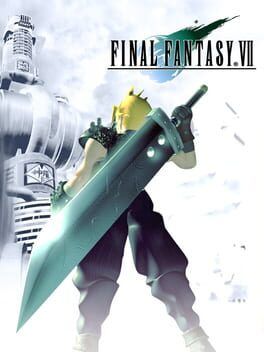
With Square Enix’s refreshed Steam release of Final Fantasy VII arriving and GOG doubling down on DRM‑free preservation, the PC and Switch 2 ecosystem for FF7 in 2026 is more confusing than ever. Here’s how the 2013 Steam Edition, the upcoming update, GOG’s approach, and the modern console ports all fit together – and which one you should actually play depending on what you care about.
In 2013, Final Fantasy VII quietly became a PC mainstay on Steam. It was not the first PC version of the game, but it was the one that finally “worked” for most people: achievements, cloud saves, modern OS support, and a few built‑in boosters. Over the last decade it also became the backbone for the thriving FF7 modding scene.
Now Square Enix is replacing that build with a refreshed Steam edition, while GOG is positioning itself as a DRM‑free sanctuary for classic Final Fantasy, and Switch 2 is turning into a surprisingly strong home for both the original and the Remake project. For anyone who just wants to play FF7 in 2026, the question is no longer “can I run it on modern hardware” but “which version actually makes sense for me?”
This is where preservation meets practicality.
What the new Steam version actually is (and what happens to the 2013 Edition)
Square Enix’s announcement is clear about the business logic, if not the tech details. The current Steam release of Final Fantasy VII is being renamed “Final Fantasy VII – 2013 Edition” and delisted from the store. In its place, a new version simply called “Final Fantasy VII” will appear on Steam “with an improved gameplay experience.”
If you already own FF7 on Steam you keep access to the 2013 Edition and get the new build for free. Both will sit side by side in your library. For new buyers though, only the refreshed version will exist.
From a preservation standpoint, that split is a double‑edged Buster Sword. On one hand, Square Enix is not yanking the 2013 build away from existing owners, which means the de facto “modding standard” PC version can survive as long as Steam itself does. On the other hand, once it is delisted, there is no straightforward, legitimate way for a new fan to buy that exact build again.
Complicating matters further, Square Enix has confirmed that save data will not be compatible between the 2013 Edition and the new version. Whatever changes underpin this “improved gameplay experience” are significant enough that your decade‑old saves cannot make the jump.
There are strong hints that the new build is focused on quality‑of‑life and system‑level updates rather than a full remaster. Modernized resolution handling, better controller support, tweaked boosters, and updated middleware are all likely candidates. Think of it less as a remake and more as a modernization pass aimed at making FF7 easier to run, stream, and support going forward.
That has real value for newcomers. It also means the 2013 Edition is quietly sliding from “current PC release” into “legacy build” status in a way that matters for modders and preservationists.
GOG’s DRM‑free Final Fantasy push and what it signals for FF7
In parallel, GOG has been expanding its catalog with classic Final Fantasy titles like Final Fantasy III (3D), IV, VIII Remastered, and IX. These releases are all DRM‑free, tied into GOG’s broader “preservation program,” and marketed explicitly on the promise that once you download them they are yours, launcher or no launcher.
The subtext for FF7 fans is obvious. There is already a wishlist entry and a vocal community asking for Final Fantasy VII on GOG, specifically without the Square Enix account requirement and without online dependencies baked into the executable. GOG’s pitch is that JRPG history should not live or die on the policies of a single client.
Right now, FF7 is not actually available on GOG, but the direction of travel is clear. Square Enix is comfortable seeding a subset of its back catalog into a DRM‑free ecosystem with light technical tweaks and no account tethering. If and when FF7 follows, it will likely resemble the 2013 PC codebase or the refreshed Steam version, wrapped in GOG Galaxy’s optional features and stripped of external DRM.
For preservation, that would be enormous. The Steam builds still depend on Valve and on Square Enix’s account systems staying online. A GOG release, even one that mirrors the refreshed Steam code closely, would be a concretely different thing: a copy of FF7 you can back up indefinitely, install offline, and keep running on future PCs without worrying about account lockouts or launcher deprecations.
Why the 2013 Steam Edition still matters in 2026
Even after the refreshed Steam version arrives, the 2013 Edition is not just a historical curiosity. It is the backbone of:
• The most mature modding ecosystem FF7 has ever had on PC, from texture overhauls and AI‑upscaled backgrounds to full gameplay conversions and story remixes.
• A decade of community tooling, installers, and guides that all expect a specific file layout and executable behavior.
• The closest “official” PC counterpart to the classic PlayStation timing, bugs, and oddities that speedrunners and long‑time fans actually care about.
Almost every “ultimate FF7 mod list” or “2026 FF7 overhaul pack” you find still starts from the assumption that you are running either the 1998 Eidos port or the 2013 Steam Edition. Community tools like 7th Heaven, catalog‑style mod managers, and modern texture packs are tested primarily against that environment.
The moment the 2013 Edition is delisted, that modding standard stops being something new players can easily buy. Legally speaking, the people who can participate fully in that ecosystem are frozen in time. That might not matter for a casual first‑time run, but for anyone who sees FF7 as a platform to be tinkered with, it is a big shift.
So the 2013 build matters less as the most convenient way to play FF7 today and more as:
• A reference version for speedrunners and historians.
• The baseline for extensive mods that may or may not successfully migrate to the new Steam build.
• A reminder of how easily digital storefront curation can rewrite what counts as “the” PC version of a 90s classic.
Switch 2’s place in the FF7 ecosystem
On the console side, Nintendo’s Switch 2 is quietly becoming one of the best ways to live with both eras of FF7.
The original FF7’s modern console ports, including the one on Switch, are based on the PC code with tweaks like character model smoothing, resolution options, cheats, and fast‑forward. They sit somewhere between strict emulation of the 1997 PlayStation disc and the more variable behavior of PC.
Switch 2’s backward compatibility and stronger hardware clean up the rough edges of those ports. Faster storage knocks down load times, higher clocks stabilize frame pacing, and the system’s suspend feature turns FF7 into a pick‑up‑and‑play RPG you can live with over weeks rather than sessions. On top of that, Switch 2 is now home to Final Fantasy VII Remake Intergrade, which runs closer to PS5 performance mode than the original PS4 release according to recent comparisons.
For many players in 2026, that combination is the appeal. You can play the original FF7 with quality‑of‑life options and then jump straight into Remake on the same device, docked or handheld, without touching PC launchers or mod managers at all.
From a preservation viewpoint, though, console ports sit in a strange middle ground. They are closed environments where the binaries are locked behind firmware, but they are also relatively stable snapshots. If you buy FF7 on Switch 2 today and keep that hardware in good shape, you will almost certainly be able to boot it ten years from now even if Steam or Square Enix’s PC launchers change. That kind of “sealed box” preservation is different from the open archival possibilities of a DRM‑free PC release, but it has its own value.
Choosing your FF7 version in 2026
When you ask “Which FF7 should I play in 2026?” what you are really asking is “What do I care about more: convenience, control, or authenticity?” Different versions answer that question differently.
If you just want a clean first playthrough
The refreshed Steam version or the Switch / Switch 2 console port will likely be the easiest options. Both offer modern controller support, higher resolutions, and optional boosters that let you smooth over the grind if you are here for the story more than the systems.
Picking between them is about lifestyle. PC gives you higher raw resolutions and the option to dabble with mild texture or UI mods once tools catch up. Switch 2 gives you hybrid handheld/docked play and instant suspend for bite‑sized sessions. Either way you are seeing a version of FF7 that respects your time without asking you to learn what a mod loader is.
If you care about DRM‑free ownership and future‑proofing
Right now, there is no official DRM‑free PC release of FF7 itself, but GOG’s handling of the rest of the series is the clearest indicator of what FF7 should look like there if and when it arrives: a stable, self‑contained installer with no online account checks.
If owning your JRPGs outright matters more to you than the newest feature set, it is worth watching GOG’s catalog and holding off on a new Steam purchase. In a preservation context, a hypothetical GOG FF7 is the release that would outlast account migrations and launcher churn. You would be able to back it up, archive it, and reinstall it on a Windows box fifteen years from now with minimal friction.
If you want the most flexible, moddable version
For the foreseeable future, that stays the 2013 Steam Edition paired with the existing community toolchain. High‑end AI background packs, fully rearranged soundtracks, frame rate tweaks, difficulty overhauls, and model replacements all target that build first.
The open question in 2026 is how quickly the community will migrate those tools to the refreshed Steam release. If Square Enix keeps file structures and executable behavior relatively close, mod authors may be able to support both editions with some work. If not, the 2013 Edition will remain the “modder’s version” and the new Steam build will be more of a plug‑and‑play, lightly enhanced take.
If you already own FF7 on Steam and care deeply about mods, the safest move is to back up the 2013 Edition while you can, keep an eye on modders’ compatibility notes, and treat the new Steam release as a separate, more vanilla experience rather than an outright replacement.
If you are interested in FF7 as a historical artifact
Here, the answer becomes more fragmented. The original PS1 discs are the truest representation of FF7 as it shipped in 1997, bugs and all. The 1998 Eidos PC port is a slightly weirder, often rougher cousin that still fascinates preservationists.
Among currently supported digital versions, the 2013 Steam Edition occupies that historical niche most clearly. It still bears the marks of its 1998 heritage, just with some scaffolding added to keep it upright on modern systems. For academic work, speedrun documentation, or anyone who wants to see how FF7 has been patched and re‑patched in the wild, that version is worth keeping.
If a DRM‑free FF7 eventually appears on GOG built from that lineage, it would become the go‑to “preservation” copy: a PC release you can archive without store lock‑in that still reflects the game’s original logic and pacing more closely than any hypothetical remaster.
The bigger preservation picture
Square Enix’s new Steam version, GOG’s DRM‑free Final Fantasy catalog, and Switch 2’s growing library all illustrate the same tension. Platform holders want clean, modern SKUs that are easy to support, market, and patch. Fans and archivists want the messy continuity of old builds, modding hooks, and the ability to keep playing regardless of which launcher is fashionable.
In FF7’s specific case, that tension now plays out like this:
• The new Steam build is the recommended entry point for most new PC players who do not care about mods.
• The 2013 Steam Edition remains the modder’s playground and the quasi‑historical PC release that future work will still reference.
• GOG’s strategy sets expectations for a future where FF7 can exist independently of online DRM, even if that reality has not landed yet.
• Switch 2 quietly offers a hardware‑level form of preservation, where a sealed software image on stable console firmware might outlast several cycles of PC storefront changes.
The practical advice for 2026, then, is simple even if the ecosystem is not.
If you are new to Final Fantasy VII and want the most painless way to experience it, grab the refreshed Steam version or the Switch 2 port and dive in. If you are here for mods, history, or the comfort of owning your copy without strings attached, keep a tight hold on your 2013 Steam build, watch GOG closely, and remember that in digital libraries, the “old version” is often the most important one to preserve.