
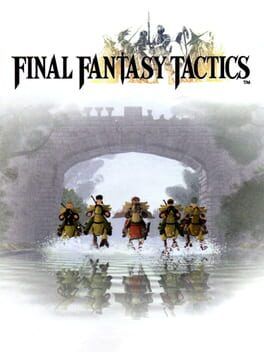

Platforms, modern upgrades, and a new wave of mini-figures show how Final Fantasy Tactics: The Ivalice Chronicles fits into Square Enix’s broader tactics revival.
A Classic Tactical Epic Comes Back Everywhere That Matters
Final Fantasy Tactics: The Ivalice Chronicles is not a small, niche port. It is the most aggressive push Square Enix has made for this series since the War of the Lions PSP release, and that starts with where it is playable.
The Ivalice Chronicles lands on PlayStation 5, PlayStation 4, Xbox Series X|S, Nintendo Switch, Nintendo Switch 2, and PC via Steam. That spread matters. Final Fantasy Tactics was historically locked to the original PlayStation and later to PSP / mobile, which left whole segments of modern players with no easy way to experience it legally. By hitting every active home console plus PC in one coordinated launch, Square Enix is treating Tactics less like a museum piece and more like a current pillar of its RPG catalog.
It also lines up with how the publisher has been moving its other flagship RPGs. Final Fantasy VII Remake, the HD-2D Dragon Quest projects, and SaGa remasters have all been positioned as multi-platform, evergreen releases. The Ivalice Chronicles clearly sits in that same strategy: a definitive version that can be kept in circulation, discounted, bundled, and cross-promoted for years.
What The Ivalice Chronicles Actually Changes
Under the subtitle is more than a simple resolution bump. The Ivalice Chronicles is built as a two-layer package that respects both the original PS1 release and the later War of the Lions while finally modernizing the experience.
On the surface level, the headline feature is a fully enhanced mode. Battles now run with sharpened HD environments and refined character sprites that preserve the original look without turning the game into something unrecognizable. The interface has been rebuilt so that information like turn order, tile details, and unit status is clearer at a glance, and it is noticeably easier to navigate menus with a controller compared to the PS1 original.
Combat pacing has been a priority. Adjustable battle speed options let you accelerate routine encounters, grind jobs, or run random battles for JP without the plodding feel that older tactics games can have. Combined with a new Tactical View that lets you zoom out and read the map properly, it is easier to plan around elevation, line of sight, and enemy clusters without wrestling the camera.
The job system, one of the main reasons Final Fantasy Tactics is still discussed, remains structurally intact. The Ivalice Chronicles does not tear out jobs or radically rebalance progression, but it gives you better tools to experiment. New equipment like the Ring of Aptitude, included in the deluxe edition, is explicitly aimed at boosting JP gain so that newer players can see more builds without excessive grinding. It is a subtle admission that the original tuning was built for a different era and that modern audiences expect to sample more of the system in a single playthrough.
One of the most interesting additions is the focus on storytelling layers. New in-battle conversations, written by original director and writer Yasumi Matsuno, give more texture to skirmishes that were previously just another fight on the way to a story beat. They reinforce the political drama, highlight side characters like Alma and Ovelia, and give rival factions more voice. Full English and Japanese voice acting pulls the script closer to the prestige presentation you would associate with recent Final Fantasy entries, without rewriting the underlying plot.
Difficulty options round out the package. Instead of the single, sometimes punishing curve of the PS1 release, The Ivalice Chronicles lets you tilt the experience toward story-first or challenge-focused play. That is a quiet but important concession to how broad the audience will be across PC, multiple consoles, and lapsed fans returning after decades.
The Classic Version Honors Both PS1 And PSP
What really sells this as a definitive release is the inclusion of a Classic Version alongside the enhanced mode. Rather than simply emulating the 1997 disc, Square Enix is effectively curating its own legacy.
The Classic Version retains the look and feel of the PS1 original but layers in the War of the Lions script, which has long been the fan-preferred translation for its tone and clarity. At the same time, it sprinkles in modest quality-of-life touches such as auto-save, so the experience is authentic without being archaic. It functions as a playable archive you can swap to when nostalgia hits or when you want to feel how specific encounters were originally framed.
Bundling both interpretations into one SKU signals that Square Enix wants this edition to be the answer to the question, "How should I play Final Fantasy Tactics today?" Instead of leaving players to hunt down discs, PSPs, or old mobile builds, everything is centralized in a single, updatable product that can persist across store promotions and platform cycles.
Ivalice For A New Generation
The Ivalice Chronicles is very deliberately pitched as more than Ramza and Delita's story. In developer messages on the official blog, co-director Ayako Yokoyama stresses that characters like Alma, Ovelia, and Argath are core to what makes the narrative feel current. Themes of class, faith, gender, and historical erasure, long baked into the original, are now being foregrounded as part of the marketing instead of left to fans to discover.
This framing suggests Square Enix sees the setting of Ivalice as having room to grow again. The original PS1 game led into spin-offs like Final Fantasy Tactics Advance, Tactics A2, and cross-pollination with Final Fantasy XII. For more than a decade, that shared world has been mostly dormant. Bringing back the foundational entry with refreshed presentation, modern reach, and explicit messaging about its relevance primes the audience for future projects in the same universe, whether that means another tactics game or a different genre exploring Ivalice from another angle.
The cross-platform rollout also makes it easier to support the game with long-tail updates. Even if The Ivalice Chronicles itself is not positioned as a live service, having a unified build across all major ecosystems simplifies post-launch balancing patches, accessibility tweaks, and small feature additions that can keep discussion alive for years.
Mini-Figures As A Signal Of Confidence
If the release plan suggests Square Enix wants Final Fantasy Tactics to matter again, the new mini-figure line all but confirms it. As covered by Siliconera, the company is launching a dedicated set of chibi-style mini figures based on key Tactics characters, including Ramza Beoulve, Delita Heiral, and Alma Beoulve.
On its own, a figure line might sound like standard merchandise. In context, it is unusual. Final Fantasy Tactics has historically had far less physical merch than mainline Final Fantasy entries. Even during the PSP War of the Lions era, there was nothing close to a sustained figure push built solely around Tactics' cast.
Launching these minis right alongside The Ivalice Chronicles does several things at once. It gives long-time fans a tangible way to celebrate a game that, for years, lived mostly in word-of-mouth recommendations and emulation playlists. It also introduces the core trio of Ramza, Delita, and Alma as marketable icons again. That matters if Square Enix is testing how much appetite there is for Tactics-branded goods in 2025, not just nostalgia discourse.
The character choices are telling. Ramza and Delita represent the fractured ideals at the center of the story, while Alma has always been important to the plot but under-served in marketing. Putting her on equal footing in the figure lineup mirrors the way the developers are now talking about her role in interviews. It is part of a subtle repositioning of who the "face" of Final Fantasy Tactics can be going forward.
From a business perspective, this kind of merch run typically does not exist in isolation. Tooling, production, and distribution for mini figures only really pay off if Square Enix expects an ongoing audience for Tactics content, whether that is additional figure waves, reprints tied to anniversaries, or future games carrying the Ivalice banner. The figures become a small but concrete proof that the tactics revival is treated as a multi-year endeavor, not a one-off remaster.
A Tactics Revival With Staying Power
Taken together, The Ivalice Chronicles' design, its platform strategy, and the new merch push point in the same direction. Square Enix is not content for Final Fantasy Tactics to be a cult classic mentioned in best-of lists and then left to gather dust. Instead, it is being reintroduced as a living part of the modern Final Fantasy ecosystem.
The enhanced mode courts new players who expect quality-of-life features, clear UI, and strong presentation. The Classic Version respects veterans who want the game they remember, just stabilized for contemporary hardware. A day-and-date footprint across consoles and PC matches how the publisher treats its flagship projects rather than its backlog. And the mini-figure line gives physical shape to a brand that has not had much merchandise support since its original run.
For tactics fans, the message is clear: this is more than nostalgia. The Ivalice Chronicles is a test bed and a foundation. If it lands, there is every sign that Square Enix is ready to keep Ivalice and its style of deliberate, turn-based strategy in the spotlight rather than in the history books.