
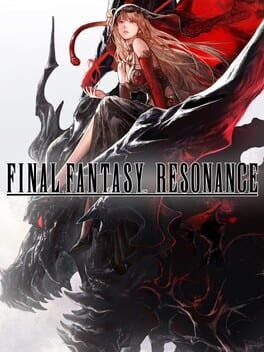

Square Enix’s new Final Fantasy Resonance trailer puts HD-2D visuals, orchestral spectacle, turn-based systems, and Switch 2 availability under the spotlight ahead of its October 22 launch.
Image: IGDB
Store links: Final Fantasy Resonance on Steam
Square Enix’s new trailer puts the HD-2D pitch under pressure
Square Enix has released a new Final Fantasy Resonance trailer ahead of the RPG’s scheduled October 22, 2026 launch, and the clearest takeaway is also the risk Square Enix is asking longtime RPG players to accept: this is the first Final Fantasy title Square Enix is presenting in its HD-2D lineup, but it is also a reimagining of Final Fantasy Brave Exvius, the free-to-play mobile RPG whose global client ended service in 2024, as noted by Nova Crystallis.
That combination gives the trailer a sharper job than a normal visual showcase. It has to sell the beauty of Final Fantasy Resonance HD-2D while also reassuring players who hear “former mobile game” and immediately wonder about structure, pacing, monetization, and how much of the original design has been rebuilt for a traditional RPG. Push Square reports that this version drops gacha mechanics and microtransactions and adapts the adventure into a traditional turn-based RPG. ComicBook reports standard edition pricing at $49.99 and a Digital Deluxe Edition at $59.99, with pre-order bonuses attached to either edition. Those details are important because they frame Resonance less as a live-service revival and more as a boxed, premium RPG with a fixed launch plan.
The new footage, covered across Square Enix-focused and platform outlets, leans hard into presentation: pixel characters in 3D spaces, dramatic camera angles, screen-filling attacks, world traversal, airship travel, Chocobo riding, and battle scenes built around classic Final Fantasy iconography. The open question is whether Resonance can turn that presentation into satisfying progression over dozens of hours, rather than simply wrapping mobile-era story material in a beautiful new format.
HD-2D is being used as a Final Fantasy argument, not a nostalgia filter
The trailer’s central visual idea is plain: Final Fantasy Resonance asks what the series might look like if its pixel-art lineage had kept evolving through modern lighting, camera work, and environmental depth. Nintendo Everything quotes Square Enix’s own feature description calling Resonance “the first Final Fantasy to join the HD-2D lineup,” with dynamic camera angles and pixelized 3D models intended to make scenes more dramatic and immersive.
That puts Resonance in conversation with Square Enix’s established HD-2D language from games such as Octopath Traveler, which GamingBolt directly cites as a reference point. The comparison is useful, but Resonance’s trailer appears to be aiming at a different emotional register. Octopath often uses diorama-like staging and restrained theatricality. Resonance, as described by GamingBolt and ComicBook, foregrounds cinematic clashes, close-ups, sweeping effects, and familiar Final Fantasy spectacle, including summons and large-scale attacks.
There is a technical cost to that ambition. GamingBolt notes separately that developer Lancarse had to take extra care to ensure the camera did not break the game’s HD-2D art style. That is the kind of production detail RPG fans should not ignore. HD-2D can look effortless in trailers, but camera angle, sprite readability, battlefield composition, and environmental layering all affect how comfortable a long RPG feels. A stylish pan across a city is one thing; a dungeon with frequent battles, hidden paths, and readable exits asks much more from the same visual system.
For now, the confirmed footage suggests Square Enix is prioritizing spectacle without abandoning pixel readability. What remains untested until launch, or until previews with hands-on play appear, is whether the camera and effects hold up during routine exploration and repeated combat.
The music is doing heavy lifting in the trailer’s identity
Several reports frame the new Final Fantasy Resonance trailer around its music as much as its visuals. GamingBolt describes the footage as pairing “bleeding edge pixel art” with sweeping music and says Resonance retains Final Fantasy’s penchant for impressive music. Push Square also points to the trailer’s music and flashy effects as part of why the game is coming across as promising.
That is not a small detail for this specific project. Resonance is adapting material from Brave Exvius, but its new audience will include players who never touched that mobile RPG and may judge it by console Final Fantasy expectations. In that context, music becomes connective tissue. It can make a crystal quest, an airship launch, or a party-versus-boss confrontation feel recognizably Final Fantasy before the player has learned the cast.
The trailer’s soundscape also helps sell the HD-2D direction. Pixel art can be intimate, even modest, but the reported footage is aiming for grandeur: dramatic cutscenes, large spell effects, and characters positioned like mythic figures within the frame. Sweeping music supports that scale and signals that Square Enix wants Resonance read as a full RPG event, not a side curiosity.
What the sources do not yet provide is a soundtrack breakdown, composer credit, track list, or information about whether Brave Exvius themes have been rearranged. Until Square Enix shares those details, the responsible read is narrower: the new trailer uses music prominently to frame Resonance as a classic Final Fantasy adventure with modernized pixel presentation.
Combat is turn-based, weakness-driven, and built around borrowed legends
The Final Fantasy Resonance gameplay shown and described so far points toward a system-first pitch: turn-based battles, enemy weakness exploitation, stagger states, extra turns, cinematic Resonance attacks, and party customization through Visions. Nintendo Everything’s quoted Square Enix feature list says players can exploit enemy weaknesses to stagger them, break defenses, seize extra turns, and use powerful Resonance attacks. GamingBolt compares the elemental weakness and extra-turn flow to Persona 4 and Persona 5, while Nova Crystallis reports that character actions proceed according to their position on a timeline.
Those details matter because they suggest Resonance is not leaning only on menu nostalgia. Weakness exploitation creates a planning loop: scout enemy affinities, build around coverage, decide when to spend resources, and push for turn advantage. Timeline-based action order can add another layer if players are able to manipulate speed, delay enemies, or time Resonance attacks around incoming threats, though the provided sources do not confirm those specific mechanics.
The other major system is Visions. Push Square reports that familiar characters such as Cloud, Tidus, and Squall return as Visions, while espers such as Shiva and Titan also appear. Nintendo Life describes Visions as echoes of beloved Final Fantasy characters that bolster the party, and Nintendo Everything says they bring unique skills and abilities for deep party customization.
For build-minded RPG players, Visions are the feature to watch most closely before launch. If they function as flexible ability packages, they could give Resonance the party-building identity it needs. If they are mostly cameo attacks, the system may feel thinner than the trailer implies. The sources confirm that Visions fight alongside the cast and provide abilities; they do not yet confirm acquisition pacing, upgrade trees, limits on equipping them, or whether any are tied to deluxe bonuses.
The story returns to crystals, Grandshelt, and Brave Exvius roots
Final Fantasy Resonance begins in the Kingdom of Grandshelt, according to the story description shared by Nintendo Life. Rain, commander of an airship squadron, is ordered to investigate the Earth Shrine after the magical barrier protecting it weakens. He travels with Lasswell, his childhood friend and deputy commander. In the shrine, they encounter a mysterious armored man, are overpowered, and witness the Earth Crystal shatter. After surviving the wreck of their airship and the loss of comrades, they return to find Grandshelt under attack by Veritas of the Dark. Rain and Lasswell then set out to protect the remaining crystals, joined by Fina, a mysterious girl they meet in Grandshelt.
That is classic Final Fantasy vocabulary: crystals, kingdoms, airships, mysterious armored antagonists, and a widening world journey. GamingBolt notes that the adventure includes dangerous dungeons, massive cities, Chocobos, Moogles, and airships. Nintendo Everything’s Square Enix feature list adds espers, moogles, and other familiar series elements woven into the story.
The Brave Exvius connection is the tension underneath all of this. Push Square calls Resonance a complete reimagining of the free-to-play mobile game, while GamingBolt says it is based on the same story as the defunct Brave Exvius. Nova Crystallis specifically notes the mobile title ended service globally in 2024. That history gives Resonance access to an existing cast and world, but it also raises practical questions about pacing. Mobile RPG storytelling often stretches arcs across updates, events, and roster additions. A traditional RPG needs cleaner act structure, stronger dungeon rhythm, and side content that feels integrated rather than bolted on.
Square Enix has confirmed several optional activities through the feature list quoted by Nintendo Everything: Gilgamesh appears as a wandering swordmaster, the Colosseum offers monsters and rewards, the Chamber of Arms contains formidable foes sealed within legendary weapons, and Ultima Weapon is listed as a showdown. For completionist players, that is encouraging. It suggests Resonance is being framed with superbosses and optional challenges, not only a straight story conversion.
Platform outlook: Switch 2 is prominent, but Resonance is wider than Nintendo
The platform picture is broad. GamingBolt and ComicBook report that Final Fantasy Resonance is scheduled for October 22, 2026 on PS5, Xbox Series X|S, PC, Nintendo Switch, and Nintendo Switch 2. Push Square’s coverage focuses on the PS5 release, while Nintendo Life and Nintendo Everything focus on Switch and Switch 2 availability. ComicBook specifies PC via Steam.
The most concrete platform-specific detail concerns Nintendo’s new hardware. Nintendo Life reports that the Switch 2 version is confirmed as a Game-Key Card release, and pre-orders are live on Square Enix’s website and elsewhere online. That matters for physical collectors because a Game-Key Card is not the same value proposition as a full game on cartridge. The sources provided do not include file size, download requirements, upgrade path between Switch and Switch 2, or performance targets for either Nintendo version.
For PS5, Xbox Series X|S, and PC players, the sources also do not provide frame-rate targets, resolution details, PC requirements, Steam Deck status, or console feature support. That absence is worth stating clearly. HD-2D games are often assumed to be technically light, but Resonance’s trailer emphasizes dynamic cameras, lighting, 3D environments, and effects-heavy attacks. Until Square Enix publishes specifications or outlets test preview builds, performance expectations should stay cautious.
Price is clearer than performance. Nova Crystallis reports a $49.99 USD release price, and ComicBook reports a $49.99 standard edition plus a $59.99 Digital Deluxe Edition. ComicBook also reports that the deluxe edition includes a Magitek & Grimoire Deluxe Pack with useful starter items, while pre-orders for either edition include a Magitek Airship & Squire Starter Pack. Those bonuses sound convenience-oriented from the description, but the provided sources do not list exact item effects, so players sensitive to early-game balance may want to wait for Square Enix’s full store-page details before buying the deluxe edition.
RPG fans should watch the systems, not only the glow-up
The Final Fantasy Resonance trailer is doing what it needs to do visually. It establishes a strong HD-2D identity, shows familiar Final Fantasy travel and battle imagery, and uses music to make the project feel larger than its mobile origins. The confirmed release plan is also straightforward: October 22, 2026, across current PlayStation, Xbox, PC, Switch, and Switch 2 platforms, with a mid-price standard edition reported at $49.99.
The healthier expectation is to treat Resonance as a promising traditional RPG adaptation with several unanswered system questions. Square Enix and the reports around the trailer confirm turn-based combat, weakness exploitation, stagger, extra turns, Resonance attacks, Visions, espers, airships, Chocobos, side content, and premium pricing. They do not yet confirm encounter structure, difficulty options, performance targets, physical media details beyond the Switch 2 Game-Key Card report, or how progression has been rebuilt after leaving gacha behind.
Community reaction already reflects that split. Push Square’s comment section includes enthusiasm for Final Fantasy in HD-2D, but also hesitation over the Brave Exvius origin and at least one complaint about random encounters. Those comments are player reactions, not official confirmation of design details. Still, they show the questions Square Enix will have to answer before launch.
For players who love party building, optional bosses, and classic turn-based Final Fantasy, Resonance has enough confirmed structure to stay on the watch list. For players wary of repurposed mobile RPGs, deluxe starter packs, or uncertain Switch 2 physical handling, waiting for previews or launch impressions is the sensible path. The trailer proves Resonance can look and sound like a Final Fantasy RPG. The remaining test is whether its progression, quests, and combat economy can sustain that promise across the full adventure.