
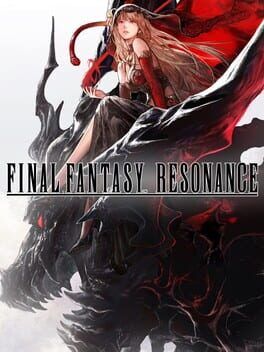

Finished Final Fantasy Resonance? Here are the Final Fantasy games to play next based on story tone, combat style, party building, platforms, and commitment.
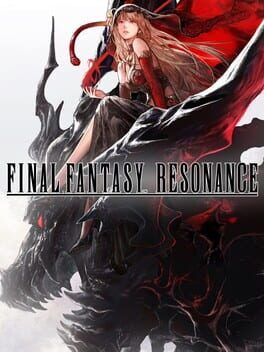
Image: IGDB
Store links: Final Fantasy Resonance on Steam
Resonance made the next choice harder, not easier
Final Fantasy Resonance arrived on October 22, 2026 across PlayStation 5, Xbox Series X|S, PC, Nintendo Switch 2, and Nintendo Switch, according to the Reddit review-thread listing, with Square Enix and Lancarse named as developers. That broad launch matters for anyone now asking the obvious follow-up question: after a new HD-2D Final Fantasy built around turn-based combat, familiar series iconography, and a long RPG commitment, which Final Fantasy should come next?
The answer depends on what Resonance actually did for you. Polygon describes Resonance as Square Enix’s first HD-2D entry in the long-running RPG series, a love letter filled with cameos and references to Final Fantasy heroes old and new. G2A’s guide frames it around classic Final Fantasy ingredients: turn-based combat, crystals, pixel art, jobs, airships, Visions, Espers, classic FF heroes, and a crystal-driven adventure rebuilt from Brave Exvius. Ranker similarly describes it as a modern HD-2D take on classic Japanese RPG design, with turn-based combat, memorable characters, magical abilities, and a sweeping fantasy adventure.
Those sources point to the tension at the center of any list of games like Final Fantasy Resonance. Resonance is pulling from several eras at once. If you chase the visual style, you may drift outside Final Fantasy toward Octopath Traveler or Dragon Quest III HD-2D Remake, as G2A does. If you want to stay inside Final Fantasy, the better question is narrower: do you want another ensemble fantasy, another franchise retrospective, or another tactical turn-based pilgrimage with a heavy emotional spine?
Start with Final Fantasy 6 if Resonance worked because of its cast
Polygon’s first recommendation after Resonance is Final Fantasy 6, available in its listing on Nintendo Switch, PlayStation 4, Windows PC, and Xbox Series X. The case is straightforward: Polygon highlights FF6 as a departure from entries centered on a single lead such as Cloud or Noctis, instead shifting attention across a large ensemble cast. If Resonance’s appeal was watching a party, legacy characters, and Final Fantasy archetypes bounce off one another rather than following one dominant protagonist, FF6 is the cleanest thematic handoff supported by the available sources.
The story-tone match is also strong, though not identical. Polygon points to FF6’s mid-game plot twist and calls out one of the series’ all-time best villains, while placing it among the best-regarded games of the 16-bit era. For a Resonance player coming off a modern HD-2D presentation, that context is important. FF6 is older in origin, but the Pixel Remaster version is the one Polygon specifically suggests taking for a spin, which makes it the practical route rather than a scavenger hunt for original hardware.
For party building, FF6 is the pick if your favorite part of Resonance was managing a broad roster and thinking about identity across a whole group. The source material here supports the ensemble angle more strongly than it supports granular build advice, so the safe recommendation is structural rather than min-maxed: choose FF6 when you want your next Final Fantasy to feel cast-led, villain-driven, and rooted in the older era Resonance is clearly conversing with.
On time investment, the supplied GameLoop source on Resonance says simply, “Get ready for a long one.” The sources provided do not give exact completion times for FF6, so the responsible guidance is comparative in format rather than hours: FF6 is the older retrospective step, not the modern launch-window epic Resonance represents. If you just finished Resonance and want to stay in classic mode without immediately jumping to a fully voiced 3D entry, FF6 is the most natural next stop.
Choose Final Fantasy 9 if you want another series celebration
Polygon’s second highlighted option, Final Fantasy 9, is the recommendation for players who came away from Resonance most attached to its reverence for the wider series. Polygon describes FF9 as, long before Resonance, another retrospective celebration of Final Fantasy history. That makes it especially relevant for readers searching for Final Fantasy Resonance recommendations rather than general RPG recommendations.
The available source excerpt for FF9 is narrower than the one for FF6, so the recommendation should be read accordingly. What is confirmed in the provided material is its retrospective role and its availability on Android, iOS, Nintendo Switch, PlayStation 4, Windows PC, and Xbox One. That platform spread makes FF9 the most flexible of the three Final Fantasy follow-ups discussed here if you want to continue on a phone, handheld, console, or PC.
As a story-tone pick, FF9 is for the player who liked Resonance as a conversation with Final Fantasy history. Resonance is described by Polygon as packed with cameos and references, while FF9 is positioned as an earlier celebration of the same franchise lineage. That does not mean the two games have the same systems, pacing, or party structure. The provided source material does not give enough detail to make a precise combat comparison, and it would be misleading to pretend otherwise.
So treat FF9 as the lore-aware choice. If what you want next is another Final Fantasy that looks backward across the series with affection, FF9 belongs high on the list. If what you want is a confirmed match for Resonance’s specific turn-based systems, party customization, or HD-2D look, the supplied sources make a stronger case for FF6 on cast structure or Final Fantasy X on combat clarity.
Pick Final Fantasy X if combat decisions were the main hook
Ranker’s Resonance-adjacent list puts Final Fantasy X forward for players drawn to tactical battles and iconic series elements. Its strongest documented match is combat. Ranker describes FFX’s Conditional Turn-Based Battle system as one where turn order and party selection are central to strategy, with spectacular summons and elaborate boss encounters offering a complementary take on the tactical battles associated with Resonance.
That makes FFX the best Final Fantasy game after Resonance if you finished Resonance thinking less about references and more about decisions. Resonance is repeatedly framed in the supplied sources as a turn-based RPG: Ranker cites turn-based combat, G2A cites strategic turn-based combat, and Reddit’s review compilation includes quoted reviews praising its rewarding or fully turn-based battles. FFX is the follow-up where the provided material most clearly confirms that party selection and turn order matter in the battle system.
The story-tone shift is also clear. Ranker describes FFX as built around a richly realized fantasy setting, emotionally expressive characters, acclaimed music, voice acting, and themes of sacrifice, faith, and challenging inherited traditions. That is a different kind of weight than Polygon’s FF6 ensemble pitch or FF9’s retrospective framing. If Resonance gave you the taste for a party-based fantasy journey but you now want something more openly emotional and tradition-questioning, FFX is the sharper pivot.
FFX is also historically important in ways that may change how it feels after Resonance. Ranker notes that it was the tenth main installment, the first Final Fantasy released on sixth-generation consoles, the first to use fully three-dimensional areas instead of pre-rendered backdrops, and the first to include voice acting. In other words, it is a bridge into a different production era. For time investment, no exact duration is supplied in the provided source material, but readers should expect a major numbered Final Fantasy rather than a short palette cleanser.
How to decide by story tone, systems, and commitment
If you want the simplest decision tree, start with what you missed the moment the Resonance credits rolled. For ensemble storytelling, go to Final Fantasy 6. Polygon’s emphasis on its large cast, major twist, and standout villain makes it the strongest match for players who liked Resonance as a party-led fantasy. It is also the recommendation most directly tied to the franchise’s 16-bit legacy, which matters when Resonance itself is being discussed as a modern HD-2D return to older Final Fantasy language.
For franchise affection, choose Final Fantasy 9. The documented reason is narrower but compelling: Polygon explicitly identifies it as another retrospective celebration of Final Fantasy history. If your favorite Resonance moments were the cameos, references, and sense of Square Enix folding decades of Final Fantasy memory into one package, FF9 is the follow-up that best preserves that mood.
For combat readability and active party decisions, choose Final Fantasy X. Ranker’s description of the Conditional Turn-Based Battle system gives it the clearest mechanical hook among the recommended games, especially for Resonance players who enjoyed planning turns and swapping emphasis between characters. FFX also gives you a stronger documented emotional throughline, with themes of sacrifice, faith, and resistance to inherited traditions.
The time question is the one area where readers should be careful. GameLoop’s own Resonance completion-time piece flags Resonance as “a long one,” but the supplied sources do not provide exact hour counts for FF6, FF9, or FFX. The best practical guidance from the available reporting is to choose by desired format of commitment: FF6 for a classic-era ensemble, FF9 for a portable and widely available series homage, and FFX for a fuller 3D, voiced, system-forward mainline journey.
What the broader Resonance reception suggests about your next game
Resonance’s reception helps explain why these recommendations cluster around older and transitional Final Fantasy entries rather than the most recent action-driven mainline games. The Reddit review-thread listing cites OpenCritic at an 85 average with 91% of critics recommending it, and Metacritic at 85 out of 100. VGTimes lists Metacritic at 86, with platform-specific figures of 86 for PlayStation 5 and 85 for PC, plus a Steam score of 97 out of 100 on its page. Those numbers are snapshots from different listings, so they should not be treated as one fixed consensus, but they point in the same direction: Resonance was received as a successful return to a classic Final Fantasy lane.
The quoted reviews in the Reddit thread underline that lane. HardZone praised its story, turn-based combat, flexible Visions system, HD-2D art, and soundtrack. DualShockers called out a deeply customizable progression system. NintendoWorldReport’s quoted review emphasized fully turn-based battles, pixelated characters, and 1990s Final Fantasy charm. Digitec’s quoted review said it offered turn-based combat that made the reviewer think and a story that made them feel involved.
That reception narrows the field for anyone searching “Final Fantasy Resonance games like” or “Final Fantasy games to play next.” The best recommendations are not simply the highest-profile Final Fantasy games. They are the ones that preserve a specific set of pleasures: party identity, turn-based structure, mythic fantasy, and a sense of the series looking at its own past with purpose.
That is why FF6, FF9, and FFX form a useful three-game path rather than a ranked podium. Play FF6 if Resonance sent you toward the ensemble heart of classic Final Fantasy. Play FF9 if you want another affectionate series reflection. Play FFX if you want the next step to be tactical, emotional, and clearly system-driven. Together, they cover the main reasons Resonance appears to have landed: nostalgia, party strategy, and the still-potent idea that Final Fantasy can reinvent itself by carefully listening to its own history.