
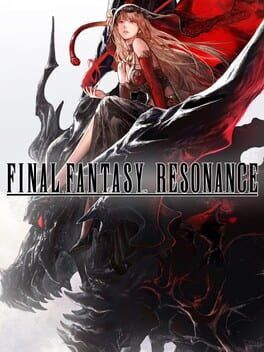

Keisuke Nakashima says Square Enix initially preferred a cheaper Brave Exvius port, sharpening how Final Fantasy Resonance should be read as a console RPG.
Image: IGDB
Store links: Final Fantasy Resonance on Steam
A cheaper Brave Exvius port was the plan Nakashima resisted
Final Fantasy Resonance exists because producer Keisuke Nakashima pushed Square Enix away from a cheaper, simpler route: bringing Final Fantasy Brave Exvius to consoles as a straightforward port.
That is the concrete tension at the center of the game’s origin story. In comments relayed from Bloomberg by Nintendo Everything, Nakashima said there was “some resistance to the idea from Square Enix executives” when he pitched a larger console adaptation. According to Nintendo Everything, that pitch came at the end of 2020 and aimed to flesh out Brave Exvius into a proper turn-based RPG for consoles without the mobile gacha mechanics.
Nakashima’s own framing is blunt. “I didn’t want to go down that route,” he said, referring to the simpler port idea. “I wanted to create an original version for consoles that was a full-blown gameplay experience.”
That distinction is doing most of the work here. The story is not simply that Final Fantasy Resonance came from a Square Enix mobile RPG. It is that Square Enix’s leadership, by Nakashima’s account, initially saw the material through the cheaper-port lens, while the producer argued for a wider rebuild. Push Square and Nintendo Everything both report that the simpler port would have cost less and required a shorter development cycle. Games.gg makes the same business point, noting that moving an existing game to another platform and rebuilding it for a standalone release are different jobs, even when they share the same source material.
For a franchise as carefully branded as Final Fantasy, that disagreement is revealing. Final Fantasy Brave Exvius had characters, story material, battle concepts, and years of mobile history behind it. But the question inside Square Enix appears to have been whether that legacy should be preserved as efficiently as possible, or reworked until it could sit in front of a console RPG audience on different terms.
The mobile legacy problem is bigger than one port
Final Fantasy Brave Exvius is an especially useful test case because, according to Push Square and Games.gg, the mobile gacha game shut down in 2024. That makes Final Fantasy Resonance part of a familiar modern preservation problem: live-service and mobile RPGs can accumulate story, characters, events, and battle systems for years, then become inaccessible when operations end.
A simple Final Fantasy Brave Exvius port would have answered that problem in the least expensive way. It would preserve something of the game, reuse existing work, and give Square Enix a console product with an established Final Fantasy connection. From a business perspective, the appeal is obvious. As Nintendo Everything reports, executives were interested in a cheaper version that would not require as long a development cycle.
The risk is equally clear. A mobile gacha RPG is built around incentives that do not map cleanly onto a traditional console role-playing game. Progression pacing, party acquisition, resource scarcity, daily routines, monetized pulls, and event cadence all shape how a player experiences a gacha title. If those systems are transferred without serious reconstruction, the result can feel like an archive with awkward controls rather than a new RPG worth committing to for dozens of hours.
That is where Nakashima’s comments matter for Square Enix’s mobile legacy strategy. They show that the company had at least two possible readings of its own back catalog. One reading treats a closed mobile game as content that can be moved cheaply before audience memory fades. The other treats it as raw material that needs new structure, pacing, and presentation to work after the service model is removed.
Final Fantasy Resonance, as reported across the supplied sources, is the second approach. Push Square says the finished game reworks entire systems so they function as expected in a traditional Final Fantasy adventure. Games.gg says it removes the gacha mechanics and rebuilds the experience around a standalone, turn-based adventure. Nintendo Everything says Nakashima’s pitch was for a proper turn-based RPG on consoles without the mobile gacha mechanics. Those are separate reports pointing to the same core positioning: this was not approved as a mere preservation wrapper, at least not in the form players received.
Nakashima identified the audience Square Enix was missing
The strongest argument for Final Fantasy Resonance may not have been nostalgia. According to Nintendo Everything and Games.gg, Nakashima said his thinking was shaped by a global press tour for Final Fantasy Brave Exvius, where he met people interested in the game’s characters and story but unwilling to play because of the gacha elements.
“It was really disappointing to hear people didn’t want to play it just because of the gacha elements,” Nakashima said, as quoted by Nintendo Everything and Games.gg. “That was another reason we wanted to make this a console game, to bring it to a wider audience.” GoNintendo’s version of the quote places that thought alongside his rejection of the simple-port plan, tying the two decisions together: the audience issue and the production scope issue were part of the same pitch.
That is a sharper market read than simply assuming Final Fantasy fans will try anything with the name attached. Nakashima’s reported point is that Brave Exvius already had aspects that could attract RPG players, but its business model blocked some of them at the door. In systems terms, the gacha was not an optional shell around the experience. For some potential players, it defined the experience before they even installed it.
Final Fantasy Resonance’s positioning follows from that diagnosis. It presents the Brave Exvius material to players who want a console-shaped RPG loop: party building without mobile pulls, turn-based battles without live-service obligations, and a complete adventure structure rather than a mobile cadence. Push Square characterizes the game as a callback to classic Final Fantasy in gameplay and structure. GoNintendo describes it as a traditional turn-based RPG at a time when modern Final Fantasy entries have leaned more action-oriented.
That does not tell us how every system works in detail, and the provided sources do not include a full design breakdown. But they do explain the design target. Resonance is being positioned as the version of Brave Exvius for players who might care about its world, companions, and battles, but who would reject the original acquisition and monetization model on sight.
The rebuild changes how players should read its progression and battles
The sources describe Final Fantasy Resonance as built on Brave Exvius while materially changing how the game plays. Push Square says it is “built on the bones” of the shut-down mobile title, but also says the development team put significant effort into essentially remaking Exvius. Nintendo Everything reports that the adaptation changed and expanded the original in different ways, including the incorporation of HD-2D visuals. Games.gg says the transition includes reworked gameplay systems, a different art style, and a standalone turn-based adventure structure.
That matters because RPG progression is a contract with the player. In a gacha game, party growth and long-term motivation can be tied to character pulls, banners, currency management, rarity tiers, and service events. In a console RPG, the player expects a different kind of authorship over builds and parties. They expect the roster, battle roles, resource flow, and difficulty curve to be legible through play rather than filtered through a live-service economy.
GoNintendo’s summary of Square Enix’s description says Resonance features a strategic turn-based battle system, appearances from beloved Final Fantasy characters, retro-inspired graphics, and Visions that can be called on in battle. That last detail is important for anyone who knows Brave Exvius: the mobile game’s identity was tied to summoning and collecting Final Fantasy-linked units, while Resonance appears to recontextualize that fantasy for a console format. The supplied sources do not provide enough detail to say exactly how Visions are earned, balanced, or upgraded in Resonance. What they do support is the broader point that the original mobile structure has been reworked rather than simply repackaged.
The HD-2D choice also helps explain Square Enix’s intended audience. GoNintendo calls Final Fantasy Resonance the first Final Fantasy game in HD-2D, and Nintendo Everything also identifies the art style as one of the ways the Brave Exvius foundation was changed and expanded. HD-2D has become shorthand for modernized pixel-era RPG presentation, which aligns with Push Square’s description of Resonance as a classic Final Fantasy callback.
For players, this changes the buying question. The relevant comparison is not whether you liked managing a mobile account in Brave Exvius. It is whether you want a turn-based console RPG that adapts that game’s material into a more traditional campaign. Nakashima’s comments suggest the team understood that those are different audiences with different tolerance for grind, randomness, and long-term commitment.
Platform and sales details remain less clear than the design story
The source material is much clearer about Final Fantasy Resonance’s creative origin than it is about every practical detail a buyer might want. Games.gg states that Final Fantasy Resonance is available worldwide on Nintendo Switch and Nintendo Switch 2. GoNintendo also says Square Enix released the game on Switch and Switch 2 recently. Push Square, meanwhile, links Final Fantasy Resonance through its PS5 game database and describes it as recently released, but the supplied Push Square text does not spell out a full platform list.
That leaves a platform gap in the reporting available here. Based on the provided sources, Switch and Switch 2 availability is directly stated. A PlayStation connection is implied by Push Square’s PS5 game page context, but the article excerpt itself does not give enough platform detail to treat the full lineup as settled. The same caution applies to PC. HappyGamer’s scraped text begins a section titled “What Steam Shows for Resonance,” but the supplied excerpt cuts off before providing usable Steam details. Games.gg links to a PC fixes guide in a related card, yet its availability note in the supplied text names Switch and Switch 2.
Pricing, file size, performance, upgrade paths, and system requirements are also absent from the provided source material. For now, the practical advice is to check the storefront for your platform before assuming availability or feature parity.
Sales are another open question. Push Square explicitly says that, at the time of its report, it did not know how well Resonance had sold. That is crucial context when discussing Square Enix strategy. Nakashima’s push may have produced a better-positioned RPG, and several outlets describe positive fan response, but no supplied source confirms commercial performance. Without sales data, it would be premature to say Square Enix has been rewarded for choosing the larger adaptation over a cheap port.
The community temperature is easier to sample but still limited. HappyGamer cites social replies praising the decision, including players calling the game fantastic and hoping for additional seasons. Push Square says the game has seemingly gone down well with franchise fans and calls it highly rated. Those are useful signals, not a complete market verdict.
Resonance now carries expectations a cheap port would not
Nakashima’s comments give Final Fantasy Resonance a clearer identity and a heavier burden. If the game had launched as a simple Brave Exvius port, criticism would likely focus on preservation value, control conversion, monetization cleanup, and whether the mobile structure survived intact. By fighting for an original console version, the Final Fantasy Resonance producer invited a different standard: players can judge it as a full turn-based RPG in the Final Fantasy lineage.
That is beneficial for Square Enix if Resonance earns trust. It gives the company a path for older mobile projects whose worlds or characters outlast their service models. It also suggests that a Square Enix mobile RPG does not have to remain trapped inside the assumptions that originally funded it. Remove the gacha, rebuild the progression, reshape the presentation, and the same material can potentially reach players who were never going to engage with the mobile version.
It also creates a harder internal lesson. A cheap port is easier to justify before release because its costs are lower and its schedule is shorter. A full rebuild has to prove that the extra design labor creates an audience large enough to matter. The sources do not confirm whether Resonance has done that commercially. They do show that Nakashima believed the mobile version’s gacha mechanics were excluding interested players, and that he used that problem to argue for a console RPG instead.
For Final Fantasy fans who skipped Brave Exvius because of gacha, Resonance is being framed by its own producer as the intended second chance. For players who loved Brave Exvius, it is less a museum copy than an adaptation with new priorities. For Square Enix, it may become a case study in how much work a mobile legacy title needs before it can live again outside a service economy.
The unanswered question is whether Square Enix sees Final Fantasy Resonance as an exception won by one producer’s persistence, or as a model for future revivals. Nakashima’s version of events makes one thing clear: the game players received was not the cheapest version Square Enix could have shipped.