
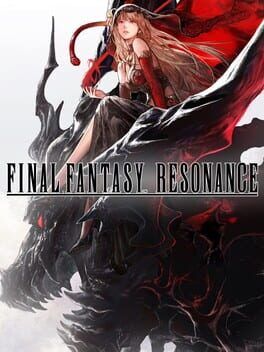

A reported demo exchange in Final Fantasy Resonance suggests Square Enix is pairing HD-2D nostalgia, turn-based systems, and series cameos with a sharper comic edge.
Image: IGDB
Store links: Final Fantasy Resonance on Steam
A Phoenix Down joke cuts through the nostalgia pitch
The most revealing Final Fantasy Resonance preview detail so far may be a villain saying “Ploink!” after using a reviving potion. In GameSpot’s hands-on report, Dr. Lazarov revives a defeated monster during the demo, then calls out Rain, Lasswell, and Fina for complaining about dirty tricks when they have been using potions and Phoenix Downs themselves. The exchange lands because it treats a long-running Final Fantasy abstraction as something characters can argue about in the room.
That is a small joke, but it creates a useful way into Square Enix’s pitch for this new Final Fantasy RPG. Final Fantasy Resonance is being presented as a return to classic pixel-art Final Fantasy, with Square Enix’s official site describing a “pixel-art world” evolved from the series’ roots, companions bound by fate, and Visions called on in battle. Preview coverage from GameSpot, Den of Geek, DualShockers, and Ani-Game all frames Resonance as a nostalgic, turn-based RPG with a heavy series-celebration angle. The Lazarov scene suggests the game may also be willing to puncture that nostalgia when the writing benefits from it.
The tension is important. Resonance has a lot of museum-piece pressure on it: classic-style presentation, crystals, airships, returning icons, and a combat system built around echoes of past heroes. A joke about enemy item use signals that Square Enix may be aiming for warmth rather than reverence alone. For a game adapted from Final Fantasy Brave Exvius, a mobile RPG with its own long-running continuity and crossover identity, tone could matter as much as spectacle.
Square Enix is rebuilding Brave Exvius as a traditional console RPG
The confirmed foundation is straightforward, even if the sources use slightly different shorthand. Square Enix’s official Final Fantasy Resonance page says players will travel with fate-bound companions and call on Visions to aid them in battle against a force threatening ruin. GameSpot reports that Resonance revives the now-defunct mobile game Final Fantasy Brave Exvius and turns it into a full console RPG. Ani-Game similarly says the game is based on the first story arc of Brave Exvius, but emphasizes that Square Enix has rebuilt and reworked the experience rather than simply porting an old mobile title.
That distinction matters for RPG players because mobile pacing and console pacing ask different things from progression. Brave Exvius originally lived in a structure designed around ongoing updates and mobile play habits. According to Ani-Game’s preview, Resonance removes that mobile-focused structure and presents the story and systems in a more traditional Final Fantasy package. That points to a campaign where party growth, dungeons, encounter balance, and story chapters need to hold up as a cohesive RPG rather than as a service-style loop.
The story setup, as described by Ani-Game and Wikipedia’s public listing, keeps the classic Final Fantasy scaffolding intact. Rain and Lasswell investigate the Earth Shrine, encounter Veritas of the Dark, and see the Earth Crystal shattered. Fina, a mysterious girl with no memories beyond her name, joins the journey as the party tries to protect the remaining Crystals. Those are familiar ingredients, but the Lazarov exchange hints that Resonance may be comfortable letting its characters react to RPG logic with some bite.
The comedy works because the scene is still grim
GameSpot’s reported scene is not framed as a detached gag reel. Dr. Lazarov is described as a mad scientist who has been using the bodies of deceased comrades for experiments, which pushes the moment into classic Final Fantasy territory: melodrama, sci-fi horror, and fantasy adventure occupying the same dungeon. Rain and Lasswell confront him, he summons an abomination, the party defeats it, and then he brings it back with an item while saying “Ploink!”
The humor comes from timing and self-awareness, not from abandoning the stakes. Lazarov is doing something grotesque, yet he is also correct within the rules of the world GameSpot describes. If heroes can use Phoenix Downs and other restorative items, an enemy using a similar trick is a fair joke aimed at decades of player behavior. The line lets the game acknowledge a mechanical absurdity without needing to explain away the entire franchise’s relationship with death, revival, and battle-state unconsciousness.
For character writing, that is encouraging. Rain, Lasswell, and Fina are not being sold only through lore summaries; they are placed in an exchange where indignation, confusion, and villainous pettiness bounce off the combat system. If that texture carries into quests and party banter, Resonance could avoid the stiffness that sometimes comes with anniversary-style projects. The safer version of this game would treat every reference as sacred. The more interesting version lets a villain be ridiculous while the dungeon remains nasty.
Visions turn fan service into a build system
The other major throughline across the Final Fantasy Resonance preview coverage is the Vision system. GameSpot compares Visions to Final Fantasy VI’s Espers: heroes from past Final Fantasy games can be equipped, they level while equipped, and they grant benefits and new skills. GameSpot also reports that earning a Vision typically involves answering questions tied to a brief rundown of that character’s story, accompanied by video montage material from the relevant game.
Ani-Game’s hands-on account adds the buildcraft angle. In that preview, each of the four active party members could use a Vision, effectively giving the player the combat options of an eight-character team. Ani-Game reports that main characters retain their own skills while the equipped Vision adds another set of options, creating room to experiment with combinations rather than locking each character into a single role. The same preview describes turn-based battles focused on exploiting enemy weaknesses and building toward stagger opportunities, with commands including standard attacks, abilities, Vision skills, items, and summons for Fina.
That structure is where Resonance’s nostalgia has the best chance to become playable design instead of a checklist. Den of Geek’s TGS preview says it saw Visions including Cloud Strife, Terra Branford, and Cecil Harvey. Ani-Game mentions Warrior of Light, Cloud, Terra, and Zidane in its session. Wikipedia’s public listing says Sephiroth is set to appear as a superboss. Those appearances are attractive marketing hooks, but the more important RPG question is whether Visions meaningfully change party roles, resource planning, and encounter solutions across a full campaign. If the system has enough friction and upgrade depth, the cameos become progression decisions. If it is too generous or too shallow, they risk becoming collectible animations.
Resonance is being sold as a classic-style Final Fantasy for the current era
Square Enix’s official language leans into heritage, describing a return to a pixel-art Final Fantasy world evolved from classic roots. Den of Geek, Ani-Game, and Wikipedia’s public listing all identify Resonance as the first HD-2D Final Fantasy game, while GameSpot describes it as using Square Enix’s housemade “2D-HD” graphical style. The wording varies, but the shared point is clear: Resonance applies the modern pixel-and-depth look associated with Square Enix’s recent RPG output to Final Fantasy itself.
Previewers are also reading the combat direction as part of that pitch. Den of Geek describes dungeon-crawling, random enemy encounters, and turn-based combat, while saying the battle menu felt intuitive. DualShockers frames the game in the context of players wanting Final Fantasy to return to turn-based roots after the mainline series’ stronger action focus. Ani-Game reports traditional turn-based foundations with weakness exploitation and stagger opportunities.
The comedy hook complicates the sales pitch in a good way. Square Enix can advertise crystals, classic art, and familiar faces, but a revived mobile story needs to persuade players that it has its own dramatic rhythm. Lazarov’s Phoenix Down-adjacent hypocrisy joke suggests Resonance is aware of the strange inheritance it is carrying: the rules of old Final Fantasy, the expectations of modern RPG pacing, and the crossover burden of putting icons from across the series into one system.
Release timing, platforms, and the questions still unanswered
According to DualShockers and Den of Geek, Final Fantasy Resonance is slated for October 22, 2026. Wikipedia’s public listing gives the same date and lists Nintendo Switch, Nintendo Switch 2, PlayStation 5, Windows, and Xbox Series X/S as platforms. Wikipedia also says a demo was released on September 3, 2026 and runs through the end of chapter one. GameSpot’s article is based on a demo, while Ani-Game says its hands-on session went beyond the section available in the public demo.
The supplied sources do not provide a price, PC requirements, performance details, physical-edition information, save-transfer details, or upgrade-path information between Switch and Switch 2. Those remain unannounced in the material available here. For now, the most practical guidance is to treat the demo as the best check on whether Resonance’s pacing and tone work for you, especially if you are coming from mainline action entries rather than older turn-based Final Fantasy games.
For RPG-focused players, the watch points are clear. The Vision system needs to sustain party experimentation past the novelty of seeing Cloud, Terra, Cecil, Zidane, or other legacy figures. The rebuilt Brave Exvius material needs quest pacing that feels native to console play. And the writing needs to keep balancing earnest crystal-era adventure with the self-aware spark seen in the Lazarov exchange. That one joke is not proof of the whole game’s quality, but it is a useful signal: Final Fantasy Resonance may be selling nostalgia, yet its best preview moment comes from knowing exactly how odd Final Fantasy has always been.