
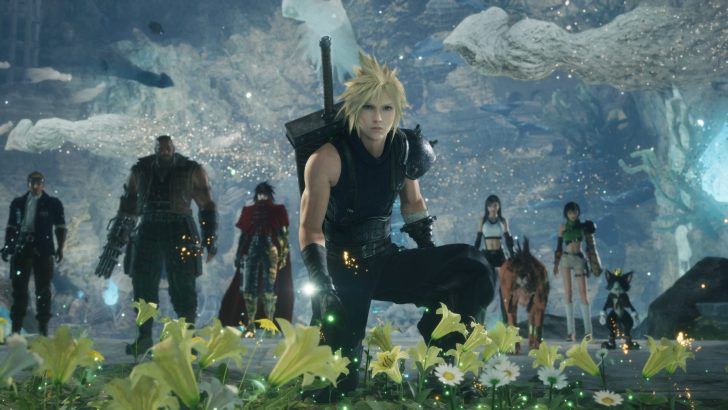

Square Enix is adding FF7 Revelation three person synergy attacks, but director Naoki Hamaguchi says they will be saved for emotional or dramatic moments instead of becoming a routine combat tool.
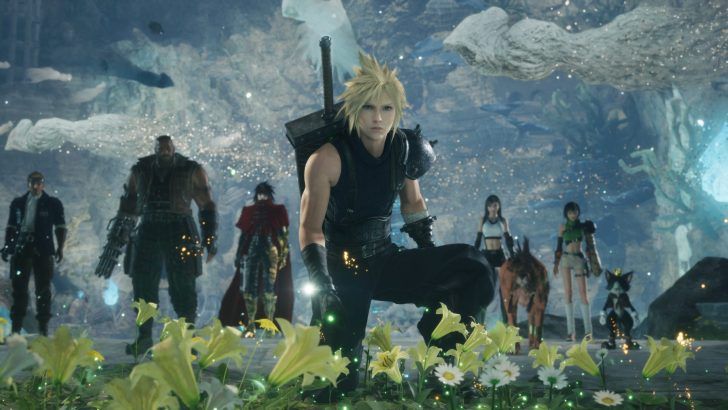
Image: wccftech.com
Square Enix is saving triple synergy for dramatic peaks
Final Fantasy 7 Revelation will include three-character Synergy Attacks, but Square Enix is deliberately keeping them out of the normal combat rotation. Director Naoki Hamaguchi told PlayStation Access, in comments reported by GamingBolt, Wccftech, xEzNaFF, and Twisted Voxel, that the team discussed the feature with battle director Teruki Endo and decided it should appear only around especially emotional or dramatic moments.
That is the concrete development: FF7 Revelation three person synergy exists, but it is not being treated like a standard command players can build around at will. Hamaguchi’s stated reason is balance and pacing. With regular abilities, two-character synergy options, and Limit Breaks already occupying the combat ladder, he said a three-person version would naturally sit at the top as the strongest option. If players could trigger it freely, he argued, it could become the obvious answer and make battles feel monotonous.
The tension is clear for anyone who spent Rebirth optimizing party chemistry. Final Fantasy 7 Revelation combat is gaining a flashier expression of team play, yet Square Enix is restricting player access to protect the rest of the system. That choice suggests the studio sees triple synergy less as a new layer of routine buildcraft and more as a narrative release valve, a way to make a particular fight land harder when the party’s emotional state, story context, and combat spectacle line up.
A combat upgrade that refuses to become the new default
Hamaguchi’s explanation frames three-person synergy as a potential design trap. In the Remake trilogy’s modern combat structure, power is already distributed across multiple meters and opportunity costs. Players swap characters, spend ATB, exploit pressure states, trigger abilities, coordinate two-person Synergy Attacks, and hold Limit Breaks for high-value windows. Adding FF7 Revelation party attacks above that stack could easily distort the decision space if the reward were available too often.
Wccftech’s report quotes Hamaguchi as saying that if a three-person synergy move became the “correct” or essential way to win battles, combat risked becoming monotonous. GamingBolt’s version of the same point describes it as the strongest option “at the top of the tower,” something everyone would want to use. xEzNaFF similarly reports that the attacks will be reserved for specific moments rather than being freely activated.
From a systems perspective, that is a conservative but understandable call. A universal triple attack would need to be powerful enough to feel worthy of coordinating three characters, but if it were too powerful, every serious encounter would bend around charging or enabling it. If it were tuned down, the fantasy of all three party members combining forces would lose its impact. Square Enix appears to be solving that contradiction by changing the feature’s role. Instead of competing with Limit Breaks or two-character synergy in the player’s normal toolkit, the triple attack becomes an authored payoff tied to the game’s most heightened encounters.
Spectacle is being treated as pacing, not only power
The important wording in Hamaguchi’s comments is not only “strongest.” It is “emotional or dramatic moment,” and, in Wccftech’s report, a sequence where the quality of the narrative experience reaches a peak. That positions Final Fantasy 7 Revelation synergy attacks as a pacing device as much as a combat mechanic.
The Remake trilogy has already leaned on the idea that battle presentation can carry story weight. GamingBolt points back to Final Fantasy 7’s climactic Sephiroth confrontation and the way a special finishing moment became part of the franchise’s memory, later echoed in Advent Children’s climactic imagery. The source does not say Revelation will recreate that exact setup, and Square Enix has not detailed which fights will trigger three-person attacks. Still, Hamaguchi’s comments make the intent plain: the team wants the first time, and perhaps every time, these attacks appear to feel tied to the scene rather than reduced to a cooldown in a rotation.
That has consequences for player expectation. Anyone hoping to design an entire build around FF7 Revelation three person synergy should temper that assumption until Square Enix shows the mechanic in full. The confirmed information supports a different reading: these attacks are likely scripted, gated, or encounter-specific in some form. The unanswered part is how much agency remains. We do not yet know whether players choose the participants, whether the party composition matters, whether the move changes based on who is present, or whether the game selects a cinematic attack automatically during fixed story battles.
Party bonds gain narrative weight, while buildcraft may stay elsewhere
The selective use of three-character attacks fits the trilogy’s broader emphasis on party bonds, but it also limits how much that bond expression can become mechanical progression. Rebirth’s two-character synergy systems gave relationships a combat texture, letting different pairs feel distinct in battle. Revelation’s triple version could have expanded that into a full party web, with combinations among Cloud, Tifa, Barret, Aerith, Red XIII, Yuffie, Cait Sith, Cid, and Vincent carrying different tactical identities.
The current reporting supports a narrower conclusion. Twisted Voxel says Hamaguchi discussed expanded combat options, including Cid and Vincent as playable characters, and described both as more technical characters that ask players to pay closer attention to timing and button inputs. The same outlet also reports that Revelation’s Fit system will let players adjust character roles to suit their playstyles. Those are the systems that currently sound closer to everyday buildcraft.
By contrast, three-person synergy seems to be about dramatic confirmation of a bond at a key point in the story. That could make the attacks more memorable, especially in a finale where party relationships carry decades of player attachment. It also means completion-focused players should not assume there will be a large menu of triple techniques to unlock, master, or route through regular encounters. Square Enix has confirmed the mechanic’s existence through Hamaguchi’s interview comments, but the structure around unlocks, variants, progression rewards, and replay tracking remains unannounced in the provided reports.
Aerith, party composition, and the unanswered combat question
One reason the three-person synergy detail has attracted extra scrutiny is the ongoing question of Aerith’s battle status in Revelation. Wccftech reports that Hamaguchi did not clarify whether Aerith will or will not be a playable battle member in the third entry. The outlet notes that she appears in key art and trailers and says she is confirmed to return in some capacity, but Hamaguchi declined to comment on her specific combat role.
That matters because triple synergy, by definition, invites speculation about which characters can participate together. The safest reading is also the narrowest: Square Enix has confirmed three-person synergy mechanics exist, and Hamaguchi has said they will be tied to cinematic or dramatic situations. It has not confirmed a full compatibility chart, Aerith’s playable status, or whether every party member can appear in a triple attack.
For lore-aware players, this restraint may be frustrating, but it is also consistent with how the studio is discussing Revelation’s finale. Party composition is one of the places where mechanics and story spoilers can overlap. A three-character move can reveal who is present, who is fighting, who is emotionally aligned, and what kind of scene is being staged. Until Square Enix shows the system directly, any specific claim about Aerith participating in FF7 Revelation party attacks, or being excluded from them, would go beyond the cited material.
Release timing is mostly clear, but reports disagree by one day
The platform picture is consistent across the reports: Final Fantasy 7 Revelation is planned for PlayStation 5, Xbox Series X|S, PC, and Nintendo Switch 2. xEzNaFF’s source text further describes the PC release as coming via Steam, Epic Games Store, and Xbox PC, while noting that the Remake series’ earlier entries are already available across several current platforms.
The launch date has a small but notable conflict in the provided sources. Wccftech and Twisted Voxel list Final Fantasy VII Revelation for April 8, 2027. GamingBolt’s article says April 7, 2027. xEzNaFF uses the broader Spring 2027 window in its overview section. With only these materials in hand, readers should treat early April 2027 as the supported window and recognize that the exact listed day differs by outlet. If you are planning time off or lining up a platform purchase, wait for Square Enix’s official storefront pages or a direct publisher confirmation before treating either April 7 or April 8 as final.
Other practical details remain outside the confirmed scope here. The provided reports do not include price, file size, PC requirements, performance targets, upgrade paths, or edition comparisons. Twisted Voxel reports that Hard Mode will be selectable from the beginning, alongside Dynamic Mode, Active Combat Style, Normal minigame difficulty, and Main Scenario Level Sync options, but those details are separate from the triple synergy implementation and still need direct player-facing explanation closer to release.
A finale trying to protect its combat rhythm
Square Enix’s choice says something specific about the priorities of Final Fantasy 7 Revelation combat. The studio is willing to add a larger spectacle button, but it is not willing to let that button flatten the rest of the battle system. Hamaguchi’s comments point to a finale built around restraint as much as escalation: stronger attacks, bigger emotional scenes, and a larger party fantasy, but with guardrails around how often the most spectacular option can take over.
That may disappoint players who wanted full control over FF7 Revelation three person synergy. It may also be the healthier design if Revelation is as large as the surrounding reports suggest. GamingBolt cites Hamaguchi on the game potentially taking over 100 hours to complete and also reports that multiple playthroughs may be required to experience everything. In a game of that scale, a dominant universal attack could wear out its welcome quickly, especially for players clearing optional content, Hard Mode, or repeat routes.
For now, the useful expectation is this: three-character Synergy Attacks are real, they are being limited on purpose, and Square Enix is framing them as emotional combat set pieces rather than a freely available pillar of progression. The remaining questions are the ones that will determine how satisfying the system feels in practice: how often these moments appear, whether player party choices shape them, and whether their rarity makes them land with the force Hamaguchi is aiming for.