
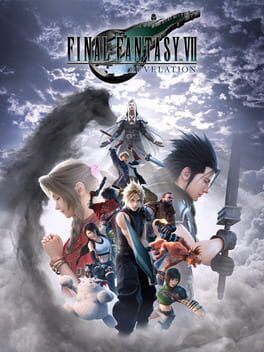
Director Naoki Hamaguchi’s latest comments frame Final Fantasy 7 Revelation as a huge RPG finale, but its 100-hour estimate, Cloud’s role, and reported 200 GB size need careful reading.
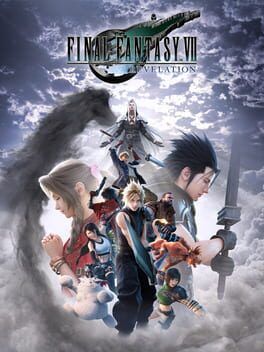
Image: IGDB
Store links: Final Fantasy VII Revelation on Steam
A 100-hour estimate with an important caveat
Final Fantasy 7 Revelation director Naoki Hamaguchi has given completion-minded RPG players the clearest warning yet about the scale of Square Enix’s trilogy finale: a thorough run could “easily take over a hundred hours.” That line comes from Hamaguchi’s interview with GameSpot, as reported by IGN, where he explained that a standard playthrough would pass that mark if he were reviewing “every single asset and element in the game” from beginning to end.
That phrasing matters. This is the strongest new practical detail for players trying to budget time for Final Fantasy 7 Remake Part 3, but it is not a clean estimate for a main-story run. Hamaguchi was describing the kind of exhaustive pass he would make as director, not the average player’s route through the critical path. He also told GameSpot that he cannot check everything on every run, so he sometimes skips combat and focuses on the main story.
IGN reported that Hamaguchi has already completed 46 full playthroughs ahead of the April 2027 launch and even checks the latest build during business trips when time allows. For a systems-heavy RPG, that is a revealing production detail. It suggests Square Enix is still iterating across a broad set of quests, battles, traversal features, and side activities, rather than treating the game as a linear wrap-up with a large ending chapter attached.
For players, the sensible read is this: the FF7 Revelation completion time will likely be heavy if you chase character content, optional systems, mini-games, late-game challenges, and map cleanup. It should not be treated as proof that every player will spend 100 hours before credits. Completionists should plan around a long tail. Story-first players should wait for Square Enix or post-launch community data before assuming their run will match Hamaguchi’s internal review pace.
Cloud is still the protagonist, but the camera is widening
The other major clarification is narrative rather than numerical. Speaking to GamesRadar, as covered by GamingBolt, Hamaguchi said “Cloud is still the main character” of Final Fantasy 7 Revelation. That confirmation addresses a visible tension in the game’s marketing, where Cloud has not appeared as overwhelmingly as he did across earlier entries.
GamingBolt frames that lighter presence as consistent with Revelation still following the same broad narrative through-line, even with the remake trilogy’s changes and new plot elements. The important confirmed point is that Square Enix is not presenting the finale as a protagonist handoff. The Final Fantasy 7 Revelation Cloud protagonist question has an answer from the director: Cloud remains central.
At the same time, Hamaguchi told GamesRadar that the team knows fans want to “see more of the other characters too,” and that it “very much wanted to have content” that goes into them. That is the real design tension for this finale. Final Fantasy VII’s back half is remembered for pushing identity, memory, party loyalty, and world-scale stakes into the foreground. A Cloud-centered story can still require longer looks at Barret, Tifa, Red XIII, Yuffie, Vincent, Cid, and the rest of the crew, especially after Rebirth expanded the party’s mechanical and emotional footprint.
The practical takeaway is that players should not read reduced trailer emphasis on Cloud as evidence that he has been demoted. Based on Hamaguchi’s comments, the more likely expectation is a finale that keeps Cloud as the axis while giving optional and story-adjacent space to party members who need resolution before the trilogy closes.
Party content appears tied to quests, leads, and dialogue choices
The most useful detail for RPG players is not simply that other characters will get attention. It is how that attention appears to be delivered. GamingBolt notes that Revelation has already shown side quests where certain characters take the lead, changing dialogue choices. That points toward a structure where party focus is not confined to cutscenes, but also embedded in quest routing and who you bring into specific situations.
For a completionist, that raises the value of side content. If quests can surface different dialogue or character perspectives depending on the lead, then clearing the map is less about empty checklist discipline and more about seeing how the ensemble reacts to the world after Rebirth. It also means players who default to one favorite battle lineup may miss some texture unless the game makes those character-led opportunities clear.
GamingBolt speculates that this broader party content could involve Barret, Tifa, Red XIII, Yuffie, Vincent, Cid, and possibly Zack Fair, whose role in the remake trilogy has remained a major point of curiosity. The outlet also mentions Chadley and a new AI assistant called MAI, reportedly tied to side quests, while noting that the frequency of MAI’s appearances is unknown. Those details should be treated carefully. Hamaguchi’s confirmed statement is that Square Enix wants content that explores other characters. The exact balance, quest density, and how intrusive any support systems feel remain unproven until reviews or extended hands-on coverage can test the full game.
This is where Revelation’s RPG structure could either pay off or strain. Character-specific quests can give party members stronger arcs and encourage build experimentation. They can also create fatigue if progression becomes a maze of icons, required diversions, and helper chatter. Hamaguchi’s comments set the expectation for a party-wide finale, but the quality test will be whether those quests make players want to rotate the roster, not simply ask them to do so.
The reported 200 GB size is a storage issue, not a quality metric
The Final Fantasy 7 Revelation file size has become a story of its own, but Hamaguchi has cautioned against treating size as a measure of quality. GamingBolt reported that Revelation may be around 200 GB, then covered Hamaguchi’s follow-up comment that “a larger file size may not necessarily mean a better game.” He added that the title is the culmination of more than ten years of work from the development team and the conclusion to the FFVII Remake series, and said the team is committed to delivering a game that meets fan expectations and is work the creators can be proud of.
That is a useful correction to the usual blockbuster-RPG conversation. A huge install can signal scope, high-resolution assets, cinematics, audio, platform packaging choices, or technical inefficiency. The provided sources do not break down what accounts for Revelation’s reported size, so no one should present 200 GB as evidence that the game is better, deeper, or more polished than Rebirth. It is a practical constraint first.
That constraint is especially relevant because GamingBolt reports that physical owners on PS5 and Xbox Series X/S will receive a single disc and must download the rest. The same report says the Nintendo Switch 2 version ships on a Game-Key Card. VGC also notes that Hamaguchi discussed word that all physical versions will require a download. For players with data caps, slow connections, shared storage, or a preference for fully preserved physical media, that is the part to watch.
The safest advice is to treat the 200 GB figure as provisional until platform storefronts and Square Enix publish final install requirements. If you are planning to play at launch, assume you may need substantial free space and download time. If you are buying physical to avoid a large download, the current reporting says that expectation does not match how Revelation’s physical release is being handled.
Square Enix is aware of scale fatigue and says it is signposting rewards
The concern underneath both the 100-hour estimate and the file-size talk is whether Revelation will feel focused. VGC asked Hamaguchi directly about comments from fans and press that the game’s scope might be too big. His answer was that he is “not worried about the scale,” while acknowledging that the media demo was built to show the impact of how much there is to do in the world.
According to VGC, that media demo started at Chapter 4, a few hours into the game, and included areas where quests were locked behind level blocks. Hamaguchi said Square Enix deliberately included those blocks to communicate that there was much more ahead. He also said the team places markers and identifies rewards so players can decide what they do and do not want to do, instead of feeling overwhelmed by choice.
For an RPG audience, that design answer is more meaningful than a raw content count. Clear reward signposting helps players make build and progression decisions. If a quest rewards a weapon upgrade, class-related tool, character scene, or card-game advancement, players can prioritize based on their own goals. If everything is presented with equal urgency, a large world becomes homework.
The sources also point to several systems that could contribute to Revelation’s breadth. GamingBolt mentions Vincent and Cid joining as new party members, FITS for equipping different classes, a revamped Queen’s Blood, and dedicated late-game content. The same outlet reports that the late-game content means players will not have to replay on Hard Mode to experience everything. Those details suggest Square Enix is trying to serve completionists inside a single broad playthrough rather than locking major narrative components entirely behind a second run.
That approach suits a finale. It also increases the burden on pacing. If Revelation wants players to explore character arcs, mini-games, late-game content, and a larger world, the interface and reward structure will have to help players choose without guilt. Hamaguchi’s VGC comments show the team knows that readability is part of scale.
Launch plans are clear, but some buying questions remain open
Final Fantasy 7 Revelation is scheduled to release on April 8, 2027. VGC lists the launch platforms as PS5, Xbox, Nintendo Switch 2, and PC, while GamingBolt specifies Xbox Series X/S alongside PS5, PC, and Nintendo Switch 2. Square Enix is the developer and publisher cited across the provided listings, and Wikipedia’s entry describes Revelation as the sequel to 2024’s Final Fantasy VII Rebirth and the final installment of the Final Fantasy VII Remake trilogy.
Some practical questions are still unresolved in the provided reporting. Final storefront install sizes have not been cited here. Performance targets by platform are not included in the source material. Pricing, PC requirements, upgrade paths, and any cross-save arrangements are also not established by these sources. DLC has been discussed in reporting, with GamingBolt noting uncertainty around whether content involving Sephiroth and Vincent or the Turks takes place in the past or present, but the details are not firm enough to use as a buying plan.
For now, the cleanest recommendation is based on playstyle. If you finished Remake and Rebirth for story and want the conclusion, Hamaguchi’s Cloud clarification should ease worries that the finale is moving away from its central character. If you are a completionist, expect a major time commitment and watch for how Square Enix explains character-led quests, late-game content, and reward markers closer to launch. If storage space or physical ownership matters to you, do not treat the reported 200 GB size as bragging rights. Treat it as a reason to check final platform requirements before release week.
Revelation’s current picture is ambitious but still incomplete. The director has confirmed a huge scope, a Cloud-led story, and a stronger ensemble focus. The unresolved question is whether all that content forms a clean endgame path for RPG players, or whether the finale asks too much of anyone trying to see every character, system, and optional thread before Meteor falls.