
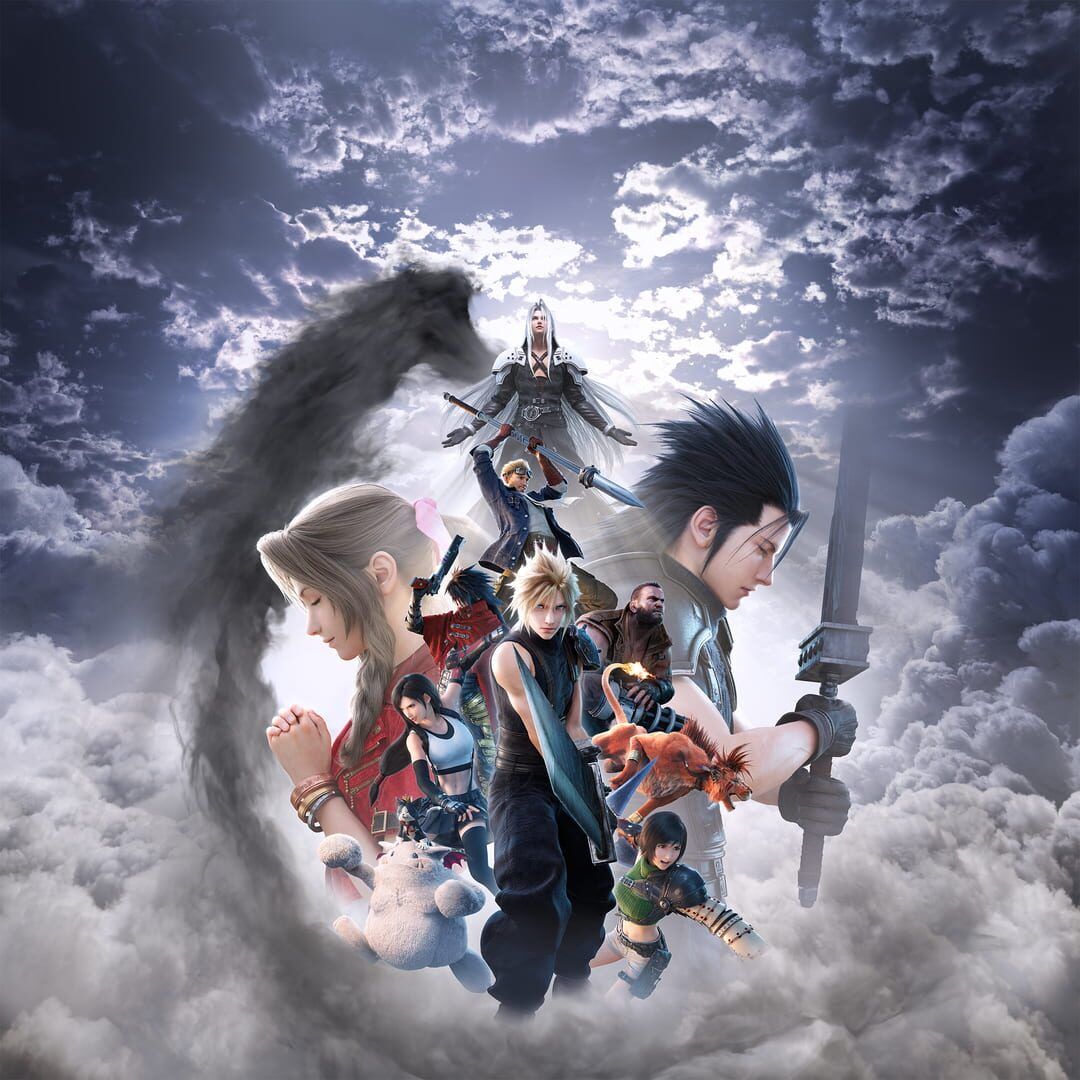

Naoki Hamaguchi sees game streaming as a threat to story‑driven RPGs that do not offer enough agency. Final Fantasy VII Revelation responds with branching choices, a reworked world structure, and a job system built for personalization and replayability that lets playing feel meaningfully different from watching.
Naoki Hamaguchi is under no illusion about what longplay streams do to a traditional, linear JRPG. If a viewer can absorb every story beat, every twist and finale of a 50 hour epic by watching a streamer over a weekend, what reason do they have to spend the money and time to play it themselves?
Talking about Final Fantasy VII Revelation, the finale to the Remake trilogy, he has gone as far as calling it a “crisis for the games themselves.” He is not anti streaming. He is worried about RPGs that do not give the audience a strong answer to a simple question: why should I play this if I have already watched it?
Revelation is the game where he tries to build that answer directly into the design.
The streaming problem: when a JRPG becomes a TV season
Hamaguchi’s comments across VGC and IGN interviews circle the same core idea. In the streaming era, a story driven RPG that plays out in one fixed way behaves a lot like a prestige TV season. Once you know the plot, re experiencing it is mostly a matter of nostalgia.
With complete playthroughs living permanently on YouTube and Twitch, a certain slice of players will choose to watch instead of play, especially younger audiences raised on video content. For RPGs that lean heavily on cutscenes and authored drama, that is a real threat. The more passive the experience, the easier it is to consume passively.
Hamaguchi’s solution is to break the one version of the story mentality, without throwing away the authored narrative that fans love. Revelation still has a single canonical ending, but the path to that ending becomes a web of different possibilities.
One ending, many journeys
A key detail in Hamaguchi’s interviews is that Revelation is not a multi ending epic. He is very clear that the remake trilogy will conclude with one “singular ending.” In other words, you cannot stream a “bad ending” or “secret ending” that someone else will miss.
Instead, he wants the customization and variability to live inside the journey itself. Side quests, relationships, world states and even how you perceive certain characters are designed to shift based on your decisions.
In RPG Site’s interview he hints that some choices can alter what players think about party members, rather than rewriting the main plot. That is a subtle but important distinction. Revelation is not trying to be a branching narrative game in the Telltale mold. It is more like an intricate remix system layered over a fixed story spine.
From a streaming perspective, this means a full playthrough communicates the overall plot, but not the full range of personal outcomes. You know where the party ends up, but you do not know exactly how your Cloud, your Tifa or your Vincent will get there.
Branching through side content, not fracturing the main story
Hamaguchi has also said that because Final Fantasy VII has a huge audience deeply attached to the original narrative, the team was careful about where to place major branches. Rather than splintering the core story into lots of alternate timelines, Revelation enriches that story laterally.
Side content, optional routes and character focused episodes absorb much of the reactive design. Decisions about who you help, which threats you tackle, how you explore the open world or which character arcs you prioritize become the levers of personalization.
This approach serves two purposes. It keeps the remake trilogy’s conclusion coherent while creating plenty of space for different play styles to matter. And it ensures there is a long list of “I never saw that in my run” moments that a stream cannot easily cover in one go.
In practice, that means your first Revelation playthrough is less about optimizing outcomes, and more about imprinting your preferences on the journey. On a second or third run, seeing how different choices ripple through those side stories becomes the main attraction.
Early Highwind: open structure as player agency
The structural change that best reflects Hamaguchi’s thinking is the Highwind. In the original FF7, gaining control of the airship is a late game power moment. In Revelation he wants you in the cockpit in roughly the first handful of hours.
By giving players that degree of freedom early, Revelation tries to turn the world map into a genuine choice space rather than a sightseeing tour. Instead of following a mostly linear route punctuated by diversions, you are handed the keys and asked to decide what matters.
From a streaming lens this is direct counterprogramming. A viewer might watch a favorite creator beeline to high level hunts or focus on certain regions first. When they pick up the game, they can take an entirely different geographical path and see story variations, encounters and character moments in a different order.
The same plot beats still exist, but the pacing and context around them shift. Cloud might reunite with a character after a long detour of side stories in one run, or stumble into that reunion immediately in another. Those subtle differences are the kind that do not read well in a highlight reel, but feel powerful when you are the one scripting them.
FITS and the personalization of combat
The other pillar of Revelation’s design is its outfit based job system, FITS. Hamaguchi cites Final Fantasy X 2’s dresspheres as inspiration, but with a modern twist. In Revelation, job identity and visual fashion are decoupled. You can change a character’s role without abandoning the iconic look you like, or you can roleplay a completely new aesthetic for a favorite job.
Crucially, jobs are available from the outset instead of being drip fed over dozens of hours. That creates a very wide design space for self expression. One player might lean into aggressive, high risk builds across the party. Another might stack support roles and damage mitigation. A third might recreate a classic FF7 feel by assigning jobs in ways that echo the original Limit Break archetypes.
Two important things happen here in relation to streaming.
First, builds become part of the authored story. When a boss that destroyed you on stream goes down in three turns on your own save because you spotted a synergy the streamer ignored, you do not feel like you are replaying a script. You are solving the problem with your own creativity.
Second, combat footage becomes less definitive. You can watch a streamer clear a Weapon fight with an intricate, technical strategy and still feel like you are playing a different game when you tackle it as a glass cannon or a status heavy setup. Revelation leans into that fantasy of ownership over party identity that single route JRPGs often underutilize.
Fixing the minigame problem to respect different play styles
One of the big criticisms of Final Fantasy VII Rebirth was its reliance on minigames. Hamaguchi has been candid that some players felt railroaded into side activities that did not match their interests.
For Revelation, he is trying to separate the reward economies. Combat related progression now primarily comes from combat focused content. Minigames tend to pay out cosmetics such as outfits. And if you really dislike them, a generous skip function lets you bypass them while still collecting the essentials.
This change might not sound like a streaming issue on the surface, but it is closely tied to agency. When viewers see a streamer forced through hours of card games or gimmick challenges they are not into, they absorb the message that the experience is as much about padding as it is about role playing.
By contrast, Revelation is trying to send a different message. You can lean into the parts of the game you love and mostly opt out of the rest. The streamer who wants to show every minigame for content and the player who just wants to fight Sapphire Weapon both get supported paths. That divergence is another way watching does not cleanly substitute for playing.
Character perception as a form of branching
Hamaguchi has hinted that some of Revelation’s most meaningful “branches” will be invisible on a flowchart. Dialog, affinity values and choice dependent scenes can change what you learn about characters like Vincent, what they reveal to you, and how the party dynamic feels moment to moment.
That kind of design creates subjective differences that are hard to spoil. You can watch a full playthrough and come away with a particular picture of Vincent’s arc, then boot up your own file and have a subtly different relationship with him based on which conversations you prioritized, which side quests you cleared and how you resolved key choices.
In an era where social media loves alignment charts and “my canon is” debates, this style of branching is powerful for community conversation. Players compare notes and discover that their emotional read on a character or relationship is not universally shared. That sense of personal canon is almost impossible to capture in a single stream archive.
Replayability as an answer, not a buzzword
Many RPGs talk about replayability, but often that means new game plus numbers go up. Hamaguchi’s comments make it clear that for Revelation, replayability has to be structural.
Early Highwind access, the FITS system, side content that meaningfully responds to decisions and character perception shifts all combine to support different runs that feel qualitatively distinct. One might be focused on hunting down every Weapon fight. Another might prioritize relationship events and narrative closure. A third might intentionally skip large chunks of the world to see how the story feels when it moves briskly.
From a streaming perspective, this is the most direct counter. The first Revelation playthrough a viewer sees online is not the authoritative version, but one possible route among many. The more Square Enix succeeds at making those routes feel valid and rewarding, the more likely players are to think, “I want to see my version,” rather than, “I already saw it.”
What Revelation tells us about the future of big budget RPGs
The ideas behind Final Fantasy VII Revelation are not unique to Square Enix, but Hamaguchi is one of the first big budget JRPG directors to frame them explicitly as a response to streaming.
He is not rejecting the reality that millions will watch this game instead of playing it. He is asking what levers he can pull so that watching a stream is a trailer for your own choices, not a complete substitute for them.
Other studios working on cinematic, linear leaning RPGs are facing the same question. Revelation hints at several answers. Give players real control over pacing and route through early mobility tools. Invest in build systems that dramatically change how fights feel. Hide some of the most interesting variations in character relationships and side content rather than in a handful of binary endings. And make sure that if someone sits through a 40 hour VOD, they still have a reason to ask themselves, “What would I do differently?”
If Revelation can land that balance while delivering the singular, emotional finale fans expect, it will not just close out the remake trilogy. It could become a template for how story driven RPGs survive in a world where any epic can be binged in a few streams, but not every journey feels like it truly belongs to you.