
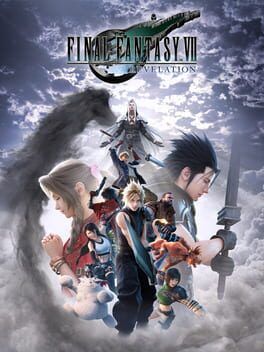

Square Enix developers used a PAX West panel to ask fans to experience the Final Fantasy 7 Revelation ending directly, turning the FF7 Remake trilogy finale into a spoiler culture test.
Image: IGDB
Store links: Final Fantasy VII Revelation on Steam, Final Fantasy VII Revelation: Story Expansion Pass on Steam
Square Enix is already managing the Final Fantasy 7 Revelation ending conversation
Square Enix developers used a Final Fantasy 7 Remake trilogy panel at PAX West to make an unusually direct request about the Final Fantasy 7 Revelation ending: do not let someone else explain the climax to you before you have lived with it yourself.
According to Polygon’s report from the panel, a presentation slide about the trilogy’s conclusion told fans, “We hope you experience the climax as something that’s not explained to you by someone else, but rather, as something that belongs to you.” Kotaku, citing the same PAX West presentation and Polygon’s account, highlighted the line as a signal that Square Enix knows exactly how quickly the FF7 Remake trilogy ending will be flattened into clips, theories, summaries, and “explained” posts once the game is out.
Game director Naoki Hamaguchi expanded on the point during the panel. As quoted by Polygon and Kotaku, Hamaguchi said that “rather than having us as developers explain the answers,” the team wants players “to receive them on their own as their own personal experience.” He connected that appeal to “the reunions we’ve built up throughout the trilogy, the bonds with our companions, and the final resolve,” saying those elements all lead into the third title.
That is the concrete news. The interpretation is that Square Enix is trying to get ahead of a predictable modern release problem: a climactic RPG ending can become public property within hours, especially when the audience includes longtime players who know the 1997 Final Fantasy VII, Remake and Rebirth players tracking every deviation, and lore channels built to process ambiguity into answers. The developers are not saying the ending will be incomprehensible, nor are they confirming a twist, multiple endings, or a deliberately vague finale. They are saying the experience is meant to be received first-hand.
The spoiler warning lands because this trilogy has trained fans to interrogate everything
The Final Fantasy VII Remake project has never been a simple one-to-one replay of a familiar RPG for a modern audience. Kotaku’s piece notes that Final Fantasy VII Remake played recognizable beats from the 1997 PlayStation game while reimagining substantial parts of it and adding a meta layer around fan expectations. That history is the reason a comment about spoilers carries more weight here than it would for a routine sequel.
For a player coming to Final Fantasy VII Revelation after Remake and Rebirth, the question is not only “what happens?” It is also “what does this version think it is allowed to change?” That tension has shaped the trilogy’s audience behavior. Every trailer, boss line, party composition change, and late-game scene becomes evidence in an argument about fidelity, destiny, and whether Square Enix is steering toward the known destination or bending around it.
Hamaguchi’s phrasing is careful. He refers to “answers,” but frames them as something players should “receive” through the journey rather than something developers should decode from a podium. That distinction matters for an RPG finale. A guide can tell you where a superboss is, which materia setup is efficient, or how a combat system scales. An ending, especially one built from character reunions and long-running emotional payoffs, loses part of its force when reduced to a verdict in someone else’s thread.
For players worried about Final Fantasy 7 Revelation spoilers, the practical advice is simple: treat this as a high-risk release the moment review code, early physical copies, preview events, or midnight launches enter the ecosystem. The sources provided do not mention Square Enix announcing any special anti-spoiler policy, review embargo terms, or streaming restrictions. The warning at PAX West is cultural rather than procedural, which means players will need to manage their own exposure.
Hamaguchi’s comment is also a statement about ownership, not a promise of ambiguity
The phrase “something that belongs to you” can be read too aggressively if stripped from the panel context. Based on the quoted comments, the developers are not telling fans that every interpretation will be equally supported by the text, and they are not promising a personalized narrative outcome. Nothing in the PAX West reporting confirms branching endings, player-determined canon, or a finale designed to withhold closure.
What is confirmed is the team’s desire for players to encounter the conclusion with the accumulated emotional and mechanical memory of the trilogy intact. Hamaguchi explicitly names “reunions,” “bonds with our companions,” and “final resolve.” Those are RPG structures as much as story themes. This trilogy asks players to spend dozens of hours learning party rhythms, swapping roles, clearing side content, and living with character banter between major plot turns. The ending is being positioned as the payoff to that accumulation, not as a lore answer key.
That framing fits the way large RPGs actually work for committed players. The same cutscene can land differently depending on whether you mained a character, invested in optional scenes, spent time mastering a party member’s kit, or rushed the critical path. A secondhand explanation can preserve plot order while erasing the personal route through the game’s systems.
As Elara Chen, I read Square Enix’s appeal less as evasiveness and more as a defense of pacing. Revelation’s ending will inevitably be debated, and the developers know that. The plea is to let the game deliver its own sequence of setup, combat pressure, party payoff, and resolution before the internet converts it into a checklist of answers.
The PAX West panel paired spoiler caution with new systems, Cid, and Vincent
The same PAX West presentation did not only address the Final Fantasy VII Revelation ending. Polygon reports that battle director Teruki Endo went into detail on Cid, Vincent, and a new combat framework called FITS. That matters because Square Enix is presenting Revelation as a playable culmination, not only a narrative conclusion.
According to Polygon, Cid uses a magical lance that can impale multiple enemies and becomes stronger while airborne, positioning him as an aerial specialist with long-range utility. Vincent uses a gun suited to mid-range combat, while his Galian Beast transformation lets him shift into close-range melee attacks. Those details suggest two late-trilogy party members are being designed around distinct positional identities rather than simply filling legacy roster slots.
The FITS system, as described in Polygon’s report, assigns traits that influence a character’s battle style. Four FITS were detailed at the panel. Warrior emphasizes offense and expands signature abilities. Knight is defensive and support-oriented, letting characters draw attention and protect allies while still dealing damage. Black Mage accelerates elemental spellcasting. Summoner unlocks Summon Commands that let players control many summon actions and perform synced attacks.
There is one important quality-of-life detail for players who care about both builds and fashion: Polygon reports that FITS choices alter outfits, but the developers confirmed players can freely choose outfit skins regardless of selected specialization. In other words, the system appears to separate mechanical role from cosmetic preference.
That gameplay context deepens the spoiler discussion. If Revelation’s climax is built around the whole party, as Hamaguchi’s remarks imply, then how players build and use Cid, Vincent, and the rest of the roster may shape the emotional texture of the finale even if the story path itself is fixed. The sources do not say FITS changes the ending. They do support the idea that Square Enix wants the route to the ending to feel owned by the player through party bonds and combat identity.
The trilogy is ending, but Square Enix has already announced story DLC afterward
There is a business and expectation-management wrinkle here: Final Fantasy VII Revelation is being sold as the conclusion to the FF7 Remake trilogy, but it will not be the last announced story content tied to the game.
Polygon separately reported that Square Enix announced Final Fantasy 7 Revelation will release on April 8, 2027, following a State of Play, and that the game will receive two pieces of story DLC. According to Polygon, the details came from edition and pre-order information on the official PlayStation Blog, where a Premium Edition includes the main game and a Story Expansion Pass. A graphic for that edition identified two planned expansions as “Story DLC 1: Sephiroth” and “Story DLC 2: Vincent & the Turks.”
Polygon also cites an official Square Enix press release saying both DLC chapters are planned for release between Winter 2027 and Spring 2028 and will be available for individual purchase. No pricing for the story DLC has been announced in the provided source material.
That creates a clear distinction for readers. The main game is still being framed as the trilogy’s conclusion. The DLC, based on the cited edition information, is additional story content focused on specific characters. Polygon notes that Hamaguchi previously told Automaton that any DLC would likely focus on “untold stories” of characters, but the provided material does not confirm the exact plot, length, pricing, or whether either expansion will alter the interpretation of the main ending.
For spoiler-sensitive players, the DLC plan cuts both ways. On one hand, the April 2027 main-game ending will likely be the central event the community dissects immediately. On the other, Sephiroth, Vincent, and the Turks are all characters with enough history that post-launch chapters could reopen debates long after credits roll. Anyone hoping to go in clean may need to protect themselves twice: once at launch, and again when the expansion schedule begins.
How to approach Revelation if you care about the ending
The safest conclusion from the PAX West comments is also the most player-friendly one: Square Enix is asking fans to give Final Fantasy VII Revelation the chance to function as an RPG first and a discourse object second.
Confirmed details from the provided sources are limited but useful. Square Enix announced an April 8, 2027 release date, with Polygon’s report tying that announcement to State of Play and the PlayStation Blog. The game is the third title in the Final Fantasy VII Remake trilogy, and the PAX West panel featured director Naoki Hamaguchi and battle director Teruki Endo discussing both the ending philosophy and new combat systems. Story DLC focused on Sephiroth and Vincent & the Turks is planned after launch, according to PlayStation Blog edition details and a Square Enix press release cited by Polygon.
What remains unannounced in the supplied material is equally important. The sources do not provide a standard edition price, DLC pricing, PC timing, performance targets, install size, review embargo timing, or any formal spoiler policy. They also do not confirm whether Revelation’s ending is faithful, radically changed, open-ended, or designed around multiple interpretations.
If the FF7 Remake trilogy ending is the main reason you are showing up, the best plan is to decide your tolerance for ambiguity before launch. If you want the ending untouched, mute Final Fantasy VII Revelation terms, character names, and broad phrases like “Revelation ending explained” as early as review week. If you are waiting for performance impressions, accept that you may be trading technical certainty for spoiler risk. If you plan to play the DLC later, remember that post-launch story content may keep the spoiler cycle active well beyond April 2027.
Hamaguchi’s message is not a demand that fans stop analyzing Final Fantasy 7 Revelation. Analysis is inevitable for Square Enix Final Fantasy 7 projects, and this trilogy practically invites it. The developers’ request is about sequence: play first, interpret after. For a series finale built around companions, reunions, and final resolve, that order may be the one thing no ending explainer can restore.