
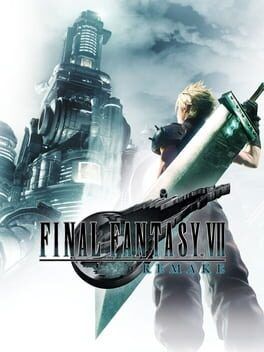
With Final Fantasy VII Remake Part 3’s title decided and Unreal Engine 4 confirmed, Square Enix is quietly defining the shape of the trilogy’s endgame. Here is what that means for development timelines, visual consistency with Remake and Rebirth, and how the last chapter could restructure the PS1 classic’s remaining story beats.
Now that Square Enix has locked in the title for Final Fantasy VII Remake Part 3 and publicly committed to Unreal Engine 4 again, the project has quietly entered a new phase. We still do not know what the subtitle is, but we do know two crucial things: the team has a clear thematic target, and they have chosen continuity over cutting-edge tech for the trilogy’s finale.
That combination says a lot about where the last game in the Remake project is heading, both behind the scenes and on screen.
Why sticking with Unreal Engine 4 actually makes sense
Director Naoki Hamaguchi has confirmed that Part 3 is staying on Unreal Engine 4, the same technology that powers both Final Fantasy VII Remake and Final Fantasy VII Rebirth. At first glance that sounds conservative. Unreal Engine 5 is now mature and already in use across the industry. But for a project like this, stability has its own kind of ambition.
Creative Business Unit I spent nearly a decade bending Unreal Engine 4 around the specific needs of this trilogy. Character shaders, hair and fabric simulation, the particular way Midgar’s neon glows or Rebirth’s grasslands catch the light are all the product of a big, bespoke toolchain built on top of stock Unreal. Moving to Unreal Engine 5 at this stage would not just be a graphics toggle. It would be a partial reboot of the entire production pipeline.
Hamaguchi has framed the decision as “more beneficial to have something we’re already used to” instead of chasing a new engine. In practice that means fewer years spent porting tools, rewriting rendering features, revalidating AI, physics and combat systems. It keeps engineers focused on content, not infrastructure. For a trilogy that already took a big structural risk by reimagining an RPG from 1997, choosing technical continuity for the finale feels like the practical way to actually finish the story.
What UE4 means for the development timeline
The long gap between the PS1 original and this remake project has made fans sensitive to scheduling, but here the tech choice hints at a relatively predictable path.
Remake and Rebirth were already iterative leaps built on the same engine. The second game reused and refined much of the combat foundation, the Cinematic Presentation tools and the performance capture pipeline from Part 1. All that work carries straight into Part 3 with minimal friction.
Internally, the team is no longer prototyping what Final Fantasy VII in real time 3D looks like or how an action-RPG hybrid system should feel. Those questions were largely settled across the first two games. With the title decided and Part 3 reportedly “playable” and “progressing smoothly,” sticking to UE4 makes it easier to target a shorter gap between entries than the PS4-to-PS5 generational jump might suggest.
There is also the production strategy to consider. Square Enix has said the trilogy will ultimately be fully multi-platform rather than locked to a single console forever. Supporting PC, PlayStation and likely other platforms is much simpler when the engine is already battle-tested across them. UE4 gives the studio known performance profiles to work with, instead of discovering the pitfalls of an UE5 upgrade at the tail end of a decade-long project.
Visual consistency across all three parts
From a pure player perspective the engine choice is less about frame-time graphs and more about how the trilogy feels as a continuous journey.
Final Fantasy VII Remake and Rebirth already share a striking visual language. Characters like Cloud, Tifa, Aerith and Barret are instantly recognizable between games, with only subtle refinements to lighting and materials. Environmental art evolved between Midgar’s dense cyberpunk alleys and Rebirth’s sweeping open regions, but the series never abandoned its initial aesthetic. That continuity is part of why the jump from Part 1 to Part 2 feels like a natural extension rather than a generation leap that leaves the earlier chapter looking obsolete.
Keeping UE4 for Part 3 keeps that visual arc intact. The finale will likely look better than Rebirth through targeted upgrades: higher density foliage, better streaming, smarter use of lighting and color in late-game locations like the Northern Crater, and refined facial animation during key emotional scenes. But you can expect those improvements to feel like evolution, not reinvention.
That is crucial for a story that has now become three separate, full-length RPGs. Players who marathon the trilogy in a few years on powerful hardware will probably appreciate that Part 1 no longer looks like an awkward outlier compared with its sequels. Instead, the three games should read as a single continuous visual production with a steady upward curve in fidelity.
A finale shaped by a locked-in title
Hamaguchi has confirmed that the subtitle for Part 3 has been chosen internally, with Tetsuya Nomura making the final call after Paris Games Week. Square Enix is keeping the name secret for now, but the director has talked more broadly about the trilogy’s structure and themes.
Remake established the “Re” branding as more than a stylistic flourish. It signaled that this is not just a straight retread of the 1997 script. Fate, memory, parallel possibilities and the weight of legacy all became explicit text when the Whispers appeared and Sephiroth started treating the original timeline as something he had lived before. Rebirth expanded that idea into a wider world and a broader emotional canvas.
Whatever word ultimately completes the trilogy has already shaped Part 3’s story design. The team has said they began development of each entry with the theme and subtitle in mind, then built their scenarios and character arcs around that conceptual spine. With the title now locked they can align the late-game pacing, party arcs and even side content toward a single emotional thesis for how this reinterpretation of Final Fantasy VII should end.
How much story is left compared with the PS1 original?
Rebirth carries the narrative through some of the most iconic mid-game beats: the escape from Midgar, Kalm and Nibelheim, the first real steps into an open world, the trip across the ocean and the tragedy at the Forgotten Capital. That leaves Part 3 with what was originally the back half of the PS1 game.
In the 1997 structure this remaining portion covers a dense run of locations and revelations. The party grapples with Shinra’s collapse, the true nature of the Planet and Jenova, Cloud’s fractured identity and Sephiroth’s apocalyptic plan. The path winds through areas like Mideel, the Lifestream sequences, the return to Midgar, the final approach to the Northern Crater and the decisive confrontation with Sephiroth.
The remake project has already shown it is willing to reframe or expand sequences that were once brief or mechanically simple. That suggests the final game will not simply speedrun the original’s latter half. Instead, expect the remaining beats to be stretched, re-ordered and interwoven with new material that pays off the trilogy’s unique threads, such as the multiverse-tinged implications of the Whispers’ defeat and the glimpses of alternate outcomes.
Possible structure for Part 3’s campaign
Looking at what is left and how Rebirth handled its open regions, a plausible structure for Part 3 emerges: a hybrid of focused narrative corridors and a few strategically chosen broad zones.
The mid-game in the original saw the group scattered and wounded in Mideel after a catastrophic encounter. Translated into the remake’s scale, that arc could form an emotionally heavy, semi-linear section that lets the team lean on the cinematic strengths of UE4’s current tools. Lifestream dives and major memory sequences are tailor-made for surreal visual design that does not have to obey the rules of the physical world, which plays nicely with the trilogy’s emphasis on fate and diverging possibilities.
Later, as the party regroups and confronts the consequences of their choices, the game can open up again around key hubs. A return to Midgar in ruin is an obvious candidate for a large, revisitable space that stitches together nostalgia for the first game’s setting with the fallout from both Shinra’s downfall and the trilogy’s new timeline complications.
The finale itself, from the descent into the Northern Crater to the final battle, was relatively short in the PS1 original but loaded with atmosphere. There is room here for Part 3 to transform that approach into a long-form climax, blending dungeons, character-focused interludes and high spectacle boss encounters that make fuller use of the combat system’s maturity.
Balancing fidelity to the original with the new timeline
The biggest question hanging over Part 3 is not purely which scenes will appear, but which version of those scenes Square Enix intends to canonize. Remake already diverged sharply from the PS1 layout by making destiny itself a villain. Rebirth continues to blur the line between homage and outright rewrite, hinting that multiple outcomes are now in play.
By the end of the trilogy Square Enix has to land on a definitive emotional conclusion even if the cosmology allows for more than one timeline. Cloud’s identity crisis, Aerith and Tifa’s arcs, Barret’s fight for the Planet and Sephiroth’s obsession with transcending death all demand resolution. The locked-in subtitle will be the key to understanding how far from the PS1 ending the team is willing to drift.
In practical terms, staying on UE4 helps here as well. The more efficiently the developers can reuse systems, enemy archetypes and animation pipelines, the more bandwidth they have to build bespoke setpieces, branching scenes and alternate resolutions without losing years to technical churn.
A trilogy defined by continuity rather than escalation
Square Enix could have chosen to signal the finality of Part 3 by jumping engines, cranking up visuals and treating it as a quasi next generation reboot of the reboot. Instead, every public statement so far points to a quieter philosophy. Consistent tools, a consistent look and a carefully chosen subtitle are the pillars they are using to bring this ambitious project to a close.
For players waiting to see how far the story will stray from the PlayStation original, those choices should be reassuring. They suggest a team focused less on starting over and more on finishing what it began in 2020: a three-part reimagining that feels cohesive to play, coherent to look at and confident enough in its own themes to step out from under the shadow of its legendary source.
Whatever name Square Enix ultimately prints on the box, the engine and the structure behind it are already telling the story of how Final Fantasy VII’s remade saga will finally end.