
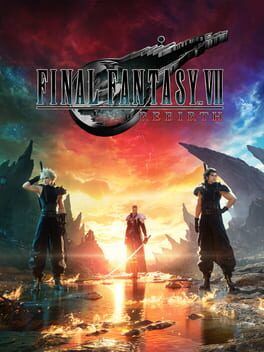

Naoki Hamaguchi says Final Fantasy VII Remake Part 3 is “on time and on schedule” and its reveal is being prepared. Here’s what that actually tells fans about development progress, platforms after Rebirth’s expansion to Xbox and Switch 2, and what to realistically expect from the trilogy’s finale without drifting into wild speculation.
Naoki Hamaguchi has finally broken the silence on Final Fantasy VII Remake Part 3, and the update is brief but meaningful. Speaking in a new interview, the director confirmed that development is “proceeding on time and on schedule” and that “preparations toward the announcement are steadily underway,” asking fans to wait “just a little longer.”
Taken literally, that is not a huge info dump. In the middle of a long wait between mainline entries, though, it is enough to sketch a clearer picture of where Part 3 stands after Rebirth’s platform expansion and what expectations are realistic for story, gameplay, and platforms.
What “on time and on schedule” actually tells fans
Japanese directors and producers tend to choose their wording very carefully. Hamaguchi saying Part 3 is “on time and on schedule” signals a few concrete things without overpromising.
First, it strongly suggests there have been no major resets, leadership changes, or structural reworks since Rebirth shipped. Creative Business Unit I tends to be upfront when projects are delayed. The absence of walkbacks or hedging language points to production milestones being hit as planned.
Second, the talk of announcement preparations “steadily underway” implies that the project has cleared a key internal threshold. Square Enix typically does not start lining up announcement beats until a game has solidified its core systems, art direction, and high level content plan. We are past the pure pre-production concept phase and into a phase where the studio is confident enough in what Part 3 is to start scripting how they will show it.
Finally, Hamaguchi’s request for fans to wait “just a little longer” is worth reading conservatively. It does not guarantee a reveal in the next event, but it does indicate that the gap between now and the first proper trailer is measured in marketing cycles rather than in years-long silence.
In other words, the project is not vaporware. Part 3 is tracking against an internal schedule, and Square Enix is close enough to a public beat that the director can acknowledge it without caveats.
Where Part 3 stands after Rebirth’s platform expansion
The context for these comments is crucial: Square Enix is currently focused on expanding Final Fantasy VII Rebirth beyond its original PS5 release, bringing it to Xbox Series X|S and Nintendo’s Switch successor. That expansion does more than widen the audience for the middle chapter. It reshapes the baseline for how Part 3 will be planned and sold.
Rebirth arriving on more platforms gives the trilogy a broader shared foundation. A large portion of the future Part 3 audience will now experience this saga on Xbox and on Nintendo’s next hardware, not just on PlayStation and PC. When Hamaguchi reassures fans that Part 3 is on schedule, he is speaking from a development environment that has already done the heavy lifting of modern multiplatform optimization for a complex, large scale RPG.
For the team, that means key tooling and pipelines originally refined for PS5 are now being tested and stretched across different architectures. Performance profiles, streaming behavior, and content pacing have already had to accommodate multiple target platforms. Even if Part 3’s actual target hardware lineup has not been announced, Rebirth’s expanded reach almost certainly informs how the finale is scoped and tuned.
The director’s calm confidence suggests that this transition has not derailed the trilogy’s timing. The studio is managing Rebirth’s ports and Part 3’s development in parallel without signaling slippage. That matters for fans hoping the wait between entries will not balloon as the project heads toward its conclusion.
What kind of reveal Square Enix is likely lining up
Multiple outlets report that Square Enix has already settled on an internal title for Part 3. Combined with Hamaguchi’s statement that announcement preparations are “steadily underway,” it is clear the publisher is now in the planning stage, not the brainstorming stage, of its reveal strategy.
Square Enix’s recent behavior with the Remake project gives us a template. Final Fantasy VII Rebirth received its key reveal at a major summer showcase, with a tightly edited trailer that framed the new structure of the game and teased just enough story to ignite speculation. With Part 3, the company will likely aim for a similar treatment, but with the added burden of closing the trilogy.
A first teaser trailer is the most logical next step. That would almost certainly focus on tone and theme, foregrounding the final confrontation with Sephiroth and the party’s emotional stakes rather than drilling into systems or breakdowns of specific regions. The title reveal is likely to be bundled with this trailer, since the naming convention has become part of the project’s identity.
It is reasonable to expect that Square Enix wants this reveal aligned with a globally visible event that has a large streaming audience. Summer Game Fest is an obvious candidate simply because Rebirth has already set that precedent, but the key point is that Part 3 looks close enough to being showable that marketing beats are being mapped out now.
Until Square Enix confirms a date or venue, the safest expectation is that the next big update will be a short, cinematic focused trailer that stakes out the game’s identity as the conclusion of the Remake saga rather than a deep dive into mechanics.
Story expectations without drifting into wild guesses
Hamaguchi’s comments avoid specifics, but Part 3 is not being built in a vacuum. It is the continuation of threads established in Remake and expanded in Rebirth, and within that framework there are some reasonable expectations about scope and focus without trying to predict exact plot twists.
Fans can expect the story to complete Cloud’s arc from fragmented identity to hard won self knowledge. The previous two entries have gradually pulled back the layers of unreliable memory and trauma around Nibelheim, Zack, and Sephiroth. Part 3 almost certainly carries that to its resolution, which in Final Fantasy VII’s original outline centered on the truth of what happened in the past and the party’s response to an existential planetary threat.
The tone is also likely to shift. Where Remake explored confinement and rebellion within Midgar and Rebirth leaned into discovery and the wider world, the finale is poised to be more relentlessly climactic, moving from gathering allies to confronting the inevitable. Expect a heavier emphasis on sacrifice, irreversible choices, and closure for long running character dynamics, particularly for Cloud, Tifa, Aerith, Barret, and Red XIII.
Given how much the Remake project has embraced alternate possibilities and meta narrative elements, Part 3 is unlikely to simply restage the original ending beat for beat. At the same time, Hamaguchi’s team has shown consistent respect for the emotional backbone of the 1997 story. The most realistic narrative expectation is not a complete rewrite, but a conclusion that honors the themes of memory, identity, and environmental responsibility while using the expanded format to give major characters more fully realized farewells.
Gameplay evolution: what is realistic for the finale
On the gameplay front, “on time and on schedule” hints that Part 3 is an iteration on a stable foundation rather than a wholesale reinvention. Rebirth already built significantly on Remake, expanding the hybrid action and command combat system, adding more playable characters, and spreading exploration across larger, semi open regions.
With the technology and core systems already proven across two large games, it is realistic to expect Part 3 to refine and recontextualize those systems rather than introduce an entirely new combat model. Party based real time combat with tactical pauses, character specific synergies, and ATB driven decisions has become the identity of this trilogy. At this stage of development, a radical shift away from that would almost certainly have jeopardized the schedule.
Instead, the team can focus on deeper enemy design, more elaborate boss encounters that lean on the full party roster, and late game builds that reward mastery of the systems players have been learning since Midgar. The finale’s structure also leans naturally toward more linear, intensity driven segments as the story reaches its peak, which plays to the studio’s strengths in cinematic encounter design.
Exploration is likely to feel more directed as the narrative narrows. The broad regions of Rebirth served to give players room to breathe, discover, and bond with the cast between story milestones. In a concluding chapter, those spaces can be smaller but denser, with side content tuned to character payoffs and world state rather than sheer geographic size.
The development timeline implied by Hamaguchi’s comments suggests that, right now, the team is in the thick of content production, encounter scripting, and polishing of existing systems, not tearing up and replacing pillars. For players, that points toward a finale that feels familiar in how it plays, but elevated in difficulty tuning, spectacle, and the sense of culmination.
Platform expectations after Rebirth’s broader reach
The question most fans have after Rebirth’s expansion to Xbox and Nintendo’s next hardware is whether Part 3 will follow suit at launch. Hamaguchi’s remarks stop short of confirming any platform list, and none of the recent interviews break that silence.
Still, there are some grounded expectations that can be set without making unfounded claims. Rebirth’s appearance on multiple platforms establishes that Square Enix is comfortable putting this project in front of a wider console audience than the first game enjoyed. It also implies that the technology stack behind the Remake series is now adaptable enough to run well across high end and more constrained hardware profiles.
Square Enix has also publicly spoken in broader financial briefings about leaning more into multiplatform strategies for major releases. That does not automatically translate to a day one launch everywhere for Part 3, but it makes it much harder to imagine the finale returning to a single platform long term when earlier chapters are already accessible elsewhere.
Realistically, fans can expect at minimum that Part 3 will land on the same family of high end hardware that has hosted the trilogy so far, with other versions to be addressed once the game is closer to launch. It is reasonable to hope that the gap between initial release and additional platforms will be shorter this time, but until Square Enix says so, anything more specific would be pure guesswork.
Hamaguchi’s focus on steady progress, not platform headlines, underlines that the team’s priority right now is finishing the game to the standard set by Rebirth. The business side will determine how and when to roll it out across consoles and PC once the creative work reaches the appropriate stage.
What fans should take away from Hamaguchi’s update
For a project as closely watched as Final Fantasy VII Remake Part 3, it is easy for a brief director comment to balloon into runaway speculation. Stripped of that noise, Hamaguchi’s message is straightforward.
The game is progressing smoothly with no sign of major delays. Square Enix is actively preparing its reveal, with an internal title chosen and marketing beats being plotted. Rebirth’s move to more platforms has not derailed that timeline and instead sets a precedent for how the finale may ultimately reach players.
In practical terms, that means the wait to actually see Part 3 in motion is shrinking. The next time Square Enix talks about this game in depth, it is likely to be with a trailer that confirms the title, frames the conclusion of Cloud and Sephiroth’s story, and signals how the trilogy plans to bring its themes home. Until then, “on time and on schedule” is a reassurance that the end of this long journey is steadily, quietly coming into view.