
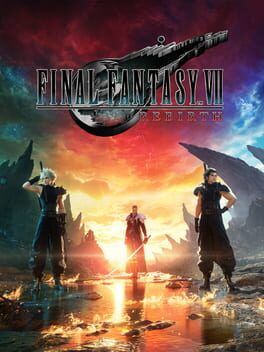
Naoki Hamaguchi’s comments on real-time versus turn-based systems, how Final Fantasy has reshaped its combat identity, and whether traditional turn-based design still has a place in modern AAA RPGs.
Hamaguchi’s Take: Why Real-Time Keeps Winning Ground
In recent interviews around Final Fantasy 7 Rebirth, director Naoki Hamaguchi has been unusually candid about where he thinks RPG combat is heading. His core argument is simple: younger players increasingly prefer real-time experiences. They are used to games that respond the moment they press a button, and that expectation shapes how they read “fun” and “modern” combat.
Hamaguchi has described traditional turn-based play as something that gives you space to think, to weigh options and commit to a plan. He calls that style of decision-making “deeply universal,” tied to how people naturally approach strategy. He is not saying the old model is obsolete. Instead, he sees a market pull where action-forward combat has become mainstream, while classic turn-based structures are treated as a kind of legacy flavor.
His comments line up with how Square Enix presented the Remake project from the start. The team worried that simply dragging Final Fantasy 7’s 1997 Active Time Battle into a modern 3D blockbuster would feel stiff. They tried to preserve the suspense and tactical choices of ATB while wrapping them in a more immediate, physically expressive layer of action. Rebirth, like Remake, is the product of that balancing act.
Hamaguchi also points to newer projects like Clair Obscur: Expedition 33, which blends real-time movement and cinematic presentation with a distinctly turn-based command structure. For him, games like this are almost “inevitable” responses to what players want now: strategy that still feels fast, tactile, and visually loud.
How Final Fantasy’s Combat Identity Evolved
To understand why Rebirth lands where it does, you have to track how Final Fantasy itself drifted from pure turn-based design.
The 16-bit and PlayStation era titles were built around variations of turn-based and ATB systems. Combat was a sequence of discrete choices that played out in rhythmic bursts. Even when the series ramped up spectacle, the underlying logic was: wait, choose, watch the result.
The real pivot started with Final Fantasy 15, which leaned into action combat where holding an attack button and warping around the battlefield did most of the work. The result was divisive, but it showed that the mainline series was no longer interested in being defined by menus and timing bars alone.
Final Fantasy 7 Remake and Rebirth are the refined form of that shift. They are not pure action games. Beneath the flashy particle effects, combat still revolves around filling ATB gauges, spending those charges on abilities, magic, and items, and exploiting stagger windows. Thinking about buffs, debuffs, and elemental weaknesses still matters, especially on higher difficulties.
What has changed is the surface language of the fights. Instead of standing in place waiting for a bar to fill, Cloud is constantly moving, swinging his sword, swapping stances, and tag-teaming with allies. Inputs map directly to animation and impact. The player’s first impression is: this is an action game that happens to have cooldowns and commands, not a command RPG that happens to have dodges and combos.
That presentation shift is not cosmetic. It reshapes what players expect Final Fantasy combat to feel like. When Hamaguchi talks about carrying forward whatever “works” into future projects, he is acknowledging that the hybrid action/ATB model has become part of the series’ new identity. For the current mainline entries, there may be no going back to a fully menu-driven aesthetic.
Do Players Still Want Traditional Turn-Based AAA RPGs?
Hamaguchi’s argument about younger audiences can sound like a death sentence for old-school turn-based fans. Reality is more nuanced.
Turn-based RPGs have been thriving in parallel to Final Fantasy’s action pivot. Persona 5 turned a deeply traditional menu system into a global hit by pairing it with stylish UI, great pacing, and strong character work. Yakuza: Like a Dragon took a long-running action series and successfully reinvented it as a pure turn-based RPG. Baldur’s Gate 3 became a phenomenon on the back of methodical, rules-heavy, turn-based encounters.
All three games prove that players are still hungry for turn-based design when the rest of the package feels modern. None of them read like relics. They have sharp presentation, fast animation timing, and smart quality-of-life touches that keep the flow from bogging down. They also lean into the strengths of turn-based structure: tactical depth, build crafting, and clear readability of cause and effect.
Where Hamaguchi has a point is in the relationship between combat style and the kind of blockbuster experience many AAA publishers are chasing. When you build a huge, cinematic RPG with real-time camera work, dense particle effects, and heavy animation blending, action begins to feel like the default. It is easier to sell a trailer where the protagonist is darting between enemies in real time than one where everyone stands in a line trading blows in turns.
In other words, the pressure is not just coming from players but from marketing and presentation. Turn-based systems fit naturally into tactical, isometric, or stylized JRPG formats. The more you chase photorealism and televisual drama, the more you are nudged toward action or at least an action-inflected hybrid.
Rebirth as a Compromise Between Two Audiences
Final Fantasy 7 Rebirth sits at the crossroads of these trends. It has to satisfy long-time fans who imprinted on the original’s ATB pacing while also convincing new players raised on action games that this world and these characters belong in their library.
Hamaguchi’s solution is to treat the action layer as an immersion tool. Real-time movement, blocks, and dodges keep the player emotionally and physically attached to their character. Underneath, the ATB system dictates when big decisions happen. You chip away with basic attacks to build ATB, then you spend those charges on the moves that really matter. On higher difficulties, you are effectively playing a turn-based puzzle stretched out over a continuous action sequence.
This is why the combat feels so different depending on how you approach it. If you ignore the deeper systems and just mash, Rebirth looks like a flashy brawler where numbers happen in the background. If you lean into materia setups, synergy abilities, and enemy scripts, it reveals itself as a modern interpretation of ATB wearing an action game’s skin.
From a design standpoint, this hybrid is a direct answer to the dilemma Hamaguchi describes. Younger players get immediacy and feedback. Veterans get structure, resource management, and the satisfaction of carefully built party loadouts.
The Risk of Losing a Clear Identity
The philosophical question is what this does to Final Fantasy’s long-term identity. For decades, you could point to turn-based, ATB-driven combat as part of what made the series distinct among big-budget RPGs. Today, a new player could look at Final Fantasy 16 and 7 Rebirth and see combat that resembles popular action RPGs and character action games more than classic JRPGs.
Hamaguchi seems comfortable with that ambiguity. He talks less about preserving a single, fixed identity and more about evolving the franchise in line with what feels natural for each project. The risk is that as Final Fantasy chases broader action sensibilities, it becomes harder to articulate what makes its battle systems uniquely “Final Fantasy” beyond familiar names and spell effects.
At the same time, the series has always reinvented itself from entry to entry. Job systems, ATB, gambits, sphere grids, real-time party control, and MMO-style cooldown combat have all had their moment. In that context, the action/ATB hybrid of Remake and Rebirth is just the latest experiment. Whether it becomes a permanent template or a stepping stone will depend on how future games are received.
So, Where Does This Leave Turn-Based in AAA?
The quieter truth behind Hamaguchi’s comments is that we are not watching a simple replacement of one style with another. We are seeing a split.
Blockbuster, cinematic RPGs like Final Fantasy 7 Rebirth are converging on hybrids that visually read as action games yet quietly preserve turn-based values through meters, cooldowns, and resource gating. At the same time, a parallel track of high-profile turn-based games is carving out its own space, often with different camera perspectives, different pacing expectations, and different marketing language.
Modern audiences have shown they still want traditional turn-based design, but they want it to be presented with as much care and confidence as any action game. They expect snappy interfaces, thoughtful encounter design, and production values that respect their time and attention. What they are less willing to accept is a turn-based system that feels slow or visually flat just because that is how it was done in the 1990s.
Final Fantasy 7 Rebirth answers that demand from another angle. It does not try to reclaim pure turn-based territory. Instead, it acts as a bridge, using action to draw in players who might never touch a classic JRPG, then using ATB-style structure to keep the combat interesting far past the opening hours.
Hamaguchi’s comments suggest that this bridge is not a temporary fix but a direction for the series and for many big-budget RPGs. Whether a future mainline Final Fantasy ever returns to a fully traditional turn-based model is unclear, but it no longer has to in order to deliver what turn-based fans value most: room to think, room to plan, and the satisfaction of seeing a good strategy unfold, even as everything on screen looks like a real-time storm of sparks and steel.